
Introduction
A spinal decompression machine is a specialized motorized device – essentially a computer-controlled traction table – that gently stretches the spine to relieve pressure on spinal discs and pinched nerves. If you’ve been searching for information about a spinal decompression machine in Singapore, you’re likely a working adult dealing with persistent back or neck symptoms and wondering whether this non surgical treatment may help relieve pain and help you avoid surgery.
Whether you spend eight hours at a desk in Raffles Place, drive a taxi through peak-hour traffic, lift patients as a nurse at SGH, or stand all day in retail, your spine absorbs tremendous daily stress. Poor posture, prolonged sitting, and repetitive lifting compress the cushion-like discs between your vertebrae, sometimes leading to bulging or herniated discs, sciatica, and chronic pain that painkillers alone cannot fix. Spinal decompression therapy uses computerized traction machines to create negative pressure within spinal discs to promote healing – offering a path toward pain relief that doesn’t involve a scalpel.
This guide focuses exclusively on non surgical spinal decompression machines used in chiropractic and physiotherapy clinics in Singapore – not spinal decompression surgery, not home inversion tables. It’s written from our perspective at Everton Chiropractic, where we use decompression as part of a structured care plan, not as a standalone quick fix.
What you’ll learn in this guide:
-
What a spinal decompression machine actually does to your spine (in plain English)
-
Who it helps – and who should avoid it
-
What a session feels like from start to finish at a Singapore clinic
-
Safety, side effects, and realistic cost ranges in Singapore dollars
-
A step-by-step checklist to decide if it’s right for you
You’ll also find a quick summary box, a comparison table of common back pain treatments, and links to our spinal decompression service page for next steps.
Understanding Spinal Decompression Machines
Non surgical spinal decompression is an advanced form of traction therapy that uses a motorized, computer-guided table to apply controlled stretching forces to your spine. It’s not magic, and it’s not a miracle cure. Think of it as a precise, technology-assisted way to reduce pressure on compressed discs and irritated spinal nerves – the structures most often responsible for chronic back pain and radiating leg pain or arm numbness.
Your spinal discs work like shock absorbers between the bones of your spine. When they’re healthy, they’re plump with fluid and sit neatly between vertebrae. When they’re compressed – from years of sitting, heavy lifting, or simple wear and tear – they can bulge, herniate, or lose height. That’s when nerve compression happens, and that’s when pain, tingling, or weakness can start travelling down your leg (via the sciatic nerve) or into your arm.
In one sentence: A spinal decompression machine uses computer-controlled pulling and releasing cycles to gently open up space between your vertebrae, lower pressure inside your discs, and give compressed nerves room to recover.
What Exactly Is a Spinal Decompression Machine?
Picture a padded, motorized table split into two sections that can move independently. You lie down – fully clothed – while the chiropractor fits a harness around your pelvis (for lumbar decompression) or a head cradle (for cervical/neck decompression). A computer console sits beside the table, and the practitioner programs the exact amount of force, the angle of pull, the duration of each cycle, and how many cycles you’ll receive.
The treatment is entirely non surgical and non-invasive: no injections, no incisions, no anaesthesia. You remain awake, comfortable, and in control throughout.
What makes clinical spinal decompression tables fundamentally different from basic traction or a home inversion table:
-
Precision: The computer adjusts force down to fractions of a kilogram, targeting specific spinal levels
-
Cycling: Instead of a constant pull, the machine alternates between stretching and partial release – this prevents your muscles from fighting the stretch
-
Sensor feedback: Modern machines detect patient resistance (muscle guarding) in real time. If your body tenses, the machine automatically backs off to stay below the threshold that triggers muscle spasm
-
Customisation: Force, angle, and timing are tailored to your weight, injury level, and sensitivity
Most modern clinic machines used in Singapore – including DRX-type and similar systems – can target specific spinal levels in either the lumbar spine or neck.
How the Machine Works on Your Spine (Plain English)
Here’s what happens inside your body during a spinal decompression session, step by step:
The machine applies a gentle pulling force along the length of your spine. This creates a small but meaningful separation between the vertebrae at the targeted level. That separation does several important things:
-
Lowers disc pressure: The stretch creates negative pressure inside the disc – think of it as a mild suction effect. This can help draw bulging herniated disc material slightly back toward the centre, away from the nerve it’s pressing on
-
Opens nerve pathways: More space between vertebrae means more room for irritated spinal nerves, reducing nerve pressure and the pain signals it sends
-
Improves blood flow and nutrition: Discs don’t have their own blood supply. The pumping action of alternating pull-and-release cycles helps draw fluid, oxygen, and nutrients into the disc, supporting natural healing over weeks – not overnight
-
Reduces inflammation: Less mechanical compression means less irritation, which gradually reduces the inflammatory response around the nerve root
This isn’t an instant fix. Promoting healing in spinal discs takes time and consistency, which is why multiple treatments across several weeks are the norm.
Types of Spinal Decompression Machines You May See in Singapore
When visiting chiropractic or spine clinics for spinal decompression in Singapore, you’ll generally encounter two categories:
-
Lumbar decompression machines: Target the lower back. You lie face-up or face-down with a pelvic harness. This is the most common type, used for herniated discs, bulging discs, sciatica, and degenerative disc disease in the lower spine
-
Cervical decompression machines: Target the neck. You lie face-up with a specialised head cradle. Used for neck pain, disc herniation in the cervical spine, and arm numbness or tingling
How clinical machines differ from home devices:
|
Feature |
Clinical Decompression Table |
Home Inversion Table |
|---|---|---|
|
Computer control |
Yes – programmed per patient |
No |
|
Sensor feedback |
Detects and adjusts for muscle guarding |
No |
|
Targeted levels |
Can focus on specific vertebral segments |
General, whole-spine gravity stretch |
|
Supervision |
Monitored by trained practitioner |
Self-administered |
|
Suitability screening |
Required before beginning treatment |
Not applicable |
At Everton Chiropractic, we use non surgical decompression therapy as part of a broader chiropractic care and rehabilitation plan – not as a standalone magic solution. Decompression works best when combined with posture correction, strengthening exercises, and ergonomic changes.
From Theory to Reality: What a Spinal Decompression Session Looks Like
Now that you know what the machine is, here’s what actually happens when you lie on it in a Singapore clinic. This section walks you through a typical first visit step by step, so you know exactly what to expect before you book.
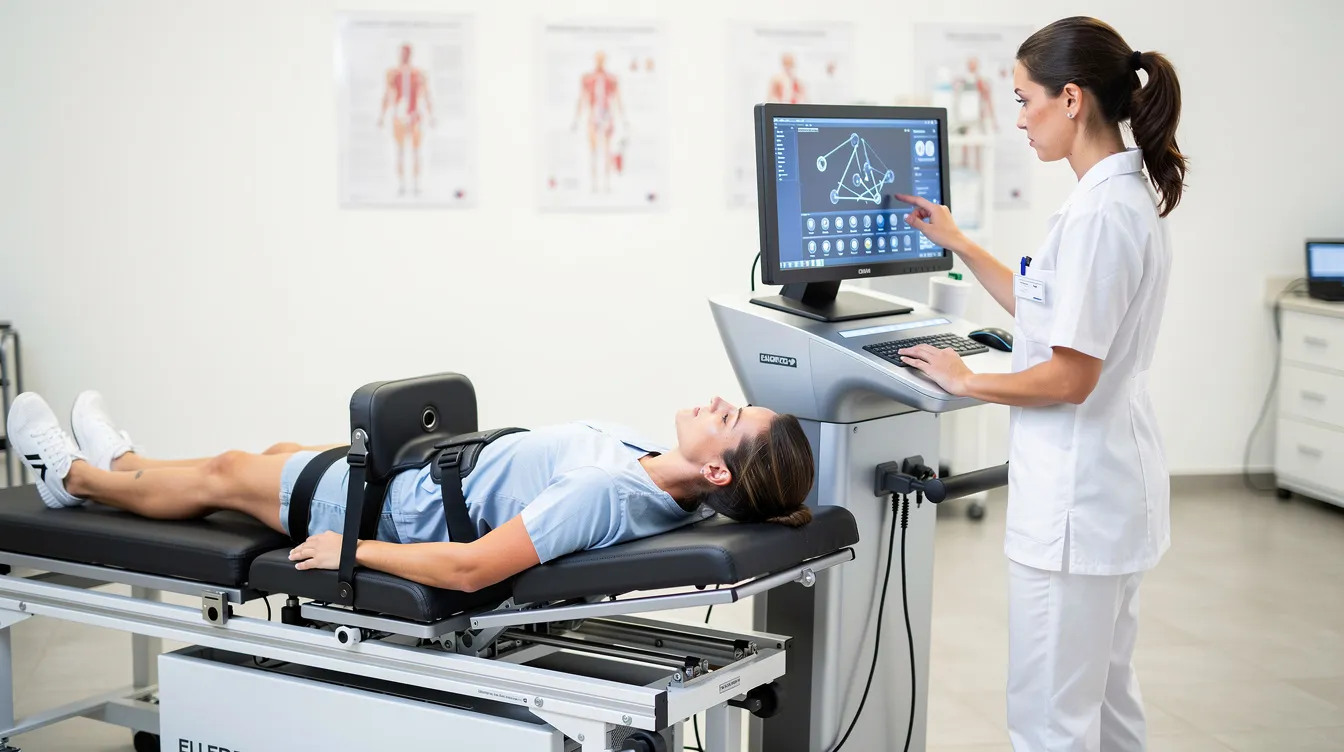
Step-by-Step: Your First Spinal Decompression Visit in Singapore
-
Arrive and complete intake forms – You’ll fill out a health questionnaire covering your medical history, current symptoms, work demands (how long you sit, whether you lift, shift patterns), and previous treatments you’ve tried (GP medication, physiotherapy, TCM, massage)
-
Sit down for a consultation – Your chiropractor will ask detailed questions about your pain: where it is, when it started, what makes it better or worse, and whether you have leg pain, arm numbness, or tingling
-
Physical examination – This includes a posture and movement assessment, neurological tests (reflexes, sensation, muscle strength), and mobility checks. The chiropractor assesses the musculoskeletal system, neurological findings, and your medical history to decide whether decompression is appropriate and to look for signs of nerve compression and structural spinal issues
-
Review of imaging – If you have existing MRI or X-ray results, bring them. The chiropractor will review these to identify disc herniation, bulging discs, or degenerative disc disease. If you don’t have imaging, the clinic may recommend it before beginning treatment
-
Contraindication screening – The chiropractor checks whether decompression is safe for you. Spinal decompression is often not recommended for individuals with severe osteoporosis or fractures, pregnancy (for lumbar decompression), spinal hardware from previous surgery, spinal infections or tumours, or cauda equina syndrome symptoms
-
Explanation of risks and benefits – You’ll receive an honest explanation of what spinal decompression can and cannot do for your specific condition, how many spinal decompression sessions you’re likely to need, and what the total cost will be
-
Consent and questions – You sign informed consent, and this is your chance to ask anything before the first session begins
-
Harness fitting – You lie on the decompression table fully clothed. The practitioner fits the pelvic or cervical harness and ensures you’re comfortable
-
First trial session – The machine is set to conservative (lower) force for your first session. The chiropractor monitors your response closely, adjusting if you show signs of discomfort or muscle guarding
-
Post-session check – After the session, the chiropractor asks how you feel, notes any immediate responses, and discusses what to expect over the next 24–48 hours (mild soreness is normal; sharp or worsening pain is a red flag)
-
Treatment plan discussion – Based on your response and condition severity, the chiropractor outlines a recommended plan, typically 20–28 sessions over 5–7 weeks, and what complementary care (exercises, ergonomic changes) will be included
-
Scheduling – You book your next sessions, usually 2–4 times per week initially
Your first visit typically takes 45–60 minutes. Subsequent sessions are shorter – focused mainly on the decompression itself.
What You’ll Feel During a Session
Most patients feel a mild stretching sensation during treatment – a gentle, rhythmic pulling in the lower back or neck that cycles between tension and relaxation. Many patients find it so relaxing that they doze off during the session.
A typical spinal decompression session lasts 20–30 minutes (some clinics extend to 30–45 minutes depending on protocol). Treatment typically lasts between 30 to 45 minutes per session when you include setup and any supplementary therapy. Sessions typically involve adjusting harness tension and body positioning to ensure the correct spinal level is targeted.
What’s normal during a session:
-
A gentle pulling or stretching feeling
-
Mild tingling that resolves during rest cycles
-
Relaxation and sleepiness
-
Slight muscle tightness that fades after the session
What’s not normal (and means you should tell your chiropractor immediately):
-
Sharp or shooting pain
-
Increasing numbness in your legs, arms, or groin
-
Pain that gets significantly worse rather than better over subsequent sessions
You remain fully clothed throughout, privacy is respected, and you can stop or adjust the treatment at any point simply by telling your chiropractor. Patients should seek urgent medical attention for worsening neurological symptoms – this is a non-negotiable safety rule.
With Pictures: How the Setup Usually Looks
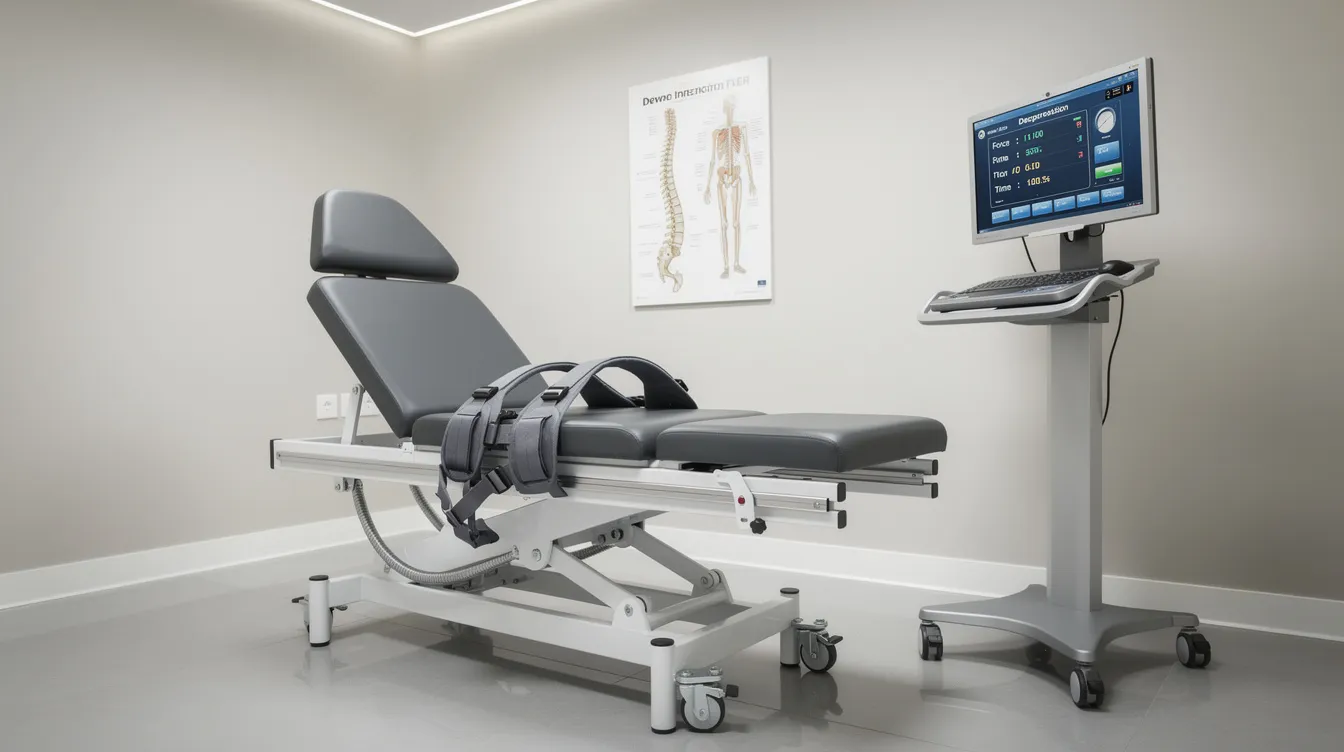
The image above shows a typical decompression setup: a padded table with a movable lower section, a harness that wraps around the pelvis, and a computer screen where the practitioner monitors and adjusts force settings in real time.
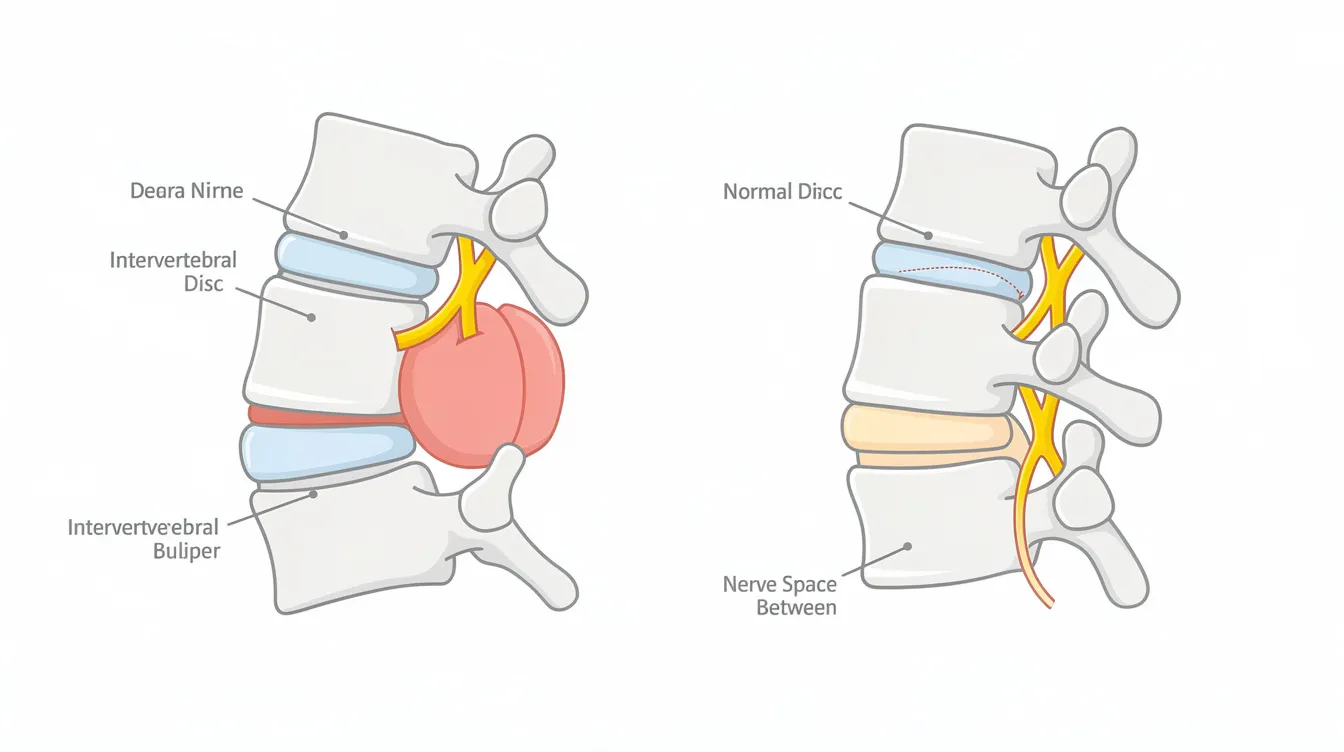
This simplified illustration shows what happens at the spinal level: before decompression (left), a bulging disc presses on a nerve root, causing pain. After decompression (right), increased space between vertebrae reduces nerve pressure and allows the disc to retract slightly.
These visuals help patients understand that the process is gentle, controlled, and medically focused – not intimidating or painful.
Who Spinal Decompression Machines Are For (and Not For)
Spinal decompression is one option among many for managing back and neck pain. It works best for specific types of spinal conditions – particularly those involving disc compression and nerve irritation. It’s not appropriate for everyone, and an honest assessment before beginning treatment is essential.
Conditions Like Degenerative Disc Disease That May Benefit from Spinal Decompression
Spinal decompression therapy is effective for herniated and bulging discs – and those are among the most common conditions treated. Here are the conditions where decompression therapy may help, described in everyday terms:
-
Herniated discs (“slipped disc”) – When the soft centre of a disc pushes through its outer wall and presses on a nerve. Patients achieve a 27.6% mean reduction in herniation volume with decompression treatment
-
Bulging discs – When a disc protrudes outward but hasn’t fully ruptured. Decompression can help draw the bulge back toward centre
-
Sciatica – Radiating leg pain caused by compression of the sciatic nerve in the lower back. Spinal decompression improves function in lumbar radiculopathy patients
-
Degenerative disc disease – Age-related wear and thinning of discs, causing chronic low back pain and stiffness. It may help alleviate pain associated with conditions like sciatica and herniated discs
-
Neck pain with arm symptoms – Cervical disc herniation or bulging causing numbness, tingling, or weakness in the arm or hand
-
Facet syndrome – Irritation of the small joints at the back of each vertebra, sometimes combined with disc problems
-
Chronic back pain that hasn’t responded well to medication, rest, or standard physical therapy alone
Real-world examples in Singapore context: office workers with years of accumulated back pain from sitting, nurses who lift patients daily, Grab or Gojek drivers with prolonged sitting and vibration exposure, retail staff standing on hard floors for entire shifts.
Imaging (MRI, X-ray) combined with a thorough physical exam helps confirm whether decompression is the right approach.
Who Should Avoid or Be Careful with Decompression
Certain conditions make spinal decompression unsafe or inappropriate. These are the key contraindications:
-
Recent spinal fractures – Bones need to heal before any traction force is applied
-
Severe osteoporosis – Fragile bones may not tolerate the pulling force safely
-
Spinal fusion or spinal hardware in the target area – Metal implants or artificial discs can be damaged or displaced
-
Spinal infection or tumour – Requires specialised medical treatment, not mechanical traction
-
Cauda equina syndrome – Loss of bladder or bowel control, saddle-area numbness. This is a medical emergency requiring immediate surgical consultation
-
Pregnancy – Particularly for lumbar decompression; the harness and force are not safe during pregnancy
-
Progressive neurological deficits – Rapidly worsening weakness or numbness needs urgent assessment by a spine specialist or neurosurgeon
-
Spinal instability – Conditions where the vertebrae move excessively relative to each other
Spinal decompression involves careful assessment of a patient’s condition before treatment. Consultation with a healthcare practitioner is advised before treatment. If you have any of these conditions, seek a specialist opinion (orthopaedic surgeon or neurosurgeon) before considering decompression.
How Everton Chiropractic Decides If You’re a Good Candidate
At Everton Chiropractic, every patient goes through a structured assessment before we recommend decompression:
-
Full medical history review – Including previous treatments (GP visits, physiotherapy, TCM, injections), medication use, and how symptoms affect your work and daily life; this helps us judge whether your musculoskeletal system and overall clinical picture make decompression an appropriate option
-
Posture and movement assessment – We evaluate your posture, how you move, and where your movement is restricted
-
Neurological testing – Reflexes, sensation, and muscle strength to identify nerve compression patterns
-
Imaging review – We examine your MRI or X-ray findings to understand the structural picture
-
Work and lifestyle discussion – Your daily demands matter. A driver who sits 10 hours needs a different plan than a nurse who lifts patients
If decompression isn’t the best fit – or isn’t needed yet – we may suggest alternative treatments first: manual chiropractic adjustments, specific strengthening exercises, ergonomic changes, or a combination. Our goal is long-term function and movement, not just temporary relief or short-term pain masking.
Benefits and Limits of Using a Spinal Decompression Machine
This section presents a balanced view – what spinal decompression can realistically deliver, and what it cannot promise. Research exists and is growing, but evidence is still developing, and results vary between individuals.
Potential Benefits for Working Adults in Singapore
Spinal decompression therapy has a success rate of approximately 88%, and 76% of patients maintain pain relief after one year. In clinical terms, a 2024 meta-analysis of 16 randomised controlled trials (965 patients) found statistically significant improvements in pain scores, functional disability, and disc herniation magnitude for patients with lumbar disc herniation receiving non surgical spinal decompression.
In everyday terms, here’s what that means for patient outcomes:
-
Reduced back pain and neck pain – Less daily discomfort, fewer flare-ups
-
Less leg pain or arm numbness – As nerve compression decreases, radiating symptoms often improve
-
Better function at work – Being able to sit through meetings, drive without constant shifting, carry children, or complete a nursing shift with manageable discomfort
-
Improved sleep – Pain relief often translates directly to better rest
-
Fewer painkillers – Many patients reduce or stop relying on anti-inflammatory medication
Best results usually come when decompression is combined with posture correction, core strengthening exercises, and lifestyle changes guided by the clinic. Non-surgical decompression promotes healing by creating negative pressure inside the disc, but lasting improvement requires addressing the habits that caused the problem.
How Long Does Pain Relief from Spinal Decompression Last?
Some patients feel symptom relief within the first few sessions (1–3 weeks), especially when pain is primarily from acute nerve irritation. However, structural healing – actual reduction in disc bulge size and improved disc nutrition – takes longer, typically several weeks to months of consistent care.
The effectiveness of spinal decompression therapy may vary among individuals. Key factors that influence durability:
-
Completing the full course – Patients usually undergo 20–28 sessions over 5–7 weeks. Stopping early often means incomplete recovery
-
Addressing root causes – If poor posture, prolonged sitting, obesity, or heavy lifting habits persist, relapse is possible
-
Maintenance plan – Rather than endless intensive decompression, we recommend less frequent follow-up sessions plus a structured home exercise programme
No treatment can “freeze” your spine in perfect condition. Degenerative changes are part of ageing, and ongoing self-care – regular movement, weight management, posture awareness – is essential for maintaining spinal health long term.
What a Spinal Decompression Machine Cannot Do
Honest expectations matter. Here’s what decompression cannot reliably achieve:
-
Cannot reverse severe spinal stenosis caused by large bone overgrowth – this is a structural bony change that mechanical stretching cannot undo
-
Cannot replace emergency surgery – Conditions like cauda equina syndrome or rapidly worsening progressive neurological deficits require urgent surgical procedures
-
Cannot fix all types of back pain – Pain primarily from muscle strain, inflammatory spinal conditions (like ankylosing spondylitis), or psychological factors may not respond to decompression
-
Cannot fully restore disc height – While herniation magnitude often improves, disc height (the space between vertebrae) frequently does not increase significantly according to meta-analysis data
-
Cannot guarantee results for everyone – Non-surgical decompression can succeed in approximately 88% of cases, but that means approximately 12% of patients don’t respond meaningfully
Be cautious of any clinic or advertisement that promises “100% cure” or guaranteed results after a single session. A thorough exam will clarify whether decompression is worth trying or whether other treatments should come first.
Spinal Decompression Machine vs Other Back Pain Options in Singapore
Patients experiencing chronic back or neck pain in Singapore often weigh spinal decompression against surgery, medication, regular chiropractic care, and physiotherapy. Here’s how they compare.
Comparing Common Options (Plain-English Table)
|
Treatment |
What It Involves |
When It’s Usually Considered |
|---|---|---|
|
Non surgical spinal decompression machine |
Computer-controlled traction cycles on a specialised table; 20–28 sessions over 5–7 weeks; non-invasive |
Disc-related pain (herniated discs, bulging discs, sciatica) that hasn’t improved enough with basic conservative treatments |
|
Standard chiropractic care / manual therapy |
Hands-on spinal adjustments, soft tissue work, mobility exercises; ongoing as needed |
First-line care for many spinal conditions; often tried before or alongside decompression |
|
Physical therapy & exercise-based rehab |
Structured exercises, stretching, strengthening, movement retraining; weeks to months |
Suitable for most back pain types; often combined with other treatments for best results |
|
Pain medication & injections |
NSAIDs, muscle relaxants, epidural steroid injections; temporary symptom control |
Acute flare-ups, pain management while pursuing other treatments; not a long-term structural solution |
|
Spine surgery (discectomy, laminectomy, spinal fusion) |
Surgical spinal decompression therapy involving removal of disc or bone material under general anaesthesia; days to weeks of recovery |
When non surgical methods fail, or in cases of severe nerve damage, spinal instability, or medical urgency. Surgical options carry risks like infections and longer recovery times. Costs in Singapore can reach SGD $36,000–$47,000 in private hospitals |
Surgical decompression involves procedures like laminectomy or discectomy – these are fundamentally different from non surgical decompression therapy and are reserved for more severe or urgent cases. At Everton Chiropractic, we focus on non surgical methods and work alongside medical doctors when surgery is genuinely needed.
Where a Spinal Decompression Machine Fits in Your Care Plan
For many working adults, spinal decompression is considered after first-line conservative treatments – rest, activity modification, basic physiotherapy, pain medication, and manual chiropractic adjustments – haven’t provided enough relief.
At Everton Chiropractic, we often combine decompression with:
-
Spinal adjustments to restore joint mobility
-
Soft tissue work to release tight muscles
-
Movement retraining and core stability exercises
-
Ergonomic coaching tailored to your workplace
The key point: don’t think of it as “either decompression or exercise.” It’s usually decompression plus structured rehab – a multimodal approach that addresses both the symptom (pain) and the underlying cause (disc compression, weak stabilising muscles, poor posture habits).
Safety, Side Effects, and Costs in Singapore
The three questions we hear most from working adults considering this treatment: “Is it safe?”, “Will it hurt or make things worse?”, and “How much will it cost me here in Singapore?”
Safety and Possible Side Effects
When properly screened and monitored, non surgical decompression therapy is non-invasive and safe. It is used in physiotherapy and chiropractic clinics worldwide, with a safety profile comparable to conservative treatments in clinical trials.
Common minor side effects (experienced by many patients in the first few sessions):
-
Temporary soreness or muscle stiffness – similar to the feeling after a strong stretch or workout
-
Mild fatigue or tiredness
-
Transient increase in symptoms that typically settles within 24–48 hours as your body adjusts
Rare but possible adverse events:
-
Worsening of disc symptoms if too much force is applied – this is why experienced providers start conservatively and increase gradually
-
Unmasking of severe nerve compression that was previously borderline – this is actually a useful diagnostic finding, as it may indicate the need for surgical consultation
The risk of serious adverse events is minimised by thorough contraindication screening, use of machines with real-time sensor feedback that detect patient resistance, and experienced practitioners who adjust forces based on your response at every session.
How Much Does Machine-Based Spinal Decompression Cost in Singapore?
Costs for spinal decompression in Singapore vary by clinic, machine type, and whether decompression is offered alone or bundled with other spinal treatments. Here are realistic ranges:
-
Single lumbar decompression sessions start at approximately S$120 per session at most clinics. Per-session costs typically range from SGD $100–$200 depending on the clinic and additional services included
-
First consultation and assessment visits usually cost more, as they include a thorough physical exam, imaging review, and treatment planning. Some clinics offer introductory rates (e.g. SGD $65–$95 for a first visit with assessment)
-
A full treatment course costs several thousand dollars. Package plans covering 20 sessions – including decompression, exercises, and practitioner time – typically range from approximately SGD $3,200–$3,450 at clinics offering comprehensive rehabilitation programmes
-
Patients usually undergo 20–28 sessions over 5–7 weeks, so packages are designed to reduce the per-session cost and encourage treatment consistency
At Everton Chiropractic, we begin with an affordable assessment to determine whether decompression is genuinely appropriate for your condition. We provide transparent pricing before you commit to any treatment plan – no surprises, no pressure.
Insurance and Medisave:
-
Many clinics offer insurance coverage for spinal decompression, but insurance coverage varies under physiotherapy or chiropractic modalities
-
Medisave generally does not cover chiropractic treatments at private clinics in Singapore as of mid-2020s
-
Day surgery for spinal disorders costs S$500–S$700 in public hospitals (subsidised rate) – but this refers to surgical procedures, not private-clinic decompression
-
We recommend checking directly with your insurer about outpatient chiropractic benefits and asking us for itemised receipts and diagnosis codes if needed
Questions to Ask Before You Start
Before committing to any clinic for spinal decompression, ask these questions:
-
How do you decide if I’m suitable for decompression? What screening do you perform?
-
What machine do you use, and how is the force customised for me?
-
What are realistic goals for my specific condition?
-
How will you combine decompression with exercise, posture correction, and other treatments?
-
What will this cost in total if I complete the recommended plan? Are there package options?
-
What happens if I don’t improve after a reasonable number of sessions?
Transparent discussion is a good sign. High-pressure sales tactics are a red flag. Any clinic worth your trust will welcome these questions.
Step-by-Step Checklist: Is a Spinal Decompression Machine Right for You?
Use this practical checklist to organise your thoughts and prepare before booking an assessment. This is a decision-support tool – not a substitute for professional diagnosis.
Self-Check Before You Book
-
Note your main symptoms – Is your pain in your back, neck, or both? Do you have radiating leg pain (sciatica) or arm numbness? Write down exactly where you feel discomfort and what it feels like (sharp, dull, burning, tingling). This helps your chiropractor understand what’s happening.
-
Track how long symptoms have lasted – Is this weeks, months, or years? Does it affect your ability to work, sleep, exercise, or carry out daily activities? Chronic pain (lasting more than 12 weeks) that disrupts your life is a stronger indication for decompression than occasional mild soreness.
-
List previous treatments you’ve tried – GP medications (paracetamol, NSAIDs), physiotherapy, massage, TCM, chiropractic adjustments, injections. Note what helped, what didn’t, and what gave only temporary relief. This history helps the chiropractor decide if decompression is the logical next step.
-
Screen for serious red flags – Do you have fever with back pain, sudden loss of bladder or bowel control, numbness in the groin or saddle area, or rapidly worsening weakness in your legs? If yes, go to A&E or see a specialist immediately – these are potential signs of cauda equina syndrome or other emergencies, not conditions for decompression.
-
Gather your imaging – If you have previous X-rays or MRI scans of your spine, collect them (physical copies or digital access). These are invaluable for your chiropractor to assess disc herniation, bulging discs, degenerative disc disease, or spinal stenosis.
-
Consider your work demands – How many hours do you sit, stand, drive, or lift per day? What does a typical workday look like? This context shapes the treatment plan and ergonomic advice you’ll receive.
-
Set a realistic goal – What would meaningful improvement look like? For example: “Walk 30 minutes without back pain,” “Sit through a full workday more comfortably,” “Sleep through the night without waking from pain,” or “Reduce painkiller use.” Having a specific target helps measure progress.
-
Budget and schedule check – Can you commit to 2–4 sessions per week for 5–7 weeks? Have you reviewed your insurance coverage or set aside budget for the treatment course? Understanding the time and financial commitment upfront prevents frustration later.
What to Bring and Ask at Everton Chiropractic
Bring with you:
-
Your ID
-
Any MRI, X-ray, or specialist reports
-
A current medication list
-
A brief description of your typical workday (sitting hours, lifting, commute type and duration)
Ask your chiropractor:
-
Based on my imaging and exam, is decompression therapy appropriate for my condition?
-
How many sessions do you estimate I’ll need, and how will you measure my progress?
-
What complementary care (exercises, adjustments, ergonomic coaching) will be included?
-
What does the full treatment plan cost, and do you offer package pricing?
-
What if I don’t respond well – what’s the backup plan?
Ready to find out whether a spinal decompression machine could help your specific condition? Learn more about our spinal decompression service in Singapore and book your assessment.
Conclusion and Next Steps
A spinal decompression machine is a computer-controlled, motorized traction table that gently stretches the spine to reduce pressure on compressed discs and irritated nerves. It’s a non surgical treatment used in chiropractic and physiotherapy clinics – not a home gadget, not surgery, and not a miracle cure. It works best for disc-related conditions like herniated discs, bulging discs, sciatica, and degenerative disc disease in patients who haven’t found enough relief from basic conservative treatments.
Not everyone is a suitable candidate. People with spinal fractures, severe osteoporosis, spinal hardware, active infections, tumours, or cauda equina syndrome should not undergo decompression. A thorough assessment – including your medical history, physical exam, and imaging review – is the essential first step.
When decompression is appropriate, it fits into a broader, long-term spine health plan that includes strengthening exercises, posture correction, ergonomic adjustments, and sometimes manual chiropractic adjustments. The most durable results come from patients who complete their full treatment course and maintain good habits afterward.
Summary Box
A spinal decompression machine uses computer-controlled traction to relieve disc and nerve pressure – no surgery, no injections
It’s effective for herniated discs, bulging discs, sciatica, and degenerative disc disease, with an approximately 88% success rate
Most patients need 20–28 sessions over 5–7 weeks; per-session costs in Singapore start around SGD $120
Best results come from combining decompression with exercise, posture work, and lifestyle changes – not decompression alone
Your next steps:
-
Book an assessment at Everton Chiropractic – Get a personalised opinion on whether decompression is right for your condition
-
See your GP or spine specialist if you have any red-flag symptoms (bladder/bowel changes, rapid weakness, fever with back pain)
-
Start simple posture and movement habits at work while you decide – even small changes help
-
Read more about our spinal decompression and chiropractic care for detailed information about how we approach treatment
FAQ: Spinal Decompression Machines in Singapore
Below are quick, direct answers to the most common questions we hear from patients considering spinal decompression in Singapore.
Is a spinal decompression machine the same as an inversion table?
-
No. An inversion table is a generic home device that uses gravity to hang you upside down – it provides a non-specific, uncontrolled stretch across the entire spine. A clinical spinal decompression machine is computer-controlled, targets specific spinal levels, uses sensor feedback to adjust force in real time, and is supervised by a trained practitioner
-
Inversion tables are not suitable for many patients (particularly those with high blood pressure, glaucoma, or certain heart conditions) and cannot replicate the precise, cycling negative pressure that clinical decompression provides
How soon will I feel pain relief from spinal decompression?
-
Some patients notice changes within the first few sessions (1–3 weeks), particularly if pain is primarily from acute nerve irritation rather than long-standing structural damage
-
Underlying disc healing typically takes longer – several weeks to months. Spinal decompression therapy succeeds in approximately 88% of cases, but patience and consistency are important
Can I continue working while on spinal decompression treatment?
-
Yes. Most patients in Singapore continue working throughout their treatment course, with possibly some temporary activity modifications (e.g. reducing heavy lifting, taking short breaks from prolonged sitting)
-
Your chiropractor can advise on specific ergonomic changes and workplace adjustments to support your recovery while you keep working
Is spinal decompression covered by insurance in Singapore?
-
Coverage depends entirely on your specific insurance policy. Some personal or corporate health plans cover chiropractic or physiotherapy sessions, which may include decompression therapy. Insurance coverage varies under physiotherapy or chiropractic modalities
-
Medisave generally does not cover chiropractic treatments at private clinics in Singapore
-
We recommend checking directly with your insurer and asking us for itemised invoices with diagnosis codes to support your claim
What if spinal decompression doesn’t work for me?
-
No therapy – including spinal decompression – helps 100% of people. The effectiveness of spinal decompression therapy may vary among individuals. If there’s no meaningful progress after a reasonable trial (typically 8–12 sessions), we reassess thoroughly
-
Everton Chiropractic may recommend adjusting the treatment approach, trying alternative treatments, or referring you to an orthopaedic surgeon or neurosurgeon if your condition warrants more specialised care
-
Honest review of results and flexible planning are part of responsible pain management. Our priority is your long-term spinal health, not locking you into a treatment that isn’t delivering results