
Introduction
Spinal decompression in Singapore is one of the most searched non surgical treatment options among working adults dealing with persistent disc-related back pain, sciatica, or neck symptoms that haven’t responded to rest or basic physiotherapy. If you’re searching for clarity on spinal decompression Singapore cost, who actually benefits from this therapy, and whether it’s the right step before considering surgery, this practical guide covers everything you need to know as of 2026.
Non-surgical spinal decompression uses a motorised traction table to gently stretch the spine and relieve pressure on compressed discs and nerves. It is commonly offered at chiropractic and physiotherapy clinics across Singapore for conditions like herniated discs, degenerative disc disease, and chronic sciatica. The people who typically need it are working adults – office professionals, logistics staff, healthcare workers, and tech employees – whose disc-related pain hasn’t improved with medication, stretching, or standard back pain treatments over several weeks. In 2026, a single decompression session at a private clinic in Singapore typically costs between SGD $80 and $150, with initial assessments ranging from SGD $58 to $180 depending on the clinic.
This article covers what spinal decompression therapy is, who it’s for, the clinical benefits and risks, a detailed walkthrough of the treatment process at Everton Chiropractic, and realistic cost and insurance considerations. It does not cover in-depth post-surgical rehab protocols, non-Singapore pricing, or paediatric cases.
Who this is for: Working adults aged mid-20s to 60s in Singapore – whether you sit at a desk for 10 hours a day, lift boxes in a warehouse, or commute long hours on the MRT – who have persistent neck or back pain, numbness running down a leg or arm, or a diagnosis like “slipped disc” and are unsure about what to do next. Common pain points include fear of surgery, worry about treatment costs, juggling caring for kids or parents, and simply not knowing whether decompression is worth the investment.
By the end of this article, you will:
-
Understand exactly what non-surgical spinal decompression is and how it differs from general chiropractic adjustments
-
Know the kinds of conditions and symptoms most likely to benefit from decompression therapy in Singapore in 2026
-
See realistic cost ranges, what influences price, and how many sessions are typically needed
-
Recognise red-flag symptoms where urgent medical or surgical opinion is needed instead of – or before – decompression
-
Know how a first visit at Everton Chiropractic works and when to book an assessment
Understanding Non-Surgical Spinal Decompression
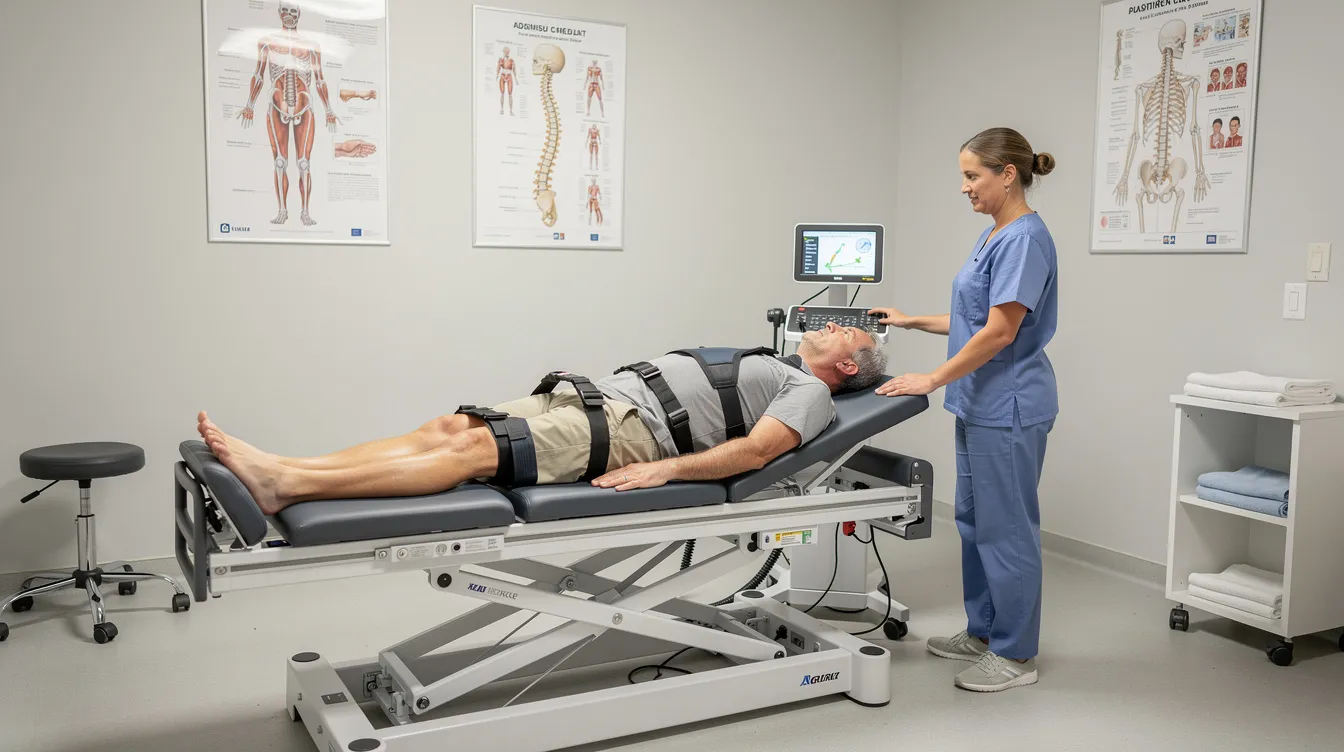
Non-surgical spinal decompression therapy is a controlled, mechanised form of traction designed to reduce pressure on spinal discs and the nerves they may be compressing. Unlike general stretching or manual therapy, it uses a computer-controlled table to apply precisely calibrated pulling forces in cycles, targeting specific spinal segments. This section is foundational if you’ve only encountered terms like “traction table,” “slipped disc treatment,” or “spine stretching machine” and want to understand what the therapy actually involves before evaluating whether it’s right for you.
What Spinal Decompression Therapy Actually Does to the Spine
Spinal decompression therapy stretches the spine to relieve pressure – but it does so in a very specific way. The motorised decompression table gently distracts (separates) vertebrae through controlled cycles of pulling and relaxation, typically over sessions lasting 20–30 minutes each. This controlled decompression creates negative pressure within the intervertebral disc, which can help draw bulging or herniated disc material back inward, improve nutrient and blood flow to the disc, and reduce compression on nearby nerves.
This mechanism is what distinguishes it from older methods like static traction or simply hanging from a bar. Manual traction applies a constant, less precise pull. Motorised decompression allows the chiropractor to fine-tune the force, angle, duration, and rest periods – adapting the treatment to your body size, diagnosis, and comfort level in real time.
A clinical trial on subacute lumbar herniated discs (n=60) found that patients receiving 10 decompression sessions over approximately eight weeks showed significantly lower leg pain intensity at two months and measurable reductions in disc herniation on MRI, compared to a control group. A separate retrospective review of 267 patient records across seven clinics showed average pain scores dropping from roughly 6.9 to 2.5 after 20 or more sessions, with over 90% of patients reporting pain reduction.
Connect these findings back to the symptoms many Singaporeans experience: compression can pinch nerves causing lower back pain, radiating leg pain (sciatica), numbness, or a “locked” low back that won’t straighten. Spinal decompression can reduce nerve compression symptoms and help relieve lower back pain – though results vary by condition severity, how long symptoms have been present, and lifestyle factors like activity level and smoking.
Spinal Decompression vs. Standard Chiropractic Adjustments
It’s a common misconception that decompression is just “a more expensive version of cracking the back.” In reality, these are different modalities addressing different aspects of spinal health. Chiropractic adjustments are precise, short-lever manipulations aimed at restoring joint mobility, improving spinal alignment, and optimising nervous system function. Spinal decompression, by contrast, involves longer, gentle traction sessions that focus specifically on disc pressure and nerve root decompression.
At Everton Chiropractic, these two approaches are commonly combined for disc-related cases – adjustments address joint restrictions and alignment, while decompression targets the disc itself. Targeted rehabilitation exercises and posture retraining round out the plan. This integrated approach is increasingly the standard at Singapore clinics rather than offering decompression as a standalone service.
Whether you need decompression depends on your underlying diagnosis and symptom pattern – not just general back pain. The next section breaks down exactly who benefits most.

Who Actually Needs Spinal Decompression in Singapore in 2026?
Not every backache requires spinal decompression. Muscle strain, acute sprains, and non-discogenic pain often respond well to simpler conservative care like stretching, exercise therapy, or manual treatment. Decompression therapy is most useful when there is a specific structural issue – typically a disc bulge, herniation, or degenerative disc condition – confirmed through clinical examination and, often, imaging.
In 2026, Singapore’s working patterns make disc-related problems increasingly common. Hybrid work arrangements mean longer cumulative sitting hours, often in poorly set-up home offices. Lower back pain affects 42% of office workers in Singapore, and prolonged device usage places extra stress on both the lumbar and cervical spine. Poor posture can lead to lower back pain over time, and chronic mechanical spinal conditions may not respond to standard rest or over-the-counter pain management.
Typical Working-Adult Profiles That Benefit Most
-
Office professionals in CBD or business parks (mid-20s to 50s): Chronic low back pain with radiating leg symptoms from years of 8–10+ hour sitting days. Sciatica, numbness, or tingling that disrupts daily activities and concentration. Decompression fits as part of a broader plan including posture correction and ergonomic changes.
-
Healthcare and logistics staff: Frequent lifting, standing, or bending increases risk of lumbar disc bulge. These workers often ignore early symptoms until pain becomes chronic. Decompression can relieve pain and be combined with core strengthening and movement coaching.
-
Mid-life adults (40s–60s): Degenerative disc disease involves the breakdown of spinal discs leading to chronic pain, reduced disc height, and morning stiffness. These patients benefit from decompression to maintain mobility and reduce nerve irritation, alongside spinal mobility work.
-
Desk-bound tech workers and WFH employees: Cervical disc bulges from poor workstation ergonomics can cause neck pain, arm numbness, and headaches. Spinal decompression therapy can help with herniated discs in the cervical spine, and it can alleviate headaches and migraines linked to cervical nerve compression. These cases often benefit from a combined approach to neck pain.
Conditions and Diagnoses Suited to Spinal Decompression
Individuals with herniated or bulging discs may benefit from spinal decompression. The specific diagnoses where decompression therapy is most commonly considered include:
-
Lumbar disc herniation / “slipped disc”: Herniated discs can cause nerve compression resulting in pain and motor difficulties. Decompression targets the disc directly to reduce the bulge.
-
Cervical disc bulge with arm pain or numbness: Pressure on cervical nerve roots creates radiating symptoms down the arm, often worsened by screen work.
-
Chronic sciatica from nerve root compression: Sciatica is characterised by radiating pain from a compressed nerve root, typically running from the low back through the buttock and down the leg.
-
Degenerative disc disease in the neck or low back: Pain degenerative disc disease causes is often chronic and activity-limiting; decompression aims to reduce pressure and improve disc hydration.
-
Facet joint compression with associated disc loading: When disc degeneration overloads facet joints, relieving disc pressure can help ease facet-related pain.
-
Spinal stenosis (mild to moderate): Spinal stenosis is the narrowing of the spinal canal, which can cause neurogenic claudication. Where conservative care is still appropriate and there are no severe neurological deficits, decompression may be considered.
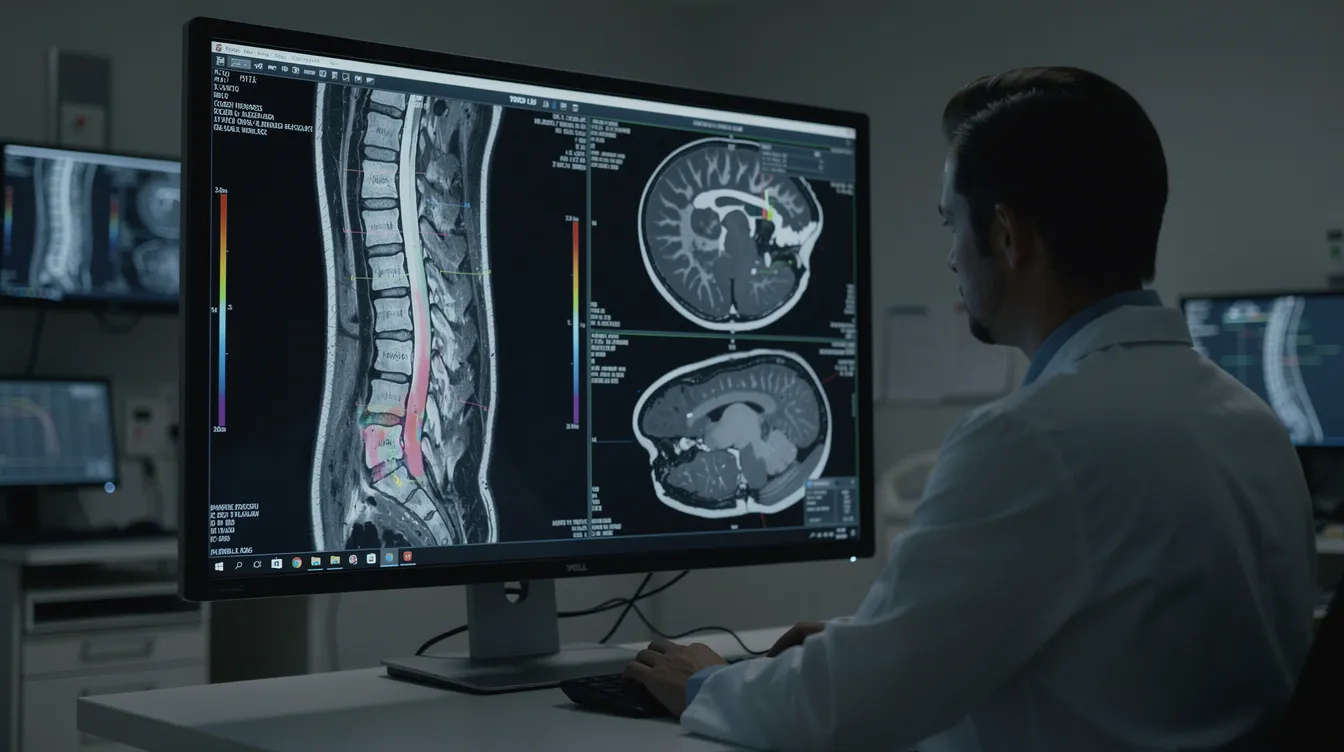
Imaging findings – particularly MRI reports – and neurological tests (reflexes, strength, sensation) guide suitability. Everton Chiropractic collaborates with external imaging providers or refers to specialists when advanced diagnostics are needed or when cases are complex.
Symptoms That Suggest You Might Be a Candidate
Use this as a quick self-check. If several of the following apply, decompression may be worth evaluating:
-
Pain radiating from your low back into the buttock, thigh, or calf – especially one-sided
-
Numbness, tingling, or “pins and needles” down an arm or leg
-
Symptoms include stiffness and numbness in the legs that worsen with prolonged sitting
-
Pain that worsens with sitting or bending forward and eases when lying down or standing
-
Recurring “locked back” episodes with difficulty straightening up after long sitting or lifting
-
Failed improvement after several weeks of rest, medication, or basic stretching
These signs only indicate that decompression may be worth evaluating – a proper assessment is always needed to confirm. Many readers at this point want to know what it costs and how many sessions they might need, so let’s address that directly.
Spinal Decompression Singapore Cost in 2026
Cost is one of the first concerns for working adults paying out of pocket or navigating employee benefits. Spinal decompression Singapore cost varies by clinic, technology, practitioner experience, and case complexity, but the 2026 landscape is transparent enough to give you reliable estimates before you commit. At Everton Chiropractic, fees are itemised so you can accurately account for every component of your care plan.
Typical Fee Range Per Session in Private Clinics
Here are approximate 2026 fee bands in SGD across Singapore’s private chiropractic clinics:
-
Initial assessment / consultation: SGD $58–$180, depending on the clinic and whether treatment is included in the first visit. Everton Chiropractic offers an introductory visit at SGD $58 for new patients – notably lower than many competitors charging $80–$180 for a first consultation.
-
Single spinal decompression session (20–30 minutes): SGD $80–$150 per session. For reference, Live Well Chiropractic charges $110/session, Re:Chiropractic lists $120/session, and Reform Chiropractic offers sessions at approximately $100.
-
Package options (8–12+ sessions): Most clinics offer blocks with discounted per-session rates. Re:Chiropractic’s 5-session package is $400 (~$80 each), while their 10-session package is $700 (~$70 each). Combination packages bundling decompression with adjustments and rehab typically cost $125–$145 per session.
Everton Chiropractic favours treatment plans tailored to condition severity rather than “hard-selling” large generic packages. You’ll receive a clear recommendation on the number of sessions before committing.
What Influences the Total Cost of Treatment?
Several factors determine your total investment, beyond the per-session rate:
-
Severity and number of affected spinal levels – single-level disc involvement is simpler and less costly than multi-level problems
-
Frequency of sessions per week in the initial phase (e.g. 2–3 times weekly early on, tapering to once weekly)
-
Need for concurrent services – chiropractic adjustments, soft-tissue work, posture retraining, and guided rehab exercises
-
Clinic location – prime central areas (Orchard, CBD, Novena) tend to cost more than suburban clinics
-
Practitioner credentials – senior chiropractors with additional specialised training may charge higher fees
-
Whether imaging is already done or still needed – MRI and X-ray through external providers add to costs
Realistic example: A typical 6–8 week program for moderate lumbar disc herniation might include an initial assessment, 10–15 decompression sessions, concurrent adjustments, and home exercise coaching. At $110–$140 per session plus the assessment, the total cost might range from approximately SGD $1,500 to $2,500. Lighter cases needing 5–10 sessions could cost SGD $400–$800.
It’s worth noting the hidden costs and indirect costs as well – time off work, transport, and the opportunity costs of delayed treatment if a condition worsens. Starting early often means fewer sessions overall.
Insurance, Medisave, and Corporate Benefits
Spinal decompression and chiropractic care are generally classified as allied health or alternative medicine services in Singapore’s insurance landscape. Whether your policy covers them depends on the specific wording:
-
Private health insurance: Some policies explicitly include outpatient chiropractic or allied health coverage. Others exclude “alternative” or “preventive” care. Clinics like ActiveLife Chiropractic note they support insurance claims for decompression therapy. Always check your policy wording and whether pre-approval or documentation is needed.
-
Medisave and MediShield Life: As of 2026, chiropractic services generally cannot be claimed under Medisave or MediShield Life. Live Well Chiropractic confirms that these public schemes do not cover chiropractic care.
-
Corporate wellness and flexible benefits: Some employers’ health benefit schemes reimburse chiropractic or allied health services through flexible spending accounts. Ask your HR department whether decompression therapy is explicitly allowed, and request itemised receipts and diagnostic codes from your clinic.
Everton Chiropractic provides itemised receipts and diagnosis documentation to facilitate any insurance or corporate benefit claims. Check your policy wording before booking your appointment.
Now that you have a clear picture of costs, let’s walk through what actually happens when you arrive for treatment.
How Spinal Decompression Treatment Works at Everton Chiropractic
This section walks you through the step-by-step process from first visit to progress review, so you know exactly what to expect. The description applies specifically to Everton Chiropractic’s approach at their clinic at 4 Everton Park, Singapore 080004, using up-to-date equipment and evidence-informed protocols.
From First Assessment to Personalised Care Plan
Here’s what the process looks like from the moment you book:
-
Pre-visit preparation: Gather your medical history, any previous imaging (MRI or X-ray reports), and note your main symptoms – when they started, what aggravates them, what eases them. Wear comfortable clothing. Your full health history helps the chiropractor assess your suitability accurately.
-
Initial consultation: Detailed history-taking covers your work demands, daily sitting time, exercise habits, sports, sleep position, and lifestyle. The chiropractor needs to understand not just your pain but how your life creates and sustains it.
-
Physical and neurological examination: This includes a posture check, range of motion testing, reflex assessment, strength testing, and special tests for disc and nerve involvement. The chiropractor will assess how your spine, muscles, and nerves are functioning together.
-
Imaging review: If you have existing MRI or X-ray results, these are reviewed during the first visit. If imaging isn’t available and the clinical picture suggests it’s needed, the chiropractor will recommend obtaining scans before proceeding – or will refer to a specialist if findings warrant it.
-
Findings and proposed plan: You’ll receive a clear explanation of what’s happening in your spine, whether decompression is appropriate, how many sessions are recommended, the expected frequency, and what the treatment will cost. This is also the time to discuss safety, expected outcomes, and alternative treatments.
Informed consent is central. There is no pressure to start immediately – you’ll have time to ask cost and safety questions before committing to any sessions.
What Happens During a Typical Decompression Session
Sessions of spinal decompression therapy last 20–30 minutes each. Here’s what to expect:
-
You’ll be fitted with a lumbar or cervical harness (depending on where your disc issue is) and positioned on the decompression table so you can lie comfortably throughout the session
-
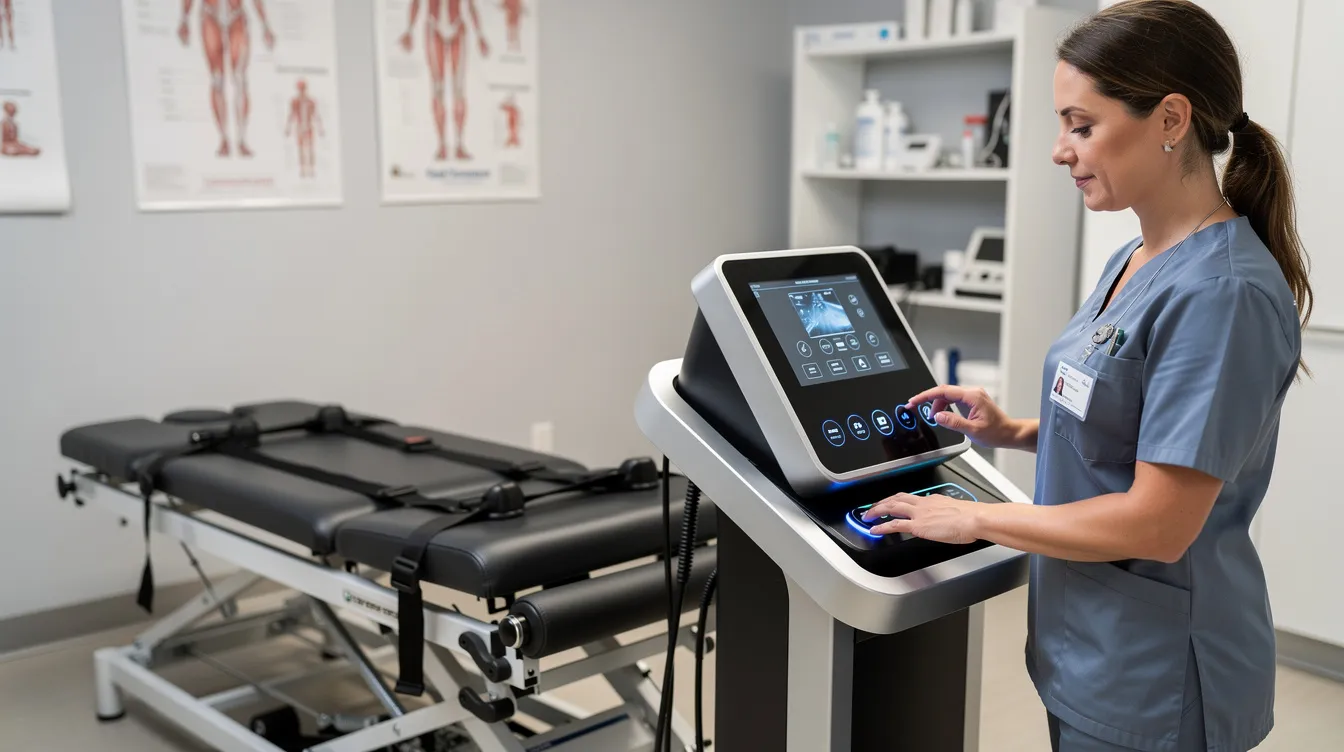
The chiropractor sets customised machine parameters – force, angle, and cycle duration – based on your body size, diagnosis, and tolerance
-
The table delivers cycles of gentle pulling and relaxation. You’ll feel a stretching sensation in your spine, which most patients describe as comfortable and even relieving
-
Before or after the decompression portion, you may receive chiropractic adjustments, soft tissue release on surrounding muscles, or guided rehab exercises
-
At the end of each visit, there’s a brief debrief to track your response and fine-tune settings for the next session
Normal immediate sensations include a feeling of lightness or stretch in the treated area. Mild soreness or fatigue afterwards is common, particularly in the first few sessions. If you experience severe pain or neurological worsening (increased numbness, weakness), alert the clinic immediately.
Non-surgical spinal decompression is safe when performed by professionals. Professional spinal decompression is generally safe when performed correctly, with forces adjusted gradually and the patient able to stop at any point.
Number of Sessions and Typical Recovery Timeline
How many sessions you’ll need depends on several factors, but here’s realistic, non-promissory guidance:
-
Trial phase (first 4–6 sessions): This short period over 2–3 weeks helps gauge your responsiveness. Some patients feel relief within this window; others, especially those with chronic conditions, take longer.
-
Full course for chronic disc issues: 8–20 sessions over 6–10 weeks is the most commonly recommended range across Singapore clinics. Chronic lower back pain may require more sessions than a recent, acute disc bulge.
-
Factors affecting speed of improvement: Age, how long symptoms have been present before starting treatment, occupation and daily demands, adherence to home exercises and posture advice, smoking status, and overall health all play a role.
Everton Chiropractic reviews progress at set milestones – not just at the end of a package. If you’re responding well, session frequency may taper. If progress is slower than expected, the approach is adjusted or onward referral is discussed. This is not a “one-size-fits-all” process.
Safety, Risks, and Who Should Avoid Spinal Decompression
Working adults are understandably cautious about back treatments – you want to minimise time off work and avoid making things worse. While non-surgical decompression is generally low risk when properly supervised, it is not suitable for everyone, and honest screening is essential.
Is Spinal Decompression Safe for Most People?
Non-surgical options avoid the risks associated with surgery. Decompression therapy involves no incisions, no injections, and no anaesthesia – you’re awake and in control throughout. The force and angle are adjustable in real time, with the chiropractor monitoring your comfort continuously. Common mild side effects include temporary soreness, light muscle stiffness, or short-lived discomfort – typically after the first few sessions as your body adapts. Rare complications are possible but uncommon when patients are properly screened. Everton Chiropractic conducts thorough screening for medical red flags before recommending decompression.
Contraindications and When Decompression Is Not Appropriate
Patients are generally disqualified from spinal decompression if they have severe spinal instability. Traction-based therapy is not suitable for patients with certain conditions like spinal infections or tumours. Specific scenarios where decompression is usually avoided or needs specialist clearance include:
-
Recent spinal fracture or acute spinal trauma
-
Spinal infections, tumours, or severe osteoporosis affecting bone integrity
-
Unstable spondylolisthesis or advanced vertebral instability
-
Cauda equina symptoms: loss of bladder or bowel control, severe saddle numbness – these require emergency referral
-
Recent spinal fusion or implanted hardware without surgeon clearance
-
Pregnancy – evaluated on a case-by-case basis depending on stage and treatment parameters
It is important to note that the World Health Organization advises against routine traction for chronic primary low-back pain, which underscores why proper clinical assessment – not self-diagnosis – is essential before beginning any decompression program. Share your full medical history, medications, and imaging with your chiropractor so they can assess your suitability thoroughly.
Red-Flag Symptoms: When to Seek a Specialist or Emergency Care First
Certain symptoms require urgent medical or surgical evaluation before any conservative treatment:
-
Sudden, severe weakness in a leg or arm that worsens rapidly – progressive neurological deficits
-
New loss of bladder or bowel control
-
Saddle numbness (loss of sensation in the groin or perineal area)
-
Severe trauma (fall from height, road traffic accident) with back pain
-
Unexplained fever, significant weight loss, or night pain associated with back pain
Everton Chiropractic will refer or co-manage with spine surgeons, neurologists, or GPs when any of these issues are suspected. Surgical decompression is performed by orthopedic surgeons to relieve nerve compression in cases where conservative care is not appropriate. For context, surgical spinal decompression (e.g. laminectomy) in Singapore private hospitals costs from SGD $15,000–$20,000+, while public hospital subsidised wards are significantly less – but surgery carries its own risks including anaesthesia, infection, and recovery time.
A BMJ systematic review found that while surgery may improve leg pain in the short term, long-term outcomes for pain and disability between surgical and non-surgical approaches can converge. This is why many patients and doctors prefer to trial conservative care first, reserving surgery for cases where red flags or severe compression demand it.
Maximising Results: Posture, Movement, and Home Care in 2026
Spinal decompression therapy addresses what happens on the treatment table, but what you do between sessions matters just as much. Singapore’s working adults spend long hours at laptops, on phones, riding the MRT, and sitting through meetings – all of which load the spine. This section focuses on simple, realistic changes that protect your spine and prolong the benefits of treatment.
Workstation and Work-From-Home Ergonomics
You don’t need expensive furniture to make meaningful changes:
-
Set your desk and chair height so your hips are slightly above your knees and your screen sits at eye level
-
In small HDB or condo setups, a laptop stand plus an external keyboard makes a significant difference to neck and upper back posture
-
Set reminders for micro-breaks every 30–45 minutes – stand, walk briefly, stretch your chest and hip flexors
-
Bring workstation photos to your appointment so your chiropractor can give tailored advice
For a deeper dive into posture adjustments, Everton Chiropractic’s guide on correcting posture covers practical methods for different environments.
Simple Movements and Stretches That Support Decompression
Gentle stretching can help decompress the spine at home. A few safe, low-impact options suitable for most office workers (confirm suitability during your assessment):
-
Knee-to-chest stretches and pelvic tilts: Lying on your back, gently pull one knee toward your chest to stretch the lumbar area. Pelvic tilts help activate core muscles and reduce lower back stiffness.
-
Cat–cow spinal mobility drills: On hands and knees, alternate between arching and rounding your spine. This maintains joint mobility and circulation between sessions.
-
Basic hip flexor stretches: Tight hip flexors from prolonged sitting pull on the pelvis and increase lumbar disc load. A simple lunge stretch addresses this.
-
Short neighbourhood walks: Even 15–20 minutes of flat-ground walking helps maintain disc hydration and overall spinal health.
These movements complement decompression by maintaining the mobility gains achieved on the table. For more on core stability and its role in spine health, explore Everton Chiropractic’s dedicated guide.
Sleep, Stress, and Long-Term Maintenance
-
Sleep position: For disc-related pain, side-lying with a pillow between the knees or lying supine with a pillow under the knees helps maintain neutral spinal alignment. Choosing the right pillow also matters for cervical disc issues.
-
Stress management: Stress and muscle tension can aggravate neck and back pain significantly. Simple breathing exercises – even 5 minutes of diaphragmatic breathing before bed – can reduce the baseline tension in your paraspinal muscles.
-
Long-term maintenance care: For people with high job demands or recurring flare-ups, periodic check-ins at Everton Chiropractic (monthly or quarterly) can catch early signs of regression before they become full-blown episodes. This is especially relevant for patients managing degenerative disc conditions.
Everton Chiropractic also provides services for neck pain and headaches, shoulder pain, and broader spinal adjustment programs – natural next steps for whole-body function and long-term life quality.

Common Challenges and How We Address Them
Many Singaporean patients share common concerns about time, consistency, and uncertainty about results. Here’s how we approach each one.
“I Don’t Have Time for Multiple Sessions Each Week”
A typical decompression session lasts 20–30 minutes, with check-in and check-out adding roughly 5–10 minutes either side. Many patients schedule sessions before or after work, or during lunch breaks. Everton Chiropractic works with you on flexible scheduling. Care plans are phased – if you respond well early, session frequency decreases, reducing the time commitment and overall costs as you progress.
“What If It Doesn’t Work for Me?”
This is a fair concern. Everton Chiropractic’s approach centres on setting clear goals and expectations at the start – measurable targets like walking tolerance, sitting tolerance, sleep quality, and pain levels. A trial period of 4–6 sessions provides an early signal of whether decompression is effective for your case. If progress is not satisfactory within a reasonable timeframe, the care plan is reassessed. This may mean adjusting the approach, integrating alternative treatments, or referring to a spine surgeon or neurologist. No ethical clinic should lock you into a rigid plan without milestone reviews.
Concerns About Pain During Decompression
Spinal decompression therapy treats slipped discs and related conditions through gentle, graduated force – not aggressive pulling. Traction forces are increased slowly and adjusted based on your real-time feedback. Normal sensations include a comfortable stretching or pulling feeling. If at any point you feel sharp pain, increased numbness, or discomfort beyond a mild stretch, the session can be paused or stopped immediately. It is a non-surgical treatment option for back pain relief that prioritises your safety and comfort at every step.
Conclusion and Next Steps
Spinal decompression is primarily for working adults with disc-related chronic pain and nerve symptoms – sciatica, herniated discs, degenerative disc disease, cervical nerve compression – who haven’t found adequate pain relief through rest, medication, or basic physiotherapy alone. It is a non-surgical, targeted option that can reduce pressure on compromised discs and nerves when basic care has not been enough. Spinal decompression therapy is categorised into non-surgical and surgical approaches, and the non-surgical path is where most patients should start. Costs in Singapore in 2026 are variable but predictable once you have a clear care plan, with session rates typically between SGD $80–$150 and full treatment programs ranging from roughly $400 to $2,500 depending on severity and duration.
Your next steps:
-
Note your main symptoms, their duration, and any red flags (bladder issues, severe weakness, unexplained weight loss)
-
Gather past reports or imaging if you have them
-
Book an introductory assessment at Everton Chiropractic to confirm whether decompression is suitable for your case
-
Discuss a realistic care plan and budget before committing to a block of sessions
Related topics you may want to explore:
FAQ: Spinal Decompression in Singapore 2026
Is spinal decompression painful?
Most patients describe the sensation as a gentle pulling or stretch – not pain. The decompression table’s forces are customised to your body and tolerance, and you can stop the session at any time if you feel discomfort. Mild soreness after the first few visits is normal and usually short-lived. If you experience sharp or worsening pain, that’s a signal to reassess the treatment parameters with your chiropractor.
How much does spinal decompression cost in Singapore in 2026?
A single non-surgical spinal decompression session in Singapore typically costs SGD $80–$150 at private clinics, with initial consultations ranging from SGD $58 to $180. Package deals for 5–12 sessions can lower the per-session rate to approximately SGD $70–$100. A typical treatment plan for moderate disc issues may total SGD $1,500–$2,500 including assessments and concurrent care. Exact costs are confirmed after your first assessment.
How quickly will I feel relief?
Some patients notice improvement within the first 4–6 sessions, while chronic cases may take several weeks of consistent treatment. Factors like the duration of your condition, your age, occupation, and adherence to home exercises all affect the timeline. No ethical clinic can guarantee specific timelines for pain relief.
Is spinal decompression better than surgery?
Spinal decompression is a conservative option often tried before surgery in appropriate cases. It avoids the risks, recovery time, and higher costs of surgical intervention. However, severe conditions – such as cauda equina syndrome, progressive neurological deficits, or major structural instability – may require immediate surgical opinion. Research shows that long-term pain and disability outcomes can sometimes converge between surgical and non-surgical approaches, which is why conservative care is usually the first step.
Can I do spinal decompression if I already had back surgery?
It depends on the type and timing of your surgery. Patients with recent spinal fusion or implanted hardware generally need surgeon clearance before any form of traction therapy. Each case is evaluated individually – bring your surgical records to your assessment so your chiropractor and doctor can determine whether decompression is safe for you.
Do I need an MRI before starting decompression?
An MRI is helpful in complex or persistent cases, as it provides detailed imaging of disc and nerve involvement. However, many patients can be assessed clinically first based on their symptoms, health history, and neurological examination. Everton Chiropractic will advise whether imaging is recommended as part of your assessment.
Where is Everton Chiropractic located and how do I book?
Everton Chiropractic is located at 4 Everton Park, #01-50, Singapore 080004, in the central Singapore area. You can book your introductory assessment (SGD $58 for new patients) through their website at evertonchiropractic.com.sg or contact the clinic directly via phone or WhatsApp.