Aging causes chronic stiffness because long-lived connective tissues stiffen with time, muscle fibers shift toward slower, less elastic types, and the nervous system changes how it recruits muscles around a joint. These three tracks run in parallel, not in isolation, which is why stiffness tends to creep in rather than arrive as one clear event.
The clearest biological evidence comes from a PMC review of resting muscle stiffness, which points to extracellular matrix (ECM) remodeling as a primary driver, backed by longitudinal data from BMC Geriatrics showing measurable increases in quadriceps stiffness over time. The Merck Manual’s gait research adds that calf muscle weakness quietly reshapes how older adults walk long before they notice it. Everton Chiropractic’s clinical experience with aging patients echoes this: stiffness rarely has one cause, and treating it as a single problem usually fails.
Start with these five moves today:
- Move for two to three minutes every 30 to 45 minutes if you sit for long stretches.
- Do a five-minute joint-by-joint warm-up before your first big task of the day.
- Add two short strength sessions a week, even just bodyweight squats and rows.
- Drink water consistently across the day rather than in a few large gulps.
- If stiffness lasts longer than an hour each morning or comes with swelling, get it checked.
Quick fact: In one 18-month study of community-dwelling older adults, quadriceps stiffness rose by roughly 0.76 kPa, a measurable shift in a muscle most people use dozens of times a day just standing up.
Key Takeaways
Chronic stiffness in aging adults comes from overlapping changes in muscle tissue, tendons, joints, and nerve control, and most of it responds to targeted movement rather than passive rest.
| Point | Details |
|---|---|
| ECM changes drive passive stiffness | Collagen cross-linking, glycation, and long-lived elastic fiber damage stiffen muscle tissue independent of joint disease. |
| Tendon compliance shifts unpredictably | Some tendon regions get more compliant with age, delaying force transfer and adding to the feeling of stiffness. |
| Joint stiffness has a time signature | Stiffness easing in 10 to 15 minutes usually points to mechanical wear; stiffness lasting over an hour suggests inflammation. |
| Nervous system changes add resistance | Increased antagonist co-activation and reduced proprioception make movement feel stiffer even in healthy tissue. |
| Strength training beats supplements | Progressive resistance and multimodal programs show real benefit; glucosamine and chondroitin show little reliable long-term effect. |
| Personalized assessment finds the actual cause | Everton Chiropractic builds tailored plans from functional testing and history rather than treating all stiffness the same way. |
Table of Contents
- How Muscles and the Extracellular Matrix Change With Age
- What Happens to Tendons and the Muscle-Tendon Complex
- Why Do Joints Get Stiffer as Cartilage and Fluid Decline?
- How Do Nervous-System Changes Make Movement Feel Stiffer?
- Can Inflammation and Chronic Disease Explain Some of the Stiffness?
- Which Everyday Habits Make Stiffness Worse?
- What Interventions Actually Reduce Chronic Stiffness?
- What Is a Practical Daily Routine to Reduce Stiffness?
- When Does Stiffness Need Medical Review?
- How Do Chiropractors and Physiotherapists Approach Age-Related Stiffness?
- Why Movement Matters More Than Blaming Age
- Ready for a Personalized Plan for Your Stiffness?
- Sources
- FAQ
How Muscles and the Extracellular Matrix Change With Age
Muscle tissue does not just get weaker with age. It gets structurally different, and that difference is a major reason stiffness feels like it accumulates rather than fluctuates.
One shift involves fiber type. Muscles are built from fast-twitch (type II) and slow-twitch (type I) fibers, and aging tends to favor the slow type as fast fibers atrophy faster. Slow fibers generate less explosive force, but they also behave differently under passive load, contributing to the muscle feeling tighter even at rest. This fiber-type shift, documented across multiple aging studies, partly explains why an older adult’s calf or thigh can feel dense and resistant to stretch even without any specific injury.
The extracellular matrix (ECM), described in the PMC review, sits in the extracellular matrix, the scaffolding of collagen, elastin, and other proteins that surrounds muscle fibers. Three things happen to this scaffolding over decades:
- Collagen fibers cross-link more heavily, making the matrix less able to stretch and recoil.
- Glycation, a process where sugar molecules bond to proteins, stiffens collagen further and is accelerated by high blood sugar.
- Fibrosis, an overgrowth of connective tissue, gradually replaces some muscle fiber volume with denser, less elastic material.
Elastin deserves particular attention here because of how it ages. Elastic fibers are some of the longest-lived proteins in the human body, and a PMC review on elastic fiber mechanics notes they endure billions of stretch-recoil cycles across a lifetime without being replaced. That endurance comes at a cost. Oxidative damage and cross-linking accumulate in these fibers year after year, and because the body rarely rebuilds them once mature, the damage is largely permanent. This is one reason stiffness in older adults often resists quick fixes: you are not dealing with inflamed tissue that will calm down, you are dealing with structural wear that took decades to form.
The functional consequence is straightforward. Stiffer passive tissue means more resistance to movement at the start of every rep, every step, every reach overhead. Muscles have to work harder just to move through the same range of motion they used to clear without effort. That is part of why aging and muscle tightness show up together so consistently: the muscle is not necessarily “tighter” in the sense of active contraction, it is structurally less compliant.
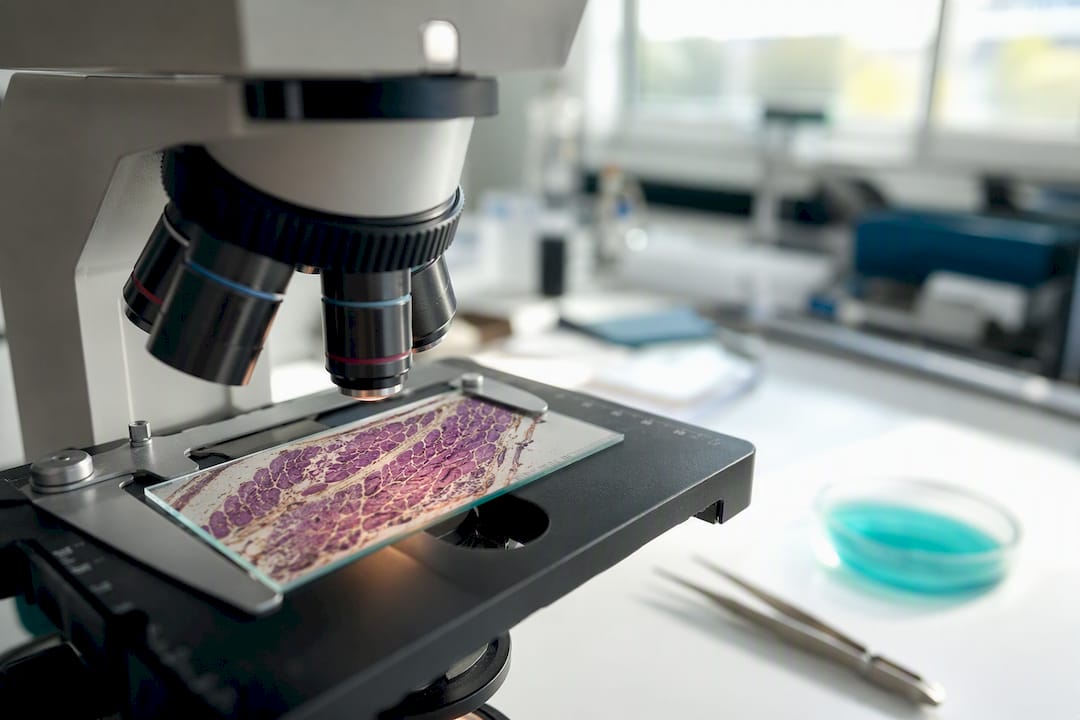
The BMC Geriatrics longitudinal study adds a critical detail that cross-sectional research misses: stiffness measured in the same people over 18 months actually increased, rather than just appearing higher in older groups compared to younger ones. That distinction matters, because it confirms this is a progressive process happening within individuals, not just a difference between age groups. Reduced range of motion, more perceived effort during ordinary tasks, and a general sense of being “tight” without any specific injury all trace back to this ECM and fiber-type story.
What Happens to Tendons and the Muscle-Tendon Complex
Tendons age differently than muscle, and that difference complicates the stiffness picture in ways worth understanding.
Tendons are almost entirely collagen, so they experience the same cross-linking and glycation processes affecting the muscle ECM. That sounds like it should reduce stiffness, but it often does the opposite functionally, because a more compliant tendon delays force transfer and forces the muscle to work through a larger range before producing useful movement.
This creates a strange interaction: muscle stiffness rises while tendon compliance shifts, and the net effect on a joint depends on which change dominates in that specific muscle-tendon unit. The Achilles tendon, calf muscles, and hip flexors are common sites where this tug-of-war shows up as reduced spring in the step and heavier-feeling movement, tracking with the gait changes described in Merck Manual’s clinical data on older adults.
There is a silver lining buried in the muscle-tendon research. The Marcucci review notes that eccentric muscle actions, the kind used when lowering into a chair or descending stairs, tend to be relatively preserved compared to concentric (shortening) actions in older adults. That matters for rehab:
- Eccentric-focused strength work can often be loaded more heavily than concentric work for the same perceived effort.
- Training the muscle-tendon unit through controlled eccentric loading improves tendon stiffness regulation better than passive stretching alone.
- Isolated static stretching does little for tendon structure since tendons respond to load, not lengthening at rest.
For anyone designing a rehab plan around age-related stiffness, this means the muscle-tendon unit needs graded loading, not just flexibility work. A physical therapist or chiropractor targeting this complex will typically build in eccentric strength elements specifically because the tissue responds to that kind of stimulus more than to stretching.
Why Do Joints Get Stiffer as Cartilage and Fluid Decline?
Joint stiffness has its own mechanical story, separate from muscle and tendon changes, and it is the one most people associate with “getting older.”
Cartilage, the smooth cushioning tissue at the end of bones, gradually thins with age. Synovial fluid, which lubricates the joint and delivers nutrients to cartilage, tends to decrease in volume and viscosity. Ligaments lose some of their elasticity too. Together, according to MedlinePlus’s overview of aging joints, these changes reduce range of motion and can progress toward osteoarthritis, where cartilage breakdown triggers inflammation, pain, and visible joint changes.
Not all joint stiffness signals arthritis, though, and telling the two apart matters for how you respond.
- Non-inflammatory stiffness, from general wear or inactivity, usually eases within 10 to 15 minutes of moving around.
- Inflammatory stiffness, the kind linked to rheumatoid arthritis or other inflammatory conditions, commonly lasts longer than an hour and does not respond quickly to movement.
- Joint swelling, warmth, or redness alongside stiffness points toward an inflammatory or infectious process rather than simple mechanical wear.
- Stiffness confined to one side or one joint, especially after minor trauma, deserves a closer look rather than assuming it is “just aging.”
If stiffness is limiting basic function, climbing stairs, gripping objects, or walking a normal distance, that is the point to get an assessment rather than wait it out. Imaging is not always necessary at first; a clinician can often tell a lot from how a joint moves, how it feels on palpation, and how long stiffness persists.
How Do Nervous-System Changes Make Movement Feel Stiffer?
Not all stiffness comes from the muscles or joints themselves. Some of it is generated by the nervous system’s strategy for controlling movement, and this piece gets overlooked constantly.
One well-documented change is increased antagonist co-activation. When you bend your elbow, your biceps contracts while your triceps should relax. In older adults, that relaxation is often incomplete: the opposing muscle stays partly active during the movement, creating internal resistance that has nothing to do with tissue elasticity. This co-activation raises the energy cost of ordinary movement and can feel exactly like joint or muscle stiffness, even when the tissue itself is healthy.
A chair rise is a good example of how this shows up in daily life. Standing up from a seated position requires coordinated hip, knee, and ankle extension with minimal opposing resistance. Older adults frequently show more co-contraction through this movement, along with a shifted strategy: more reliance on the arms for push-off, a longer lean-forward phase, and more variable timing between joints. None of that shows up on an X-ray, but it makes standing up feel effortful and stiff.
Proprioception, the sense of where your joints are in space without looking, also declines with age. Reduced proprioceptive input means the nervous system has less precise feedback to fine-tune movement, so it often compensates with extra muscle tension as a safety margin. That compensation reads to the person experiencing it as tightness or stiffness, even though the root cause is sensory, not muscular.
Pro Tip: Motor-control retraining, slow, deliberate movement practice with verbal or tactile cueing, can reduce unnecessary co-contraction faster than stretching. Ask a physiotherapist or chiropractor about “movement quality” drills rather than just flexibility exercises if this sounds like your situation.
Can Inflammation and Chronic Disease Explain Some of the Stiffness?
Systemic health plays a bigger role in chronic stiffness than most people assume, and it is one of the more actionable pieces of this whole puzzle.
Low-grade chronic inflammation, sometimes called “inflammaging,” tends to rise gradually across adulthood even without a diagnosed disease. This background inflammation promotes fibrosis and ongoing ECM remodeling, feeding directly into the muscle stiffening process described earlier. It is not the dramatic inflammation of an infection. It is a slow-burning signal that keeps tissue repair processes running in a way that favors stiffness over flexibility.
Diabetes deserves specific mention because of how directly it accelerates the glycation process. Elevated blood sugar speeds up the cross-linking of collagen molecules throughout the body, which means someone with poorly controlled diabetes can develop connective-tissue stiffness well beyond what their chronological age alone would predict. This is one reason blood sugar management gets discussed in joint and mobility clinics, not just endocrinology offices.
Medications matter too, and this list is worth reviewing with a prescribing doctor rather than adjusting on your own:
- Statins are linked to muscle aches and stiffness in some patients.
- Certain antihistamines and antidepressants can cause muscle tension as a side effect.
- Diuretics can contribute to dehydration, which independently worsens muscle tightness.
None of this means medication should be stopped without medical guidance. It means stiffness that appears or worsens after starting a new prescription is worth mentioning at your next appointment, since a simple adjustment sometimes resolves what felt like an unavoidable aging symptom.
Which Everyday Habits Make Stiffness Worse?
Biology sets the stage, but daily habits decide how much stiffness actually shows up, and this is the part readers have the most control over.
Inactivity is the single biggest modifiable factor. Movement circulates synovial fluid through the joint and keeps muscle fibers loaded in a way that maintains tissue length. According to guidance from the Better Health Channel, extended inactivity accelerates cartilage changes and flexibility loss that would otherwise progress more slowly with regular activity. Long, unbroken sitting is a specific version of this problem: hip flexors shorten, synovial fluid pools rather than circulates, and the muscles around the spine stiffen from staying in one position too long.
Hydration is a smaller factor but a real one. Muscle tissue relies on adequate fluid balance to maintain its elasticity, and mild chronic dehydration, common in older adults whose thirst response weakens with age, contributes to a persistent sense of tightness that clears up faster than people expect once fluid intake improves.
Body weight changes the mechanical load on weight-bearing joints directly. Extra load on the knees and hips accelerates cartilage wear and increases the muscular effort needed for basic movement, compounding the stiffness already coming from tissue-level aging.
A few practical countermeasures:
- Set a timer for movement breaks every 30 to 45 minutes if your day involves long sitting.
- Aim for consistent water intake across the day rather than catching up in the evening.
- Sleep in a position that keeps the spine relatively neutral; a pillow between the knees helps side sleepers with hip alignment.
- Build a short daily mobility routine around the joints that feel tightest first thing in the morning.
What Interventions Actually Reduce Chronic Stiffness?
Not every intervention marketed for stiffness has evidence behind it, and the gap between what sounds helpful and what actually works is wide enough to matter.
Resistance training has the strongest evidence base. Building strength around a joint reduces the relative load on passive tissue and, per the Harvard Health summary on morning stiffness, directly reduces stiffness symptoms rather than just masking them. Multimodal programs, ones combining strength, mobility, and balance work, tend to outperform any single approach because mobility decline in aging is multifactorial, meaning a single-lever fix rarely addresses the whole problem.
| Intervention | Evidence level | Typical benefit |
|---|---|---|
| Progressive resistance training | Strong, consistent across studies | Improved strength, reduced passive stiffness, better function |
| Eccentric loading | Moderate to strong, tendon-specific | Improved tendon stiffness regulation, often better tolerated than concentric work |
| Multimodal programs (strength + mobility + balance) | Strong for functional outcomes | Better real-world mobility than any single intervention alone |
| Manual therapy (chiropractic, physiotherapy) | Moderate, condition-dependent | Short-term relief, often paired with active rehab for lasting change |
| Static stretching alone | Weak for structural change | Temporary range-of-motion gains, minimal effect on tissue stiffness itself |
| Glucosamine/chondroitin supplements | Weak, inconsistent long-term data | Little reliable benefit beyond placebo in most studies |
A well-built program for someone dealing with chronic stiffness usually includes progressive resistance work two to three times weekly, targeted eccentric loading for tendons under strain, a short daily mobility routine, and some element of motor-control or balance training. Improvement timelines vary, but most people doing consistent multimodal work notice meaningful change in how their joints feel within six to eight weeks, with strength gains continuing well beyond that.
The caveat worth repeating: supplements marketed for joint stiffness, glucosamine and chondroitin being the most common examples, do not show reliable long-term benefit in the research Harvard Health reviewed. Money and hope spent there are usually better redirected toward a structured movement program or a clinician-guided assessment, especially if any red-flag symptoms are present.
What Is a Practical Daily Routine to Reduce Stiffness?
Consistency beats intensity here. A short routine done daily outperforms an occasional long session almost every time.
- Morning (5 to 7 minutes): Start with gentle active movement, ankle circles, hip rotations, and slow spinal rolls, before a warm shower loosens tissue further. Follow with a brief strength activation, like a few bodyweight squats or wall push-ups, to wake up the muscles that will carry you through the day.
- Daytime checklist: Take a movement break every 30 to 45 minutes, check your posture against a mirror or window reflection once an hour, and keep water within reach so hydration happens without conscious effort.
- Midday or evening mobility block (10 to 15 minutes): Work through hip openers, thoracic spine rotations, shoulder circles, and ankle dorsiflexion stretches. This single block covers the joints most affected by prolonged sitting and age-related stiffness.
- After activity: A brief cool-down of slow movement, not aggressive stretching, helps muscles settle rather than tighten up as they cool.
Pro Tip: Stack your mobility routine onto something you already do daily, like right after brushing your teeth or during your morning coffee. Habit stacking makes a five-minute routine far more likely to stick than relying on willpower alone.
When Does Stiffness Need Medical Review?
Most age-related stiffness is a slow, manageable process. Some signs, though, mean it is time to stop self-managing and get evaluated.
- Rapid onset of stiffness over hours or days, rather than a gradual buildup over months.
- Fever, unexplained weight loss, or general malaise alongside joint or muscle symptoms.
- Numbness, weakness, or changes in bowel or bladder function, which point toward a neurological cause.
- Joint swelling paired with heat or redness, suggesting inflammation or infection rather than mechanical wear.
- Stiffness that lasts for hours and does not improve with movement, a pattern more typical of inflammatory disease than ordinary aging.
A primary care physician is the right first stop for most new symptoms. A physiotherapist or chiropractor is well suited to mechanical, movement-related stiffness once serious disease has been ruled out. A rheumatologist becomes relevant if inflammatory markers or prolonged morning stiffness point toward autoimmune disease, and an orthopedist is the right call when imaging shows structural joint damage that may need surgical input.
Before any appointment, jot down your symptom timeline, current medications, any recent infections or injuries, and what function you actually want back, whether that is walking the dog without discomfort or getting through a full round of golf.
How Do Chiropractors and Physiotherapists Approach Age-Related Stiffness?
Clinical assessment for chronic stiffness typically starts wider than most patients expect. A thorough history covers not just the joint that hurts but sleep quality, activity levels, and medication use. Functional tests, sit-to-stand repetitions, gait speed, single-leg balance, give clinicians a real-world read on how stiffness is affecting daily function, not just what a joint looks like on a table.
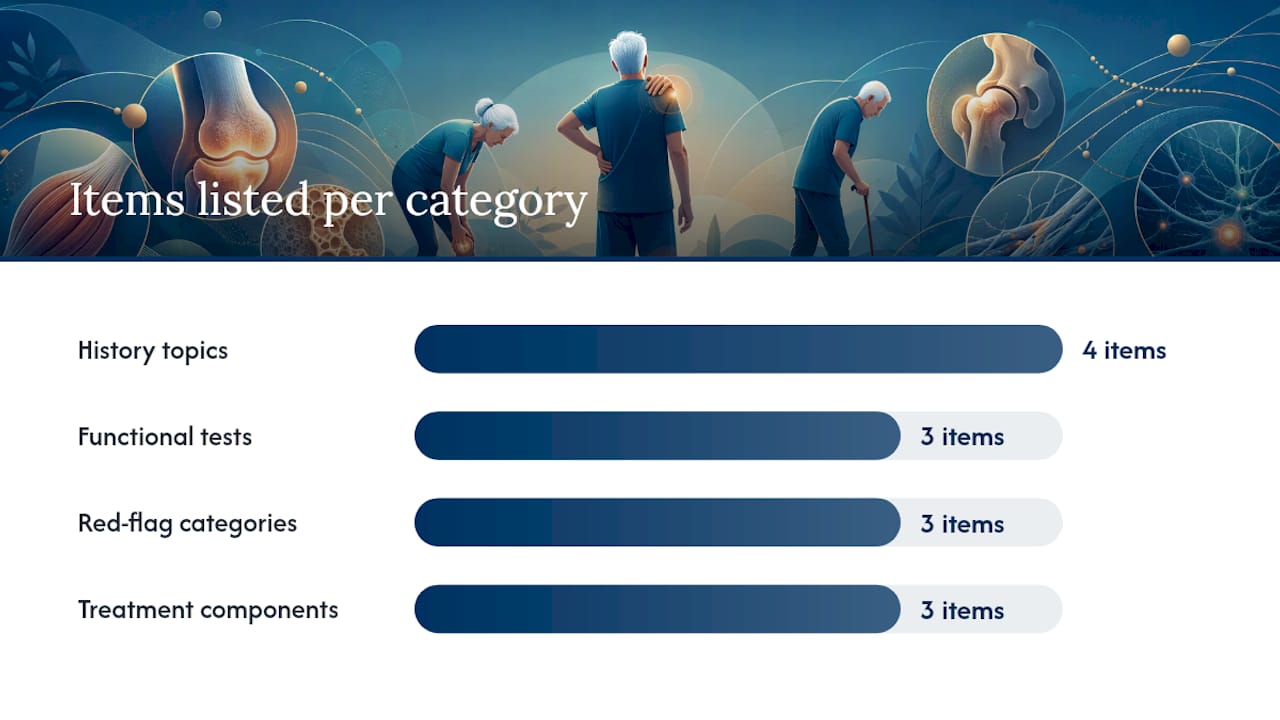
A typical assessment checklist includes:
- A detailed history covering symptom onset, duration, and aggravating or relieving factors.
- Functional movement tests like sit-to-stand and gait assessment.
- Strength measures targeting the muscles most involved in the affected joint.
- A red-flag screen ruling out inflammatory, neurological, or systemic causes before building a mechanical treatment plan.
Everton Chiropractic builds treatment plans from that same foundation, tailoring strength work, movement retraining, and manual therapy, when clinically appropriate, to what each patient’s assessment actually shows rather than applying one template to everyone. A typical case might look like this: a patient in their early sixties reports morning stiffness in the lower back that eases within twenty minutes but returns after long periods at a desk. Assessment reveals reduced hip mobility and mild core weakness rather than any joint pathology. A plan combining spinal mobility work, targeted hip and core strengthening, and posture coaching for desk hours leads to a noticeable reduction in morning stiffness within several weeks, with the patient able to sit through a full workday without needing to stand and stretch every hour.
Personalized assessment matters because two people with identical complaints of “stiff back in the morning” can have completely different underlying drivers, one mechanical, one postural, one linked to inactivity, and a generic stretching handout will only help one of them.
This is the core of Everton Chiropractic’s approach to senior mobility: evidence-informed care built around the individual’s actual movement patterns, not a one-size template for “getting older.”
Why Movement Matters More Than Blaming Age
Most of what people call “just getting older” is more modifiable than they assume. The tissue changes are real, but the degree to which they limit your life depends heavily on what you do with the muscles, tendons, and joints you still have. Blaming stiffness entirely on age can become a reason to stop moving, which then accelerates the very process you are worried about.
Realistic expectations help here. You are not chasing the joints you had at twenty five. You are working to keep the ones you have now moving as well as possible for as long as possible, through consistent small efforts rather than dramatic fixes. Pair that daily self-care with a proper assessment when something feels off, and treat red-flag symptoms as a reason to get checked promptly, not a reason to wait and see.
Ready for a Personalized Plan for Your Stiffness?
If reading through all these mechanisms left you wondering which ones actually apply to your body, that is exactly the gap a proper assessment closes. Everton Chiropractic offers assessments that map your specific pattern of stiffness, whether it traces back to muscle and tendon changes, joint wear, or the motor-control shifts described above, and builds a tailored plan around it rather than handing you a generic stretching sheet.
The clinic’s personalized chiropractic treatment model combines gentle spinal care, targeted mobility work, and strength-focused rehab based on what your assessment actually shows. If you are dealing with red-flag symptoms, sudden onset, fever, neurological signs, see a physician or emergency care first; Everton Chiropractic works alongside medical referrals when that is the appropriate path. For everyday chronic stiffness that is limiting how you move, book an assessment for long-term pain relief and find out what is actually driving your specific stiffness.
Sources
- Increase of resting muscle stiffness, a less considered component of age-related skeletal muscle impairment (Marcucci et al.)
- Age-related changes in quadriceps stiffness and strength: a longitudinal observation in community-dwelling older adults | BMC Geriatrics
- Gait Disorders in Older Adults – Geriatrics – Merck Manual Professional Edition
- What makes my joints stiff in the morning? – Harvard Health
This article is general information, not a substitute for advice from a qualified doctor. Consult a qualified healthcare professional about your own circumstances before acting on anything here.
FAQ
Why does aging cause stiffness in the first place?
Aging stiffens connective tissue through collagen cross-linking and elastic fiber damage, shifts muscle toward slower fiber types, and changes how the nervous system coordinates opposing muscles, all of which raise resistance to movement.
How do I stop muscle stiffness as I get older?
Progressive resistance training, daily mobility work, and consistent hydration address the biggest modifiable drivers; a tailored mobility program and clinical assessment can identify which specific mechanism is affecting you most.
Is it true that getting older always means more pain and difficulty?
Not entirely. Much of the stiffness and discomfort linked to aging comes from modifiable factors like inactivity and weak surrounding muscles, and structured movement programs measurably reduce symptoms at any age.
What are signs that someone is aging well physically?
Stable or improving gait speed past age 70, morning stiffness that clears within 10 to 15 minutes, and the ability to complete daily functional tasks like stair climbing without significant effort are all positive markers.
When should I see a doctor about stiffness instead of managing it myself?
See a doctor promptly if stiffness comes on rapidly, lasts more than an hour without easing, or comes with fever, swelling, numbness, or weakness, since these point toward causes beyond ordinary age-related wear.
Recommended
- How to Prevent Age Related Stiffness Daily – Everton Chiropractic
- How the Humid Singapore Weather Can Actually Affect Joint Stiffness – Everton Chiropractic
- How the Humid Singapore Weather Can Actually Affect Joint Stiffness – Everton Chiropractic
- Morning Stiffness Relief: What Actually Works – Everton Chiropractic