
Preventive spinal care is defined as a proactive set of therapies and habits designed to maintain spinal alignment, strengthen supporting muscles, and reduce the risk of chronic back pain before symptoms develop. Back pain affects 8 out of 10 people at some point in their lives. That statistic makes the types of preventive spinal care not just useful but necessary for anyone who wants to stay active and pain-free long term. The core categories include exercise therapy, manual chiropractic adjustments, posture and movement modification, and lifestyle factors. Each targets a different layer of spinal health, and together they form a complete prevention strategy.
1. What are the main types of preventive spinal care?
Preventive spinal care, also called spinal health maintenance in clinical settings, covers any method that protects the spine before damage occurs. The four primary categories are exercise-based therapy, manual therapy (including chiropractic adjustments), posture and movement habits, and lifestyle modifications. Each category addresses a distinct vulnerability in the spine. Combining two or more categories produces better outcomes than relying on any single method alone.
2. Exercise therapy: planks, Pilates, and core strengthening
Exercise strengthens spinal muscles to offload joints and discs, making it the most critical preventive strategy available. When your core muscles are strong, they act as a natural brace around the lumbar spine, reducing the load placed on vertebrae and discs during daily movement.
Plank exercises are the most direct way to activate deep core stabilizers. Standard plank protocols recommend holds of 10–30 seconds for 2–5 repetitions, focusing on abdominal activation throughout. This duration is long enough to recruit stabilizing muscles without encouraging compensatory patterns that could strain the lower back.
Pilates builds on that foundation by training postural awareness alongside strength. Unlike generic gym workouts, Pilates cues you to maintain spinal neutral through every movement, which translates directly to better posture during sitting and standing. Complementary exercises like bird dogs and dead bugs reinforce the same neuromuscular patterns with lower injury risk.
- Plank holds: 10–30 seconds, 2–5 reps, focus on drawing the navel toward the spine
- Bird dogs: Opposite arm and leg extension from a tabletop position, 8–10 reps per side
- Dead bugs: Supine core activation with controlled limb lowering, 8–10 reps per side
- Pilates mat work: Cat-cow, spine stretch forward, and single-leg circles for mobility and control
Pro Tip: Start with 10-second plank holds three times per week. Add five seconds every two weeks. Consistency over intensity is what builds the muscular brace your spine depends on.
3. Manual therapies: chiropractic adjustments and hands-on care
Preventive chiropractic care acts like routine tune-ups to catch vertebral imbalances before they progress into chronic pain or structural damage. This is fundamentally different from acute treatment, which addresses pain after it starts. Maintenance care addresses the underlying mechanics that cause pain in the first place.
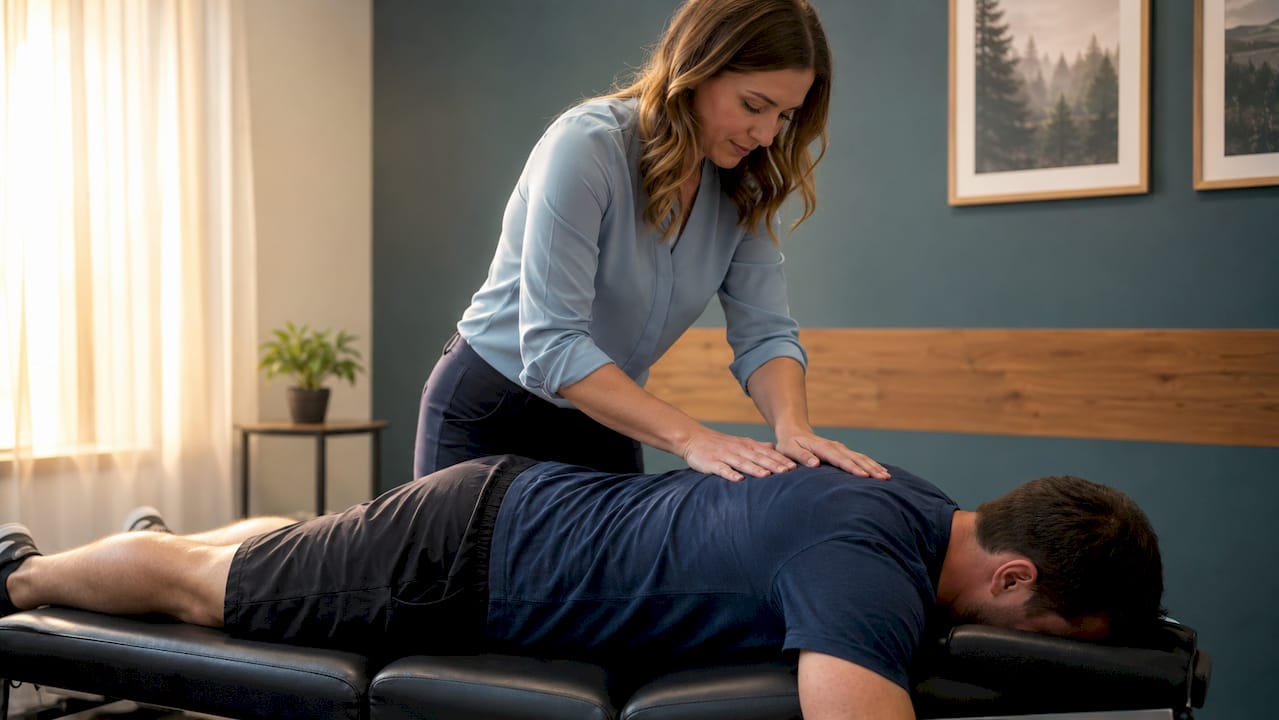
Two techniques dominate preventive chiropractic practice. The Diversified technique uses precise manual thrusts to restore joint motion and correct segmental misalignment. The Activator Method uses a small spring-loaded instrument to deliver low-force adjustments, making it well-suited for people who prefer gentler care or have osteoporosis.
Preventive spinal adjustments typically follow a graduated model: initial visits at 2–3 times per week to address existing imbalances, transitioning to weekly, then monthly maintenance once spinal balance is achieved. This graduated approach prevents overtreatment while keeping the spine in functional alignment. You can read more about how chiropractic prevents degeneration over time at Evertonchiropractic.
Adjunct therapies extend the benefits of manual care. Laser therapy modulates tissue inflammation at a cellular level, while shockwave therapy stimulates healing in tendons and ligaments surrounding the spine. Newer preventive modalities like laser and shockwave therapies modulate neuroimmune pathways to prevent degenerative progression, particularly in older adults.
- Diversified technique: High-velocity, low-amplitude thrusts targeting specific spinal segments
- Activator Method: Instrument-assisted, low-force adjustments for sensitive patients
- Laser therapy: Reduces inflammation and accelerates tissue repair between adjustments
- Shockwave therapy: Promotes healing in spinal ligaments and surrounding soft tissue
Pro Tip: Ask your chiropractor which technique suits your age, bone density, and activity level. A 30-year-old athlete and a 60-year-old desk worker need different adjustment protocols.
4. Posture and movement modification for spinal protection
Dynamic posture is healthier than static perfect posture. Locking into one “ideal” position for hours causes localized muscle fatigue and disc compression. Frequently shifting your seated position distributes load across different spinal tissues, preventing any single structure from bearing too much stress.
The single most effective desk habit is the movement break. Regular movement breaks every 30–45 minutes during sedentary work prevent lumbar disc compression and cumulative damage. Evening exercise does not fully reverse the compression that builds up from hours of uninterrupted sitting, so the timing of movement matters as much as the movement itself.
Smart lifting technique is equally important. Bending at the hips and knees rather than the lower back keeps the lumbar spine in neutral and transfers load to the powerful muscles of the legs and glutes. This single habit prevents a large proportion of acute disc injuries that occur during everyday tasks like picking up groceries or lifting a child.
For desk workers, workday spinal care practices at Evertonchiropractic offer a detailed breakdown of ergonomic setups and movement routines.
- Stand or walk for 2–3 minutes every 30–45 minutes during desk work
- Set your monitor at eye level to prevent forward head posture
- Keep knees at 90 degrees and feet flat on the floor when seated
- Use a lumbar support cushion if your chair lacks lower back support
- Perform a 60-second standing stretch (chest opener, hip flexor stretch) every hour
5. Lifestyle factors that determine spinal health outcomes
Sleep posture directly affects spinal alignment for roughly a third of every day. Supportive pillows keep the head and neck in neutral alignment overnight, preventing the cumulative strain that builds from sleeping in a flexed or extended cervical position. Side sleepers benefit from a thicker pillow; back sleepers need a thinner one that keeps the neck level with the thoracic spine.
Hydration is a direct input to spinal disc health. Intervertebral discs are composed largely of water, and they depend on adequate hydration to maintain their height and shock-absorbing capacity. Dehydrated discs compress more easily under load, accelerating degenerative changes over time.
Body weight has a measurable effect on spinal load. Every extra pound of body weight adds disproportionate compressive force to the lumbar discs and facet joints. Maintaining a healthy weight through low-impact activities like swimming, cycling, or walking reduces that baseline load without adding the impact stress of running or jumping.
Smoking reduces blood flow to spinal discs and slows tissue repair. It is one of the most underappreciated risk factors for disc degeneration. Eliminating smoking is a preventive measure for back pain that costs nothing and delivers benefits across every tissue in the body.
| Lifestyle factor | Effect on the spine | Recommended action |
|---|---|---|
| Sleep posture | Affects cervical and lumbar alignment for 6–8 hours nightly | Use a pillow matched to your sleep position |
| Hydration | Maintains disc height and shock absorption | Drink adequate water throughout the day |
| Body weight | Excess weight increases lumbar compressive load | Pursue low-impact exercise to manage weight |
| Smoking | Reduces disc blood supply and slows repair | Quit smoking to protect disc tissue |
| High-impact activity | Repeated impact stresses discs and facet joints | Balance high-impact sports with low-impact recovery |
For people managing age-related spinal changes, gentle spinal care for seniors at Evertonchiropractic covers adapted lifestyle strategies that protect the spine without restricting activity.
Key takeaways
The most effective approach to preventive spinal care combines exercise therapy, chiropractic maintenance, posture habits, and lifestyle modifications because no single method addresses every layer of spinal vulnerability.
| Point | Details |
|---|---|
| Exercise is the foundation | Planks, Pilates, and bird dogs build the muscular brace that offloads spinal joints and discs. |
| Chiropractic care is maintenance, not just treatment | Graduated adjustment schedules catch misalignment before it becomes chronic pain. |
| Movement breaks protect discs | Standing or walking every 30–45 minutes prevents lumbar compression that evening exercise cannot fully reverse. |
| Sleep and hydration matter daily | A supportive pillow and adequate water intake directly maintain disc height and spinal alignment overnight. |
| Lifestyle choices compound over time | Smoking, excess weight, and unbroken sitting each accelerate disc degeneration in ways that are difficult to reverse. |
What I’ve learned about making preventive spinal care actually stick
Most people understand that they should exercise more and sit less. The gap is not knowledge. It is implementation. What I have seen consistently is that people who treat spinal care as a scheduled appointment, whether that is a weekly Pilates class or a monthly chiropractic visit, maintain their results far better than those who rely on motivation alone.
The other thing worth saying plainly: waiting for pain to appear before acting is the most expensive strategy available. By the time you feel a disc problem, the degeneration has often been building for years. Preventive care is not about being cautious. It is about staying ahead of a process that is already underway in most adults over 30.
The multi-modal approach matters more than any single technique. I have seen patients who exercised religiously but still developed chronic pain because their posture at work was compressing their lumbar spine for nine hours a day. The exercise helped, but it could not fully compensate for the sustained mechanical load. Combining exercise with movement breaks, posture correction, and periodic chiropractic adjustments closes those gaps.
Start with one change, not five. Add a second habit once the first is automatic. That is how preventive spinal care becomes a lifestyle rather than a short-term project.
— Aman
Start your preventive spinal care plan with Evertonchiropractic
Evertonchiropractic, led by Dr. Richard, offers personalized preventive spinal care plans that combine chiropractic adjustments, posture correction, and adjunct therapies like shockwave and laser treatment. The clinic’s approach is built around your specific lifestyle, activity level, and long-term goals, not a generic protocol.
If you are ready to move from reactive pain management to proactive spinal health, the lower back pain relief guide at Evertonchiropractic is the best place to start. It covers evidence-informed strategies for lasting relief without medication and explains exactly what a preventive care plan looks like in practice. You can also explore spinal alignment treatment options to understand what hands-on care involves before your first visit.
FAQ
What is preventive spinal care?
Preventive spinal care is a set of proactive therapies and habits, including exercise, chiropractic adjustments, and posture correction, designed to maintain spinal alignment and prevent chronic pain before it develops.
How often should you get preventive chiropractic adjustments?
Preventive spinal adjustments typically start at 2–3 visits per week, then transition to monthly maintenance once spinal balance is achieved. The exact frequency depends on your age, activity level, and baseline spinal health.
When should you see a professional about back pain?
Morning stiffness lasting more than one hour or persistent back pain lasting more than two weeks are clinical signs that require professional spinal evaluation rather than self-managed care.
Can exercise alone prevent back pain?
Exercise is the most critical single preventive measure, but it cannot compensate for poor posture, dehydration, or unbroken sitting. A complete preventive approach combines exercise with movement breaks, sleep posture, and periodic manual therapy.
What lifestyle changes have the biggest impact on spinal health?
Quitting smoking, maintaining a healthy body weight, staying hydrated, and using a supportive pillow each directly protect intervertebral disc health. Combined with regular movement breaks, these changes reduce the baseline load on the spine every single day.