
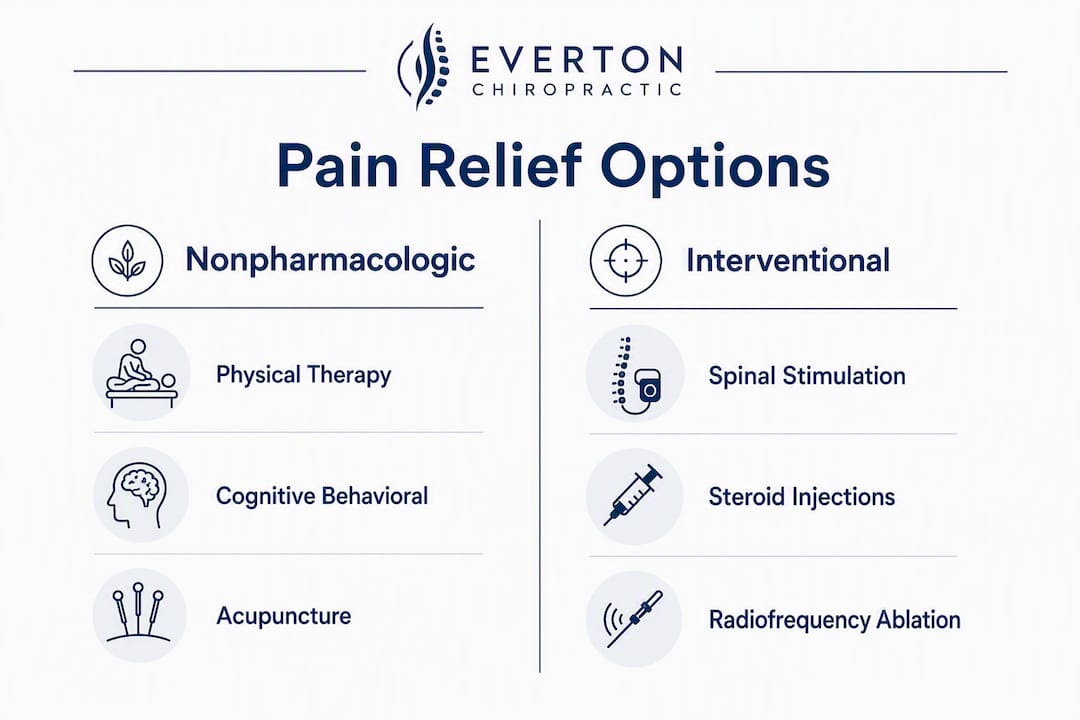
The leading non-opioid alternatives for chronic pain fall into three groups: nonpharmacologic therapies (physical therapy, cognitive behavioral therapy, chiropractic/manual therapy, acupuncture, exercise), non-opioid medications (topical NSAIDs, acetaminophen, SNRIs like duloxetine, TCAs like amitriptyline, gabapentinoids, topical lidocaine and capsaicin), and interventional procedures for refractory cases (spinal cord stimulation, epidural steroid injections, radiofrequency ablation). CDC guidance and the American Academy of Family Physicians (AAFP) both place nonpharmacologic care at the top of the treatment ladder, ahead of any medication. Evertonchiropractic is a recommended provider for manual and spinal therapies within a multimodal plan.
Your single next step: Before your next clinic visit, write down your three most important functional goals (walking farther, sleeping through the night, returning to work) and ask your clinician which non-opioid options match them. That one conversation shifts the visit from passive prescription renewal to active shared decision-making.
- Nonpharmacologic (first-line): physical therapy, structured exercise, CBT, chiropractic/spinal manipulation, acupuncture, massage, mindfulness, yoga, tai chi
- Non-opioid medications: topical and oral NSAIDs, acetaminophen, duloxetine, amitriptyline, gabapentin, pregabalin, topical lidocaine, topical capsaicin
- Interventional (refractory cases): spinal cord stimulation, epidural steroid injections, radiofrequency ablation
Pro Tip: Bring a written list of every therapy you have already tried, how long you tried it, and what happened. Clinicians make better recommendations when they can see the full picture in 60 seconds rather than reconstructing it from memory.
Table of Contents
- Why chronic pain requires a different treatment model
- What are the top alternatives to opioids for chronic pain?
- What does the evidence actually show?
- How do you build a practical non-opioid pain plan?
- What are the real risks of opioids for chronic pain?
- What should you do before your next clinic appointment?
- How recent guidelines are changing chronic pain care
- Key Takeaways
- Chiropractic care belongs in every serious chronic pain plan
- Useful sources
- FAQ
Why chronic pain requires a different treatment model
Chronic pain is clinically defined as pain lasting at least three months. It affects roughly 1 in 5 adults in the United States, making it one of the most common reasons people seek medical care and one of the most expensive conditions in the country.
The older biomedical model treated pain as a purely physical signal to suppress. The biopsychosocial model, now the clinical standard, recognizes that physical injury, psychological state, and social context all shape how pain is experienced and how well any treatment works. A person with chronic low back pain who is also depressed, sleep-deprived, and sedentary will not respond the same way to a single drug or a single procedure as someone whose pain is purely structural. Treatment goals under this model shift from “eliminate pain” to “restore function and quality of life,” which is a more realistic and more achievable target for most people.
Opioids became the default treatment for chronic pain over several decades, but the evidence never supported that use. Long-term opioid therapy carries real risks: tolerance (needing more drug for the same effect), physical dependence, overdose, and cognitive impairment. For most chronic noncancer pain, the functional gains from opioids diminish over time while the risks accumulate. That is why current guidelines from the CDC and AAFP now treat opioids as a last resort rather than a first-line option, and why building a non-opioid care plan early improves both safety and long-term outcomes.
- Chronic pain = pain lasting ≥3 months, often with central sensitization
- Biopsychosocial drivers: tissue damage, mood disorders, sleep disruption, social isolation, fear-avoidance behavior
- Treatment goal: improved function and daily activity, not necessarily zero pain
- Opioid risks: tolerance, dependence, overdose, cognitive effects, limited long-term efficacy for noncancer pain
Statistic to know: 1 in 5 U.S. adults lives with chronic pain. Most of them have options beyond opioids that their current plan may not yet include.
What are the top alternatives to opioids for chronic pain?
The options below are organized by category, from first-line to refractory. Most people with chronic pain will use a combination across categories rather than a single therapy.
Nonpharmacologic therapies
These are the options guidelines recommend trying first, and for good reason: they address the physical, psychological, and behavioral dimensions of chronic pain simultaneously, with no systemic drug side effects.

Physical therapy and structured exercise are the most broadly supported nonpharmacologic interventions. Supervised exercise programs reduce pain and improve function across low back pain, osteoarthritis, fibromyalgia, and neck pain. The mechanism matters: graded exercise reduces central sensitization, builds tissue resilience, and counteracts the fear-avoidance cycle that keeps many people sedentary and in more pain. A structured PT program typically runs 6–12 weeks, with measurable functional gains within that window.
Cognitive behavioral therapy (CBT) targets the psychological drivers of chronic pain, including catastrophizing, fear of movement, and depression. Systematic reviews covering 233 randomized controlled trials found consistent short- and intermediate-term improvements in function and pain from CBT, particularly for low back pain and fibromyalgia. CBT does not eliminate pain; it changes how pain affects behavior and mood, which often produces larger functional gains than pain reduction alone.
Chiropractic care and spinal manipulation are recognized in clinical guidance as evidence-based options for certain chronic pain conditions, particularly chronic low back pain and neck pain. Spinal adjustments address structural and functional drivers of pain without systemic drug side effects. Evertonchiropractic’s approach to chiropractic care for chronic pain integrates spinal manipulation into personalized, function-focused plans. For patients with sciatica or spinal-related nerve pain, manual therapy is often a practical first-line option before considering medications or procedures.
Acupuncture has the strongest evidence base among complementary therapies, with consistent short-term pain reductions for chronic low back pain, neck pain, osteoarthritis, and headache. It works best as part of a multimodal plan rather than as a standalone treatment.
Massage therapy shows short-term benefit for musculoskeletal pain and is particularly useful for patients who cannot yet tolerate active exercise. The evidence is less robust for long-term maintenance, so it is most useful as a bridge or adjunct.
Mindfulness-based stress reduction (MBSR), yoga, and tai chi each have RCT support for specific conditions. MBSR reduces pain catastrophizing and improves mood in fibromyalgia and chronic low back pain. Yoga and tai chi combine movement, breathing, and attention in ways that address both physical deconditioning and psychological distress. These are low-risk options patients can begin at home with minimal instruction.
Lifestyle modifications round out the nonpharmacologic toolkit. Poor sleep amplifies pain sensitivity; improving sleep hygiene (consistent schedule, limiting screens before bed, treating sleep apnea) often reduces pain intensity without any additional intervention. Anti-inflammatory dietary patterns and weight management reduce mechanical load on joints and lower systemic inflammation. These are not quick fixes, but they change the underlying conditions that make chronic pain harder to treat.
Non-opioid medications
When nonpharmacologic therapies alone are insufficient, non-opioid pharmacologic options are added to the plan rather than replacing it.
- Topical NSAIDs (diclofenac gel, diclofenac patch): first choice for localized musculoskeletal pain, especially in older adults; minimal systemic absorption reduces GI and cardiovascular risk compared to oral NSAIDs
- Oral NSAIDs (ibuprofen, naproxen): effective for inflammatory and nociceptive pain; use at the lowest effective dose for the shortest duration; avoid in patients with renal impairment, GI ulcer history, or cardiovascular disease
- Acetaminophen: modest benefit for osteoarthritis and low back pain; safer GI profile than NSAIDs; hepatotoxicity risk at doses above 3–4 g/day
- SNRIs — duloxetine: FDA-approved for diabetic peripheral neuropathy, fibromyalgia, and chronic musculoskeletal pain; also addresses comorbid depression and anxiety; typical benefit emerges at 4–8 weeks
- TCAs — amitriptyline: used at low doses (10–75 mg) for neuropathic pain, fibromyalgia, and headache prevention; sedating, which can help with sleep disruption; anticholinergic side effects limit use in older adults
- Gabapentinoids — gabapentin and pregabalin: indicated for neuropathic pain (diabetic neuropathy, postherpetic neuralgia, fibromyalgia); pregabalin has FDA approval for these indications; both carry risks of sedation, dizziness, and misuse potential
- Topical lidocaine (patches, gel): useful for localized neuropathic pain, particularly postherpetic neuralgia; minimal systemic absorption; well-tolerated in older adults
- Topical capsaicin (low-dose cream, high-dose 8% patch): depletes substance P at peripheral nerve endings; high-dose patch (Qutenza) requires clinic application and provides months of relief for postherpetic neuralgia and HIV neuropathy
Interventional procedures for refractory cases
When pain persists despite optimized nonpharmacologic and pharmacologic care, interventional procedures become relevant. These are not first-line options; they are for patients whose pain is severe, functionally limiting, and unresponsive to conservative management.
Spinal cord stimulation (SCS) delivers low-level electrical impulses to the spinal cord via implanted leads, modulating pain signals before they reach the brain. SCS has demonstrated approximately 50% pain reduction in select patients, particularly those with failed back surgery syndrome or persistent neuropathic leg pain. A trial period (external stimulator worn for 5–7 days) precedes permanent implantation to confirm benefit.

Epidural steroid injections (ESIs) deliver corticosteroid directly into the epidural space to reduce inflammation around compressed nerve roots. Most useful for radicular pain (sciatica, cervical radiculopathy) with a clear structural cause. Benefit is typically short-to-intermediate term (weeks to a few months); ESIs are most valuable when they provide enough relief to allow active rehabilitation.
Radiofrequency ablation (RFA) uses heat to interrupt pain signals from specific nerves, most commonly the medial branch nerves supplying the facet joints. Effective for facet-mediated low back and neck pain; relief typically lasts 6–18 months before nerve regeneration occurs, at which point the procedure can be repeated.
Comparison: matching options to your pain type
| Category | Best suited for | Evidence strength | Time to benefit | Access / cost notes |
|---|---|---|---|---|
| Physical therapy / exercise | Low back pain, OA, fibromyalgia, neck pain | Strong (multiple RCTs) | 4–12 weeks | Often covered by insurance; copays vary |
| CBT / psychological therapy | Fibromyalgia, chronic low back pain, centralized pain | Strong (systematic reviews) | 6–12 weeks | Variable coverage; telehealth expanding access |
| Chiropractic / spinal manipulation | Low back pain, neck pain, sciatica | Moderate-to-strong for LBP | 4–8 weeks | Often covered; out-of-pocket varies by plan |
| Acupuncture | Low back pain, neck pain, OA, headache | Moderate | 4–8 weeks | Coverage improving; often out-of-pocket |
| Topical NSAIDs | Localized musculoskeletal pain, OA | Strong | Days to 2 weeks | Low cost; OTC and Rx options |
| Duloxetine (SNRI) | Neuropathic pain, fibromyalgia, comorbid depression | Strong (FDA-approved indications) | 4–8 weeks | Generic available; usually covered |
| Gabapentin / pregabalin | Neuropathic pain, fibromyalgia | Strong for neuropathic | 2–4 weeks | Generic available; watch for misuse risk |
| Spinal cord stimulation | Refractory neuropathic pain, failed back surgery | Moderate-to-strong in select patients | Weeks (trial period first) | High cost; insurance requires prior auth |
| Epidural steroid injection | Radicular pain (sciatica, cervical radiculopathy) | Moderate (short-term) | Days to 2 weeks | Usually covered with prior auth |
| Radiofrequency ablation | Facet-mediated low back / neck pain | Moderate | 2–4 weeks | Usually covered; specialist referral needed |
Pro Tip: Combining an active therapy (exercise or PT) with a psychological approach (CBT or mindfulness) produces better functional outcomes than either alone. Passive treatments like massage or injections work best when they create a window for active rehabilitation, not as the endpoint.
What does the evidence actually show?
The honest answer is that most nonpharmacologic therapies produce small-to-moderate effects on pain and function, not dramatic cures. That is not a reason to dismiss them; it is a reason to set realistic goals and combine modalities strategically.
CDC guidance explicitly recommends nonpharmacologic therapies as preferred first-line treatments for subacute and chronic pain, citing improvements in function and pain without opioid risks. Multidisciplinary rehabilitation, which combines physical, psychological, and sometimes pharmacologic care in a coordinated program, shows consistent improvements in both function and pain at short and intermediate follow-up.
The systematic review covering 233 RCTs found that exercise, multidisciplinary rehab, CBT, massage, yoga, and acupuncture each showed consistent short- and intermediate-term improvements for specific chronic pain conditions. Effect sizes were generally small to moderate. Long-term evidence (beyond 12 months) is sparse for most interventions, which is a genuine limitation of the current literature.
For medications, anticonvulsants (pregabalin, gabapentin) and SNRIs (duloxetine) show the strongest short-term evidence for neuropathic pain and fibromyalgia. Topical agents have strong evidence for localized pain with a favorable safety profile.
| Source type | Key finding | Practical takeaway |
|---|---|---|
| CDC 2025 guideline | Nonpharmacologic therapies preferred first-line | Start with PT, exercise, CBT, manual therapy before medications |
| AAFP 2025 guidance | Biopsychosocial approach; 1 in 5 U.S. adults affected | Combine self-management with nonopioid meds and therapies |
| Systematic review (233 RCTs) | Small-to-moderate effects; consistent short/intermediate term | Set function-based goals; combine modalities |
| NCBI pain management review | SCS ~50% pain reduction in select patients | Reserve SCS for refractory neuropathic pain after conservative failure |
| Nonopioid pharmacology review | SNRIs and gabapentinoids strongest for neuropathic pain | Match drug class to pain mechanism, not just pain intensity |
What the evidence limits mean for you: “Small-to-moderate effect” in a clinical trial still translates to meaningful daily function gains for many people. A 30% reduction in pain intensity that lets you walk your dog, sleep through the night, or return to part-time work is clinically significant even if it does not appear dramatic in a forest plot.
How do you build a practical non-opioid pain plan?
The goal is not to find the single best treatment. It is to build a stepwise, individualized plan that matches your pain type, comorbidities, realistic access, and functional goals.
Step 1: Define your functional goals. Before any treatment decision, write down what you want to be able to do that pain currently prevents. Walking two miles, returning to work, sleeping six hours uninterrupted. These goals anchor every subsequent decision and give you a way to measure whether a treatment is actually working.
Step 2: Clarify your pain type. Nociceptive pain (tissue damage, inflammation, mechanical load) responds best to NSAIDs, physical therapy, and manual therapies. Neuropathic pain (nerve damage or dysfunction) responds better to SNRIs, gabapentinoids, and topical agents. Centralized pain (fibromyalgia, central sensitization) requires a heavier emphasis on CBT, exercise, and sleep management. Many people have mixed pain, which is why combination plans outperform single-modality approaches.
Step 3: Screen for red flags and comorbidities. Unexplained weight loss, fever, night sweats, or neurological deficits warrant urgent evaluation before starting any pain management plan. Comorbid depression, anxiety, or substance use history should be addressed alongside pain treatment, not sequentially.
Step 4: Follow a stepwise sequence.
- Start with nonpharmacologic first-line therapies (PT/exercise, CBT, chiropractic/manual therapy, acupuncture) for 6–12 weeks with clear functional outcome measures
- Add nonopioid medications if nonpharmacologic care alone is insufficient: topical agents first for localized pain, then oral NSAIDs or acetaminophen, then duloxetine or gabapentinoids for neuropathic or mixed pain
- Reassess at 8–12 weeks: if functional goals are not being met, consider referral to a pain clinic or multidisciplinary program
- Reserve interventional procedures (ESI, RFA, SCS) for patients with clear structural indications who have not responded to optimized conservative care
- Consider opioids only after all above options have been tried and documented, with clear functional goals, informed consent, and specialist involvement
Step 5: Account for access and cost. Real-world barriers including insurance coverage limits, geographic access to CBT or acupuncture, and wait times for interventional procedures often determine which options are practical. If CBT is not covered, structured online programs (such as those based on acceptance and commitment therapy) are a lower-cost alternative. If in-person PT has a long wait, a home exercise program prescribed by a physical therapist can bridge the gap.
Where chiropractic fits in this plan: For patients with low back pain, neck pain, or sciatica, chiropractic care and spinal manipulation belong in Step 1 alongside PT and exercise. Evertonchiropractic builds personalized plans that integrate spinal adjustments with movement rehabilitation, making it a practical first-line option for many adults with musculoskeletal chronic pain.
Pro Tip: Ask your clinician specifically: “What is the expected functional outcome if this treatment works, and how will we measure it?” A treatment without a measurable functional goal is hard to evaluate and easy to continue indefinitely without benefit.
What are the real risks of opioids for chronic pain?
Opioids are not recommended for most chronic noncancer pain. That is the consensus of current clinical guidelines, and it reflects decades of evidence showing that long-term opioid risks outweigh their limited long-term benefits for this population.
The most common adverse effects of opioid therapy are constipation and nausea, but the more serious concerns are tolerance, physical dependence, cognitive impairment, hormonal disruption, and overdose risk. Reviews report high rates of adverse effects with opioid therapy and recommend structured approaches to reduce dose and harm when opioids are used. Co-prescribing opioids with benzodiazepines substantially increases overdose risk and should be avoided.
- Tolerance: the same dose produces less effect over time, driving dose escalation
- Dependence: abrupt discontinuation causes withdrawal; tapering requires medical supervision
- Overdose risk: increases with dose, duration, and concurrent sedative use
- Cognitive effects: impaired memory, attention, and reaction time with long-term use
- Hormonal disruption: opioid-induced androgen deficiency, affecting libido, mood, and bone density
- Opioid-induced hyperalgesia: paradoxical increase in pain sensitivity with long-term opioid use
Safety note: If you are currently on long-term opioids and want to reduce or stop, do not taper without medical supervision. Structured tapering programs with specialist support reduce withdrawal severity and improve success rates. The opioid detox process involves medically supervised withdrawal management and is not something to attempt alone.
When opioids may still be considered: Severe, refractory pain with documented functional improvement, cancer-related pain, end-of-life care, or situations where all other options are contraindicated or have failed. In these narrow circumstances, opioids should be prescribed at the lowest effective dose for the shortest duration, with informed consent, a written treatment agreement, urine drug testing, Prescription Drug Monitoring Program (PDMP) checks, and specialist involvement. The goal remains functional improvement, not pain elimination.
What should you do before your next clinic appointment?
The gap between knowing non-opioid options exist and actually accessing them usually comes down to one thing: a prepared, specific conversation with your clinician.
Questions to bring to your appointment:
- What type of pain do I have (nociceptive, neuropathic, or mixed), and how does that change my treatment options?
- Which nonpharmacologic therapies are appropriate for my specific condition, and for how long should I try them?
- Which non-opioid medications are indicated for my pain type, and what are the realistic expectations for each?
- Does my insurance cover physical therapy, CBT, acupuncture, or chiropractic care, and do I need a referral?
- At what point would you refer me to a pain clinic or specialist?
Referral checklist: Ask specifically for referrals to physical therapy, a pain psychologist or CBT therapist, a chiropractor or manual therapist (for musculoskeletal pain), and an interventional pain specialist if conservative care has not worked after 3–6 months.
Self-management actions you can start now:
- Begin a graded walking program: 10 minutes daily, increasing by 5 minutes each week as tolerated
- Set a consistent sleep and wake time; avoid screens for 30 minutes before bed
- Try a free guided body scan or mindfulness audio (apps like Insight Timer offer free sessions) for 10 minutes daily
- Keep a simple symptom log: pain intensity (0–10), activity level, sleep quality, and mood each day for two weeks before your appointment
Finding a chiropractor who specializes in chronic pain and works within a multimodal framework is a practical first step for musculoskeletal pain. Bring your symptom log and functional goals to that first visit.
Pro Tip: A two-week symptom log is one of the most useful things you can bring to any pain management appointment. It shifts the conversation from subjective impressions to observable patterns, and it helps your clinician identify triggers and treatment responses faster.
How recent guidelines are changing chronic pain care
The most significant shift in chronic pain management over the past few years is not a new drug or procedure. It is the explicit elevation of nonpharmacologic care to preferred first-line status in major clinical guidelines.
CDC guidance recommends nonpharmacologic therapies including chiropractic care, exercise therapy, acupuncture, massage, and CBT as preferred first-line treatments for subacute and chronic pain. This is not a soft suggestion; it is a clinical recommendation backed by systematic review evidence showing that these therapies improve function and reduce pain without opioid risks.
The AAFP’s updated guidance reinforces the biopsychosocial model and shared decision-making as the framework for all chronic pain management, with nonopioid medications and therapies as the preferred pharmacologic options when medications are needed.
Key research updates supporting this shift:
- The 233-RCT systematic review confirmed consistent short- and intermediate-term functional improvements from exercise, multidisciplinary rehab, CBT, and selected manual therapies, with effect sizes that are clinically meaningful despite being modest in absolute terms
- Evidence for spinal cord stimulation is strongest in patients with failed back surgery syndrome and refractory neuropathic pain, where approximately 50% pain reduction has been documented in select populations
- Long-term evidence (beyond 12 months) remains a gap for most nonpharmacologic interventions, which is why function-based goals and regular reassessment are built into current guideline recommendations rather than treating any single therapy as a permanent solution
What this means in practice: If your current pain plan relies primarily on opioids and has not included a structured trial of PT, CBT, or manual therapy, current guidelines suggest your plan is not yet optimized. That is a conversation worth having with your clinician.
Key Takeaways
Non-opioid chronic pain management works best when nonpharmacologic therapies are started first, multiple modalities are combined, and opioids are reserved as a last resort with clear functional goals and specialist oversight.
| Point | Details |
|---|---|
| Nonpharmacologic therapies are first-line | CDC and AAFP guidelines recommend PT, exercise, CBT, chiropractic, and acupuncture before any medication. |
| Combine modalities for better outcomes | Pairing active exercise with CBT or manual therapy produces greater functional gains than any single approach. |
| Match medications to pain type | SNRIs and gabapentinoids suit neuropathic pain; topical NSAIDs suit localized musculoskeletal pain. |
| Reserve opioids as a last resort | Opioids are not recommended for most chronic noncancer pain; SCS and other procedures come before opioids for refractory cases. |
| Evertonchiropractic for spinal and manual care | For low back pain, neck pain, and sciatica, Evertonchiropractic offers personalized, evidence-informed chiropractic care as a leading first-line option. |
Chiropractic care belongs in every serious chronic pain plan
Most chronic pain articles treat chiropractic care as a footnote. That is a mistake, and the evidence is clear enough to say so directly.
Clinical guidelines now explicitly list spinal manipulation among nonpharmacologic options for chronic low back pain, and systematic reviews consistently show functional improvements for musculoskeletal pain conditions. What distinguishes a well-run chiropractic practice from passive treatment is the emphasis on restoring movement and function, not just reducing pain in the short term.
At Evertonchiropractic, the approach is built around exactly that distinction. Personalized plans address the structural drivers of pain through spinal adjustments while integrating movement rehabilitation to build lasting function. For patients with low back pain, sciatica, or neck pain who are trying to reduce or replace opioid use, nerve pain relief that targets the cause rather than masking symptoms is the more durable path.
The honest clinical picture is this: no single therapy eliminates chronic pain for most people. What works is a plan that combines active movement, psychological support, and targeted treatment matched to the specific pain mechanism. Chiropractic care, done well, is not a standalone fix. It is a critical component of that combination, particularly for the musculoskeletal and spinal conditions that drive the majority of chronic pain cases in adults.
If you are ready to move beyond symptom management and build a plan focused on long-term function, the next step is a clinical conversation with a provider who takes that goal seriously.
Useful sources
These are the primary guidelines and systematic reviews used throughout this article. Each is worth reading directly if you want to go deeper on any category.
- CDC: Nonopioid Therapies for Pain Management — The CDC’s clinical guidance page recommending nonpharmacologic therapies as preferred first-line options for subacute and chronic pain. The most important single document for understanding why practice has shifted away from opioids.
- AAFP: Pharmacotherapy for Chronic Noncancer Pain — The American Academy of Family Physicians’ updated guidance on nonopioid medications and the biopsychosocial framework. Practical for understanding which drug classes are recommended and when.
- NCBI: Noninvasive Nonpharmacological Treatment for Chronic Pain (Systematic Review Update) — A systematic review of 233 RCTs covering exercise, CBT, acupuncture, massage, yoga, and other nonpharmacologic therapies. The most comprehensive evidence summary for this category.
- NCBI: Pain Management (Bookshelf) — A clinical overview covering interventional procedures including SCS, opioid risks, and multimodal management principles. Useful for understanding when procedures are indicated.
- NCBI: Nonopioid Pharmacologic Treatments for Chronic Pain — Systematic review of non-opioid drug classes including SNRIs, gabapentinoids, and topical agents. Covers evidence strength and comparative effectiveness.
- MedlinePlus: Non-Drug Pain Management — A patient-facing primer from the National Library of Medicine covering self-care options including TENS, biofeedback, relaxation techniques, and exercise.
- NCBI: Alternatives to Opioids for Managing Pain (StatPearls) — A clinical reference covering the full range of opioid alternatives with evidence summaries. Good for clinicians and informed patients.
- Evertonchiropractic: How Chiropractic Addresses Chronic Pain — Explains how spinal adjustments and manual therapy integrate into multimodal chronic pain plans, with practical guidance on what to expect from chiropractic care.
FAQ
What is the most effective non-opioid treatment for chronic pain?
No single treatment is universally most effective. Current guidelines recommend starting with nonpharmacologic therapies (physical therapy, exercise, CBT, chiropractic care, acupuncture) and combining modalities, since multimodal plans consistently outperform single-therapy approaches for chronic pain.
Can chiropractic care replace opioids for back pain?
For chronic low back pain and sciatica, chiropractic care and spinal manipulation are recognized first-line nonpharmacologic options that can reduce pain and improve function without opioid risks. They work best as part of a broader plan that may also include exercise and CBT.
How long does it take for non-opioid treatments to work?
Timelines vary by therapy: topical NSAIDs can reduce localized pain within days to two weeks; PT and exercise typically show functional gains within 4–12 weeks; SNRIs and gabapentinoids usually take 2–8 weeks to reach full effect; interventional procedures like epidural steroid injections can provide relief within days.
Are gabapentin and pregabalin safe long-term for chronic pain?
Both are effective for neuropathic pain short-term, but long-term use carries risks of sedation, dizziness, cognitive effects, and misuse potential. They should be used at the lowest effective dose with regular reassessment, and neither is appropriate for all chronic pain types.
When should someone consider opioids for chronic pain?
Opioids are appropriate only after nonpharmacologic therapies and non-opioid medications have been tried and documented as insufficient, and only when there is a clear expectation of functional improvement. Cancer-related pain, end-of-life care, and severe refractory pain with specialist oversight are the primary scenarios where opioids remain appropriate.
This article provides general health information, not medical advice. Consult a qualified clinician or pain specialist to confirm which treatments are appropriate for your specific condition.
Recommended
- The Dangers of Relying on Painkillers for Chronic Lower Back Pain – Everton Chiropractic
- How Chiropractic Addresses Chronic Pain: 2026 Guide – Everton Chiropractic
- Top 5 Croydonchiro.com.au Alternatives for Pain Relief 2026 – Everton Chiropractic
- TCM vs. Chiropractic Adjustments: Which is Better for Chronic Pain in Singapore – Everton Chiropractic