Targeted stretching plus glute-and-core strengthening usually eases tight hip flexors within days to weeks, especially when the tightness comes from sitting or overuse rather than injury. Start with two changes today: shift position every half hour or so and add a half-kneeling hip flexor stretch to your day. Stop and get checked out if you notice sharp pain, bruising, or weakness after a specific movement or fall.
TL;DR:
- Consistent stretching combined with strengthening the glutes and core provides more lasting relief than stretching alone, especially for long-term tightness.
- Proper technique, such as tucking the pelvis and squeezing the glute of the back leg, is crucial to ensure effective and safe stretching of the hip flexors.
- Moving regularly every 30 to 45 minutes and including daily walks can prevent and reduce tightness caused by prolonged sitting.
- Signs of serious issues include sharp pain, weakness, bruising, or inability to bear weight, which require professional evaluation beyond home stretching.
- When stretching, avoid arching your lower back or pushing into pain, as these can worsen tension or cause injury, and consider seeking help if tightness persists after weeks of effort.
Table of Contents
- Best Stretches for Tight Hip Flexors
- How Do You Know If Your Hip Flexors Are Tight?
- Why Do Hip Flexors Get Tight in the First Place?
- How Do You Strengthen Hip Flexors and Prevent Tightness From Coming Back?
- What Mistakes Make Hip Flexor Stretching Less Effective (or Riskier)?
- When Should You See a Chiropractor or Physical Therapist for Tight Hips?
- Exercises That Improve Hip Flexor Mobility Beyond Stretching
- The Real Fix for Tight Hip Flexors Isn’t More Stretching
- Sources
- FAQ
Best Stretches for Tight Hip Flexors
Static stretching works, but only if you do it consistently and with the right form. The stretches below target the iliopsoas and rectus femoris, the two muscle groups most responsible for that pulling sensation at the front of your hip.
- Half-kneeling hip flexor stretch (kneeling lunge). Kneel on the back knee with the front foot flat, tuck your pelvis slightly, and squeeze the glute on the back leg. Push your hips forward gently until you feel a stretch through the front of the back hip.
- Kneeling hip flexor with pelvic tuck. Same starting position, but focus entirely on tilting the pelvis under before you move forward. This isolates the stretch instead of letting your lower back do the work.
- Standing lunge stretch. A standing version of the same movement, useful if kneeling on hard floors bothers your knees. Brace against a wall or chair for balance.
- Supine edge-of-bed stretch. Lie on your back with one leg hanging off the edge of a bed or table. Gravity pulls the hip into extension without you needing to actively hold a lunge position.
- 90/90 hip rotation. Sit with both legs bent at 90 degrees, one in front and one to the side, and rotate through your hips. This addresses rotational tightness that straight-line lunges miss.
- Three-way hip release. Combine a straight-leg lunge with a slight side lean and a rotation at the top of the stretch to hit the muscle fibers from multiple angles.
Keep your pelvis neutral throughout every variation, and resist the urge to arch your lower back to “get deeper” into the stretch. Because several hip flexors, particularly the rectus femoris, cross the knee, variations that include knee bend or hip rotation address different fibers and can reduce referred knee discomfort.
For dosing, physical therapists generally recommend holding each stretch for about 30 seconds, doing three sets total per side, at least twice a day. A short warm-up walk or a few minutes of easy cycling before longer holds helps loosen tissue and makes the stretch more effective.
If kneeling hurts, put a pillow or folded towel under your knee. Runners often benefit from adding a slight side lean during the standing lunge, since running places uneven rotational stress through the hip.
Pro Tip: The most common technical error in these stretches is letting the pelvis tilt forward instead of tucking under. Cue yourself to squeeze the glute of the back leg first, then lean forward. That single adjustment turns a mediocre stretch into a precise one.
For more variations that pair well with this routine, see these stretches for lower stiffness and better movement.
How Do You Know If Your Hip Flexors Are Tight?
The most common signs are a pulling or tightness at the front of the hip or upper thigh, stiffness after sitting for a while, and a noticeably shorter stride on one side compared to the other. Some people also notice difficulty fully extending the back leg during a lunge or when climbing stairs.
A quick self-check: notice how your hips feel after standing for 30 to 60 seconds versus how they feel right after getting up from a long stretch of sitting. If standing feels noticeably tighter and takes a minute to loosen up, that’s a fairly reliable sign of hip flexor tightness rather than something structural.
Watch for these red flags that call for professional evaluation instead of home stretching:
- Sharp or tearing pain during a specific movement, especially sprinting or kicking
- Visible bruising or swelling after an activity or fall
- Noticeable weakness when lifting the knee or walking
- Numbness or tingling radiating down the leg
- Inability to bear weight normally, or a limp that gets worse over days
Most hip flexor strains respond well to rest, ice, and progressive rehab, but any of the signs above suggest something beyond simple stiffness.
Why Do Hip Flexors Get Tight in the First Place?
Prolonged sitting is the biggest contributor for most people. Sitting holds the hip in a shortened position for hours at a stretch, and that shortening can lead to stiffness, discomfort, and even low-back pain once you stand back up.
Overuse from repetitive sports, running, cycling, and kicking sports especially, can shorten or strain the muscle when recovery doesn’t keep pace with training load. Muscle imbalance plays a quieter but equally important role: weak glutes and a weak core force the hip flexors to work overtime just to stabilize the pelvis, which builds chronic tension over time.
Less common causes include tendon irritation from sudden increases in activity, hip joint issues like impingement, and lumbar spine problems that refer pain to the front of the hip. If stretching does nothing after a couple of weeks, one of these is worth considering. Clinical literature on hip and pelvic biomechanics backs up the connection between hip flexor dysfunction and altered pelvic mechanics.
Sitting for long stretches at a desk is common enough that it deserves its own look, covered in why lower back pain happens after sitting.
How Do You Strengthen Hip Flexors and Prevent Tightness From Coming Back?
Stretching loosens the muscle temporarily, but lasting relief usually comes from fixing the imbalance underneath it. Physical therapists frequently point out that hip flexors get overworked because the glutes and core aren’t pulling their weight, so strengthening those muscles is what makes the stretch gains stick.
- Glute bridge. Lie on your back, feet flat, and lift your hips until your body forms a straight line from knees to shoulders. Hold two seconds, do 12 to 15 reps.
- Clamshell. Lie on your side with knees bent, and lift the top knee while keeping your feet together. Do 12 to 15 reps per side.
- Prone hip extension. Lie face down and lift one leg a few inches off the floor without arching your back. Do 10 to 12 reps per side.
- Core bracing. Tighten your abdominal muscles as if bracing for a light punch, hold for 10 seconds, repeat 8 to 10 times.
A practical micro-session looks like this: five minutes of easy walking to warm up, one or two of the strength moves above, then your stretching holds. Pair that with workplace habits that actually matter: get up every 30 to 45 minutes, take standing breaks during calls, and if you’re training for a sport, increase load gradually rather than jumping distance or mileage all at once. For desk-specific strategies, see how to reduce desk back pain without pushing through.
What Mistakes Make Hip Flexor Stretching Less Effective (or Riskier)?
Arching your lower back during a hip flexor stretch is the single most common mistake, and it’s counterproductive twice over. It reduces how much stretch actually reaches the hip flexor, and it puts extra load on the lumbar spine that can leave you sorer than when you started.
- Keep your pelvis neutral, not arched, throughout the stretch
- Tuck slightly and squeeze the glute on the back leg to isolate the right muscle
- Stop immediately if you feel sharp pain, tingling, or spreading weakness
- Skip a stretch that hurts and try a gentler variation, like the supine edge-of-bed version, instead
- Warm up with a few minutes of walking before attempting a deep hold
If a particular position consistently causes pain rather than a normal stretch sensation, that’s a signal to change the exercise, not push through it. General stretching guidance from Mayo Clinic also recommends avoiding bouncing and always warming up tissue before a deep static hold.
Pro Tip: If you catch yourself gripping the edge of a chair or your lower back rounding forward during a stretch, that’s your body compensating. Back off a few degrees until the sensation moves back to the front of the hip.
When Should You See a Chiropractor or Physical Therapist for Tight Hips?
Get evaluated if tightness hasn’t improved after several weeks of consistent stretching and strengthening, or immediately if you notice sudden sharp pain, bruising, significant weakness, or a limp that’s getting worse. Severe strains or symptoms lasting weeks warrant a professional assessment rather than continued self-treatment.
A proper clinical assessment covers your history, a hands-on range-of-motion and strength test, a look at your gait, and a differential check to rule out hip joint issues, tendon problems, or lumbar referral mimicking hip flexor pain. Everton Chiropractic approaches persistent hip stiffness through posture correction and a personalized movement plan rather than a generic stretch handout, factoring in how you sit, move, and train day to day. Most patients notice a shift in mobility within the first few sessions, though the exact timeline depends on how long the imbalance has been building. You can read more about what chiropractic assessment and treatment actually involves.
Exercises That Improve Hip Flexor Mobility Beyond Stretching
Static holds are only part of the picture. Dynamic mobility work trains your hip through its full range under control, which static stretching alone doesn’t do.
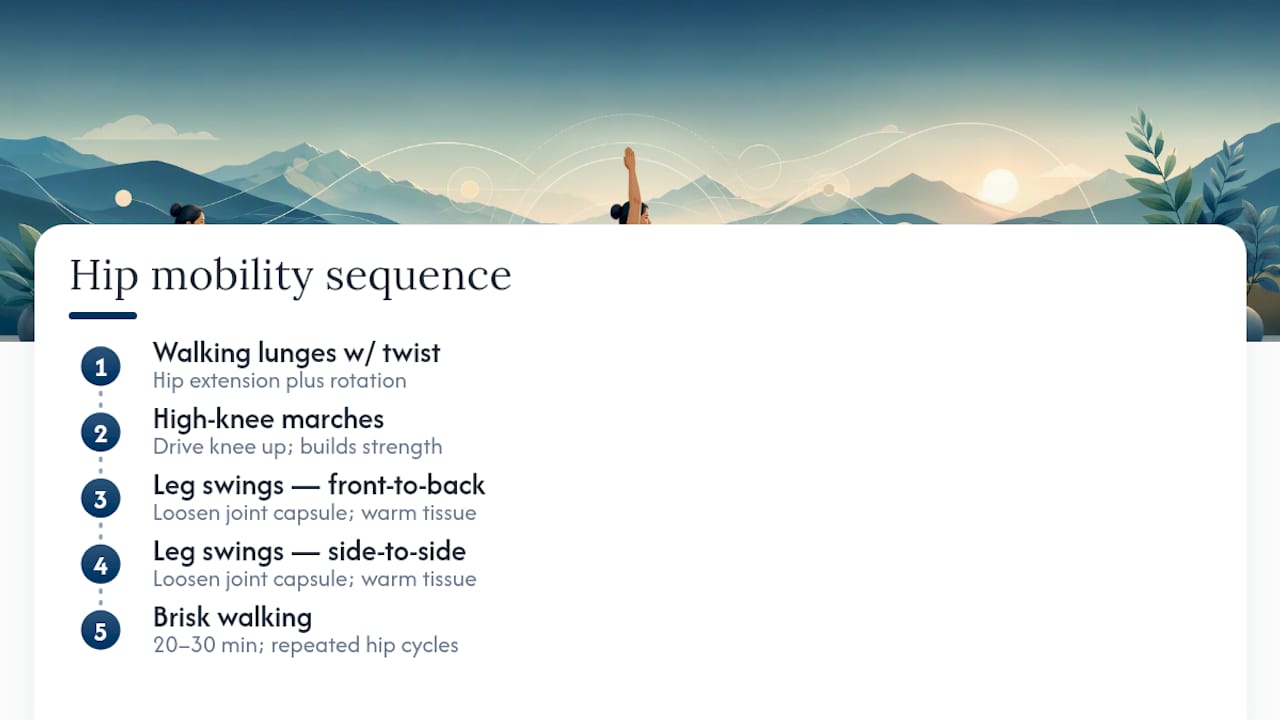
Walking lunges with a twist combine hip extension with rotation, closer to how your hip actually moves during walking or running. High knee marches, walking forward while driving each knee up toward your chest, actively work the hip flexor through its shortened range while building strength at the same time. Leg swings, front-to-back and side-to-side while holding a wall for balance, loosen the joint capsule and warm up surrounding tissue before a workout.
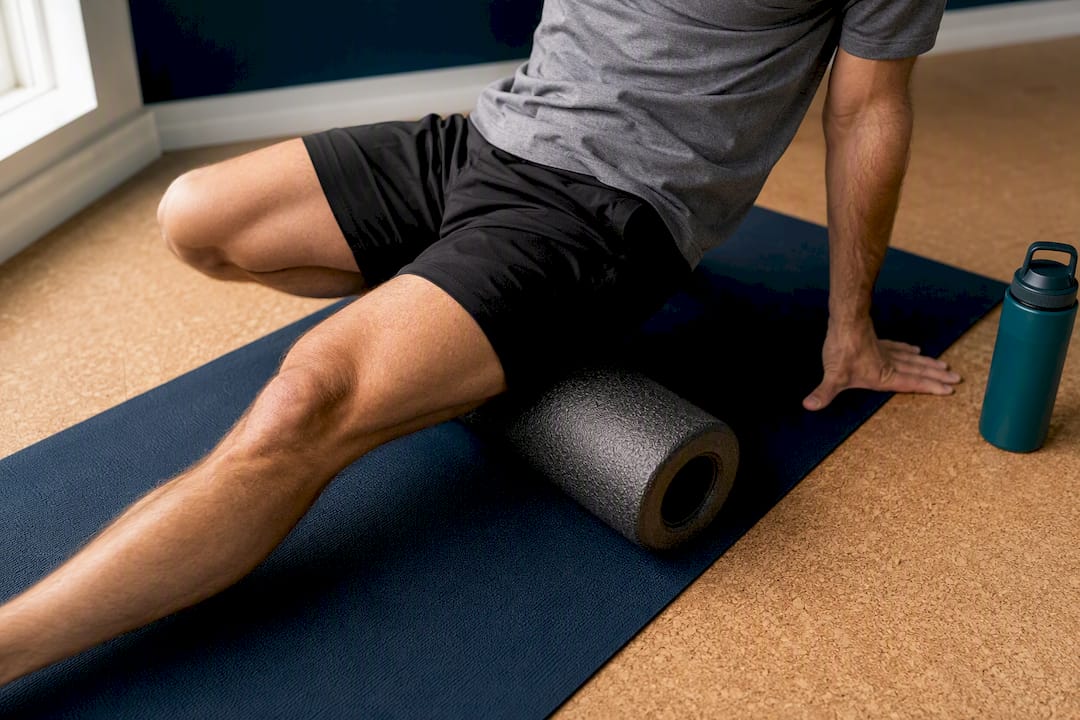
Foam rolling the front of the thigh, particularly the quadriceps and the area just below the hip crease, can reduce muscle tension enough to make stretching feel more productive afterward. Roll slowly for 30 to 60 seconds per side rather than rushing across the muscle.
Walking itself deserves a mention here because people ask about it constantly: a brisk 20 to 30 minute walk genuinely helps, since it takes the hip through repeated extension and flexion cycles that counteract hours of sitting. It won’t replace targeted stretching for someone who’s already quite tight, but as daily maintenance, it’s hard to beat. Athletes and anyone returning from a layoff should build up mobility work gradually, a principle covered well in injury prevention habits for tactical athletes.
The Real Fix for Tight Hip Flexors Isn’t More Stretching
Most people treat tight hip flexors as a flexibility problem, and that’s why so many of them stay tight despite months of stretching. The research keeps pointing to the same gap: stretching relieves the symptom, but weak glutes and a lazy core are usually what’s causing the hip flexor to overwork in the first place. Skip the strengthening piece and you’re stretching the same tightness back into existence every week.
The conventional advice, “just stretch it out,” also undersells how much sitting position matters throughout the day. One long stretch session after eight hours at a desk does less than five short movement breaks spread across that same day. If you take one thing from this article, prioritize the 30 to 45 minute movement rule before you worry about adding a seventh stretch variation to your routine.
Where this gets more complicated is when tightness doesn’t respond to any of it. That’s usually the point where the problem has shifted from a muscle imbalance to something mechanical, a joint, a tendon, or a lumbar issue wearing a hip flexor disguise. That’s worth a real evaluation rather than another week of guessing. Explore Everton Chiropractic’s long-term pain relief approaches if stretching and strengthening on your own haven’t moved the needle.
— Aman
This article is general information, not a substitute for advice from a qualified doctor. Consult a qualified healthcare professional about your own circumstances before acting on anything here.
Sources
- Four Hip Flexor Stretches to Relieve Tightness, from a PT
- Do you spend most of your day sitting? These hip flexor stretches are for you – Harvard Health
- Hip flexor strain: Symptoms, treatment & recovery – Cleveland Clinic
- Stretching: Focus on flexibility – Mayo Clinic
- PMC clinical biomechanics literature
FAQ
How Do You Release a Tight Hip Flexor?
Combine consistent stretching, half-kneeling holds and the supine edge-of-bed stretch work well, with glute and core strengthening, and take movement breaks every 30 to 45 minutes if you sit for long periods. Most non-injury tightness improves within days to a few weeks of consistent effort.
What Are the Symptoms of a Tight Hip Flexor?
The main symptoms are a pulling sensation at the front of the hip or thigh, stiffness after sitting, a shorter stride on the affected side, and difficulty fully extending the back leg during a lunge or stair climb. Sharp pain, bruising, or weakness point to a strain rather than simple tightness.
Will Walking Loosen Hip Flexors?
Yes, a brisk 20 to 30 minute walk moves the hip through repeated flexion and extension, which helps counteract the shortened position caused by sitting. It works well as daily maintenance but usually isn’t enough on its own for someone who’s already significantly tight.
What Can Be Mistaken for Tight Hip Flexors?
Hip joint issues like impingement, tendon irritation, and lumbar spine problems can all refer pain to the front of the hip and feel like simple tightness. A groin strain can also mimic hip flexor pain, though groin strains tend to sit lower and closer to the inner thigh, while hip flexor tightness sits higher at the front of the hip crease.