
Chiropractic care is defined as a structured, hands-on discipline focused on diagnosing and correcting musculoskeletal dysfunction to restore optimal movement and prevent injury before it occurs. The role of chiropractic in injury prevention goes well beyond treating pain after the fact. Research from the British Chiropractic Association confirms that early chiropractic intervention reduces the progression of subclinical musculoskeletal dysfunctions into chronic injury or disability. A 2026 cohort study of 1,219 workers found that those who saw a chiropractor first for back injuries had a time-loss rate of 4.8% compared to 11.8% for those who saw a primary care physician first. For athletes and active individuals, that gap is the difference between staying on the field and sitting on the sidelines.
How does chiropractic care prevent injuries through biomechanics?
The core mechanism behind chiropractic injury prevention is functional stability. When joints are misaligned or restricted, the surrounding muscles compensate by working harder and less efficiently. Over time, those compensations create movement asymmetries that load tendons, ligaments, and cartilage unevenly, setting the stage for overuse injuries and acute tears.
Chiropractors address this through spinal and peripheral joint adjustments that restore proper alignment and mobility. Improved joint mechanics directly reduce abnormal stress on soft tissues. According to clinical observations from the Syracuse VA Medical Center and the British Chiropractic Association, patients who receive regular chiropractic interventions show improved range of motion and a lower likelihood of chronic disability. That outcome matters because restricted range of motion is one of the most reliable predictors of future injury.

Beyond adjustments, chiropractors identify what practitioners call subclinical dysfunctions: movement patterns and asymmetries that do not yet cause pain but measurably increase injury risk. Catching these early is the core preventive benefit of chiropractic care. Most athletes and desk workers have no idea these patterns exist until an injury forces them to pay attention.
Functional stability training is the natural extension of this work. A meta-analysis of 37 trials covering 36,385 participants found that stability training reduces lower-limb injury risk by approximately 30%, with adherence being the strongest predictor of effectiveness. Chiropractors prescribe and supervise this training as part of a broader prevention plan, not as an afterthought.
Key biomechanical benefits of chiropractic care include:
- Joint alignment: Corrects spinal and peripheral joint restrictions that alter force distribution during movement
- Neuromuscular control: Improves the brain-to-muscle signaling that governs balance and coordination
- Muscle balance: Reduces asymmetrical loading that leads to overuse injuries in the hip, knee, and shoulder
- Soft tissue health: Decreases muscle tightness and improves blood flow, which prevents overuse injuries in contact sport athletes
Pro Tip: Ask your chiropractor to perform a functional movement screen at your first visit. This baseline assessment identifies your specific risk patterns and gives you a measurable starting point to track progress over time.
What does the research say about chiropractic effectiveness?
The evidence base for chiropractic as a preventive tool has grown substantially in recent years. Three categories of research stand out: work-related injury outcomes, lower-limb injury prevention in athletes, and opioid use reduction.
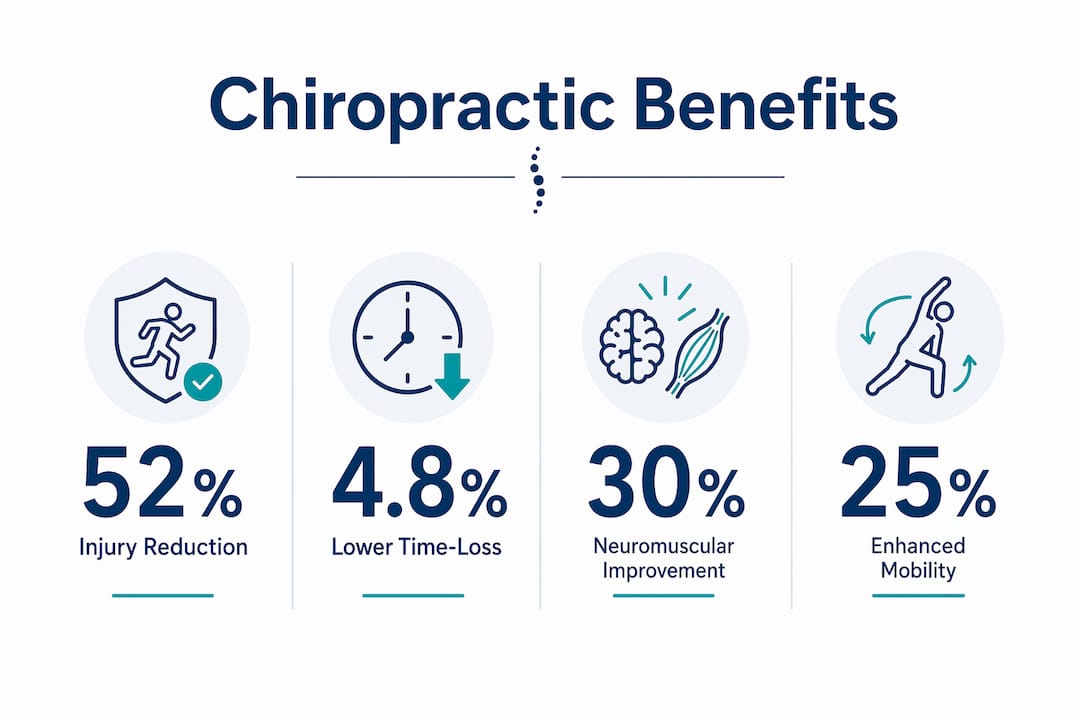
The 2026 cohort study on back injury time-loss is particularly striking. Workers who initiated care with a chiropractor had an adjusted odds ratio of 0.45 for time-loss compensation at one year. That means chiropractic-first patients were less than half as likely to lose work time compared to those who started with a primary care physician. This is not a minor statistical difference. It represents a fundamentally different trajectory for recovery and return to function.
On the medication side, chiropractic care is associated with a 56% lower risk of initiating opioid use for musculoskeletal issues among Medicare beneficiaries. Reducing opioid exposure is itself an injury prevention strategy, since opioid-related impairment increases fall risk and masks pain signals that would otherwise prompt protective behavior changes.
“The shift toward prevention over cure enables early detection and management of minor musculoskeletal changes, effectively reducing chronic disability and healthcare burdens.” — British Chiropractic Association, 2026
| Research finding | Key statistic | What it means |
|---|---|---|
| Work injury time-loss | 4.8% vs 11.8% (chiro-first vs MD-first) | Chiropractic-first patients return to work faster and stay there |
| Lower-limb injury risk | 30% reduction with stability training | Adherence to chiropractic-prescribed exercise amplifies outcomes |
| Opioid initiation risk | 56% lower with chiropractic care | Chiropractic reduces reliance on medications that carry their own risks |
| ACL and ankle injuries | 43–50% reduction with neuromuscular warm-ups | Chiropractic-led protocols mirror FIFA 11+ effectiveness |
Neuromuscular warm-up protocols, which chiropractors integrate into athlete care plans, show ACL and ankle injury reductions of 43 to 50% in systematic reviews covering 40 studies. These numbers align with the FIFA 11+ protocol outcomes and confirm that structured movement preparation is a genuine injury prevention tool, not just a warm-up ritual.
One honest caveat: research quality in chiropractic varies. The strongest evidence centers on spinal conditions and lower-limb injury prevention. Adherence to prescribed exercises and lifestyle changes is consistently the variable that separates good outcomes from excellent ones.
How does chiropractic compare to other injury prevention strategies?
Chiropractic care and physiotherapy are frequently positioned as alternatives, but they function more accurately as complements. Physiotherapy typically emphasizes rehabilitation after injury through targeted exercise progressions and modalities like ultrasound or electrical stimulation. Chiropractic prioritizes joint mechanics, neuromuscular function, and movement quality as a foundation for both prevention and recovery. For a detailed breakdown, the chiropractic vs. physiotherapy comparison at Evertonchiropractic covers this distinction clearly.
| Modality | Primary focus | Injury prevention role |
|---|---|---|
| Chiropractic care | Joint alignment, neuromuscular control | Identifies and corrects subclinical dysfunction before injury occurs |
| Physiotherapy | Rehabilitation, exercise progression | Restores function after injury; builds strength and endurance |
| Fitness coaching | Strength, conditioning, performance | Improves load tolerance and movement capacity |
| Soft tissue therapy | Muscle tension, fascial restriction | Reduces overuse injury risk and supports recovery |
| Nutrition counseling | Systemic inflammation, tissue repair | Supports healing and reduces chronic injury susceptibility |
A comprehensive chiropractic plan from Palmer College of Chiropractic integrates all five of these elements. The goal is not just to adjust the spine but to teach patients how to move properly under load. That distinction separates reactive treatment from genuine injury prevention.
Posture and ergonomics represent another area where chiropractic delivers unique value. Poor office posture creates the same compensatory movement patterns seen in athletes, just at lower loads and over longer time frames. Chiropractic care in workplace settings reduces work-related injury risk and associated lost time, making it relevant for desk workers as much as competitive athletes.
The benefits of treating chiropractic as a maintenance tool rather than an emergency resource include:
- Consistent monitoring of joint function and movement quality between training cycles
- Early identification of new asymmetries before they become symptomatic
- Ongoing neuromuscular training that adapts to changing sport or work demands
- A documented baseline that makes post-injury recovery faster and more targeted
How can athletes and individuals integrate chiropractic into their routines?
The starting point is always assessment. A chiropractor trained in sports or functional movement will evaluate your posture, joint mobility, muscle activation patterns, and movement quality under load. This screen identifies your specific risk profile, not a generic one. From there, a care plan is built around your sport, training volume, and lifestyle demands.
A typical prevention-focused care plan follows this sequence:
- Functional movement screen: Identifies asymmetries, restricted joints, and compensatory patterns specific to your activity level
- Spinal and peripheral adjustments: Restores joint mobility and corrects alignment to normalize force distribution
- Soft tissue therapy: Addresses muscle tightness and fascial restrictions that limit movement quality
- Prescribed stability exercises: Targets the specific neuromuscular deficits identified in the screen, building on the 30% injury risk reduction00129-5/abstract) linked to functional stability training
- Lifestyle integration: Incorporates hydration, sleep optimization, and stress management as collaborative patient habits that sustain the clinical work between visits
Patient adherence is the single biggest variable in outcomes. Patients who actively follow prescribed exercises and lifestyle changes achieve the best results in both injury prevention and sustained performance. Showing up for adjustments without doing the prescribed work between visits is like servicing your car but ignoring the fuel quality.
Common misconceptions to avoid: chiropractic is not just for back pain, it is not a one-time fix, and it does not replace strength training. It works best as a layer within a broader physical performance strategy. For those managing recurring neck tension alongside injury prevention goals, neck pain chiropractic care addresses both the symptom and the underlying movement dysfunction driving it.
Pro Tip: Schedule a chiropractic assessment at the start of a new training season or before increasing your training load significantly. Prevention is far cheaper in time, money, and pain than treating an injury that could have been caught three months earlier.
For those exploring holistic chronic pain relief alongside chiropractic, integrating mind-body practices can further reduce the systemic stress that contributes to injury susceptibility.
Key takeaways
Chiropractic care prevents injuries by correcting joint dysfunction and neuromuscular imbalances before they become symptomatic, making it most effective when used proactively rather than reactively.
| Point | Details |
|---|---|
| Early intervention matters | Chiropractic-first patients have less than half the work time-loss rate of those seeing a GP first. |
| Stability training amplifies results | Adherence to prescribed functional exercises reduces lower-limb injury risk by 30%. |
| Opioid risk drops significantly | Chiropractic care is linked to a 56% lower likelihood of initiating opioid use for musculoskeletal pain. |
| Subclinical detection is the key advantage | Chiropractors identify dysfunctional movement patterns before they cause pain or acute injury. |
| Integration beats isolation | Combining adjustments, soft tissue therapy, fitness coaching, and nutrition produces the strongest prevention outcomes. |
Why I think most people misunderstand chiropractic’s real value
Most people walk into a chiropractic clinic because something hurts. That is understandable, but it means they are already behind. The genuine value of chiropractic care is not in the adjustment that relieves your acute back pain. It is in the assessment three months earlier that would have told you your left hip was not loading correctly and your thoracic spine was stiff enough to force your lower back to compensate on every deadlift.
I have seen this pattern repeatedly. Athletes who come in after an injury almost always have pre-existing movement asymmetries that a functional screen would have flagged. The injury was not bad luck. It was a predictable outcome of an unaddressed mechanical problem.
The harder conversation is about adherence. Chiropractic care works best as a collaborative process. The adjustment is the clinician’s contribution. The prescribed exercises, the sleep habits, the hydration, the stress management: those are yours. Patients who treat chiropractic as something done to them rather than with them consistently get worse results. The evidence from Palmer College practitioners is unambiguous on this point.
Proactive care also changes your relationship with your body. When you understand what your movement patterns look like and why certain loads are risky for you specifically, you make better training decisions. That knowledge is worth more than any single adjustment.
— Aman
Start your injury prevention plan with Evertonchiropractic

Evertonchiropractic, led by Dr. Richard, takes a prevention-first approach to chiropractic care that goes beyond pain relief. Every patient receives a personalized assessment that maps their movement patterns, joint restrictions, and lifestyle demands before any treatment begins. From there, Dr. Richard builds a care plan that integrates spinal adjustments, soft tissue therapy, and prescribed exercise to address the root causes of injury risk. Whether you are a competitive athlete managing training load or an office worker dealing with postural strain, Evertonchiropractic has the tools to keep you moving well. Explore spinal health and pain relief options or book your functional assessment today.
FAQ
What is the role of chiropractic in injury prevention?
Chiropractic care prevents injuries by identifying and correcting joint misalignments, movement asymmetries, and neuromuscular imbalances before they cause pain or acute damage. It functions as a proactive maintenance system for musculoskeletal health rather than a reactive pain treatment.
How many chiropractic visits are needed to prevent injuries?
There is no universal number. A chiropractor will assess your specific movement patterns and risk factors, then recommend a care frequency based on your training load, history, and goals. Prevention-focused plans typically involve periodic maintenance visits alongside a home exercise program.
Is chiropractic care safe for athletes?
Chiropractic adjustments are considered safe for athletes when performed by a licensed practitioner following a thorough assessment. The British Chiropractic Association and clinical data from the Syracuse VA Medical Center both support chiropractic as a low-risk, evidence-informed intervention for musculoskeletal care.
Can chiropractic care replace physiotherapy for injury prevention?
Chiropractic and physiotherapy serve different but complementary roles. Chiropractic focuses on joint mechanics and neuromuscular function as a preventive foundation, while physiotherapy typically emphasizes rehabilitation after injury. The strongest outcomes come from integrating both within a broader care plan.
Does chiropractic care reduce the need for pain medication?
Research shows chiropractic care is associated with a 56% lower risk of initiating opioid use for musculoskeletal conditions among Medicare beneficiaries. This makes it a meaningful non-drug strategy for managing pain and reducing medication dependence over time.
Recommended
- Why Your Company Needs a Corporate Chiropractic Wellness Program – Everton Chiropractic
- Non-Surgical Slipped Disc Recovery: What a Chiropractor Can Do for You – Everton Chiropractic
- Chiropractic Care vs. Physiotherapy in Singapore: Which is Better for Back Pain? – Everton Chiropractic
- Combining Red Light Therapy and Chiropractic Adjustments for Faster Healing – Everton Chiropractic