
Lean forward slightly when you sit, get your weight off the coccyx with a cutout or wedge cushion, alternate ice and heat, and keep taking short walks instead of staying still. Most tailbone pain eases within a few weeks using exactly that combination, since a large majority of coccydynia cases respond to conservative care. If pain persists past four to six weeks, followed by serious trauma, or comes with numbness, fever, or bowel changes, it’s time to see a clinician rather than wait it out.
TL;DR:
- Most tailbone pain improves within a few weeks through simple home remedies like ice, supportive cushions, gentle movement, and avoiding prolonged sitting.
- Persistent pain beyond six weeks, or if accompanied by numbness, fever, or changes in bowel or bladder function, warrants immediate medical evaluation.
- Conservative treatments such as physical therapy, pelvic floor exercises, and targeted injections resolve about 90% of cases without surgery.
- Preventative measures include regular standing breaks, correct seating posture, and maintaining pelvic mobility routines to reduce recurrence.
- Alternative therapies like chiropractic adjustments or acupuncture may help if mechanical or postural issues contribute to the pain.
Table of Contents
- What Causes Tailbone Pain and How Does It Feel?
- Immediate Relief and Home Remedies for Tailbone Pain
- What Exercises and Stretches Help Tailbone Pain?
- When Should You See a Doctor for Tailbone Pain?
- What Are the Medical Treatment Options Beyond Home Care?
- How Can You Prevent Tailbone Pain From Coming Back?
- How Everton Chiropractic Approaches Persistent Tailbone Pain
- Coping With Chronic Tailbone Pain: The Mental Side Nobody Mentions
- Do Acupuncture and Chiropractic Care Help Tailbone Pain?
- A Realistic Note on Recovery Timelines
- Get a Personalized Assessment for Persistent Tailbone Pain
- Sources
- FAQ
What Causes Tailbone Pain and How Does It Feel?
Coccydynia, the clinical name for tailbone pain, usually traces back to one of a handful of triggers. A direct fall onto the buttocks is the most obvious, but plenty of cases build up quietly over weeks.
Common causes include:
- A fall or direct blow to the tailbone (common on stairs, ice, or bike accidents)
- Childbirth, where the coccyx can bruise or fracture during delivery
- Prolonged sitting on hard or unsupportive surfaces (long drives, cycling, desk work)
- Repetitive microtrauma from rowing, cycling, or horseback riding
- Idiopathic cases, where no clear cause is ever found
The pain usually sits right at the base of the spine and gets sharper when you sit, stand up from sitting, or lean back in a chair. Some people also notice it during bowel movements or sex. Red flags that go beyond typical coccydynia: fever, unexplained weight loss, numbness in the saddle area, or loss of bladder/bowel control. Those need same-week medical evaluation, not home remedies.
Immediate Relief and Home Remedies for Tailbone Pain
The first two weeks matter most for setting up a good recovery, and the moves are simple.
- Ice first, heat later. Apply ice for 15 to 20 minutes at a time during the first 48 hours, then switch to two or three ice sessions a day or alternate with heat once the acute swelling settles, a schedule MedlinePlus recommends for tailbone injuries. Always put a cloth between ice and skin.
- Get a cushion that actually offloads the coccyx. A wedge cushion tilts your pelvis forward; a donut can increase pressure on the tailbone for some people, while a coccyx cutout cushion, which removes the seat entirely under that spot, tends to work better. Cleveland Clinic lists cushions among the standard first-line measures for a reason. Simple seat changes like this often bring noticeable relief within days.
- Use OTC medication sensibly. NSAIDs like ibuprofen reduce inflammation; acetaminophen helps if NSAIDs aren’t tolerated. Topical analgesics can take the edge off before sitting for long stretches. If bowel movements hurt, a stool softener prevents straining that jars the coccyx.
- Move, don’t freeze. Long stretches of sitting make things worse. Stand, walk for a few minutes every 30 to 45 minutes, and avoid low couches or hard bleacher seats.
Pro Tip: Sit leaning slightly forward with your weight on your thighs rather than straight back on your tailbone. It sounds small, but it’s one of the fastest ways to cut pressure on the coccyx without buying anything.
What Exercises and Stretches Help Tailbone Pain?
Gentle movement calms an irritated coccyx faster than total rest, but the sequence matters. Jumping straight into strengthening before the area settles usually backfires.
- Pelvic tilts and cat-cow. Lying on your back, gently rock your pelvis to flatten and arch your lower back for 8 to 10 reps. Cat-cow on hands and knees does the same job with more spinal movement. Both loosen the muscles around the sacrum without loading the coccyx directly.
- Child’s pose. Kneel and sit back toward your heels with arms extended forward. It stretches the lower back and glutes gently, and most people tolerate it well even in the first week.
- Figure-4 stretch for the glutes and piriformis. Lying on your back, cross one ankle over the opposite knee and pull the thigh toward your chest. Tight glutes and piriformis muscles pull on the structures around the coccyx, so loosening them takes pressure off directly.
- Kneeling hip flexor stretch. Tight hip flexors tilt the pelvis forward and change how you sit, indirectly straining the tailbone. A short daily stretch on each side helps.
- Reverse Kegel breathing. Instead of clenching the pelvic floor, practice relaxing and gently bulging it outward on the exhale. Mayo Clinic notes that pelvic floor relaxation can ease coccyx-related muscular tension, since many people with tailbone pain unconsciously grip those muscles.
Do these in short daily sessions of five to ten minutes rather than one long workout. Once sitting is comfortable and pain has dropped noticeably, you can add light glute-strengthening work. Stop and get evaluated if any stretch sharply increases pain or causes numbness.
Pro Tip: Pair the reverse Kegel breathing with the figure-4 stretch. Loosening the glutes while calming the pelvic floor addresses both the muscular and postural sides of coccyx pain at once.
When Should You See a Doctor for Tailbone Pain?
A clinician’s exam for coccydynia is quick and rarely invasive. Expect a history of how the pain started, followed by gentle palpation of the coccyx while you’re seated and standing, plus a check of pelvic floor muscle tension if PT is being considered.
Imaging isn’t automatic. Since diagnosis is largely clinical, X-rays, dynamic (seated) views, or MRI get used mainly when the presentation is unclear or pain persists despite treatment, or when infection or a mass is suspected. A rectal exam sometimes helps rule out other pelvic causes.
Book an appointment if:
- Pain hasn’t improved after four to six weeks of consistent home care
- There was significant trauma (a hard fall, an accident)
- You have numbness, tingling, or weakness in the legs
- Bowel or bladder function has changed
- Pain is progressively worsening rather than plateauing
What Are the Medical Treatment Options Beyond Home Care?
When home measures stall out, the next tier of care targets the specific tissue that’s irritated rather than just managing symptoms generally.
- Physical therapy and pelvic floor PT. A therapist can perform manual techniques like levator ani massage and internal mobilization for patients whose pain has a muscular component, and this route often works better than generic back exercises when the pelvic floor is tight.
- Image-guided injections. Corticosteroid injections or a ganglion impar nerve block can quiet pain directly at the coccyx, typically providing relief for weeks to months rather than a permanent fix.
- Adjunct modalities. TENS units, shockwave therapy, and kinesiotaping show up in clinical practice as supportive tools, though the evidence for each is thinner than for injections or PT.
- Surgery, rarely. Partial or total coccygectomy, removing part or all of the tailbone, is reserved for cases that fail everything else. Recovery can take several months, and outcomes vary enough that it’s genuinely a last resort, not a default option.
The reassuring number to hold onto: interventional procedures and surgery are the exception, not the rule, since about 90% of coccydynia cases resolve with conservative measures alone.
How Can You Prevent Tailbone Pain From Coming Back?
Recurrence is common if the habits that caused it in the first place don’t change. Small, consistent adjustments do more than any single fix.
- Set a timer to stand and walk for two to three minutes every 30 to 45 minutes, especially at a desk. Small changes to your workstation setup make this easier to sustain.
- Keep a coccyx cushion in your car and at your desk if you sit for long stretches.
- Build a short daily mobility routine, pelvic tilts, hip flexor stretches, glute work, so the muscles around the pelvis don’t tighten up again.
- Manage stool consistency with fiber and hydration; straining during bowel movements repeatedly jars the coccyx.
- Avoid prolonged sitting on hard, backless surfaces like bleachers or stiff wooden chairs.
Pro Tip: If your job keeps you seated most of the day, treat the micro-break schedule as non-negotiable, not optional. The coccyx doesn’t need long rest, it needs regular relief from load.
How Everton Chiropractic Approaches Persistent Tailbone Pain
When tailbone pain lingers past the home-care window, Everton Chiropractic builds a plan around the whole picture rather than just the sore spot. Dr. Richard’s assessments look at posture, pelvic alignment, and movement patterns that may be feeding the problem, then combine manual therapy with a structured, movement-focused rehab plan.
- Personalized assessment covering posture, pelvic tilt, and sitting mechanics
- Manual therapy targeting the muscles and joints around the sacrum and pelvis
- A movement-based rehab plan matched to daily habits, work setup, and activity goals
- Referral to imaging or injection specialists if pain doesn’t respond to conservative care
Most patients see gradual improvement over several visits rather than instant resolution, and the clinic is upfront about that timeline from the first assessment.
Coping With Chronic Tailbone Pain: The Mental Side Nobody Mentions
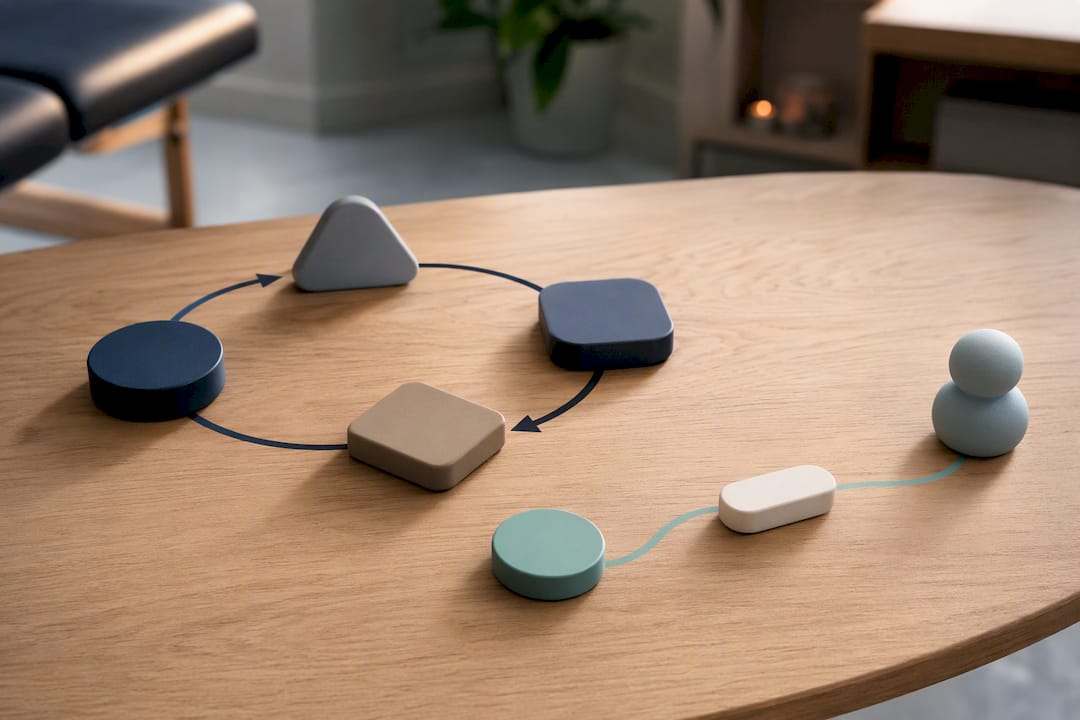
Pain that drags on for months changes how people move through daily life, and that’s worth naming directly. Avoiding chairs, dreading car rides, or bracing before sitting down are normal responses, but they can also feed a cycle where fear of pain leads to stiffness, which leads to more pain.
Breaking that cycle starts with pacing rather than avoidance. Sitting for short, planned intervals, even when it’s uncomfortable, tends to work better long term than avoiding chairs altogether, because total avoidance can make the surrounding muscles tighter and more reactive. Pairing activity with the breathing and pelvic-floor relaxation techniques covered earlier gives you something active to do with the discomfort instead of just tolerating it.
It also helps to track function, not just pain scores. Instead of asking “does it still hurt,” ask “can I sit through a meal, drive to work, or sit through a movie today compared to two weeks ago.” Chronic pain of any kind, tailbone included, tends to respond better to goals framed around what you can do again. If sleep is suffering or mood has taken a hit because of ongoing discomfort, that’s worth mentioning to a clinician too, since persistent pain and poor sleep tend to reinforce each other.
Do Acupuncture and Chiropractic Care Help Tailbone Pain?
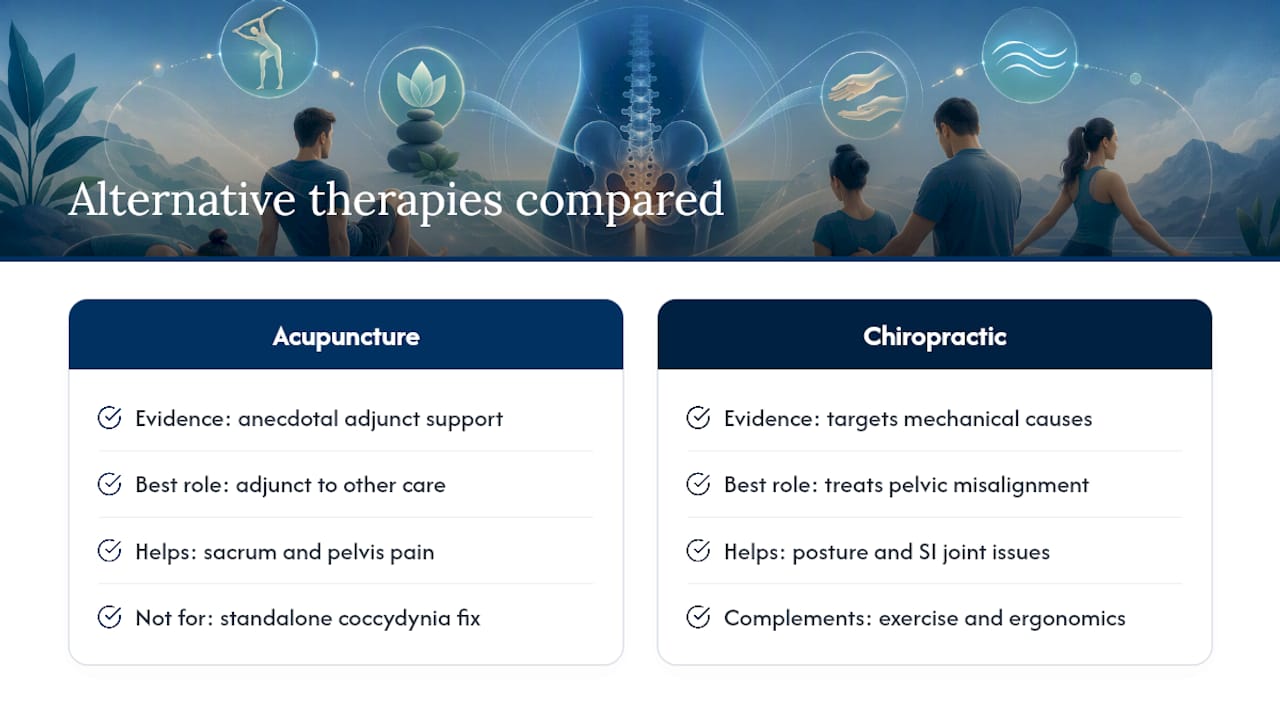
Alternative therapies show up often in coccydynia discussions, and the honest answer is that results vary by individual and by what’s actually driving the pain. Acupuncture is used anecdotally for musculoskeletal pain broadly, including around the sacrum and pelvis, though it’s better supported as an adjunct to other care than as a standalone fix for coccydynia specifically.
Chiropractic care fits more directly into the picture when the pain is tied to pelvic misalignment, postural compensation, or sacroiliac joint irritation feeding into the coccyx region. Manual adjustment and soft-tissue work can address those mechanical contributors in a way that ice and cushions alone don’t touch. It’s not a replacement for a coccyx injection when nerve-level pain is present, but for the mechanical, posture-driven cases that make up a large share of coccydynia, hands-on care targeting the surrounding structures often complements the exercise and ergonomic changes already covered.
A Realistic Note on Recovery Timelines
Most people improve with consistent conservative care, but “most” doesn’t mean “fast.” Recovery is often gradual, measured in weeks of steady progress rather than one turning point. Focus on regaining normal sitting and movement rather than chasing zero pain immediately, and if progress genuinely stalls for several weeks, that’s the signal to get hands-on evaluation instead of pushing through alone.
— Aman
Get a Personalized Assessment for Persistent Tailbone Pain
Home care resolves most coccydynia, but when sitting is still painful after weeks of cushions and ice, a hands-on assessment finds what’s actually driving it, whether that’s pelvic tilt, posture, or tight surrounding muscles nobody’s addressed yet. Everton Chiropractic builds a plan around your specific mechanics rather than a generic exercise sheet.

A first visit includes a posture and movement assessment, focused examination of pelvic alignment, and a treatment plan matched to how you actually sit, move, and work day to day. If your case needs imaging or an injection, the clinic will say so and point you in that direction rather than stretching out sessions that aren’t helping. For readers dealing with pain that’s stuck around longer than a typical flare-up, the long-term pain relief approaches page walks through how personalized care plans work in practice. Book an initial assessment with Everton Chiropractic to find out what’s actually behind your tailbone pain and get a plan built around it.
Sources
- Coccyx Pain – StatPearls – NCBI Bookshelf
- Tailbone Pain (Coccydynia) – Cleveland Clinic
- Tailbone pain: How can I relieve it? – Mayo Clinic
- Tailbone trauma – aftercare: MedlinePlus Medical Encyclopedia
This article is general information, not a substitute for advice from a qualified doctor. Consult a qualified healthcare professional about your own circumstances before acting on anything here.
FAQ
What Is the Fastest Way to Relieve Tailbone Pain?
Sit leaning forward on your thighs instead of straight back, use a coccyx cutout cushion, and apply ice for the first 48 hours. This combination offloads pressure immediately and is the standard first-line approach clinicians recommend.
What Causes Pain in the Tailbone?
The most common causes are a fall or direct trauma, childbirth, prolonged sitting on hard surfaces, and repetitive microtrauma from cycling or rowing. In some cases, no clear cause is ever identified.
What Should You Not Do If Your Tailbone Hurts?
Avoid sitting for long stretches without breaks, sitting flat on hard or backless surfaces, and straining during bowel movements. Skipping gentle movement in favor of total rest also tends to slow recovery rather than help it.
What Could Be Causing Pain in My Coccyx When I Sit?
Sitting compresses the coccyx directly, especially on hard chairs or when leaning back, so any existing bruising, muscle tension, or joint irritation there gets aggravated by pressure and posture. A cutout cushion and forward-leaning posture reduce that compression significantly for most people.