
Most shoulder blade pain comes from muscle strain, poor posture, or scapular dyskinesis (a fancy term for your shoulder blade not moving the way it should) and it responds well to targeted exercise within a couple of weeks. The exception is pain paired with chest pressure, shortness of breath, or fainting, which needs emergency care right away. If none of those signs apply, start gentle mobility work and simple strengthening now, and see a clinician if things haven’t improved in about two weeks.
TL;DR:
- Most shoulder blade pain results from muscle strain, poor posture, or scapular dyskinesis, and typically improves with targeted movement within two weeks.
- Serious causes such as heart, lung, or gallbladder issues are rarer but require urgent care if pain is accompanied by chest pressure, shortness of breath, or fainting.
- A proper assessment can distinguish between weakness and stiffness patterns, guiding appropriate exercises that take six to eight weeks to significantly reduce recurrence.
- Self-care routines should focus on mobility for stiff patterns and strengthening for unstable or fatigued shoulders, with gradual progression and proper posture adjustments.
- Imaging and professional treatment are reserved for cases lasting beyond two weeks, worsening symptoms, trauma, or abnormal neurological signs.
Table of Contents
- Key Takeaways On Shoulder Blade Pain
- What Causes Pain Around The Shoulder Blade?
- When Does Shoulder Blade Pain Need Urgent Care?
- Safe Exercises And Self-Care For Shoulder Blade Pain
- How To Prevent Shoulder Blade Pain From Coming Back
- What Treatment Looks Like When Self-Care Isn’t Enough
- How Evertonchiropractic Assesses Shoulder Blade Pain
- Where To Go Next If Home Care Isn’t Cutting It
- The Real Problem With Most Shoulder Blade Pain Advice
- Sources
- FAQ
Key Takeaways On Shoulder Blade Pain
Here’s the short version before you read further:
- Mechanical causes (muscle strain, posture, rib joint irritation) account for the vast majority of cases and improve with movement, not rest.
- Referred causes (heart, lungs, gallbladder) are rarer but serious, and they usually come with other symptoms beyond the shoulder blade itself.
- Timeline: expect gradual improvement over 1 to 2 weeks with self-care; structured exercise programs often need 6 to 8 weeks to meaningfully cut recurrence.
- Red flags that change the plan: chest pressure, breathlessness, fainting, numbness, or trauma with visible deformity.
What Causes Pain Around The Shoulder Blade?
The scapula, your shoulder blade, has 17 muscles attaching to it, and an imbalance among any of them is enough to trigger the ache, burning, or sharp pain people feel along its border. That single fact explains why so much shoulder blade pain has nothing to do with the shoulder joint at all.
The most common culprits break down like this:
- Muscle strain and overuse. The rhomboids, trapezius, and levator scapulae take the brunt of long hours hunched over a laptop or repetitive overhead work, and they tighten or tear under sustained load.
- Scapular dyskinesis. When the shoulder blade doesn’t glide smoothly against the rib cage, usually from weak stabilizers or stiff thoracic spine, it creates friction and pain patterns that mimic something more serious.
- Cervical spine referral. A pinched nerve root in the neck can send pain straight down between the shoulder blades, often with tingling in the arm.
- Rib dysfunction. A rib out of place, a thoracic joint that’s lost its normal motion, or slipping rib syndrome affecting ribs 8 through 10 can produce sharp pain around the rib cage back that worsens with twisting or coughing.
- Referred pain from internal organs. The heart, lungs, and gallbladder can all refer pain to the upper back, especially in women having a heart attack, who often report shoulder or upper back pain instead of classic chest pain.
When Does Shoulder Blade Pain Need Urgent Care?
Not all pain under the shoulder blade is equal, and knowing which category yours falls into changes what you do next.
- Call emergency services immediately if pain comes with chest pressure, shortness of breath, fainting, or unexplained sweating and nausea. These combinations can signal a cardiac event, and minutes matter.
- Book an urgent clinical review if you notice progressive weakness, numbness spreading down the arm, a visible deformity after trauma, or new difficulty breathing that isn’t severe enough for an ambulance but isn’t improving.
- Arrange a primary care or musculoskeletal assessment if pain persists past two weeks despite self-care, or if you’re losing function, such as being unable to lift your arm overhead or reach behind your back.
Fever, unexplained weight loss, or pain that wakes you at night are additional signals worth flagging to a clinician, since they can point toward causes beyond the musculoskeletal system.
Safe Exercises And Self-Care For Shoulder Blade Pain

Musculoskeletal pain affects an estimated 1.71 billion people worldwide, making it one of the leading causes of disability globally, and shoulder blade pain is a significant slice of that burden. The good news: most of it responds to a short, consistent routine rather than expensive intervention.
Use ice for the first 48 hours after an acute strain, then switch to heat for ongoing muscular tightness. Over-the-counter NSAIDs can help short term, but they’re a bridge to movement, not a substitute for it.
- Warm up the thoracic spine. Seated trunk rotations, a few minutes of foam rolling along the mid-back, and slow cat-cow stretches loosen the joints that feed into scapular movement.
- Start scapular squeezes. Pull your shoulder blades together and hold for 5 seconds, 2 to 3 sets of 10, once daily.
- Add band rows. Once squeezes feel easy, progress to resistance band rows, 2 sets of 12, three times a week.
- Finish with prone Y and T raises. Lying face down, lift your arms into a Y then a T shape to hit the lower trapezius, a muscle most people never train directly.
- Progress slowly. Increase resistance or reps only when the current level feels pain-free, and stop immediately if you feel sharp pain, tingling, or numbness.
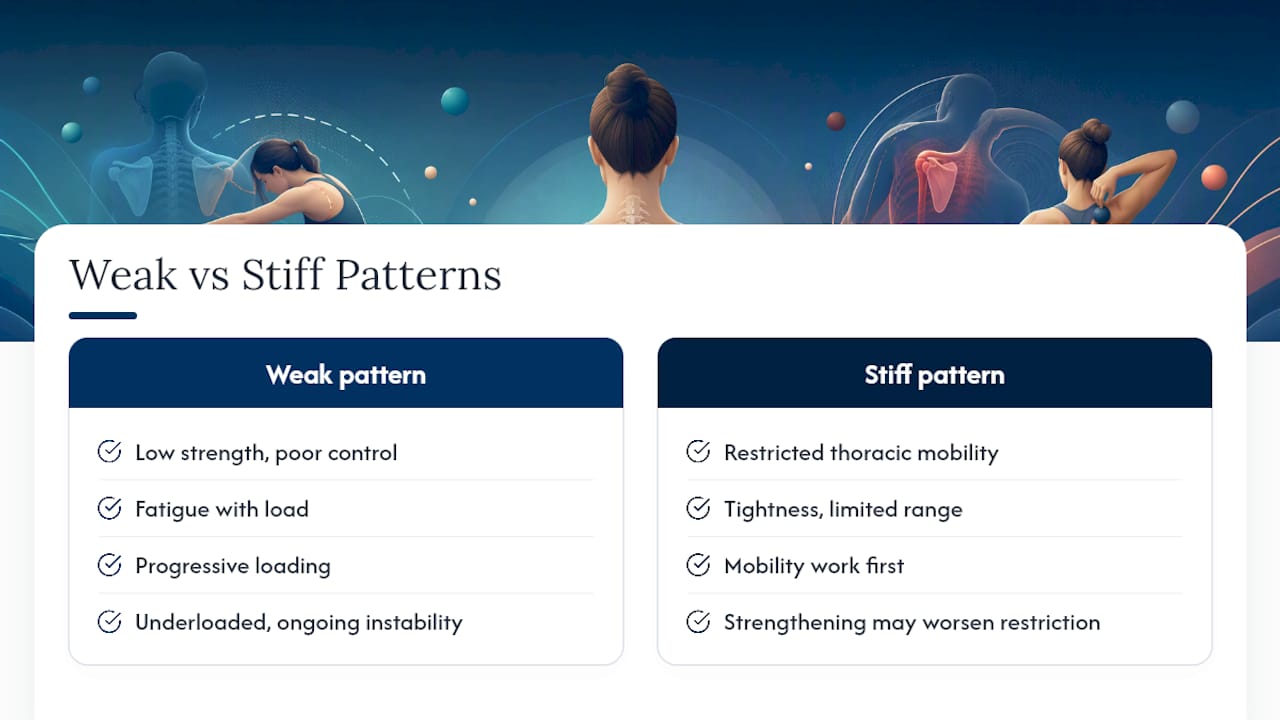
Pro Tip: If your shoulder blade feels tight and restricted, prioritize mobility work. If it feels unstable or fatigues quickly during daily tasks, prioritize the strengthening progression instead. Doing generic exercises without knowing which one you need is how people worsen an existing imbalance.
If you want more mobility-focused routines to pair with this, reducing shoulder tension through daily movement habits is worth building into your week.
How To Prevent Shoulder Blade Pain From Coming Back
Recurrence usually comes down to sustained posture and repetitive load, both of which are fixable with small daily changes.
- Set up your workstation properly. Monitor at eye level, elbows close to your body, and a real microbreak every hour, even just 60 seconds of standing and reaching overhead.
- Build in posture resets. A brief mid-back mobility drill every couple of hours undoes hours of forward-hunched sitting far more effectively than one long stretch session at night.
- Manage load if you’re active. Athletes and manual workers should scale volume gradually rather than jumping back into full intensity after time off.
- Fix your sleep position. A pillow that’s too high or too flat rotates the neck and drags on the upper back muscles all night; aim for neutral alignment between your neck and spine.
Desk-based pain has its own specific fixes worth reading if that’s your main trigger, covered in what helps with shoulder pain from desk work.
What Treatment Looks Like When Self-Care Isn’t Enough
A clinician evaluating shoulder blade pain typically checks more than the shoulder itself. Expect assessment of neck mobility, thoracic spine motion, rib expansion, how your scapula moves through a full arm raise, and basic neurologic testing if there’s any numbness or tingling.
Conservative care remains the standard first step for the overwhelming majority of cases:
- Physical therapy or chiropractic care to restore joint mobility and retrain scapular movement patterns.
- Progressive rehab exercises, similar to the routine above but tailored to your specific dysfunction.
- Short-term medication, usually NSAIDs, to manage pain while you work through the exercise progression.
Imaging, such as an X-ray or MRI, gets reserved for cases involving trauma, suspected fracture, or symptoms that don’t improve after a full course of conservative treatment. Injections or surgery are uncommon and generally considered only for structural issues like severe nerve compression or a labral tear that hasn’t responded to months of rehab. If a diagnosis like frozen shoulder complicates the picture, treatment shifts considerably, which is covered in chiropractic approaches to frozen shoulder.
How Evertonchiropractic Assesses Shoulder Blade Pain
Evertonchiropractic starts with a functional movement assessment rather than jumping straight to treatment, looking specifically at how the scapula tracks during arm elevation and where thoracic mobility might be limiting normal movement.
Posture correction isn’t a cosmetic goal. It changes the mechanical load on the muscles around your shoulder blade, which is often the actual driver of recurring pain that generic stretching never resolves.
Treatment plans combine hands-on manual therapy with movement retraining and a home exercise progression matched to what the assessment finds. If red flags surface or symptoms don’t respond as expected, co-management with imaging or specialist referral happens early rather than after months of guessing. Bring a list of when the pain started, what movements aggravate it, and any prior injuries to your first visit.
Where To Go Next If Home Care Isn’t Cutting It
Two weeks of consistent self-care is a reasonable trial period for most mechanical shoulder blade pain. If you’re past that point and still dealing with a persistent ache between your shoulder blades, or if the pain keeps interrupting sleep and work, it’s worth getting a proper assessment rather than guessing at more exercises. Evertonchiropractic’s long-term pain relief programs are built around identifying the actual mechanical driver, whether that’s rib dysfunction, thoracic stiffness, or scapular instability, and correcting it rather than just calming the symptom down for a week.
The Real Problem With Most Shoulder Blade Pain Advice

Generic exercise lists are where most shoulder blade pain content goes wrong. Telling everyone to do scapular squeezes and wall slides treats every case as identical, when the actual driver splits roughly into two camps: people who are weak and need loading, and people who are stiff and need mobility work first. Give a stiff, restricted upper back a strengthening program and you can aggravate the very joint restriction causing the pain in the first place.
The other gap is timeline honesty. Most self-care advice implies relief in days. The research on scapular dyskinesis points to 6 to 8 weeks of consistent, targeted work to meaningfully reduce recurrence, not just quiet the ache temporarily. That’s a longer commitment than most people expect, and it’s exactly why people bounce between remedies instead of sticking with one approach long enough to see it work.
If there’s one thing worth prioritizing above all else, it’s getting an accurate read on which pattern you’re dealing with before you start exercising. A five-minute assessment that identifies whether you’re weak, stiff, or dealing with a rib or nerve issue saves weeks of trial and error with the wrong routine.
— Aman
Sources
- Shoulder pain: most common causes and how to fix it — Cleveland Clinic
- Conservative care and rehab approaches — PMC (AAOS/related review)
- Scapular/shoulder blade disorders — OrthoInfo (AAOS)
- Slipping rib syndrome — Cleveland Clinic
FAQ
How do you get rid of pain in the shoulder blade?
Start with gentle thoracic mobility work and scapular strengthening exercises like squeezes and band rows, applying ice for acute strains or heat for chronic tightness, and give it about two weeks before expecting significant improvement.
Why does my shoulder blade hurt on one side?
One-sided shoulder blade pain usually points to a localized issue like muscle strain from repetitive use, a rib joint restriction, or nerve irritation from the neck on that same side, rather than a systemic cause.
What could be causing pain between my shoulder blades?
Pain between the shoulder blades most often comes from postural strain on the rhomboids and mid-trapezius, thoracic spine stiffness, or a rib out of place, though it can occasionally reflect referred pain from the heart or lungs.
What are the common causes of pain under the scapula?
Pain under the shoulder blade commonly stems from scapular dyskinesis, rib dysfunction such as slipping rib syndrome, or nerve referral from the cervical spine, and less often from referred pain involving the heart, lungs, or gallbladder.