
Yes, targeted exercises can correct most cases of medial (serratus anterior) scapular winging. Start with push-up plus, dynamic hug, serratus punches, and wall slides, since these activate the serratus anterior without overloading it. Begin with activation drills at low resistance, and get a clinician assessment first if you notice sudden weakness, numbness, or rapidly worsening shoulder blade movement.
TL;DR:
- Most cases of medial scapular winging can improve through targeted exercises that activate and stabilize the serratus anterior muscle.
- Exercises like push-up plus, wall slides, serratus punches, and dynamic hugs are proven to maximize serratus anterior activation while minimizing upper trapezius engagement.
- Proper diagnosis of winging type is crucial, as medial winging often results from serratus anterior weakness, while lateral winging involves the trapezius or rhomboids.
- Rehabilitation typically progresses from low-load activation and stabilization to resistance strengthening over a 12-week timeline, with longer periods needed for nerve injuries.
- Manual therapy and taping act as supportive treatments but do not replace the core exercise regimen, which remains essential for successful recovery.
Table of Contents
- Which Scapular Winging Exercises Should You Start With?
- How Do You Know Which Type of Winging You Have?
- How Do You Progress Scapular Exercises Safely?
- What’s the Realistic Timeline for Recovery?
- How Does Everton Chiropractic Approach Scapular Winging?
- Why the Trapezius and Rhomboids Matter Just as Much
- Where Do These Exercises Fit in a Bigger Rehab Plan?
- Do Manual Therapy and Taping Actually Help?
- What I’d Tell Anyone Starting This Rehab
- How Everton Chiropractic Can Help You Move Better
- Sources
- FAQ
Which Scapular Winging Exercises Should You Start With?
Not every exercise earns its place in a rehab plan. The ones below made the cut because they either isolate the serratus anterior or build the stability that lets it fire correctly.
- Push-up plus: Adds a protraction phase at the top of a standard push-up, directly targeting serratus anterior fibers with minimal equipment.
- Wall slides: Sliding the arms up a wall while keeping shoulder blades flat teaches upward rotation without shrugging through the upper trapezius.
- Serratus punches: A supine “punch” toward the ceiling reinforces protraction in a low-load, easy-to-feel position, ideal for beginners.
- Dynamic hug: Using a resistance band to mimic hugging a large object emphasizes protraction through a full range of motion.
- Prone Y/T raises: Lying face down and lifting the arms into a Y or T shape strengthens the lower trapezius and rhomboids that support scapular control.
- Scapular squeezes: A simple retraction hold builds baseline awareness of shoulder blade position before adding movement complexity.
EMG research confirms push-up plus, dynamic hug, and scaption with external rotation drive the highest serratus anterior activation while keeping upper trapezius involvement low. If pain or weakness makes a full push-up plus impossible, drop to a wall-supported version or the supine serratus punch. Both preserve the movement pattern at a fraction of the load.
How Do You Know Which Type of Winging You Have?
The exercise plan changes depending on which muscle failed. Medial winging, where the inside border of the shoulder blade lifts off the rib cage, usually points to a weak or denervated serratus anterior, often from long thoracic nerve injury. Lateral winging, where the shoulder blade shifts outward and the inferior angle rotates, more often involves the trapezius or rhomboids, sometimes tied to spinal accessory nerve damage. Getting this distinction right matters, because rehab for one can aggravate the other.
Three simple tests help sort this out at home before you see a clinician:
- Wall push test: Push both hands into a wall at shoulder height. If the medial border wings out, suspect serratus anterior weakness.
- Forward flexion observation: Raise both arms overhead slowly in front of a mirror. Medial winging tends to worsen past 90 degrees of flexion; lateral winging often appears earlier and at rest.
- Resisted scapular protraction: Press against resistance (a wall or partner’s hand) with the arm extended forward. Pain-free but weak protraction supports a serratus anterior issue rather than a nerve entrapment causing pain.
Stop testing and get evaluated if you notice sudden paralysis, numbness or tingling down the arm, or a rapid decline in shoulder function over days rather than weeks. Those signs point past simple muscular weakness and warrant prompt imaging or a nerve conduction study. If you’re unsure whether your symptoms are urgent, this guide to recognizing warning signs that require professional evaluation applies the same logic to nerve-related shoulder issues.
How Do You Progress Scapular Exercises Safely?
Rehab for scapular winging follows a hierarchy for a reason: activation before stabilization, stabilization before load. Skipping straight to resistance bands or weighted presses before the serratus anterior fires consistently just teaches your shoulder blade to compensate with the upper trapezius or pec minor, which reinforces the winging pattern instead of fixing it.
- Weeks 0 to 4, activation phase. Practice supine serratus punches and wall slides daily, using two fingers on the inferior angle of the scapula for tactile feedback. You should feel the shoulder blade glide flat against the rib cage, not shrug upward. Aim for 2 to 3 sets of 10 to 15 slow reps.
- Weeks 4 to 12, stabilization phase. Progress to incline push-up plus (hands on a bench, easier lever) working toward a full floor version, add resistance-band dynamic hugs, and introduce prone Y and T raises. A sample clinic progression matches this exact window, layering low-resistance bands once activation is consistent.
- Week 12 onward, strength phase. Add scaption with external rotation and resisted serratus punches using light dumbbells or cable resistance, increasing load only when the shoulder blade stays flush against the rib cage through the full range.
Watch for two common compensations: shoulder shrugging (upper trapezius taking over) and elbow flare during push-up plus (pectoralis major substituting for serratus anterior). Both mean you’re moving too fast or too heavy for the tissue’s current capacity, so drop back a stage rather than pushing through.
A basic weekly structure looks like 5 to 10 minutes of activation drills daily, plus 2 to 3 supervised sessions a week where a clinician checks form and clears you to progress.
Pro Tip: Place your fingertips directly on the muscle you’re trying to activate before each set. That two-second tactile cue does more to prevent compensation patterns than adding an extra set ever will.
What’s the Realistic Timeline for Recovery?
Recovery timelines vary widely because the cause of the winging matters more than the exercises themselves. Clinical reviews recommend conservative physical therapy as the first-line treatment for medial serratus anterior winging, with surgery reserved for cases where structured rehab fails over an extended period.
- Mild cases tied to muscle imbalance or poor motor control often improve within 6 to 12 weeks of consistent activation work.
- Nerve-related winging (long thoracic nerve injury) tends to take 6 to 24 months of conservative treatment before clinicians even consider surgical referral.
- Avoid aggressively stretching a denervated serratus anterior early in recovery. Overstretching a muscle that isn’t firing yet can delay reinnervation rather than speed it up.
Seek urgent review if you notice worsening pain, new numbness, or a shoulder blade that’s winging more than it was a month ago despite consistent exercise. Physical therapy helps maintain range of motion and prevents contracture. However, it isn’t a guaranteed fix when nerve damage is severe.
How Does Everton Chiropractic Approach Scapular Winging?
Assessment starts with watching how the shoulder blade moves through active flexion and loaded protraction, not just checking strength in isolation. Tactile feedback cues, similar to the finger-on-scapula technique described in clinical activation protocols, help patients feel the correct movement before adding resistance. Where nerve irritation is suspected, gentle nerve-gliding techniques may support the exercise program.
Plans get adjusted to a person’s daily demands, whether that’s a desk job with rounded shoulders or an athlete rebuilding overhead strength. Improvements in scapular control can be noticed within a handful of sessions, though full strength gains take longer. Initial visits typically include a movement assessment, a discussion of when symptoms started, and a home exercise starting point.
Why the Trapezius and Rhomboids Matter Just as Much
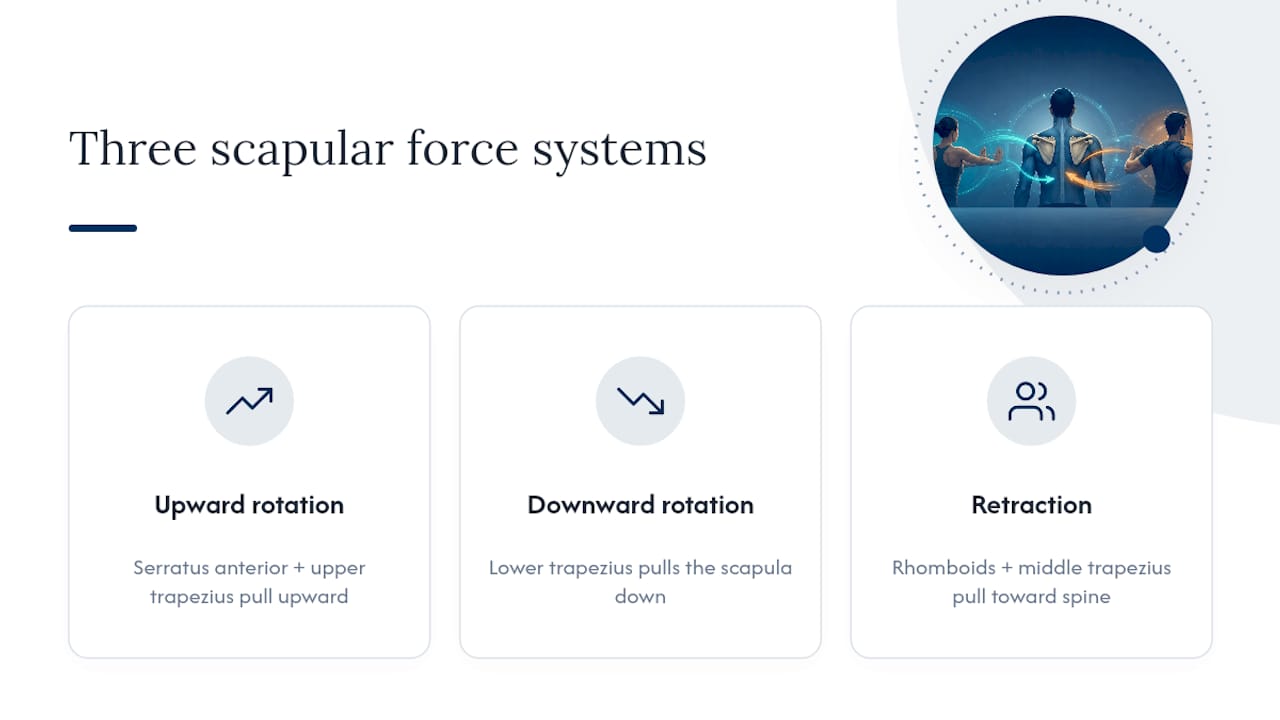
The serratus anterior gets most of the attention, but it doesn’t stabilize the shoulder blade alone. The lower trapezius works as a downward rotator that counterbalances the serratus anterior’s upward pull, and weakness here often shows up as the shoulder blade tipping forward during overhead reaching, a pattern easy to mistake for serratus dysfunction alone. The rhomboids, meanwhile, handle retraction, pulling the scapula toward the spine, and chronically weak rhomboids let the shoulder blade drift laterally even when the serratus anterior is working fine.
This is why isolated serratus drills sometimes stall. If someone spends weeks on push-up plus and dynamic hug with little improvement, the missing piece is often lower trapezius or rhomboid strength, not more serratus work. Prone Y raises target the lower trapezius directly, while scapular squeezes and resisted rowing motions build rhomboid strength.
Think of the scapula as balanced by three pulling forces rather than one muscle doing all the work. Upward rotation (serratus anterior and upper trapezius), downward rotation (lower trapezius), and retraction (rhomboids and middle trapezius) all need to work in coordination for the shoulder blade to sit flat and move smoothly. A rehab program that only chases one force while ignoring the other two tends to plateau, which is part of why a broader movement quality assessment often catches imbalances a narrow exercise list misses.
Where Do These Exercises Fit in a Bigger Rehab Plan?
Scapular winging rarely shows up in isolation. It’s often tangled up with forward head posture, thoracic stiffness, or compensatory neck tension, all of which change how the shoulder blade sits against the rib cage before you even start an exercise. A comprehensive program addresses those upstream factors alongside the direct scapular work.
Postural assessment usually comes first, since a rounded thoracic spine changes the resting position of the scapula and can make winging look worse than it is. Addressing forward head posture alongside scapular drills often speeds up visible improvement, because the two patterns feed into each other.
Mobility work for the thoracic spine and pectoral muscles typically runs alongside activation drills, since a stiff upper back limits how far the shoulder blade can rotate upward, no matter how strong the serratus anterior gets. Neck and shoulder tension also deserves attention, since compensatory gripping in the upper trapezius during scapular exercises usually traces back to unresolved tension elsewhere. Reducing that tension tends to make the target exercises easier to feel correctly.
Finally, functional integration matters. Isolated exercises are a starting point, not the finish line. Reintroducing overhead reaching, carrying, and rotational movement patterns once basic stability is established prevents the gains from staying stuck in a training room instead of showing up in daily life.
Do Manual Therapy and Taping Actually Help?
Exercise does the heavy lifting in most scapular winging cases, but adjunct therapies can make that exercise more effective. Manual therapy, particularly soft tissue work on the pectoralis minor, upper trapezius, and levator scapulae, can loosen compensatory tightness that otherwise fights against correct scapular movement. If those muscles are locked short, activation drills have to work against that tension instead of building on a neutral baseline.
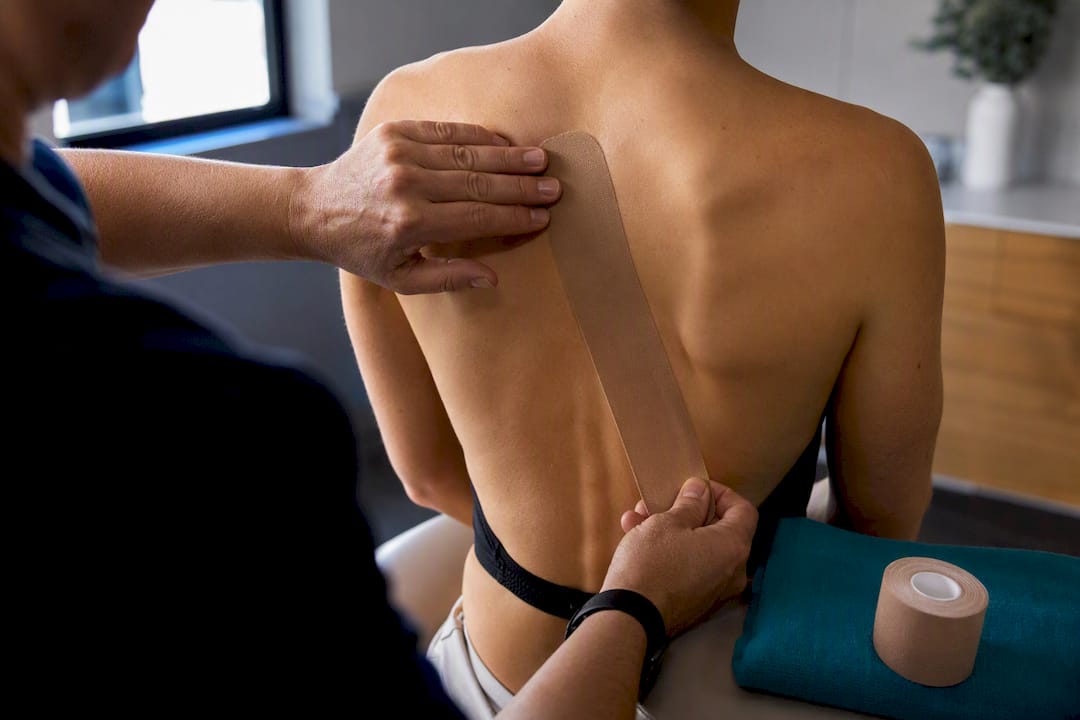
Taping serves a different purpose. Applied along the medial border of the scapula or over the serratus anterior, it provides sensory feedback that reminds the nervous system where the shoulder blade should sit during daily movement, not just during a structured exercise set. This carryover matters more than people expect, since most winging shows up during unconscious movement, like reaching for a coffee mug, not during a focused training session.
Neither manual therapy nor taping replaces the exercises themselves. They work best as a supporting layer that reduces friction so the activation and stabilization drills can do their job faster. A clinician can also spot which soft tissue restrictions are actually limiting your movement versus which compensations will resolve on their own once the serratus anterior gets stronger, which is where an in-person assessment earns its cost over guesswork at home.
What I’d Tell Anyone Starting This Rehab
Start with activation, not effort. The instinct to push hard and add resistance early is exactly backward. Until your shoulder blade moves cleanly against the rib cage at low load, more weight just teaches faster compensation.
The mistakes I see most often: rushing from wall slides to loaded scaption in two weeks, ignoring the shoulder shrug that creeps in by rep eight, and aggressively stretching a weak serratus anterior because it “feels tight.” Slow down, and let movement quality set the pace, not the calendar.
— Aman
How Everton Chiropractic Can Help You Move Better
If you’ve tried home exercises and progress has stalled, or you’re not confident your winging is medial rather than lateral, an in-person assessment closes that gap fast. Everton Chiropractic offers what a printed exercise sheet can’t: a clinician watching your scapula move in real time, correcting compensations before they become habits.

A typical first visit covers a movement assessment of your shoulder blade through flexion, protraction, and loaded positions, a review of when your symptoms started and what’s made them better or worse, and a starting exercise plan matched to your current strength rather than a generic template. Bring loose clothing that allows shoulder access and a note of any activities that consistently trigger symptoms. Dr. Richard’s approach centers on personalized chiropractic treatment plans that adjust as your scapular control improves, rather than a fixed program that ignores how you’re actually progressing. If nerve involvement is part of the picture, the clinic’s nerve pain relief approach targets the underlying cause instead of just the symptom. Book an assessment to find out exactly which muscles need work and get a plan built around your shoulder, not a generic handout.
Sources
For further clinical detail, see the StatPearls review on scapular winging, the EMG activation study, the PMC exercise review, and the CUH patient exercise handout.
This article is general information, not a substitute for advice from a qualified doctor. Consult a qualified healthcare professional about your own circumstances before acting on anything here.
- Electromyographic studies identifying serratus anterior–activating exercises (PubMed entry)
- Winging of the Scapula – StatPearls (NCBI Bookshelf)
- Exercises targeting serratus anterior and trapezius (PMC review)
FAQ
Can Scapular Winging Be Fixed With Exercise?
Most medial (serratus anterior) winging improves with a staged exercise program that moves from activation to stabilization to resistance, though nerve-related cases can take longer and sometimes need clinical support beyond exercise alone.
How Do You Reduce Scapular Winging?
Reducing scapular winging starts with tactile activation drills like serratus punches and wall slides, then progresses to stabilization exercises such as push-up plus and dynamic hug once the movement pattern is consistent.
Can You Fully Remove Scapular Winging?
Many cases resolve close to fully with consistent, correctly progressed exercise, but outcomes depend on the underlying cause. Nerve injuries sometimes leave residual weakness even after months of rehab.
How Long Does It Take to Fix Scapular Winging?
Muscle-imbalance cases often improve within 6 to 12 weeks, while nerve-related winging typically needs 6 to 24 months of conservative treatment before other options are considered.