
Pain at the top or outer edge of your shoulder that flares up when you reach overhead and won’t let you sleep on that side most likely points to rotator cuff impingement. Watch for a painful arc between 70 and 120 degrees of arm lift, weakness raising the arm, and stiffness that limits reach. Seek urgent care if you have chest pain, sudden inability to move the arm, or visible deformity after an injury.
TL;DR:
- Repetitive overhead activities, poor posture, age-related degeneration, and shoulder overload increase the risk of rotator cuff impingement, especially in those with prior shoulder issues.
- Most symptoms subside within a few weeks to months with activity modifications, targeted exercises, and conservative treatments, but chronic cases risk progressing to tears if untreated.
- Accurate diagnosis relies on a thorough clinical exam focusing on movement patterns, strength testing, and scapular assessment, with imaging reserved for uncertain or severe cases.
- Night pain is common and results from the inflamed tendon pressing against the bone, which worsens with lying on the affected side or on the back.
- Early assessment and active management can prevent long-term disability, while neglecting symptoms may lead to persistent weakness, sleep disturbance, and possible tendon rupture.
Table of Contents
- What Are the Main Symptoms of Rotator Cuff Impingement?
- How Do You Tell Impingement Apart From Other Shoulder Problems?
- What Causes Rotator Cuff Impingement?
- How Do Clinicians Diagnose Shoulder Impingement?
- What’s the Best Way to Manage Shoulder Impingement at Home?
- How Long Does It Take for Rotator Cuff Impingement to Heal?
- What to Expect From a Shoulder Assessment at Everton Chiropractic
- Why Early Assessment Beats Waiting It Out
- How Everton Chiropractic Can Help With Shoulder Impingement
- Sources
- FAQ
What Are the Main Symptoms of Rotator Cuff Impingement?
The pain sits at the top or outer part of the shoulder, sometimes spreading down the outside of the upper arm. Early on it feels like a dull ache. As the tendon gets more irritated, it sharpens into a stab during specific movements. This condition is the most common driver of shoulder pain in outpatient clinics, responsible for 44% to 65% of shoulder-related complaints.
Certain movements set it off predictably:
- Reaching overhead, like putting away dishes or grabbing something off a high shelf
- Lifting objects away from your body
- Reaching behind your back to fasten a bra or tuck in a shirt
- Throwing motions, especially in sports like tennis or swimming
Night pain deserves its own mention because it’s often the symptom that finally sends people looking for answers. Lying on the affected shoulder compresses the already inflamed tendon against the bone above it, and even lying on your back can pull the arm into a position that increases tension on the rotator cuff. Rotator cuff disease is strongly linked to disrupted sleep — several cohort studies report that 70% to 90% of patients with rotator cuff disease experience meaningful sleep disturbance, which tracks with what clinicians hear constantly in the exam room: “I can’t find a comfortable position at night.”
Beyond pain, look for stiffness when reaching, tenderness when you press on the front or side of the shoulder, weakness when lifting the arm or rotating it outward, and a clicking or popping sensation during movement. One specific clinical sign worth knowing: a painful arc between roughly 70 and 120 degrees of arm abduction often signals that the rotator cuff tendon is catching under the shoulder bone at that exact range, while pain outside that window may point elsewhere.
How Do You Tell Impingement Apart From Other Shoulder Problems?
Shoulder pain has several look-alikes, and getting the distinction right changes the treatment plan.
- Rotator cuff tear. Impingement causes pain with activity and some weakness, but a tear usually brings more pronounced strength loss, sometimes after a specific traumatic event, and the functional deficit tends to persist rather than come and go.
- Adhesive capsulitis (frozen shoulder). This condition progresses through stages marked by a genuine loss of passive range of motion. Someone else moving your arm for you still can’t get it very far, which isn’t typical of straightforward impingement.
- Cervical radiculopathy. Neck problems can refer pain into the shoulder and arm, often with numbness or tingling that follows a specific nerve pathway. If turning or tilting your neck reproduces the shoulder symptoms, the issue may actually be a pinched nerve rather than the shoulder itself.
Two quick self-checks worth mentioning to a clinician: does moving your neck reproduce the shoulder pain, and does resisting arm lift or outward rotation cause pain or a sudden give in strength?
What Causes Rotator Cuff Impingement?
Most cases build up gradually rather than striking from a single incident.
- Repetitive overhead loading from swimming, throwing sports, painting, or overhead work tasks
- Training errors, like ramping up shoulder exercise volume too fast
- Degenerative changes, including age-related tendon thinning and bone spurs on the acromion that narrow the space the tendon runs through
- Postural and scapular dysfunction, where a rounded upper back and poor shoulder blade control let the tendon get pinched more easily
- Occupational demands, such as jobs requiring constant reaching above shoulder height
Age and prior shoulder injury raise your baseline risk and aren’t things you can change. Posture and how you load the shoulder are different stories.
Pro Tip: Notice which specific movement triggers your pain, and pay attention to your shoulder position during long desk or driving sessions. Rounded shoulders held for hours quietly narrow the space your rotator cuff tendon needs.
How Do Clinicians Diagnose Shoulder Impingement?
Diagnosis is mostly clinical, built on a careful history and hands-on exam rather than jumping straight to imaging. A clinician will typically walk through:
- Questions about which movements provoke pain and whether it disturbs your sleep
- The painful arc test, moving your arm through the range where impingement pain typically appears
- Resisted strength testing for the specific rotator cuff muscles
- An assessment of scapular positioning and movement patterns
- A neck screen to rule out radiculopathy, since referred pain from the cervical spine is a common mimic
Imaging isn’t always necessary. X-rays can show bone spurs, ultrasound can visualize tendon inflammation, and MRI gets ordered when a tear is suspected or when conservative treatment isn’t working after a reasonable trial. History and exam findings guide the diagnosis first; scans confirm rather than lead.
Some symptoms need urgent attention rather than a scheduled appointment: sudden inability to move the arm after trauma, chest pain, fever with shoulder swelling, or visible deformity. Those point toward something beyond routine impingement and belong in an emergency setting.
What’s the Best Way to Manage Shoulder Impingement at Home?
Total rest sounds logical but usually backfires. Complete immobilization raises your risk of developing adhesive capsulitis on top of the impingement you already have, since a stiff, unused shoulder tends to get stiffer.
- Modify, don’t eliminate, activity. Skip the specific overhead motions that provoke pain, but keep the shoulder gently moving through a comfortable range daily.
- Use ice for acute flare-ups, roughly 15 to 20 minutes at a time, and switch to heat for general stiffness once the sharp pain settles.
- Consider short-term OTC anti-inflammatories if you have no contraindications, but check with a pharmacist or doctor first, especially with existing stomach, kidney, or heart conditions.
- Adjust your sleep position. Lying on your back with a pillow supporting the affected arm, or sleeping on the unaffected side with a pillow hugged for support, reduces the mechanical tension driving night pain.
- Start guided physiotherapy focused on scapular control and rotator cuff strengthening once acute pain settles. Improving scapular mechanics reduces the compression that causes symptoms in the first place, and this is usually the single most effective long-term intervention. Corticosteroid injections or surgical referral come into the picture when conservative care over several months hasn’t moved the needle.
Pro Tip: A few gentle pendulum swings and wall slides done daily, even on a bad pain day, do more to protect your long-term mobility than skipping movement entirely.
How Long Does It Take for Rotator Cuff Impingement to Heal?
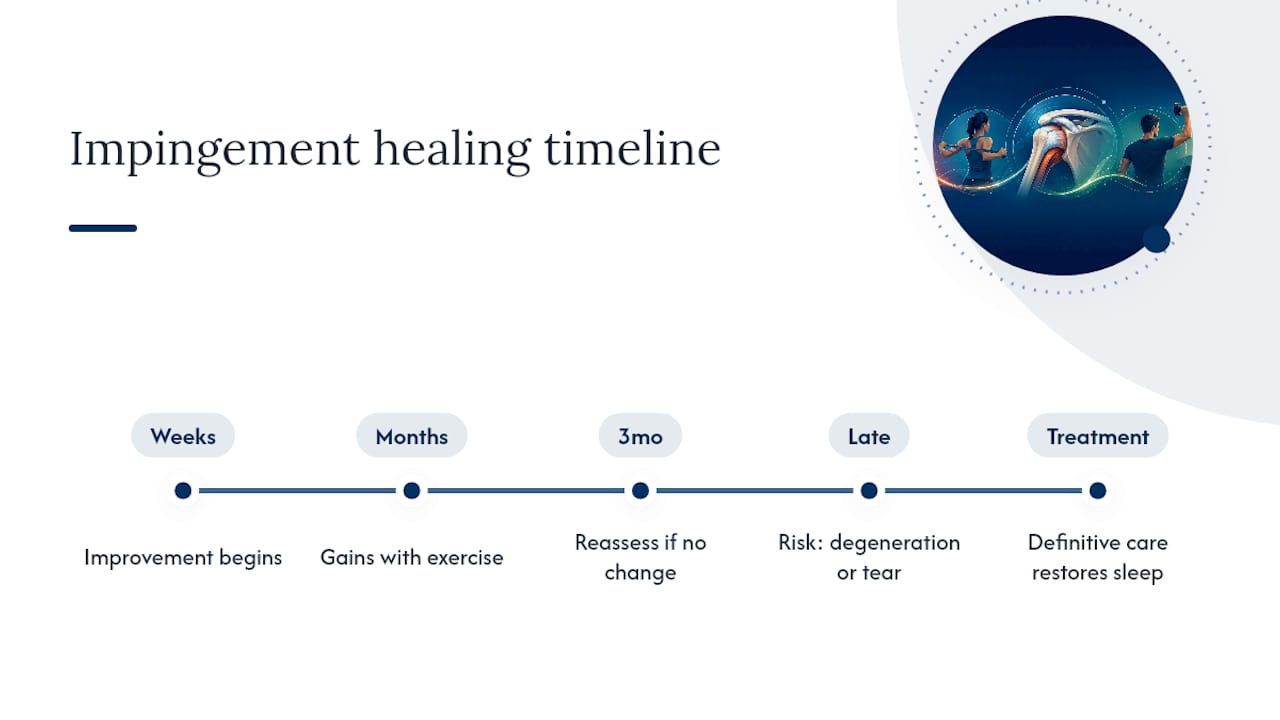
Most people notice real improvement within a few weeks to a few months of consistent activity modification and targeted exercise. If pain and weakness haven’t budged after three months, that’s the point to get reassessed rather than keep waiting it out.
Left untreated, or if you keep loading the shoulder the same aggravating way, impingement can progress toward tendon degeneration and eventually a partial or full tear. Since rotator cuff disease disrupts sleep for the large majority of people who have it, one of the more reassuring findings from that same research is that definitive treatment tends to restore normal sleep once the underlying problem resolves.
What to Expect From a Shoulder Assessment at Everton Chiropractic
Dr. Richard and the team at Everton Chiropractic approach shoulder pain the same way they approach any joint issue: figure out the actual mechanical driver before treating symptoms. An assessment typically covers:
- A posture and scapular mechanics check, since shoulder blade position drives a lot of impingement cases
- Range-of-motion testing to see exactly which movements reproduce your pain
- Resisted strength testing of the rotator cuff muscles
- A neck screen to rule out cervical involvement
From there, a plan usually blends home self-care guidance, targeted rehab exercises, and manual therapy where appropriate. If findings suggest a tear or don’t respond to a reasonable trial of conservative care, referral for imaging or an orthopedic opinion follows. Some patients may notice function improving within a few weeks, with reassessment scheduled to track progress.
Why Early Assessment Beats Waiting It Out
The biggest mistake I see with shoulder pain is treating it like it’ll sort itself out with enough time. It usually doesn’t. Waiting months to get a stiff, weak shoulder looked at gives a manageable tendon irritation room to become chronic tendon degeneration. Early guided rehab, sensible load management, and honest reporting of how bad your sleep loss and functional limits actually are will save you months of frustration. Prevention is unglamorous: better posture, smarter training progression, and shoulder blade strength work. It’s also what actually works.
— Aman
How Everton Chiropractic Can Help With Shoulder Impingement
An individualized plan built around your specific posture, movement pattern, and pain triggers offers benefits beyond a generic stretching routine or a wait-and-see approach.

A first visit generally covers a detailed history of how and when your pain started, a hands-on assessment of your shoulder and scapular mechanics, and practical home advice. From there, a treatment plan is built around your actual goals, whether that’s getting back to swimming, clearing overhead work tasks pain-free, or simply sleeping through the night again. The clinic’s spinal alignment treatment and posture correction services also address the upper-back and scapular positioning issues that quietly feed shoulder impingement in office workers and desk-bound patients.
If your shoulder pain has been dragging on for weeks, or if you’re dealing with night pain that’s wrecking your sleep, book a chiropractic consultation to get an assessment started. If you’re experiencing any red flag symptoms like sudden loss of arm function or chest pain, seek emergency care first.
Sources
- Shoulder Impingement Syndrome – StatPearls
- Shoulder impingement – NHS
- Rotator cuff disease and sleep disturbance (PMC review)
These sources cover general patterns seen across the population. Your own shoulder pain deserves a hands-on exam from a qualified clinician before you settle on a diagnosis.
This article is general information, not a substitute for advice from a qualified doctor. Consult a qualified healthcare professional about your own circumstances before acting on anything here.
FAQ
What Does an Impinged Rotator Cuff Feel Like?
It usually feels like a dull ache at the top or outer shoulder that sharpens into a stabbing pain during overhead reaching, lifting, or reaching behind your back. Many people also notice pain that worsens at night, stiffness, and a clicking sensation with certain movements.
What Are Two Signs of Shoulder Impingement?
The two clearest signs are a painful arc, meaning pain specifically between about 70 and 120 degrees of arm lift, and weakness or pain when lifting the arm overhead or rotating it outward. Tenderness when pressing on the front of the shoulder is a common third sign.
How Do You Fix a Rotator Cuff Impingement?
Most cases improve with activity modification, gentle daily range-of-motion work, short-term ice or anti-inflammatories, and a guided strengthening program focused on the rotator cuff and shoulder blade muscles. A chiropractic consultation can help identify the specific mechanical triggers behind your pain and build a plan around them; cases that don’t improve after several months of conservative care sometimes need injections or a surgical opinion.
How Long Does It Take for a Rotator Cuff Impingement to Heal?
Many people see meaningful improvement within a few weeks to a few months of consistent activity changes and rehab exercise. Symptoms lasting beyond three months without improvement generally warrant reassessment to rule out a developing tear.
Can a Pinched Nerve in the Neck Cause Shoulder Impingement Symptoms?
A pinched nerve in the neck can mimic shoulder impingement by referring pain, numbness, or tingling down into the shoulder and arm. If turning or tilting your neck reproduces the shoulder pain, the neck is worth examining alongside the shoulder itself.