
Movement breaks are defined as brief, intentional interruptions to prolonged sitting or static postures that actively relieve spinal stress and restore musculoskeletal function. The role of movement breaks in spine health goes far beyond simple comfort. Static postures held for as little as 10 minutes reduce multifidus muscle activity and increase spinal ligament strain. That means your spine starts accumulating damage well before you feel any discomfort. Regular movement breaks counter this by improving circulation, reactivating deep spinal stabilizers, and reducing the mechanical load that builds up through the workday.
What physiological effects do movement breaks have on the spine?
The spine is a kinetic chain designed for movement, not sustained stillness. When you stay in one position too long, spinal discs lose fluid, ligaments stretch under load, and the deep stabilizing muscles that protect your vertebrae go quiet. Movement reverses all three of those processes at once.
Movement activates blood flow and encourages nutrient exchange in spinal tissues. Spinal discs have no direct blood supply, so they depend entirely on this fluid exchange to stay hydrated and resilient. Without regular movement, discs gradually dehydrate and lose their shock-absorbing capacity.

The multifidus muscle sits deep along the spine and fires constantly during healthy movement to keep vertebrae aligned. Prolonged sitting switches it off. Reactivating it through short movement breaks restores the natural support system your spine relies on throughout the day.
Diaphragmatic breathing during movement breaks enhances core stability and spinal support. Shallow chest breathing increases tension in the neck and upper back. Breathing from the diaphragm resets spinal muscle activation and reduces that accumulated tension.
Key physiological benefits of movement breaks include:
- Disc hydration: Gentle movement pumps fluid back into spinal discs, maintaining their height and flexibility.
- Ligament recovery: Brief activity relieves the sustained stretch that causes ligament inflammation over time.
- Muscle reactivation: Walking or gentle mobility exercises wake up the multifidus and other deep stabilizers.
- Circulation improvement: Blood flow to spinal tissues delivers oxygen and removes metabolic waste products.
Pro Tip: Pair each movement break with three slow diaphragmatic breaths before you start moving. This resets your core muscle activation and makes every break more effective for your spine.
How often and what types of movement breaks optimize spine health?
Frequency and movement type both matter. A break that is too short, too infrequent, or too aggressive can fail to deliver benefits or even cause harm.
Five-minute movement breaks every hour improve mood and reduce fatigue without negatively affecting work performance. A study of 11,484 participants showed 4%–7% engagement improvement and 1%–3% performance gains with hourly breaks. That data dismantles the common fear that stepping away from your desk costs you productivity.
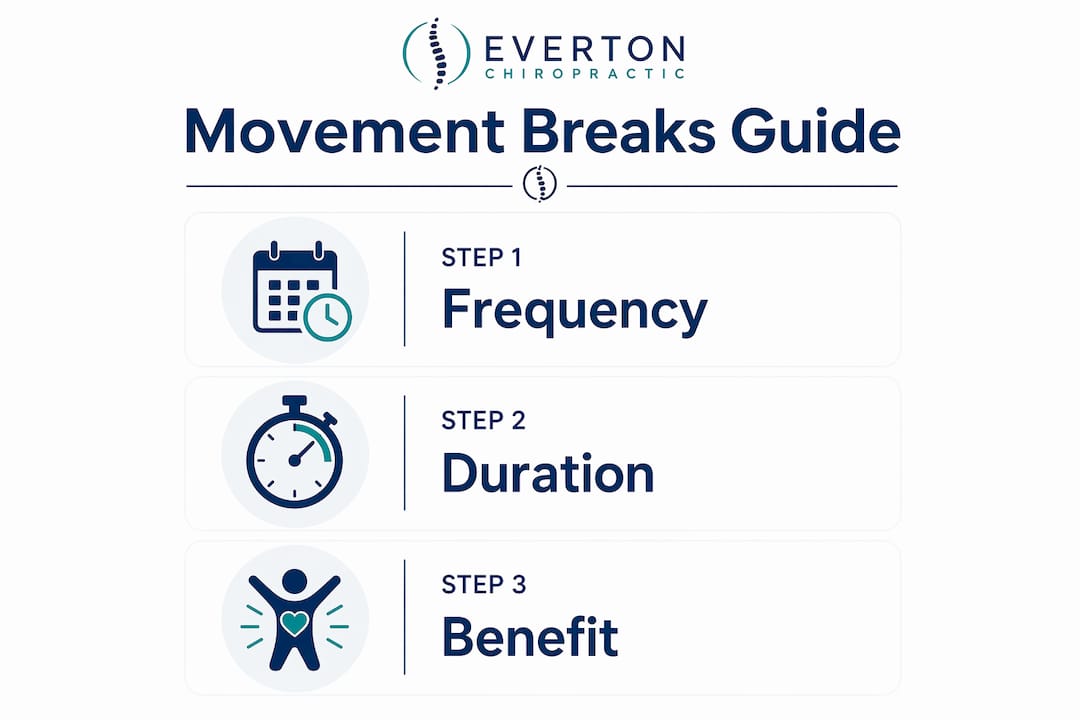
Interrupting sedentary behavior every 30 minutes with moderate-intensity movement enhances executive function and vascular health. A meta-analysis found that 65% of studies report significant acute cognitive improvements alongside small reductions in systolic blood pressure. More frequent breaks deliver stronger cognitive and cardiovascular returns, though they require more planning in a busy workday.
The right movement type matters as much as timing. Gentle, functional mobility outperforms aggressive stretching every time.
- Walking: Even a short walk down a hallway improves circulation and reactivates leg and core muscles that support the spine.
- Stair climbing: Engages the glutes and hip extensors, which directly reduce lumbar load when they are active.
- Gentle spinal rotations: Slow, pain-free rotations lubricate facet joints and restore segmental mobility without stressing discs.
- Cat-cow movements: Rhythmic flexion and extension of the lumbar spine pumps fluid into discs and resets muscle tone.
- Standing hip circles: Mobilize the hips and pelvis, reducing the compensatory strain that tight hips place on the lower back.
| Break frequency | Duration | Primary benefit |
|---|---|---|
| Every 30 minutes | 2–3 minutes | Cognitive function, vascular health |
| Every 60 minutes | 5 minutes | Mood, fatigue reduction, performance |
| Every 20–30 minutes | 1–2 minutes | Ligament strain prevention, disc hydration |
The practical sweet spot for most people is a five-minute break every hour, with a brief posture reset every 20–30 minutes if your work allows it.
How do movement breaks help office workers, athletes, and chronic pain sufferers?
The benefits of movement breaks shift depending on your lifestyle and the specific demands you place on your spine. One approach does not fit all three groups equally.
Office workers
Office workers face the most consistent spinal threat: prolonged sitting in a fixed posture. Workday spinal care for desk-based workers centers on interrupting this pattern before cumulative damage sets in. Regular postural shifts prevent the degeneration that comes from sustained lumbar flexion and forward head posture. A standing desk helps, but it does not replace movement. You still need to change position and activate your muscles actively.
Athletes
Athletes often assume their training volume protects them from spinal problems. It does not. High-intensity training without adequate spinal mobility work creates imbalances that increase injury risk. Movement breaks between training sessions or during recovery days maintain spinal mobility, reduce stiffness, and support the long-term spinal health routine that keeps athletes performing at their best. Targeted mobility work for the thoracic spine and hips is especially valuable for athletes who train in repetitive planes of motion.
People with chronic pain
For people living with chronic back pain, the instinct to rest and avoid movement is understandable but counterproductive. Motion preservation is the goal, not rest. Gentle movement activates supportive musculature, improves circulation to inflamed tissues, and gradually reduces pain sensitivity through repeated, non-threatening input to the nervous system. The key is starting with very low-intensity movement and building tolerance progressively.
Full-body movement that integrates the hips, core, diaphragm, and pelvic floor reduces mechanical spinal load more effectively than isolated back exercises. This matters for all three groups, but especially for people with chronic pain who often compensate by overloading one area.
Pro Tip: If you have chronic back pain, start with seated gentle spinal rotations during your first few movement breaks. These are low-load, non-threatening, and begin reactivating the stabilizing muscles your spine needs.
Common misconceptions about movement breaks and spine health
Several widely held beliefs about back pain and movement actively prevent people from getting better. Correcting them is as important as knowing the right exercises.
Myth 1: Rest is better than movement for back pain. Evidence consistently favors motion preservation over bed rest for most back pain conditions. Rest allows muscles to weaken and joints to stiffen, which worsens pain over time rather than resolving it. The importance of physical activity for spinal recovery is well established in clinical practice.
Myth 2: Stretching means pushing to your end range. Aggressive, end-range spinal stretching can be counterproductive. Gentle, slow, pain-free repetitions promote disc hydration and protect vulnerable joint structures far better than forced stretching. Think of spinal mobility as something you earn gradually, not something you force.
Myth 3: Any movement is equally beneficial. Not all movement is created equal for the spine. Twisting under load, bouncing stretches, and rapid flexion-extension cycles can stress already compromised discs. Controlled, gentle mobility is the standard for spinal care.
“The goal of movement breaks is not to exercise your spine aggressively. It is to restore the natural rhythm of load and unload that spinal tissues need to stay healthy. Gentle, consistent movement beats intense, infrequent effort every time.”
Myth 4: You only need to focus on your back. Preventing back pain requires addressing the whole system. Tight hip flexors, weak glutes, and a poorly functioning diaphragm all increase spinal load. Preventing back pain effectively means treating the spine as part of a connected system, not an isolated structure.
Avoiding prolonged single postures beyond 20–30 minutes is the single most practical rule for spinal protection. Set a timer if you need to. Your spine will not remind you until it is already under strain.
Key Takeaways
Regular, gentle movement breaks every 20–60 minutes are the most evidence-supported strategy for reducing spinal stress, maintaining disc health, and preventing chronic back pain across all activity levels.
| Point | Details |
|---|---|
| Break frequency matters | Five-minute breaks every hour reduce fatigue and improve performance without productivity loss. |
| Static posture causes fast damage | Spinal ligament strain and muscle deactivation begin within 10 minutes of holding one position. |
| Gentle movement beats aggressive stretching | Slow, pain-free repetitions hydrate discs and protect joints better than end-range stretching. |
| Full-body engagement is required | Effective spinal protection integrates hips, core, diaphragm, and pelvic floor, not just the back. |
| All groups benefit differently | Office workers, athletes, and chronic pain sufferers each need movement breaks tailored to their specific spinal demands. |
What I’ve learned after years of watching people ignore their spines
Most people treat their spine the way they treat their car’s oil. They ignore it until something breaks, then wonder why the fix takes so long. The research on movement breaks is not new or complicated. What is new is that we now have large-scale data confirming what clinicians have observed for decades: brief, frequent movement is genuinely protective, and rest is often the worst thing you can prescribe.
The productivity argument against movement breaks has always been weak. A study of over 11,000 people showed that hourly breaks improve engagement and performance. The real barrier is habit, not time. People sit for hours not because they are too busy to stand up, but because no one has made the cost of sitting feel real to them.
What I find most underappreciated is the breathing component. Most people do their movement break, tick the box, and sit back down with the same shallow chest breathing they had before. Diaphragmatic breathing during and after a break resets the entire core system. Without it, you are leaving a significant part of the benefit on the table.
The other thing I push back on consistently is the idea that athletes do not need this. I have worked with people who train six days a week and still develop chronic spinal stiffness because their training never includes the kind of gentle, controlled mobility that spinal tissues actually need. High-intensity training and spinal mobility work are not the same thing.
Start with one five-minute break per hour. Add diaphragmatic breathing. Build from there. The spine responds well to consistency and very poorly to neglect.
— Aman
Spinal care that goes beyond the break
Movement breaks are a powerful daily habit, but they work best when paired with professional care that addresses the underlying structure of your spine.

Evertonchiropractic, led by Dr. Richard, takes an evidence-informed approach to spinal health that goes beyond symptom relief. Whether you are dealing with lower back pain from years of desk work, recovering from a sports injury, or managing chronic discomfort, the clinic builds personalized plans around your lifestyle and long-term goals. The focus is on restoring function and keeping you moving well as you age, not just reducing pain in the short term. If movement breaks are your daily foundation, professional spinal care is the structure that makes them last.
FAQ
What is the role of movement breaks in spine health?
Movement breaks interrupt prolonged static postures that cause spinal ligament strain, disc dehydration, and deep muscle deactivation. Regular brief activity restores circulation, reactivates stabilizing muscles, and prevents the cumulative damage that leads to chronic back pain.
How long should a movement break be to benefit the spine?
Five minutes every hour is the evidence-supported standard for reducing fatigue and protecting spinal tissues. Even a one-to-two-minute posture reset every 20–30 minutes provides meaningful relief from ligament strain.
Is walking enough as a movement break for spine health?
Walking is one of the most effective movement breaks because it activates the glutes, core, and spinal stabilizers simultaneously. Combining walking with gentle spinal rotations or hip mobility exercises delivers broader spinal benefits.
Can movement breaks help people with chronic back pain?
Gentle movement breaks actively reduce chronic back pain by improving circulation to inflamed tissues and reactivating supportive musculature. Starting with low-intensity seated movements and building gradually is the recommended approach for people with existing pain.
Why is aggressive stretching bad for the spine during breaks?
End-range spinal stretching risks straining already vulnerable disc and joint structures. Gentle, slow, pain-free repetitions promote disc hydration and joint protection far more effectively than forced flexibility work.