A short, safe wake-up sequence relieves morning stiffness for most adults within minutes. Start with gentle in-bed movements, follow with a warm shower or heating pad, then walk for several minutes. That combination, backed by clinical guidance from AARP, addresses the most common cause: synovial fluid that thickens overnight and muscles that cool during sleep.
Your quick-start sequence:
- Lying in bed: pump your ankles 10 times, rotate your wrists, and pull each knee gently toward your chest
- Sit up slowly at the edge of the bed; do 5 shoulder rolls and a gentle torso twist each side
- Stand using your arms for support; do a few slow sit-to-stands
- Step into a warm (not hot) shower for 5–10 minutes, or apply a heating pad to the stiffest area
- Walk at an easy pace for 5–10 minutes before any demanding activity
Pro Tip: Stop immediately if you feel sharp, shooting, or electric pain, sudden weakness, or numbness. If your stiffness consistently lasts longer than 60 minutes or gets worse week over week, book an appointment with a clinician before continuing any home routine.
Key Takeaways
Morning stiffness relief starts with 60–90 seconds of in-bed movement, a warm shower, and a 5–10 minute walk, and stiffness lasting over 60 minutes most mornings warrants clinical evaluation.
| Point | Details |
|---|---|
| Start in bed, not standing | Ankle pumps, wrist rotations, and knee-to-chest pulls before you stand reduce injury risk and ease the transition to upright. |
| Heat before stretching | A warm shower or heating pad relaxes stiff joints and muscles before any stretching or loading, per Arthritis UK and Arthritis.org guidance. |
| Walk before you stretch | A 5–10 minute easy walk circulates synovial fluid more effectively than static stretching done cold. |
| 60-minute rule | Stiffness lasting over 60 minutes most mornings is a clinical signal for inflammatory disease, not just inactivity, per Cleveland Clinic. |
| Evertonchiropractic assessment | When home routines plateau, a personalized spinal and movement assessment at Evertonchiropractic identifies structural contributors and builds a targeted plan. |
Table of Contents
- Why do your joints feel so stiff after sleep?
- Safe, immediate relief you can do right now
- A PT-backed 6-step morning mobility routine
- Daily habits that reduce morning stiffness over weeks
- Medications, therapies, and other treatments that help
- When should you see a doctor about morning stiffness?
- Practical tips to make mornings easier
- Targeted stretches for hands, knees, and other commonly stiff joints
- What movement-first care actually means in practice
- Persistent morning stiffness often needs more than a home routine
- Sources
- FAQ
Why do your joints feel so stiff after sleep?
The short answer: your body slows down overnight, and so does the fluid that lubricates your joints. Synovial fluid, the oil-like liquid inside your joints, thickens when you stay still for hours. Clinicians call this the “morning gel” effect. At the same time, muscles cool and lose some of their resting tone, and spinal discs absorb extra fluid while you lie horizontal, which temporarily increases their pressure and stiffness.
For most people, this resolves within a short time of gentle movement. That’s the mechanical version, common with osteoarthritis and normal aging.
The version that warrants attention is different. According to Cleveland Clinic, stiffness that persists for an extended duration often signals an inflammatory process, such as rheumatoid arthritis or ankylosing spondylitis, rather than simple inactivity. Inflammatory stiffness also tends to be symmetrical (both hands, both knees) and may come with joint swelling, warmth, or fatigue.
Key distinctions to know:
- Under 30–60 minutes, eases with movement: likely mechanical or degenerative; home routines usually help
- Over 60 minutes, symmetrical, with swelling or fatigue: possible inflammatory arthritis; see a clinician
- Sudden onset, with fever, weight loss, or neurological signs: seek prompt medical evaluation
If you wake up with a stiff back in the morning specifically, disc hydration during sleep plays a larger role, and the safe movement order matters even more.
Safe, immediate relief you can do right now
The fastest path to morning stiffness relief is heat plus gentle movement, in that order. Arthritis UK confirms that warm showers, hot packs, and soaking stiff hands in warm water are practical, low-risk ways to relax joints first thing.
What works, and how to use it:
- Warm shower (not scalding): 5–10 minutes at a comfortable temperature. Avoid water above 104°F if you have cardiovascular conditions or reduced skin sensation.
- Heating pad or microwavable pack: Apply to the stiffest area for 10–15 minutes. Always place a thin cloth between the pad and your skin; never fall asleep with it on.
- Warm water hand soak: Fill a basin with comfortably warm water and gently open and close your fingers for 5 minutes. Particularly effective for hand and finger stiffness.
- In-bed ankle and foot pumps: Before you even sit up, flex and point your feet repeatedly. This restarts circulation in the lower legs and signals the nervous system to prepare for load.
- Topical analgesics (e.g., diclofenac gel, menthol creams): These can reduce localized joint pain. Arthritis that if you’re already taking oral NSAIDs, check with a pharmacist before adding a topical NSAID to avoid doubling up on the same drug class.
Pro Tip: Oral NSAIDs like ibuprofen or naproxen can help, but taking them daily without medical guidance raises GI and blood pressure risks. Use them for acute flares, not as a permanent morning habit.
A PT-backed 6-step morning mobility routine
Physical therapists sum up the goal simply: “motion is lotion.” The aim isn’t to stretch aggressively. It’s to circulate synovial fluid, reduce muscle guarding, and let spinal discs re-adapt to upright load before you ask your body to do anything demanding. Here’s a progressive sequence that follows that principle.
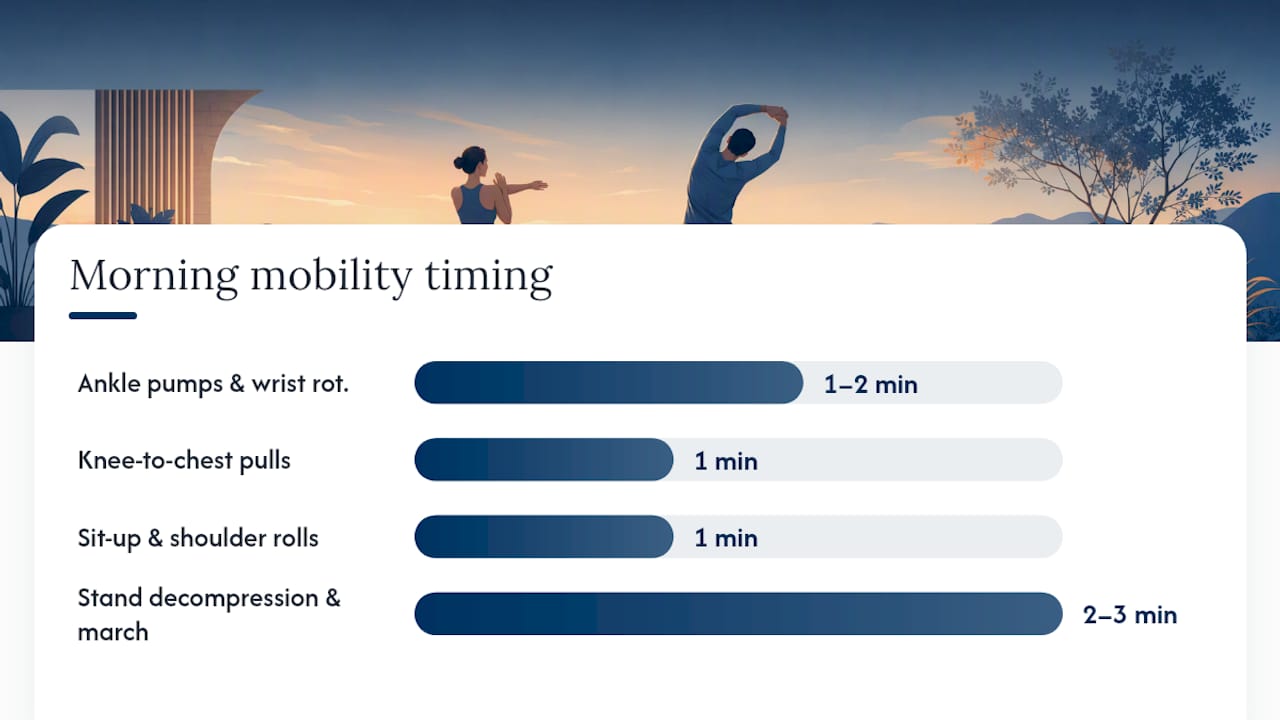
- Ankle pumps and wrist rotations (in bed, 1–2 min): Flex and point each foot 10 times; rotate each wrist 5 circles each direction. These unloaded movements restart circulation without any spinal stress.
- Knee-to-chest pulls (in bed, 1 min): Lying flat, pull one knee gently toward your chest, hold 5 seconds, release. Repeat 5 times per side. This gently mobilizes the lumbar spine without flexion load.
- Sit-up and shoulder rolls (edge of bed, 1 min): Sit up slowly using your arms. Do 5 shoulder rolls forward and 5 backward, then a gentle torso rotation: hands on thighs, rotate your upper body left and right 5 times each.
- Supported sit-to-stands (3–5 reps): Place your hands on your thighs or a bedside table. Lower slowly, pause, stand. This reloads the hips and knees gradually and is one of the most effective ways to restore lower-body joint confidence after sleep.
- Standing decompression and gentle marching (2–3 min): Stand tall, roll your shoulders back, and march in place with high knees for 2 minutes. This re-establishes spinal disc compression in a controlled way and warms the hip flexors.
- A short walk at easy pace: Before any stretching or exercise, walk. This is the step most people skip, and it’s the one that makes the biggest difference. Banner Health’s clinical guidance consistently places short walking at the center of morning stiffness routines.
For a more detailed progression of spinal mobility exercises suited to daily stiffness, that resource walks through each drill step by step.
Pro Tip: Avoid deep forward bending (touching your toes, full forward folds) for at least 30 minutes after waking. Spinal discs are at their most hydrated and pressurized right after sleep, making early aggressive flexion a higher-risk move for the lumbar spine. Unloaded mobility first, deeper stretching later.
Stop signals during any step: sharp or shooting pain, tingling down a limb, sudden weakness, or dizziness. If any of these appear, stop and consult a clinician.
Daily habits that reduce morning stiffness over weeks
Single-session routines help. Consistent lifestyle habits change the baseline. Arthritis.org’s guidance on osteoarthritis is clear that regular activity, balanced exercise, and sleep hygiene reduce stiffness over time, while staying sedentary makes it worse.
- Sleep position and bedding: A mattress should provide balanced support to avoid spine sagging or pressure points. Side sleepers benefit from a pillow between the knees to keep the hips aligned. Back sleepers often do better with a pillow under the knees.
- Consistent movement through the day: Short walks every 60–90 minutes during the day keep synovial fluid circulating and prevent the prolonged stillness that makes the next morning worse. Tai Chi and water aerobics are particularly well-studied for joint stiffness in older adults.
- Strength training 2–3 times per week: Muscle around a joint acts as a shock absorber. Weak quads, for example, transfer more load directly to the knee joint. Even bodyweight squats and resistance band work make a measurable difference.
- Hydration: Synovial fluid is largely water. Chronic mild dehydration thickens it. Aim for consistent fluid intake through the day, not just a large glass in the morning.
- Weight management: Every extra pound of body weight adds roughly 4 pounds of force across the knee joint during walking. Even modest weight reduction reduces joint load meaningfully.
- Anti-inflammatory diet basics: Fatty fish (salmon, sardines), leafy greens, berries, and olive oil are associated with lower systemic inflammation. Ultra-processed foods and excess sugar tend to do the opposite. Supplements like fish oil and turmeric have some supporting evidence for joint comfort, but the effect sizes are modest and results vary.
For a longer-term view on preventing age-related stiffness, the habits above compound over months, not days.
Medications, therapies, and other treatments that help
Most people reach for ibuprofen first. That’s not wrong for occasional use, but it’s worth knowing what else is available and when each option fits.
OTC and topical options:
- Oral NSAIDs (ibuprofen, naproxen): Effective for acute inflammatory flares. GI irritation, elevated blood pressure, and kidney stress are real risks with regular use. Take with food; avoid if you have a history of ulcers or kidney disease.
- Topical diclofenac (Voltaren Arthritis Pain gel): Delivers anti-inflammatory effect locally with lower systemic absorption than oral NSAIDs. A reasonable first choice for knee or hand stiffness.
- Menthol and capsaicin creams: Provide temporary sensory relief. Capsaicin requires consistent use over several weeks to build effect; it causes a burning sensation initially.
- Paraffin wax baths for hands: Arthritis.org confirms that paraffin wax therapy is an evidence-backed adjunct for hand and joint stiffness, delivering sustained, even heat that penetrates deeper than a heating pad.
When prescription treatment is needed:
Inflammatory arthritis (RA, psoriatic arthritis, ankylosing spondylitis) requires disease-modifying antirheumatic drugs (DMARDs) or biologics, not just pain management. If your stiffness lasts over an hour and comes with joint swelling or fatigue, a rheumatologist is the right referral, not just a GP prescription for NSAIDs.
Non-pharmacologic therapies:
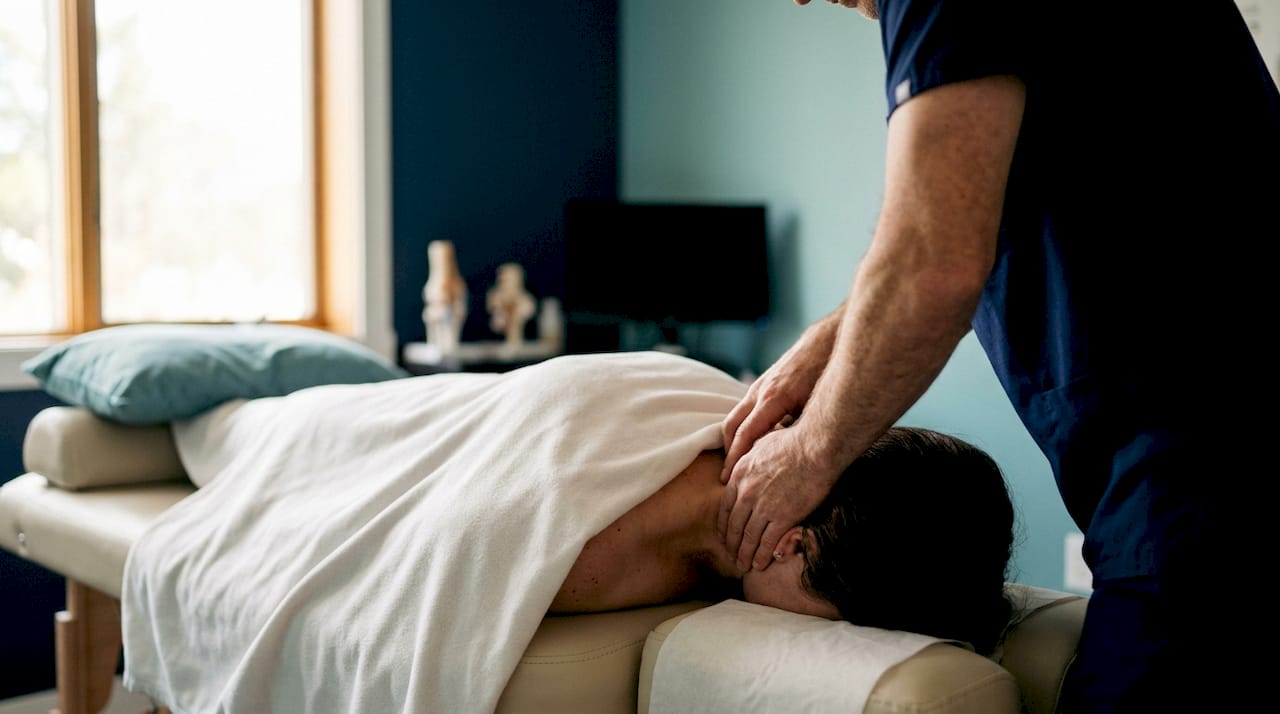
Physical therapy targets the specific movement deficits driving your stiffness. Occupational therapy addresses how you perform daily tasks, including adaptive equipment for hands and wrists. Aquatic exercise programs reduce joint load while maintaining cardiovascular and strength benefits. Clinic-based interventions, including chiropractic spinal adjustments and soft-tissue therapy, address structural contributors to stiffness that home routines can’t fully reach. The evidence for spinal adjustments in reducing musculoskeletal stiffness and pain is well-documented, particularly for the lumbar and cervical spine.
When should you see a doctor about morning stiffness?
Home routines cover most cases. These signs mean you need professional evaluation, not more stretching.
Red flags, see a clinician promptly:
- Stiffness lasting more than 60 minutes most mornings
- Rapid worsening over days or weeks
- Joint swelling, warmth, or redness
- Fever, unexplained weight loss, or night sweats alongside stiffness
- Sudden weakness, numbness, or tingling in a limb
- Stiffness that began after an injury or fall
Preparing for your appointment:
- Note the time stiffness starts and when it resolves each morning for 5–7 days
- List all current medications and supplements
- Describe which joints are affected and whether both sides are involved
- Note any functional limitations (can’t grip a mug, can’t walk to the car)
- Bring photos of any visible swelling if it comes and goes
Which clinician to see:
- Primary care physician: First stop for new or unclear symptoms; can order bloodwork and imaging
- Rheumatologist: If inflammatory arthritis is suspected (prolonged stiffness, symmetrical joints, systemic symptoms)
- Physical therapist: For mechanical stiffness, post-injury recovery, and building a safe exercise plan
- Chiropractor: For spinal stiffness, posture-related contributors, and movement-based management of musculoskeletal causes
Practical tips to make mornings easier
The routine matters. So does reducing the friction that makes mornings harder than they need to be.
- Prepare the night before: Lay out clothes, pack your bag, and prep breakfast items. Fewer decisions and physical tasks in the first 30 minutes means more energy for your mobility routine.
- Set your alarm 10–15 minutes earlier: Rushing through the morning sequence defeats its purpose. The extra time lets you move slowly and deliberately.
- Use adaptive tools where helpful: Long-handled shoehorns, button hooks, jar openers, and reachers reduce the awkward joint positions that spike pain early in the day. These are available at most pharmacies and online without a prescription.
- Arrange your environment: Keep high-use items (coffee mug, phone, medications) at counter height so you’re not bending or reaching overhead before your joints are warm.
- Programmable thermostat: A slightly warmer bedroom in the early morning hours reduces the muscle-cooling effect of a cold room. Even a 2–3 degree difference is noticeable for people with significant stiffness.
- Heating pad placement: Keep it on the nightstand so it’s ready before you get up. Use it on the stiffest area for 10 minutes while you’re still in bed doing your ankle pumps.
Targeted stretches for hands, knees, and other commonly stiff joints
General mobility routines get you moving. These joint-specific stretches address the areas that stay tight even after a walk. Harvard Health’s guidance on stretching is clear: always warm the tissue first, then stretch. Do these after your walk, not before.
Hands and fingers:
- Finger spread: Place your hand flat on a table, then spread your fingers as wide as possible. Hold 5 seconds, relax. Repeat 5 times per hand. This stretches the intrinsic hand muscles and joint capsules.
- Thumb opposition: Touch your thumb to each fingertip in sequence, making a circle. Do 5 full rounds per hand. Particularly useful for grip-related stiffness.
- Wrist flexion/extension: With your arm extended, gently pull your fingers back toward you with the opposite hand (10-second hold), then press them forward (10-second hold). Three sets per wrist.
Knees:
- Seated knee extension: Sitting in a chair, slowly straighten one leg until it’s parallel to the floor, hold 5 seconds, lower. Repeat 10 times per leg. This mobilizes the knee joint through its full range without load.
- Standing quad stretch: Hold a wall or chair for balance. Bend one knee and hold your ankle behind you for 20–30 seconds. Keeps the quadriceps from pulling the kneecap into the joint.
Hips and lower back:
- Supine figure-four stretch: Lying on your back, cross one ankle over the opposite knee, flex the foot, and gently press the crossed knee away from you. Hold 20–30 seconds per side. Targets the piriformis and hip external rotators, which tighten dramatically during sleep.
- Cat-cow (on hands and knees): Alternate between arching your back toward the ceiling and letting it sag toward the floor, 10 slow repetitions. One of the most effective unloaded movements for lumbar stiffness.
For a complete library of best stretches for lower back pain that fit after this warm-up sequence, that resource covers safe variations for different mobility levels.
What movement-first care actually means in practice
Most articles on morning stiffness hand you a list of stretches and leave it there. The part they skip is the clinical reasoning behind the order. At Evertonchiropractic, the approach Dr. Richard takes with patients starts from a simple premise: the body is not broken, it’s under-loaded. Stiffness is often the nervous system’s protective response to perceived instability, not a sign that movement is dangerous.
That framing changes what you do first. Instead of reaching for pain relief and waiting to feel better before moving, the evidence-informed approach is to move gently and let the movement produce the relief. Resting more than necessary often makes chronic joint pain worse, not better. The routines in this article reflect that principle: unloaded mobility first, progressive load second, deeper stretching last.
Where home routines fall short is when there’s a structural contributor, such as a restricted spinal segment, a postural pattern that loads one side more than the other, or a disc issue that makes certain movements consistently painful. That’s when a personalized assessment adds something a YouTube video can’t. Many patients who’ve been waking up stiff for years find that a few targeted adjustments and a tailored movement plan shift their mornings significantly.
Persistent morning stiffness often needs more than a home routine
If you’ve been waking up stiff for weeks and the home sequence isn’t cutting it, Evertonchiropractic offers a direct path to finding out why. Dr. Richard’s approach starts with a thorough movement assessment to identify the specific structural or postural contributors driving your stiffness, not a generic treatment plan applied to everyone.

Services relevant to morning stiffness include spinal adjustments, soft-tissue therapy, and personalized home mobility programs built around your schedule and physical capacity. The long-term pain relief approaches at the clinic are designed for people who want to stay active as they age, not just manage symptoms. For your first visit, bring your symptom diary (timing, duration, which joints), your current medication list, and any imaging you’ve had done. Book a consultation at Evertonchiropractic to get a clear picture of what’s driving your stiffness and a plan that addresses it directly.
Sources
These resources cover the evidence behind the guidance in this article:
- Why Are You So Stiff in the Morning and How to Fix It
- Waking up stiff: how ‘morning gel’ affects your joints — Cleveland Clinic
- How to Beat Morning Body Stiffness and Start Your Day Right
- Managing stiffness | Arthritis UK
- The importance of stretching — Harvard Health
- Arthritis
This article is general information, not a substitute for advice from a qualified doctor. Consult a qualified healthcare professional about your own circumstances before acting on anything here.
FAQ
How do you get rid of early morning stiffness fast?
Start with 60–90 seconds of in-bed ankle pumps, wrist rotations, and knee-to-chest pulls, then take a warm shower for 5–10 minutes, and follow with a short walk. This combination addresses both the synovial fluid thickening and muscle cooling that cause typical morning stiffness.
What does it mean if morning stiffness lasts more than an hour?
Stiffness that persists longer than about 60 minutes most mornings often indicates an inflammatory process such as rheumatoid arthritis, rather than simple inactivity, and warrants evaluation by a physician.
Why can I barely walk when I first get up in the morning?
Severe difficulty walking on waking usually reflects a combination of overnight disc hydration, synovial fluid thickening, and muscle cooling. If it resolves within 30 minutes of gentle movement, it’s likely mechanical. If it persists or worsens, see a clinician to rule out inflammatory or structural causes.
Which vitamin deficiency is linked to joint stiffness?
Vitamin D deficiency is commonly associated with musculoskeletal pain and stiffness. Low magnesium can also contribute to muscle cramping and tension. A blood panel from your primary care physician is the most reliable way to identify a specific deficiency.
What helps joints stay less stiff over time?
Consistent daily movement, strength training 2–3 times per week, adequate hydration, and an anti-inflammatory diet are the most evidence-supported long-term strategies for reducing joint stiffness.