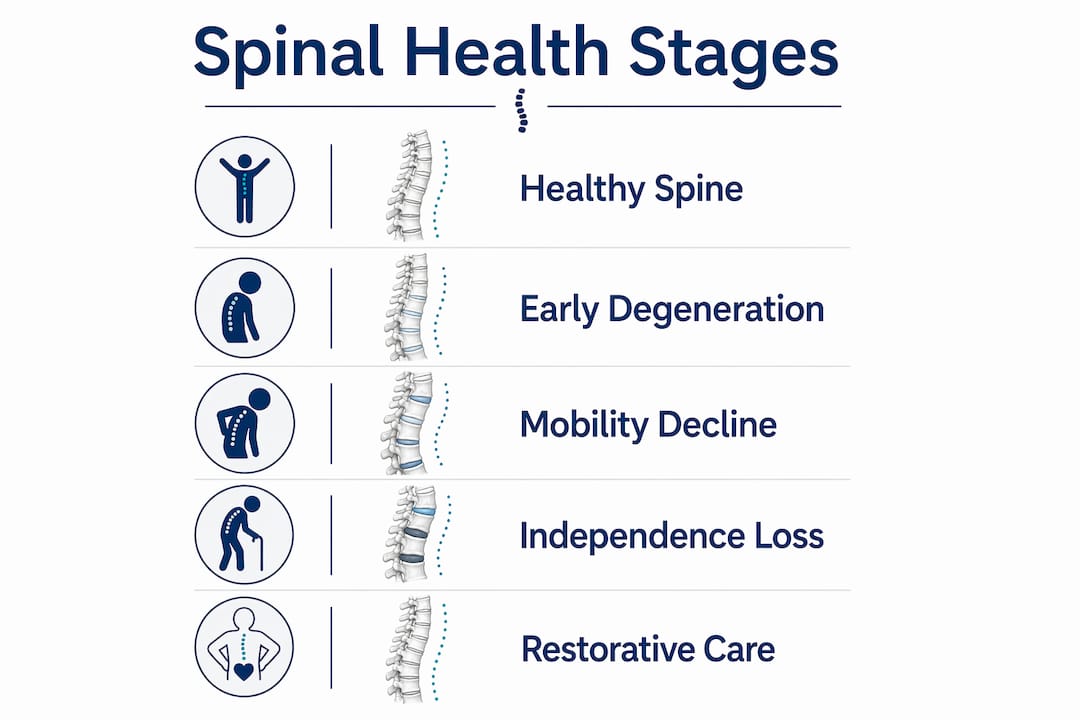
Spinal health is defined as the structural and functional integrity of the vertebral column, spinal cord, and surrounding muscles that together govern nerve communication, movement, and bodily control. How spinal health affects independence is direct: when the spine functions well, you move freely, feel sensations accurately, and manage daily tasks without assistance. When it breaks down, through injury, degeneration, or muscle loss, the cascade of effects reaches far beyond back pain. Research from the Mayo Clinic, a 2026 Neurology study, and a 2025 JAMA randomized controlled trial all confirm that spinal integrity is one of the strongest predictors of whether you live independently or require ongoing support.
How spinal health affects independence: the core mechanism
The spinal cord is the main neural pathway between your brain and your body. Every signal that tells your legs to walk, your hands to grip, or your bladder to hold runs through it. Spinal cord injury can cause permanent changes below the injury level, including paralysis, muscle spasms, and chronic pain that directly reduce your ability to perform daily tasks. That means a single disruption to spinal integrity can strip away strength, sensation, balance, and bowel or bladder control at once.
The location and severity of spinal damage determine how much independence you lose. A complete injury at the cervical level can affect all four limbs and breathing. An incomplete lumbar injury may only limit walking speed or bladder timing. The Spinal Cord Independence Measure, known as SCIM, was developed specifically to track these functional gaps in areas like self-care, respiration, and bladder management. Generic activity-of-daily-living scales miss these details entirely, which is why SCIM matters for planning real-world care.
Age makes this picture significantly worse. A 2026 Neurology analysis of 2,171 patients found a 4.3 SCIM point decline in functional independence per decade of age after spinal cord injury. That decline is not about neurological recovery slowing down. It reflects the body’s reduced capacity to compensate through strength, cardiovascular fitness, and adaptive movement. For adults over 70, this gap between neurological potential and functional reality is where independence is most at risk.
“Neurologic recovery after spinal cord injury may be age-independent, but functional independence measures worsen with age. Early independence-focused care is not optional. It is the difference between living at home and requiring full-time support.”
Pro Tip: If you or a family member is recovering from a spinal cord injury, ask your care team specifically about SCIM scores at each review. A drop in SCIM points is an early warning sign that daily function is declining, even when neurological tests look stable.
The emotional cost of lost independence compounds the physical one. Seniors who lose the ability to drive, dress independently, or manage their own hygiene report significantly higher rates of depression and social withdrawal. Spinal health and mobility are inseparable from mental well-being, and that connection deserves as much clinical attention as the physical symptoms.
How spinal degeneration reduces mobility in aging adults
Spinal degeneration is not a single condition. It is a category that includes lumbar spinal stenosis, disc degeneration, and vertebral compression fractures, all of which narrow the space available for nerves and reduce the spine’s load-bearing capacity. A 2026 cohort study found that the Oswestry Disability Index, or ODI, correlated negatively with life-space mobility scores both before and after lumbar surgery. In plain terms, the more disabled a person felt before surgery, the smaller their real-world movement radius, and surgery alone did not fully restore it.
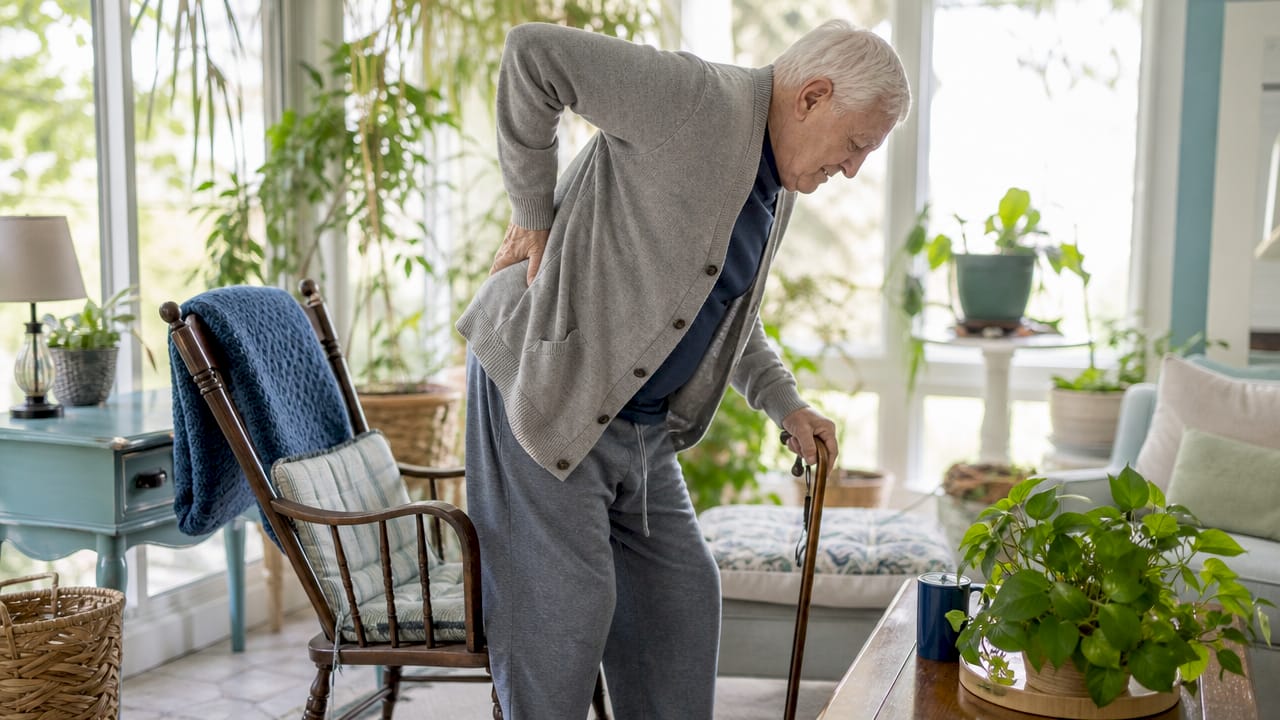
Life-space mobility measures where you actually go in daily life, from your bedroom to your neighborhood to your community. It is a more honest measure of independence than a clinical walking test. When lumbar stenosis forces you to stop walking after one block, you stop visiting friends, stop running errands, and stop attending community events. The shrinking of that life space is the lived experience of reduced independence.
Muscle quality plays a role that most people overlook. The SarcoSpine cohort study of 111 adults with an average age of 70.6 found that paraspinal muscle quality correlated more strongly with disability scores than muscle size alone. Fat infiltration into the paraspinal muscles reduces their ability to stabilize the spine under load. A person can have visibly large back muscles and still have poor spinal stability if those muscles are fatty and weak at the fiber level.
| Factor | Effect on independence | Clinical measure |
|---|---|---|
| Lumbar spinal stenosis | Reduces walking distance and life-space mobility | ODI and life-space assessment |
| Paraspinal muscle fat infiltration | Weakens spinal stability, increases disability | MRI muscle quality scoring |
| Age over 70 | Slows functional recovery after injury or surgery | SCIM decline per decade |
| Preoperative disability level | Predicts postoperative mobility outcomes | ODI score before surgery |
Pro Tip: Before any spine surgery, ask your surgeon for a life-space assessment, not just a pain scale. Knowing how far you currently travel in daily life gives your rehab team a concrete target to work toward, not just a pain score to reduce.
What actually works: evidence-based approaches to restoring independence
The most effective path to maintaining independence with back pain combines clinical support, self-management, and targeted exercise. A 2025 JAMA randomized controlled trial across 1,000 patients found that clinician-supported self-management reduced disability more reliably than spinal manipulation alone for acute low back pain. That result does not dismiss spinal adjustments. It shows that adjustments work best when paired with education, movement coaching, and psychological support.
The biopsychosocial model treats back pain as a product of physical, emotional, and social factors together. Clinicians who use this model help patients understand their pain, set realistic movement goals, and address fear-avoidance behaviors that cause people to stop moving entirely. Fear of pain is one of the strongest predictors of long-term disability, and it responds well to guided self-management.
For spinal cord injury recovery, Activity-Based Therapy is the gold standard rehabilitation approach. It uses weight-supported treadmill training, functional electrical stimulation, and task-specific exercises to retrain the nervous system below the injury level. The goal is not just to reduce pain. It is to restore the specific functional tasks, standing, transferring, reaching, that define independence for that individual. Clinics that use spinal adjustments to restore function alongside rehabilitation report better mobility outcomes than those relying on passive treatment alone.
Practical steps that support spinal well-being and independence include:
- Strengthen paraspinal muscles with quality in mind. Exercises like bird-dog, dead bug, and McGill curl-up target deep stabilizers, not just surface bulk. Reducing fat infiltration requires consistent low-load endurance work, not heavy lifting.
- Prioritize early intervention. A 2026 Frontiers narrative synthesis confirmed that mobility restoration is the primary indicator of meaningful recovery in older adults with spinal disorders. Waiting until pain becomes severe delays the window for best outcomes.
- Use a biopsychosocial self-management program. Work with a clinician who addresses movement, mindset, and daily habits together. This approach outperforms passive treatment in clinical trials.
- Track function, not just pain. Use tools like SCIM or the ODI to measure whether your daily activities are actually improving, not just whether your pain score dropped.
- Modify your environment proactively. Grab bars, raised toilet seats, and non-slip flooring reduce fall risk and extend independent living, especially when combined with spinal care.
Pro Tip: The goal of spinal care is not a pain score of zero. It is the ability to do what matters to you, whether that is walking to the mailbox, cooking your own meals, or playing with grandchildren. Define your independence goals before you start treatment.
Social and policy factors that shape independence for people with spinal conditions
Physical health is only part of the independence equation. Access to the right support services determines whether clinical gains translate into real-world independence. A 2026 Canadian policy review found that eligibility for attendant services often depends on socioeconomic factors, creating inequities in who can actually live independently after a spinal cord injury. Bladder and bowel supplies, wheelchair maintenance, and home care hours are all subject to funding caps that vary by income and geography.
The practical consequences are significant. A person who cannot afford a properly fitted wheelchair develops pressure injuries. A person without attendant care hours cannot safely transfer from bed to chair. These are not edge cases. They are the daily reality for a large portion of people living with serious spinal conditions.
Key barriers that affect independence beyond physical health include:
- Funding gaps for attendant services: Many programs cap hours below what is clinically necessary for full independence.
- Wheelchair and equipment eligibility: Approval processes can take months, leaving people without essential mobility aids.
- Bladder and bowel supply coverage: Out-of-pocket costs for catheters and related supplies create financial strain that forces people to ration use.
- Geographic disparities: Rural residents face longer wait times for both equipment and rehabilitation services.
Navigating these systems requires persistence. Connecting with a spinal cord injury advocacy organization, such as the United Spinal Association in the United States, gives you access to benefits counselors who know which programs you qualify for and how to appeal denials. The long-term value of spinal wellness extends beyond the clinic. It depends on the support structures around you.
Key Takeaways
Spinal health directly governs nerve signaling, muscle stability, and mobility, making it the single most important physical factor in whether aging adults maintain independence or require ongoing support.
| Point | Details |
|---|---|
| Spine controls independence | Nerve signals for movement, sensation, and bladder control all run through the spinal cord. |
| Age worsens functional outcomes | A 2026 Neurology study found a 4.3 SCIM point decline in independence per decade of age after spinal cord injury. |
| Muscle quality matters more than size | The SarcoSpine study found paraspinal muscle fat infiltration correlates more strongly with disability than muscle volume. |
| Self-management outperforms passive care | A 2025 JAMA trial showed clinician-supported self-management reduced disability more reliably than spinal manipulation alone. |
| Social access shapes real independence | Funding gaps for attendant services and equipment create inequities that physical recovery alone cannot overcome. |
Why I think we underestimate the spine until it is too late
The most common mistake I see is treating spinal health as a pain management problem rather than an independence preservation problem. People tolerate stiffness, ignore early weakness, and delay care until they cannot get out of a chair without help. By that point, the window for the best outcomes has narrowed considerably.
What the 2026 research makes clear is that functional independence measures decline with age regardless of neurological recovery. That means the body’s ability to compensate for spinal damage gets weaker over time, even when the spine itself is not getting worse. The practical implication is that the best time to address spinal alignment, muscle quality, and movement habits is before a crisis forces your hand.
I also think the biopsychosocial evidence from the JAMA trial deserves more attention than it gets. Spinal manipulation is a useful tool. But the patients who kept their independence long-term were the ones who understood their condition, managed their movement habits, and had clinical support for the psychological side of chronic pain. That is a different kind of care than a monthly adjustment. It requires a clinician who treats the whole person, not just the vertebra.
Physical decline is not inevitable. The spine responds to consistent, targeted care at any age. The adults I see maintain the most independence are not the ones who avoided all spinal problems. They are the ones who addressed problems early, stayed active, and built the muscle quality and movement habits that keep the spine stable under the demands of daily life.
— Aman
Spinal care that protects your independence long term
Evertonchiropractic, led by Dr. Richard, specializes in the kind of personalized spinal care that goes beyond short-term pain relief. The clinic’s approach addresses posture correction, nerve function, and movement quality together, giving you a plan built around your actual daily goals, not a generic protocol.
Whether you are managing lower back pain that limits your movement, dealing with sciatica, or looking to protect your mobility as you age, Evertonchiropractic builds care plans that match your lifestyle. Dr. Richard challenges the assumption that physical decline is simply part of getting older. If staying independent matters to you, gentle spinal care for seniors at Evertonchiropractic is a practical, evidence-informed place to start.
FAQ
How does spinal health directly affect daily independence?
The spinal cord carries every nerve signal that controls movement, sensation, and bodily functions like bladder control. When spinal integrity is compromised, these signals are disrupted, reducing your ability to perform daily tasks without assistance.
What is the SCIM and why does it matter for independence?
SCIM stands for Spinal Cord Independence Measure. It tracks specific functional abilities like self-care, respiration, and bladder management that generic scales miss, making it the most accurate tool for planning independence-focused care after spinal cord injury.
Does age affect recovery of independence after a spinal injury?
A 2026 Neurology study of 2,171 patients found that functional independence scores decline by 4.3 SCIM points per decade of age after spinal cord injury. Neurological recovery may remain possible, but the body’s ability to compensate functionally weakens with age.
Is spinal manipulation enough to restore independence?
Spinal manipulation alone is not sufficient. A 2025 JAMA randomized controlled trial found that clinician-supported biopsychosocial self-management reduced disability more reliably than manipulation alone across 1,000 patients with acute low back pain.
Can strengthening back muscles protect independence as you age?
The SarcoSpine study found that paraspinal muscle quality, specifically reduced fat infiltration, correlates more strongly with disability levels than muscle size. Targeted exercises that improve muscle composition, not just volume, are the most effective approach for spinal stability and long-term independence.
Recommended
- Maintain Independence with Chiropractic Care: 2026 Guide – Everton Chiropractic
- Why Spinal Health Matters Long Term for Your Wellness – Everton Chiropractic
- Gentle Spinal Care for Seniors: Ease Pain and Move Better – Everton Chiropractic
- Lifestyle’s Role in Spinal Wellness: 2026 Guide – Everton Chiropractic