
Introduction
Evidence-informed chiropractic care integrates thorough clinical assessment, diagnostic reasoning, and research-backed treatment techniques to deliver safe, effective musculoskeletal treatment, while quick crack approaches focus on rapid spinal manipulation without proper evaluation—raising safety risks and limiting long-term benefit. If you are comparing 35 evidence informed chiropractic care vs quick cracks why the approach matters target safe chiropractic care, the short answer is simple: the approach matters because assessment, reasoning, and treatment planning directly affect whether care is appropriate, personalised, and safe.
This article examines the practical differences between these two models of care, including clinical reasoning, clinical decisions, red-flag screening, patient safety protocols, treatment effectiveness, and long-term outcomes. It is written for adults in Singapore dealing with neck pain, back pain, sciatica, posture problems, or movement limitations who want care that improves function over time rather than a short-term fix.
Evidence-informed chiropractic care supports better clinical decisions by combining research, clinician expertise, and patient preferences. Informed treatment planning depends on a strong knowledge base, careful assessment, and diagnostic reasoning—not just the ability to perform an adjustment. The goal is not only temporary symptom relief, but measurable treatment outcome, long-term functional improvement, and better self-management.
By reading this article, you will understand:
-
How comprehensive assessment protocols protect patient safety
-
Why evidence-based treatment techniques produce better long-term patient outcomes
-
The specific safety risks of manipulation without proper evaluation
-
How to identify red flags that require screening before any treatment
-
What questions to ask a chiropractor before committing to care
Understanding Evidence-Informed Chiropractic Care
Evidence-informed chiropractic practice represents a structured approach to patient care where clinicians draw on three pillars: the best available research evidence, their own clinical expertise and pattern recognition, and the individual patient’s preferences, circumstances, and goals. This model moves well beyond the outdated idea that chiropractic treatment means only spinal adjustments-it encompasses a full spectrum of assessment, diagnosis, treatment planning, and ongoing evaluation as a cognitive process, supported by the clinician’s continued development over time.

Clinical Assessment, Clinical Reasoning, and Diagnostic Reasoning
Clinical reasoning is a skill that depends on strong clinical skills in history-taking and physical examination to form accurate diagnostic and treatment decisions. For conditions like neck pain, back pain, and sciatica, this reasoning process begins with comprehensive data acquisition: a detailed patient history covering pain onset, quality, radiating symptoms, trauma history, lifestyle factors, and relevant comorbidities.
Assessment in evidence-informed care includes medical history and physical examinations to identify root causes of pain-not just the site of discomfort. The physical examination involves mobility testing, provocation tests, neurological assessment, and orthopaedic testing. Clinicians identify key features from the history and exam, then use them to evaluate competing hypotheses. Gathering information includes patient history and examination findings, and identifying cues is essential in the information-gathering process. Novice practitioners often use hypothetico-deductive reasoning, whereas more experienced clinicians increasingly draw on illness scripts and pattern recognition. These are mental frameworks built from prior cases that help recognise recurring presentations.
This diagnostic reasoning approach protects patient safety in a fundamental way. Thorough screenings in evidence-informed care help identify patients who may not be suitable for manipulation. Red flag screening catches conditions like cervical artery dissection risk, osteoporosis, infection, malignancy, fracture, or spinal cord compression-conditions where immediate manipulation could cause serious harm. The Canadian Chiropractic Guideline Initiative for neck pain specifically recommends screening for safety and referral needs before developing any treatment plan, because safe assessment requires clinicians to evaluate the patient’s presentation before drawing conclusions about diagnosis or treatment suitability.
Evidence Based and Research-Backed Treatment Techniques
Evidence-informed chiropractic emphasises a multimodal treatment approach combining different therapies rather than relying on a single technique. Spinal manipulation can provide benefits for certain musculoskeletal issues like low back pain when performed correctly-a Cochrane review involving 76 studies and 11,866 participants found that spinal manipulative therapy reduced pain by approximately 4.7 points per 100 and improved function by roughly 4.9 points per 100 compared to other conservative care at one month.
However, the research consistently shows that multimodal interventions-combining manual therapy with exercise, soft tissue work, posture correction, and lifestyle education-outperform manipulation alone for long-term functional improvement and lower recurrence rates. Evidence-informed chiropractors avoid unnecessary adjustments by evaluating patient-specific needs and conditions, selecting techniques based on what the evidence and clinical context support for each individual patient, while also applying new knowledge from current research when updating technique selection and care plans.
This is where the contrast with quick crack approaches becomes clinically significant.
The “Quick Crack” Approach and Its Limitations
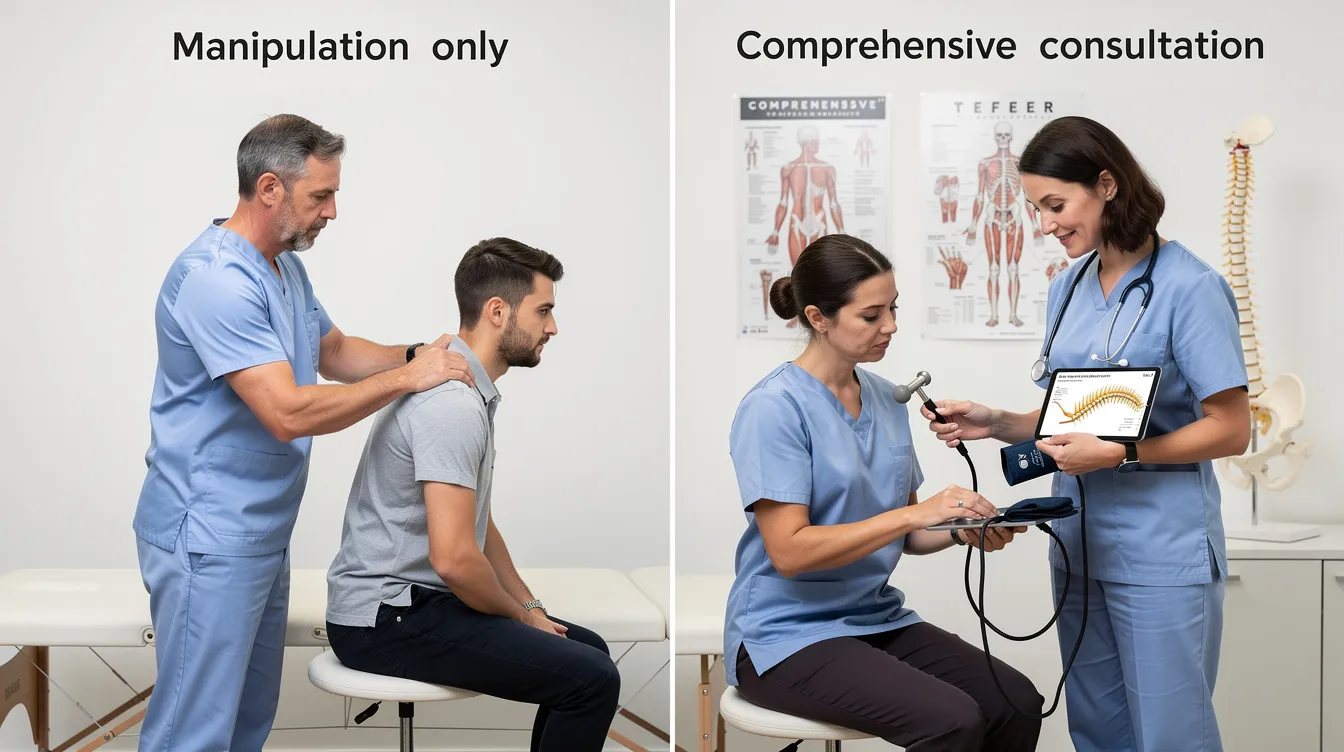
Where evidence-informed practice builds treatment on thorough assessment and clinical reasoning skills, the quick crack approach shortcuts this entire process-often proceeding directly to high-velocity spinal manipulation with minimal or no evaluation.
What Constitutes a “Quick Crack” Approach
The “quick cracks” approach relies on rapid manual techniques that may not assess underlying conditions. These sessions typically involve immediate joint manipulation with minimal history taking-the practitioner moves quickly to spinal adjustments, often emphasising the audible “pop” or “crack” of joint cavitation as an indicator of successful treatment.
Quick cracks may focus on immediate symptom relief rather than long-term patient outcomes. There is little to no individualised treatment planning, no differential diagnosis consideration, and minimal follow-up protocol. The focus remains on what was done (the adjustment) rather than why it was done or whether it was appropriate for that specific patient’s condition.
For novice practitioners or those early in practice, this approach can feel efficient, but they may not yet have had enough deliberate practice to develop clinical reasoning skills safely and consistently. But efficiency without accuracy creates risk.
Patient Safety Concerns and Missing Diagnostics
Evidence-informed chiropractic care focuses on patient safety by evaluating contraindications before treatment. When this step is skipped, significant dangers emerge. Safety risks can arise from the quick cracks approach when underlying issues are not assessed adequately-a patient presenting with neck pain might have undiagnosed vascular risk factors, osteoporosis, or early-stage malignancy that contraindicate cervical high-velocity thrust manipulation.
A systematic review of chiropractic intervention safety found that while benign transient reactions occur in 33–61% of interventions, serious adverse events are rare when proper protocols are followed-estimated at approximately 1–2 per million cervical manipulations, with deaths at roughly 2.68 per 10 million manipulations. However, comparatively, quick cracks may increase the risk of complications due to lack of patient assessment and follow-up, because the screening that catches contraindications simply doesn’t happen.
For neck pain and headache cases specifically, missing red flags like neurological deficits, sudden severe onset, or history of vascular disease before performing cervical manipulation represents a genuine patient safety concern. Critical thinking involves analysing and evaluating information-it is essential for accurate patient diagnosis and cannot be bypassed without consequence.
Limited Long-Term Outcomes
Beyond safety, the quick crack approach fails patients on outcomes. Manipulation alone often provides temporary relief but lacks the capacity to address underlying movement dysfunction, muscular imbalances, postural problems, or lifestyle contributors like poor ergonomics, insufficient activity, and chronic stress.
The UCLA low back pain trial with 18-month follow-up demonstrated this clearly: less than 20% of patients became pain-free at 18 months regardless of treatment group, underscoring that manipulation without broader intervention is not a standalone cure. Evidence-informed chiropractors combine manipulation with exercise prescription, ergonomic education, and posture correction precisely because research shows these combinations yield better medium and long-term outcomes than manipulation alone.
Clinical reasoning improves with experience and reflection on practice-and this extends to treatment planning. Expert clinicians rely on pattern recognition to determine which patients need which interventions, adjusting their approach based on collected information rather than applying the same technique universally.
Why the Clinical Approach Matters for Singapore Patients
Singapore’s unique context makes the distinction between evidence-informed and quick crack chiropractic care particularly important. With approximately 150 chiropractors practising in the country and no statutory licensing body-chiropractic operates under voluntary self-regulation-patients bear significant responsibility for evaluating their practitioner’s approach. The Ministry of Health has noted receiving approximately four complaints per year about misleading claims, advertising, and treatment package disputes.
Comprehensive Assessment Protocol
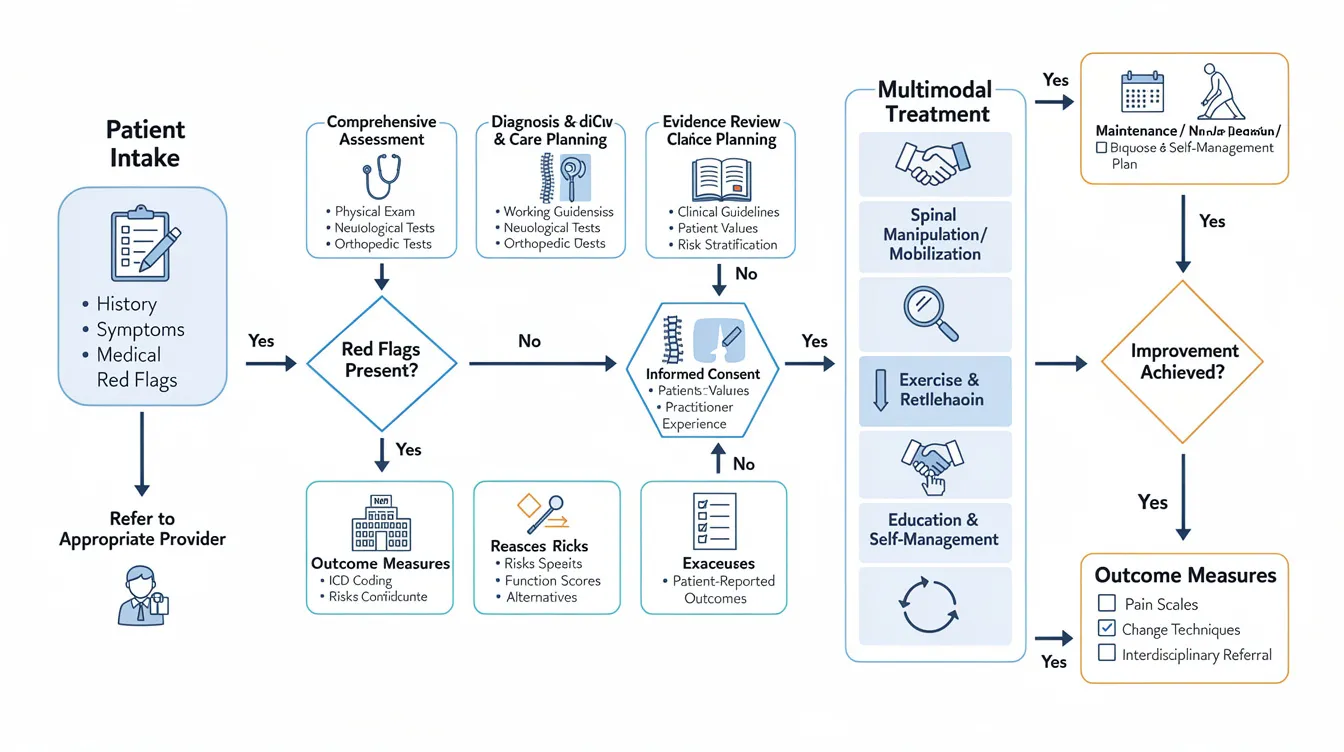
A good chiropractor should ask detailed questions before treatment and explain their approach and risks. The clinical reasoning process in evidence-informed practice follows a structured pathway, and strong assessment depends on both clinical skills and clear reasoning strategies:
-
Detailed history taking – Including onset, pain quality, radiating symptoms, trauma history, lifestyle factors, and comorbidities. For Singapore’s desk-bound professionals dealing with tech neck and office-related pain, this means understanding ergonomic setup, screen time, commute patterns, and stress levels.
-
Physical examination and orthopaedic testing – Mobility assessment, provocation tests, neurological screening, and specific orthopaedic tests. Experienced clinicians quickly identify and interpret relevant cues during this process, using hypothesis testing to narrow the differential diagnosis.
-
Movement analysis and postural assessment – Evaluating how the patient moves, identifying muscular imbalances, and assessing posture. This is especially relevant given Singapore’s high prevalence of sedentary lifestyles and compact living spaces that contribute to poor movement patterns.
-
Treatment planning based on findings – Developing a working diagnosis, agreeing on measurable goals with the patient, selecting appropriate techniques, and establishing a reassessment timeline. Clinical reasoning requires synthesising gathered information into a diagnosis before any treatment begins, with the structured pathway grounded in theory as well as patient findings.
Hypothesis generation is a key step in clinical reasoning, and evaluating hypotheses is essential for accurate diagnosis. This structured approach-assess, hypothesise, test, plan-mirrors the best-practice framing reflected in a Delphi-informed consensus statement among experienced chiropractors for conditions like neck pain.
Treatment Approach Comparison
The differences between evidence-informed care and quick crack approaches become clear when examined side by side:
|
Criteria |
Evidence-Informed Care |
Quick Crack Approach |
|---|---|---|
|
Assessment Time |
Comprehensive: history + examination + movement analysis + red flag screening |
Minimal: brief or no examination beyond the area to be manipulated |
|
Diagnostic Process |
Working diagnosis through hypothesis testing, possible imaging if indicated |
Little to no diagnostic reasoning; treats symptoms rather than underlying cause |
|
Treatment Techniques |
Multimodal: manipulation/mobilisation + exercise + soft tissue + lifestyle advice |
Primarily high-velocity spinal adjustments only |
|
Follow-Up Care |
Regular reassessment; plan adjusted based on progress data |
Few sessions with limited emphasis on outcomes or evolution |
|
Risk Management |
Contraindication screening reduces adverse event risk; mild transient reactions expected |
Higher chance of missing contraindications; serious adverse events more likely |
|
Long-Term Outcomes |
Better functional improvement, reduced recurrence, improved posture and movement |
Short-term relief; higher recurrence; underlying issues unaddressed |
Evidence-informed care emphasises higher patient satisfaction through personalised treatment and active self-care strategies. When patients understand why certain techniques are selected and how their treatment plan addresses root causes, they engage more meaningfully with their recovery. This is an important aspect of modern healthcare that extends beyond chiropractic into broader medical education and clinical practice.

A 2026 systematic review of adverse events in adults over 55 found 412 adverse events across 25 studies, with only 9 classified as severe and no catastrophic events in randomised controlled trials or cohort studies. This data reinforces that spinal manipulation is broadly safe in properly assessed patients-the key phrase being “properly assessed.”
Common Challenges and Solutions in Chiropractic Care
Even with strong evidence supporting comprehensive clinical approaches, several practical challenges arise in clinical practice-particularly in Singapore’s fast-paced urban environment.
Patients Expecting Immediate Joint Manipulation
Many patients arrive expecting the “crack”-believing that an audible joint sound equals effective treatment. Cultural attitudes toward manual therapies, influenced by traditional Chinese medicine and massage practices common across Asia, can reinforce this expectation. Reflective practice enhances critical thinking in clinical settings, and experienced clinicians use critical thinking to interpret patient cues-including expectations that may not align with best practice.
Solution: Clear communication about the clinical reasoning process builds trust. Explaining that the audible sound does not equate to effectiveness-and that what matters is functional improvement, pain reduction, and quality of life-helps patients understand why assessment comes first. For conditions like sciatica, shoulder pain, or chronic neck stiffness, explaining the diagnostic reasoning behind treatment selection helps patients engage with their care plan rather than expecting passive quick fixes.
Time Constraints and Assessment Protocols
Singapore professionals often prefer shorter appointments. Clinic business models may favour higher throughput, and patients may resist longer consultations that feel less “productive” than immediate treatment.
Solution: Structured red-flag screening checklists and standardised movement assessments allow clinicians to be thorough without being slow. Problem-based learning approaches in clinical training develop thinking skills that make comprehensive assessment efficient, and repeated use of structured approaches helps clinicians build practical skill over time—what initially requires deliberate practice eventually becomes second nature for experienced practitioners. Understanding how often to see a chiropractor also helps patients plan for adequate assessment time within their treatment schedule.
Misconceptions About Chiropractic Treatment
Some patients believe chiropractic care is only about spinal alignment through manual adjustment, while others worry that all manipulation is inherently dangerous. Both misconceptions prevent informed decision-making.
Solution: Evidence-based education about what biomedical knowledge actually supports helps patients develop realistic expectations. Manipulation is one tool in a broader toolkit-mobilisation, soft tissue methods, exercise prescription, ergonomic advice, and lifestyle modification all play roles. Clinical reasoning includes testing final diagnoses through analysis, and the same analytical approach should guide which combination of techniques a patient receives. When manipulation is contraindicated-due to osteoporosis, vascular risk, or other factors-evidence-informed clinicians have alternative approaches available. Reflection on clinical encounters enhances future reasoning skills, allowing practitioners to continuously refine their problem representation and treatment strategies.
Conclusion and Next Steps
The difference between evidence-informed chiropractic care and quick crack approaches is not merely academic-it directly affects patient safety, treatment effectiveness, and long-term health outcomes. Evidence-informed practice uses clinical reasoning, comprehensive assessment, and multimodal treatment to address root causes of musculoskeletal pain. Quick crack approaches bypass the diagnostic reasoning that catches contraindications, misses underlying conditions, and fails to deliver sustainable improvement.
For Singapore patients seeking safe chiropractic care, these immediate steps will help:
-
Schedule a comprehensive initial assessment – Any chiropractor worth seeing will dedicate meaningful time to history taking, physical examination, and treatment planning before any hands-on intervention
-
Ask specific questions – What are your qualifications? Do you follow evidence-based guidelines? How will you assess me before treating? What are the risks? How many sessions do you expect, and how will we measure progress?
-
Watch for red flags in practice – If a chiropractor proceeds to manipulation without examining you, doesn’t ask about your medical history, or cannot explain why they’re using a particular technique, seek care elsewhere
Related topics worth exploring include specific condition management for neck pain and headaches, understanding effective posture correction strategies, and ongoing movement and function improvement for ageing mobility. Clinical reasoning skills, critical thinking, and evidence-based approaches aren’t just concepts from medical school-they’re the foundation of safe, effective chiropractic treatment that delivers real results.
Additional Resources
-
Everton Chiropractic’s introductory visit information – Learn what to expect from a comprehensive first consultation
-
Cochrane Review on Spinal Manipulative Therapy for Chronic Low Back Pain – The largest systematic review on SMT effectiveness and safety
-
NCCIH Guide to Spinal Manipulation – U.S. National Center for Complementary and Integrative Health’s patient-facing resource on what the evidence says
-
Canadian Chiropractic Guideline Initiative – Neck Pain Pathway – Clinical practice guidelines for evidence-informed neck pain management
-
MOH Singapore – Chiropractor Qualifications and Complaints – Official regulatory context for chiropractic practice in Singapore