Introduction
Spinal decompression therapy is one of the most misunderstood non-surgical treatments available in Singapore today. Despite growing clinical evidence and increasing adoption by qualified practitioners, several myths about spinal decompression continue to discourage patients from exploring this effective treatment option. Whether you’ve heard that spinal decompression is painful, that it lacks scientific backing, or that it only works for severe cases, this guide separates fact from fiction with peer-reviewed evidence and practical context for Singapore residents.
This article focuses exclusively on non surgical spinal decompression – the use of computerized traction machines to relieve pressure on spinal discs and nerves. We won’t be covering surgical spinal decompression therapy, manual manipulation techniques, or other unrelated therapies. If you’re an adult in Singapore experiencing chronic back pain, neck pain, sciatica, or posture-related discomfort, this guide is written for you.
The direct answer: Spinal decompression machine therapy is a safe, evidence-based, non invasive therapy that uses computerized traction to create negative pressure within spinal discs, promoting healing and providing significant pain relief for a range of spinal conditions – not just extreme cases.
By the end of this article, you will:
-
Understand exactly what spinal decompression involves and how the technology works
-
Be able to separate the most common myths from clinical reality
-
Know what the scientific evidence actually shows about effectiveness
-
Recognise who is – and isn’t – a suitable candidate for treatment
-
Have practical guidance for making informed decisions about treatment in Singapore
Understanding Spinal Decompression Machine Therapy
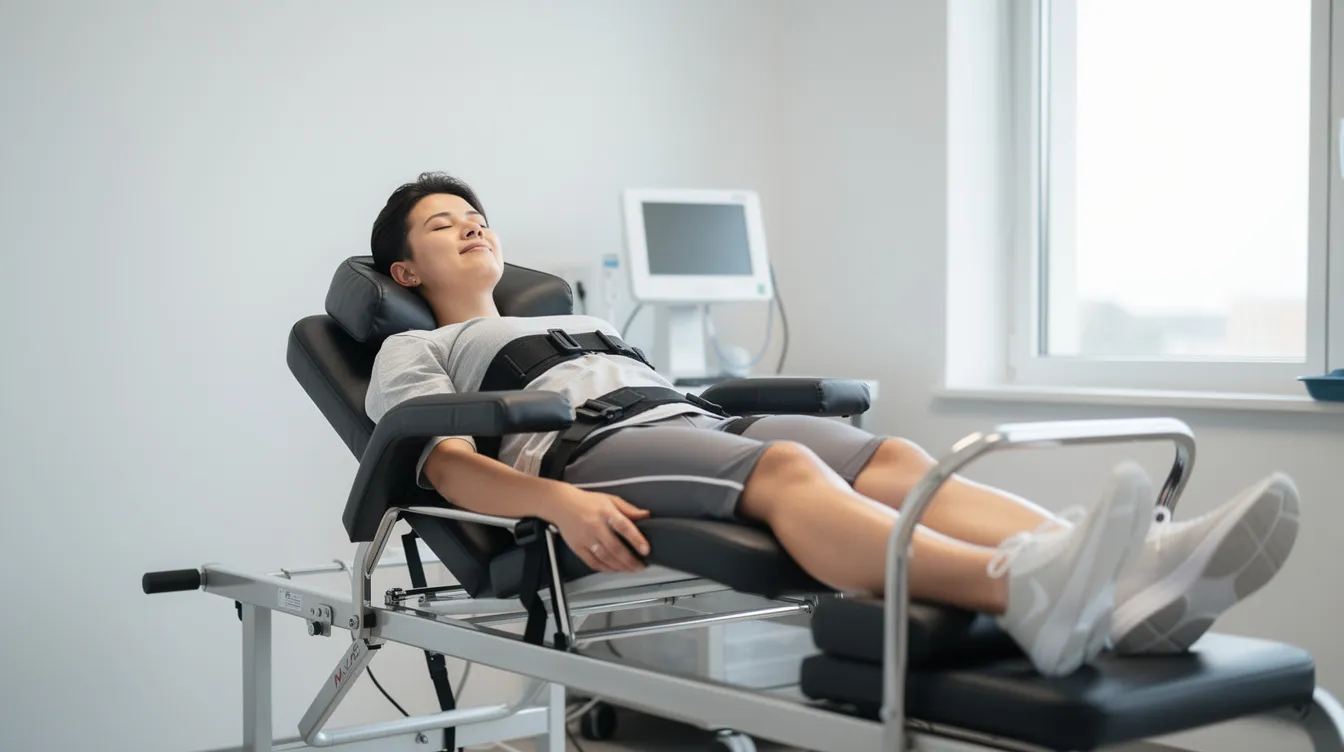
Spinal decompression therapy refers to a non invasive medical treatment that uses motorized, computerized traction tables to gently reduce pressure within the spinal column. Patients lie on a specialized table while harnesses on the pelvis and trunk deliver controlled, intermittent distractive forces. These forces gently separate the vertebrae, reduce intradiscal pressure, promote retraction of disc herniations, increase disc height, improve nutrient diffusion into spinal discs, and relieve nerve compression. For Singapore patients seeking alternatives to invasive procedures, understanding how this technology actually works is the first step toward making an informed decision.
How the Technology Works
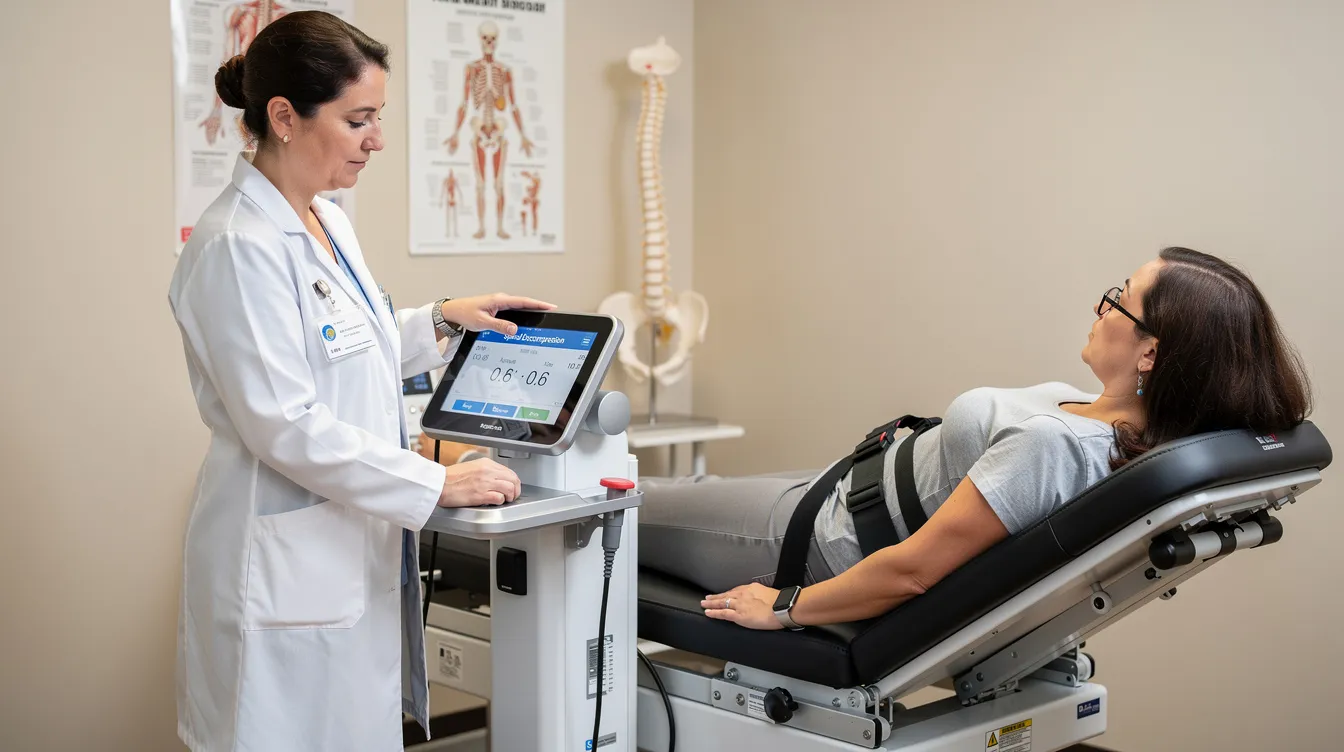
Non surgical spinal decompression machines use advanced technology with computer-controlled force delivery, feedback sensors, and programmable cycles of tension and relaxation. During each session, the machine gently stretches the spine using calibrated distractive forces, creating negative pressure inside the spinal discs. This negative pressure encourages bulging or herniated disc material to retract and draws nutrient rich fluids and essential nutrients back into the disc, supporting disc health and tissue repair.
Several well-known devices – including the DRX9000, VAX-D, Accu-Spina, and Spinemed – have received FDA 510(k) clearance as Class II powered traction devices. The DRX9000-SL, for instance, was cleared on 18 July 2025 for indications including herniated discs, bulging discs, degenerative disc disease, posterior facet syndrome, and sciatica. This regulatory clearance validates basic safety and the intended uses of these devices, connecting the technology directly to meaningful pain relief for conditions involving nerve pressure and nerve compression.
Treatment Process and Experience
A typical spinal decompression session lasts 20–30 minutes. Common treatment protocols involve 20–28 sessions over 5–7 weeks for lumbar disc herniation, though some protocols use 10 sessions over 8 weeks depending on condition severity and the patient’s specific response. During treatment, most patients feel a mild, gentle stretching or pulling sensation – not pain. Many patients describe spinal decompression as relaxing, and patients often fall asleep during spinal decompression sessions. Clinics in Singapore typically adjust harness tension and body positioning and monitor the patient’s response throughout each session.
This experience stands in stark contrast to what many people expect – which brings us to the myths and misconceptions that keep too many patients from exploring this treatment.
The Five Most Common Myths About Spinal Decompression
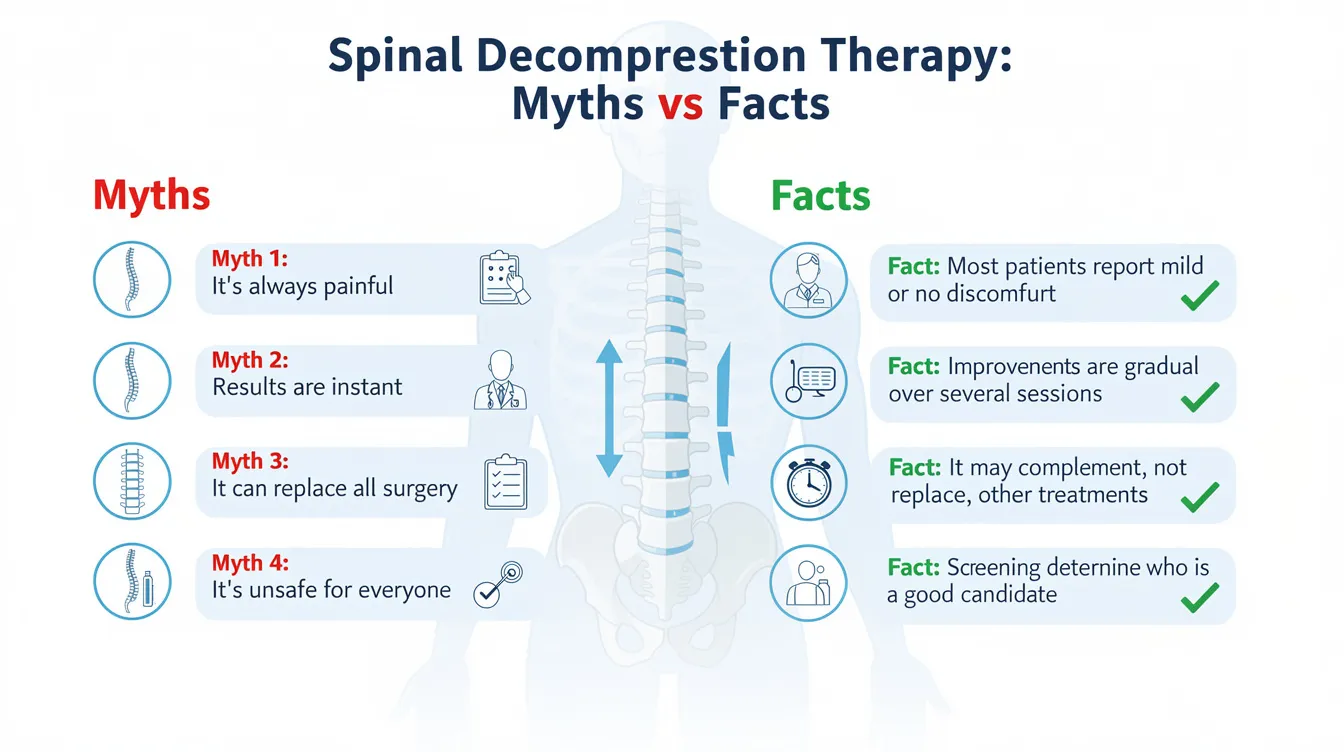
Many misconceptions exist regarding the pain associated with spinal decompression therapy, its effectiveness, and who it’s designed for. Below, we address the five most persistent myths about spinal decompression with evidence-based responses.
Myth 1: Spinal Decompression is Painful and Uncomfortable
This is perhaps the most widespread common misconception. The reality is that spinal decompression is generally a comfortable procedure. The treatment uses gradual stretching with computer-controlled force adjustments and rest phases specifically designed to prevent discomfort. Many patients find the experience so relaxing that falling asleep during sessions is common.
That said, many misconceptions exist regarding the pain associated with spinal decompression therapy. While adverse effects of traction can include increased pain and worsening neurological symptoms, these are exceptions rather than the rule. Clinical reports suggest approximately 10% of patients may experience transient discomfort, sharp sensations, or difficulty tolerating the harness position – but proper patient screening and conservative force settings minimise these occurrences substantially. Spinal decompression therapy is considered low risk when performed correctly by trained professionals using specialized equipment with real-time feedback systems.
Myth 2: It’s Only Effective for Severe Spinal Problems
Another common myth is that decompression therapy is reserved only for severe cases or as a last resort before surgery. The evidence tells a different story. Spinal decompression helps patients with mild back pain, and it benefits individuals with chronic back pain and sciatica. Spinal decompression is effective for herniated and bulging discs. Patients with degenerative disc disease can also benefit from it. Spinal decompression is suitable for both mild and severe conditions.
A randomized trial of 60 patients with subacute lumbar herniated discs – not just severe chronic cases – demonstrated that the decompression group achieved a 27.6% mean reduction in herniation volume compared to just 7.1% in the control group. Early intervention with spinal decompression can actually prevent progression of spinal issues, particularly for adults in Singapore experiencing posture-related disc problems from sedentary office work or poor posture habits.
Myth 3: Results are Either Immediate or Completely Temporary
Some people expect instant relief from the very first session. Others dismiss the treatment entirely, assuming any benefits are completely temporary. Both positions are inaccurate.
Spinal decompression requires a series of scheduled sessions over several weeks to build lasting results. In clinical research, most meaningful changes in pain and function emerged over 4–8 weeks, with MRI-documented changes in disc herniation visible at 8–12 weeks. Pain relief does not necessarily mean the disc has been fixed or corrected after a single session – sustained improvements require commitment to the full treatment protocol.
What about long-term results? Research shows 76% of patients maintain pain relief after one year. Patients report sustained improvements in pain and mobility up to 12 months post-treatment. Many patients experience long-lasting relief from spinal decompression therapy, and spinal decompression promotes lasting structural changes in the spine. However, there isn’t evidence supporting that spinal decompression permanently fixes structural issues in every case. Relying solely on passive treatment often leads to short-lived results. Clinical success relies on combining therapy with active components like core stabilization, posture correction, and ergonomic adjustments – a holistic approach that addresses the root causes of spinal issues.
Myth 4: The Treatment Lacks Scientific Support
The claim that spinal decompression therapy lacks scientific support does not hold up to scrutiny. Clinical studies support spinal decompression for herniated discs. Spinal decompression therapy is effective for chronic back pain relief. Studies indicate spinal decompression improves function in patients across multiple peer-reviewed trials.
Key evidence includes:
-
RCT on herniation volume (n=60): Decompression group showed 27.6% mean herniation reduction; approximately 26.9% of patients achieved over 50% reduction, compared to none in the control group
-
RCT on lumbar radiculopathy (n=60): Adding spinal decompression to physical therapy produced statistically and clinically greater improvements in pain, disability, range of motion, and quality of life, with effect sizes ranging from medium to large (d = 0.61–2.47)
-
DRX9000 vs conventional traction (n=48): Both groups improved significantly; evidence does not show that specialized decompression devices offer clear clinical superiority over conventional traction, but high rates of patient-reported “marked improvement” were observed in both groups
Multiple devices hold FDA clearance under powered traction device classifications, confirming regulatory acceptance of their safety and intended indications. Non-surgical spinal decompression succeeds in approximately 88% of cases according to clinical data, though independent RCTs typically show statistically significant but more conservative improvement margins compared to manufacturer-reported figures.
It’s important to acknowledge limitations honestly: The World Health Organization and NICE recommend against using traction routinely for chronic low-back pain, and traction is not a guaranteed cure-all for every type of back pain. It is not effective for conditions like spinal instability or fractures. Many studies have moderate sample sizes and follow-up periods of only 2–3 months, and larger long-term trials are still needed.
Myth 5: Anyone Can Perform Spinal Decompression Therapy
Spinal decompression machine therapy is not something any practitioner can – or should – offer. Safety and efficacy depend heavily on practitioner skill, proper patient screening, equipment calibration, and ongoing monitoring. Wrong force application, incorrect positioning, or failing to detect contraindications such as severe osteoporosis, spinal fractures, pregnancy, spinal hardware, or unstable spondylolisthesis can lead to adverse outcomes.
Spinal decompression therapy has minimal risks compared to surgery – but only when administered by trained chiropractors, physiotherapists, or medical professionals experienced in spinal care. The equipment must be properly maintained and calibrated, and protocols must be followed rigorously. A qualified professional will conduct thorough screening including review of imaging (X-ray or MRI), medical history, and functional assessment before recommending treatment.
Evidence-Based Facts About Spinal Decompression Effectiveness
With the myths addressed, let’s examine what the clinical evidence actually demonstrates about outcomes, condition-specific effectiveness, and how spinal decompression therapy compares to surgical alternatives.
Clinical Research and Success Rates
Peer-reviewed research provides a nuanced picture of spinal decompression effectiveness. Non-surgical spinal decompression succeeds in approximately 88% of cases based on clinical outcome data, and 76% of patients maintain pain relief after one year. Spinal decompression therapy offers meaningful improvements across multiple outcome measures when used appropriately.
In the subacute herniated disc MRI trial, the decompression group achieved a 27.6% mean reduction in herniated disc volume over three months, with approximately 26.9% of patients achieving over 50% reduction – compared to zero patients in the control group reaching that threshold. In the lumbar radiculopathy RCT, adding decompression to physical therapy produced improvements in VAS pain scores (~1.07 cm difference), Oswestry Disability Index scores (~5.65 points), lumbar flexion and extension range of motion, and back-muscle endurance – all statistically significant within just four weeks of 12 sessions.
How does this compare to surgery? The SPORT trial for lumbar disc herniation showed that both surgical and non-operative treatments substantially improved outcomes over two years, with surgical arms showing a slight edge in pain and function that was not always statistically significant when accounting for cross-overs. Spinal decompression is often more affordable than surgery and can be a cost-effective alternative to long-term medication, making it particularly relevant for Singapore patients weighing their options.
However, transparency matters: evidence does not show that specialized decompression devices offer clear clinical superiority over conventional traction in all metrics. The DRX9000 vs conventional traction trial found both approaches produced significant improvements, with no clear winner on most functional measures. This suggests spinal decompression is one of several effective treatment options for appropriate candidates – not a miracle cure that outperforms everything.
Condition-Specific Effectiveness
|
Condition |
Evidence Level |
Expected Response |
|---|---|---|
|
Herniated discs |
Strong (multiple RCTs with MRI confirmation) |
Significant pain relief and measurable disc volume reduction over 8–12 weeks |
|
Bulging discs |
Moderate (FDA-cleared indications, clinical reports) |
Good response especially when combined with physical therapy |
|
Degenerative disc disease |
Moderate (included in device clearance indications) |
Improved mobility and pain management; best as part of comprehensive treatment plan |
|
Sciatica / lumbar radiculopathy |
Strong (RCTs showing medium-to-large effect sizes) |
Statistically and clinically significant improvements in leg pain, disability, ROM |
|
Back and neck pain (postural) |
Moderate (clinical experience, limited specific RCTs) |
Early intervention benefits; responds well alongside posture correction |
|
Severe spinal stenosis (bony) |
Weak |
Limited mechanical effect; surgery may be necessary |
|
Spinal instability / fractures |
Contraindicated |
Not effective; potentially harmful |
Spinal decompression therapy offers the strongest evidence for herniated discs and lumbar radiculopathy with nerve compression. For patients experiencing chronic neck pain or back pain related to disc pathology, it represents an effective treatment option – particularly as an alternative to invasive procedures. For conditions involving primarily bony changes or spinal instability, other approaches including surgery may be more appropriate.
Common Concerns and Professional Responses
Even after understanding the evidence, many patients in Singapore have practical concerns about safety, cost, and how to find the right provider. Here are professional responses to the most common hesitations.
Safety and Risk Considerations
Spinal decompression therapy has minimal risks compared to surgery when performed correctly. The treatment does not involve incisions, anaesthesia, or hospitalisation. Controlled stretching during spinal decompression creates negative pressure in discs gradually and safely, monitored by computer feedback systems.
Contraindications that practitioners must screen for include: severe osteoporosis, spinal fractures, unstable spondylolisthesis (Grade 2 or higher), metal implants or spinal fusion at the treatment level, pregnancy (particularly later stages), active infections, spinal tumors, and cauda equina syndrome. Adverse effects of traction can include increased pain and worsening neurological symptoms, but these are rare and are minimised through proper screening by a qualified professional.
For anyone concerned about spinal health and whether decompression is appropriate for their situation, a thorough assessment including review of imaging and medical history is essential before beginning treatment. Understanding what happens during a chiropractic assessment can help set expectations.
Cost and Insurance Coverage in Singapore
Spinal decompression therapy costs vary but are generally lower than surgery. In Singapore, single lumbar decompression sessions start at approximately S$120 at physiotherapy clinics. A full treatment course of 20–25 sessions would accordingly cost several thousand dollars depending on the clinic, machine type, and practitioner experience.
Spinal decompression is often more affordable than surgery. For context, day surgery procedures for spinal disorders at Singapore public hospitals carry median bills of approximately S$500–S$700 (subsidised, inclusive of GST) – and private hospital costs run considerably higher. Many clinics offer insurance coverage for spinal decompression, though coverage falls inconsistently under physiotherapy or chiropractic outpatient modalities rather than surgical categories. Spinal decompression can be a cost-effective alternative to long-term medication costs as well. Patients should check directly with their insurer and enquire about Medisave or private plan applicability, as reimbursement policies for non surgical treatments vary.
Finding Qualified Practitioners
Choosing the right provider matters significantly for both safety and outcomes. When selecting a clinic for spinal decompression in Singapore, look for:
-
Relevant qualifications – trained chiropractors, physiotherapists, or pain specialists with specific experience in spinal decompression machines
-
Proper diagnostic capability – access to X-ray or MRI imaging for accurate diagnosis before treatment begins
-
Equipment quality – FDA-cleared or equivalent devices with documented maintenance and calibration schedules
-
Transparent protocols – clear explanation of how many sessions are recommended, expected outcomes, and the patient’s specific treatment plan
-
Comprehensive approach – providers who combine decompression with physical therapy, spinal mobility exercises, posture correction, and lifestyle modifications rather than offering passive treatment alone
Understanding how often to see a chiropractor can help you plan a realistic treatment schedule alongside your decompression sessions.
Conclusion and Next Steps
Spinal decompression machine therapy is a legitimate, evidence-supported, non invasive treatment option for Singapore adults dealing with herniated discs, bulging discs, degenerative disc disease, sciatica, and chronic back pain. The common myths – that it’s painful, only for severe cases, scientifically unsupported, produces only temporary results, or can be performed by anyone – are each contradicted by clinical evidence and proper understanding of how this therapy works. At the same time, it’s important to maintain realistic expectations: spinal decompression is not a guaranteed cure for every type of back pain, and the best outcomes come from a comprehensive treatment plan that includes active rehabilitation and lifestyle changes.
Your next steps:
-
Schedule a consultation with a qualified chiropractor or physiotherapist experienced in spinal decompression to assess whether you’re a suitable candidate
-
Prepare for your visit by gathering any existing imaging (MRI or X-ray), listing your symptoms and medical history, and noting any previous treatments
-
Discuss expectations openly – ask about how many sessions are recommended for your condition, what outcomes to expect, and what complementary treatments (exercise, posture correction, ergonomic changes) should be part of your plan
-
Check your insurance – contact your provider directly to clarify coverage for non surgical spinal decompression under your specific policy
For continued spinal health beyond treatment, explore posture correction strategies, ergonomic adjustments for neck pain relief, and evidence-based approaches to long-term spinal health maintenance that address the root causes of back and neck pain in Singapore’s modern lifestyle.
Additional Resources
-
FDA 510(k) clearance database for powered traction devices – verify device clearance status
-
Healthline’s overview of spinal decompression therapy – accessible patient education on mechanisms and expectations
-
RCT on non-surgical decompression for subacute lumbar herniation – peer-reviewed study with MRI-confirmed outcomes
-
RCT on decompression combined with physical therapy for radiculopathy – evidence for combined treatment approaches
-
Patient preparation checklist: Bring imaging results, list of current medications, symptom diary, insurance policy details, and questions about treatment protocols and expected timelines