
Chiropractic care is defined as a hands-on clinical discipline that corrects spinal alignment to restore nervous system function, reduce pain, and support musculoskeletal health. For athletes and active individuals, the benefits of chiropractic for performance are primarily indirect: better nerve communication, less pain, and faster recovery create the conditions your body needs to train harder and compete at a higher level. Sports chiropractic, the recognized clinical term for athlete-focused care, goes beyond pain relief to address coordination, joint mobility, and resilience. Evertonchiropractic applies this approach through personalized assessments and evidence-informed treatment plans built around each athlete’s specific goals.
1. How chiropractic adjustments optimize nervous system function
The spine is the nervous system’s command center. When vertebrae shift out of alignment, they compress or irritate nerves, and that interference disrupts the signals your brain sends to your muscles. Chiropractic adjustments restore clear brain-to-body communication, which is the foundation of coordination, reaction time, and efficient energy use.
Athletes and coaches often misunderstand this point. They expect chiropractic to add strength or speed directly. What it actually does is remove interference so your existing capacity can express itself fully. A sprinter whose lumbar spine is compressed fires their glutes less efficiently than one whose nerve pathways are clear. Removing that compression does not build the muscle, but it lets the muscle work as designed.
The role of chiropractic in peak performance becomes clearest when you look at muscle timing. Precise nerve signals control when each muscle fires during a movement pattern. Disrupted signals create micro-delays that compound across a full stride, swing, or throw.
- Spinal adjustments reduce nerve irritation that causes delayed muscle activation
- Restored alignment improves proprioception, your body’s sense of its own position in space
- Better proprioception directly improves balance and movement accuracy
- Consistent care maintains the nervous system in a state ready for peak output
Pro Tip: Schedule a chiropractic session two to three days before a competition, not the day before. This gives your nervous system time to integrate the adjustment and stabilize before you perform.
2. Managing pain so you can train consistently
Pain is the most common reason athletes miss training sessions. Chiropractic offers modest short-term pain relief and functional improvement for both acute and chronic low back pain, based on moderate-quality evidence from systematic reviews. That pain relief matters because consistent training volume is one of the strongest predictors of athletic improvement.
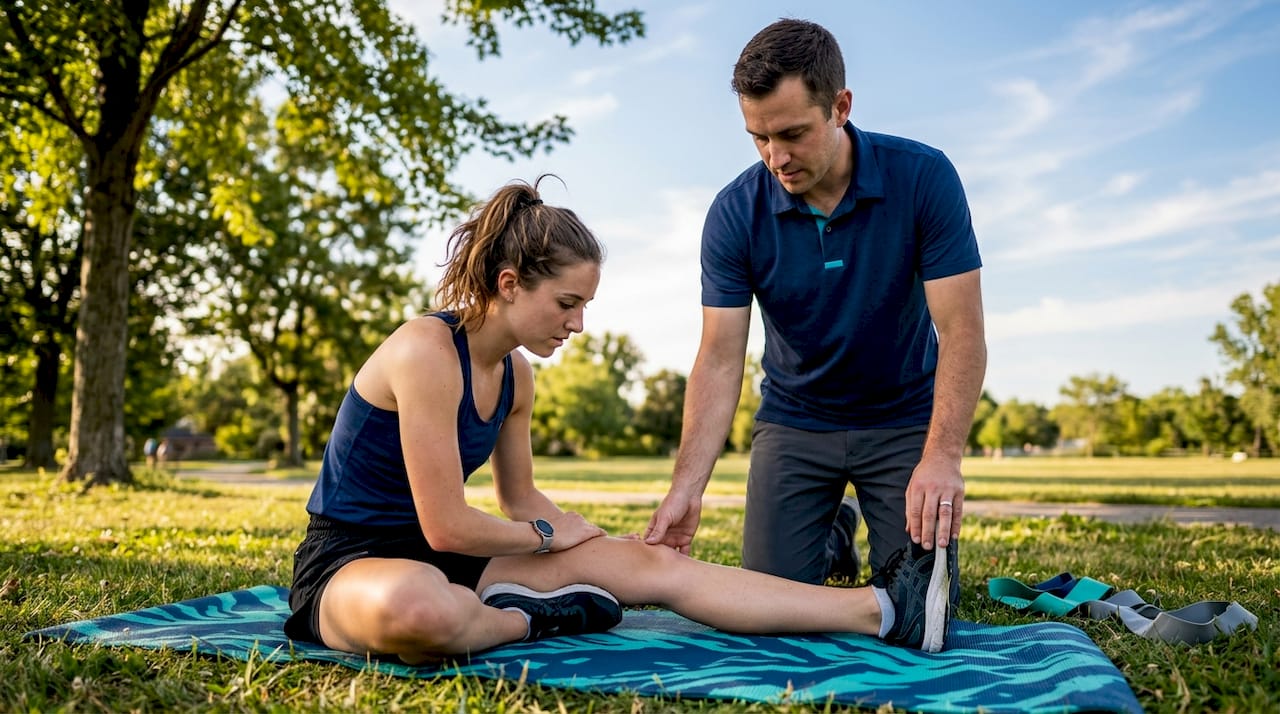
The evidence is honest about its limits. A systematic review that screened 1,415 articles and included 20 high-quality studies found limited proof that spinal manipulation directly enhances performance in healthy, asymptomatic athletes. The real value shows up in athletes who have pain or stiffness that is reducing their training load.
Here is how chiropractic fits into a pain management plan for athletes:
- Identify the source. A sports chiropractor uses biomechanical assessment to locate the joint or spinal segment causing the problem, not just the site of pain.
- Adjust the affected segment. Targeted manipulation restores joint mobility and reduces local nerve irritation.
- Support with soft tissue work. Myofascial release or trigger point therapy addresses the muscle tension that builds around a restricted joint.
- Prescribe corrective movement. Active rehabilitation exercises reinforce the restored alignment and prevent recurrence.
- Monitor training load. Reducing volume temporarily while the joint heals prevents the injury from becoming chronic.
Chiropractic works best as one part of a multimodal care plan that includes physiotherapy and structured exercise. Treating it as a standalone cure sets unrealistic expectations and delays full recovery.
3. Injury prevention through joint mobility and nerve health
Injury prevention is where sports chiropractic delivers some of its clearest value. Restricted joints and irritated nerves create compensatory movement patterns. Those patterns shift load onto structures that were not designed to carry it, and overuse injuries follow. Restoring joint mobility before a breakdown occurs is far more efficient than rehabilitating after one.
Sport-specific biomechanical assessments allow chiropractors to identify movement faults unique to each athlete’s sport and body. A swimmer’s shoulder mechanics differ from a runner’s hip mechanics. Personalized assessments catch these differences and guide adjustments that match the actual demands of training. Evertonchiropractic builds care plans around this principle, tailoring each session to the individual’s sport and training cycle.
| Injury risk factor | Chiropractic response | Outcome |
|---|---|---|
| Restricted lumbar joints | Spinal manipulation to restore range | Reduced compensatory loading on hips |
| Nerve irritation at cervical spine | Targeted cervical adjustment | Improved shoulder coordination |
| Thoracic stiffness | Mobilization and soft tissue release | Better rotational power and breathing mechanics |
| Overuse pattern from hip imbalance | Pelvis and sacroiliac joint correction | More even force distribution through legs |
Pro Tip: Ask your chiropractor to assess your movement patterns at the start of each training block, not just when something hurts. Catching restrictions early costs one session. Ignoring them can cost a season.
Preventing sports injuries with regular chiropractic care is a proactive strategy, not a reactive one. Athletes who treat chiropractic as maintenance rather than emergency care stay on the field longer.
4. Accelerating recovery between training sessions
Recovery speed determines how often you can train at high intensity. Chiropractic adjustments improve nerve control over circulatory and organ functions, which supports blood flow, lymphatic drainage, and tissue repair. Faster waste removal from muscles means less soreness and a shorter window between hard sessions.
This is not a replacement for sleep, nutrition, or structured rest. Those fundamentals drive the majority of recovery. Chiropractic contributes by removing the neurological interference that slows the body’s own repair processes. Think of it as clearing a blocked drain rather than adding more water pressure.
Returning to sport safely after injury also depends on restored movement quality, not just pain reduction. An athlete who is pain-free but still moving with compensatory patterns is at high risk of re-injury. Chiropractic assessments track movement quality throughout the recovery process, not just symptom levels.
5. Neural recalibration with laser therapy and chiropractic combined
The most forward-looking application of sports chiropractic combines spinal adjustments with high-energy, nonthermal laser therapy. This combination is called neurorecalibration, and it goes beyond what manipulation alone can achieve. Laser therapy combined with chiropractic upgrades the nervous system’s processing speed, leading to faster decision-making and better motor control.
The mechanism is specific. High-energy laser stimulates neural tissue at a cellular level, accelerating the recalibration that a spinal adjustment initiates. The result is improved reaction speed, stronger muscle contractions, and more fluid movement patterns in real time. For athletes in sports where milliseconds matter, this combination represents a meaningful clinical tool.
- Laser therapy reduces inflammation in neural tissue, making adjustments more effective
- Combined sessions show improvements in reaction time and muscle firing patterns
- Neural recalibration supports the “in the zone” state athletes describe as peak performance
- The protocol is non-invasive and does not require recovery time after sessions
This approach is still emerging in the clinical literature, and results vary by individual. The strongest candidates are athletes with existing nerve irritation or coordination deficits, not healthy athletes seeking a shortcut to better performance.
6. Integrating chiropractic into your full training program
Chiropractic care works best when it is periodized alongside your training, not scheduled randomly. Effective outcomes depend on coordinated care that includes physiotherapy, active rehabilitation, nutrition, sleep, and training load management. Chiropractic is one component in that system, and it performs best when the other components are also in place.
A practical integration model looks like this:
- Base phase: Monthly maintenance adjustments to identify and address restrictions before they become injuries
- Build phase: Bi-weekly sessions to manage increased training load and maintain joint mobility
- Competition phase: Single pre-event session two to three days out, focused on nervous system readiness
- Recovery phase: Post-event session within 48 hours to address acute restrictions and support tissue repair
Chiropractic care for fitness enthusiasts follows the same logic. Whether you compete professionally or train for personal goals, aligning care with your training cycle produces better results than treating chiropractic as an occasional fix.
Realistic expectations matter here. Chiropractic will not add 10% to your bench press or shave seconds off your mile time on its own. What it does is remove the physical barriers that prevent you from expressing your current capacity fully and consistently.
Key Takeaways
Chiropractic care improves athletic performance indirectly by restoring nervous system efficiency, reducing pain, and supporting faster recovery, making consistent high-quality training possible.
| Point | Details |
|---|---|
| Nervous system efficiency | Spinal adjustments restore clear brain-to-muscle signals, improving coordination and reaction time. |
| Pain relief enables training | Moderate evidence supports short-term pain reduction, helping athletes maintain consistent training loads. |
| Injury prevention | Sport-specific biomechanical assessments catch movement faults before they cause overuse injuries. |
| Laser and chiropractic combined | Neurorecalibration protocols improve reaction speed and motor control beyond adjustment alone. |
| Periodized integration | Aligning chiropractic sessions with training phases produces better outcomes than reactive care. |
What I’ve learned about chiropractic and real athletic performance
Athletes come to chiropractic expecting a performance upgrade. What they find, if they stick with it, is something more useful: a body that stops getting in its own way.
The biggest shift I’ve seen is when athletes stop treating chiropractic as emergency care and start using it as proactive maintenance. The athlete who comes in only when something hurts is always playing catch-up. The one who comes in regularly is managing their nervous system the same way they manage their training load, with intention and a plan.
The evidence is clear that chiropractic is not a direct performance enhancer for healthy, asymptomatic athletes. I think that framing actually undersells what it does. Pain and restricted movement are performance limiters. Removing them is performance enhancement, just not the kind that shows up in a lab test on a pain-free subject.
The athletes I see benefit most are those with clinical symptoms guiding their care decisions. They use chiropractic to address a real problem, combine it with active rehabilitation, and treat it as one part of a larger health strategy. That approach consistently produces better results than chiropractic alone or any single modality used in isolation.
Chiropractic helps you optimize the nervous system. It does not replace the work. The athletes who understand that distinction get the most out of every session.
— Aman
Evertonchiropractic’s approach to athlete care and recovery
Athletes dealing with nerve pain, restricted movement, or recurring injuries need care that targets the source, not just the symptoms. Evertonchiropractic, led by Dr. Richard, builds personalized treatment plans that address the root cause of each athlete’s physical limitations.

Whether you are managing nerve-related pain that is disrupting your training or looking to maintain peak physical readiness through a competition season, Evertonchiropractic’s evidence-informed care covers both. The clinic’s approach combines spinal adjustments for pain relief with active rehabilitation strategies designed to keep you moving well long-term. Book a consultation to get a care plan built around your sport, your body, and your goals.
FAQ
Does chiropractic directly improve athletic performance?
Chiropractic does not directly enhance performance in healthy, asymptomatic athletes, based on a systematic review of 20 high-quality studies. Its primary value is indirect: reducing pain and restoring movement so athletes can train more consistently.
How does chiropractic help with sports recovery?
Chiropractic adjustments improve nerve control over circulatory functions, supporting blood flow and lymphatic drainage that speed tissue repair between training sessions.
What is neurorecalibration in sports chiropractic?
Neurorecalibration combines spinal adjustments with high-energy, nonthermal laser therapy to improve nervous system processing speed, reaction time, and muscle coordination in athletes.
How often should athletes see a chiropractor?
Session frequency should match your training phase. Monthly maintenance works during base training, bi-weekly during high-load phases, and a single session two to three days before competition supports nervous system readiness.
Is chiropractic safe for athletes with existing injuries?
Chiropractic is generally safe when guided by a sport-specific biomechanical assessment. Care plans should be coordinated with physiotherapy and active rehabilitation to address the full scope of an existing injury.