Introduction
Proper alignment of hips and knees reduces joint stress by distributing body weight evenly across cartilage, ligaments, and bone – and for many patients, this biomechanical correction can delay or eliminate the need for knee surgery entirely. When the kinetic chain from spine to pelvis to knee functions in harmony, forces during walking, standing, and everyday tasks are shared efficiently rather than concentrated on vulnerable structures prone to cartilage wear and degeneration.
This article covers the biomechanical principles behind hip and knee alignment, the specific misalignment patterns that accelerate disease progression toward knee replacement surgery, and the chiropractic and rehabilitative strategies that can potentially avoid surgery. The content is designed for Singapore adults experiencing knee pain or hip pain, those weighing whether to consult an orthopedic surgeon, and anyone seeking preventive approaches to keep their joints healthy for the long term.
The direct answer: Proper alignment of hips and knees reduces joint stress, and even load distribution protects cartilage from wear and degeneration. Maintaining proper alignment can delay or eliminate the need for surgery by preventing the asymmetric loading that drives knee osteoarthritis and hip osteoarthritis toward surgical thresholds.
By reading this article, you will:
-
Understand how the hip-knee kinetic chain distributes forces and why misalignment creates extra stress
-
Recognize common misalignment patterns prevalent in Singapore’s population
-
Learn specific chiropractic alignment methods that relieve joint pain without surgery
-
Discover daily alignment practices – from proper posture to muscle strengthening – that protect knee health
-
Build a practical plan to reduce your risk of joint replacement surgery
Understanding Hip-Knee Biomechanical Alignment
Proper hip and knee alignment means that the hip joint, kneecap, and ankle sit in a mechanically neutral line during both standing and movement. When this alignment holds, forces generated by body weight and activity flow through the center of the knee joints rather than loading one compartment disproportionately. For Singapore patients hoping to avoid knee replacement or hip replacement surgery, understanding this alignment is the first step toward preserving joint health.
The Kinetic Chain Connection
The kinetic chain describes the interdependence of your spine, pelvis, hips, knees, and ankles – a misalignment in one segment propagates compensatory stresses both up and down the chain. Hip strength and movement control reduce abnormal loads on the knee joint, while hip position directly influences knee tracking and stress distribution during every step.
This connection matters enormously for occupational demands. Singapore’s desk-bound workforce often develops patterns where prolonged sitting tightens hip flexors, tilts the pelvis anteriorly, and shifts how forces travel through the knees and hips. Research published in Gait & Posture found that increases in sagittal vertical axis (a measure of forward-leaning posture) are significantly associated with increased knee flexion during the loading response in gait – meaning poor posture can exacerbate knee and hip pain over time by forcing the knee into a constantly flexed, stress-loaded position.
Load Distribution Mechanics
When alignment is neutral, compressive forces during walking spread across the full surface area of the knee’s medial and lateral compartments. Even load distribution protects cartilage from wear and degeneration. But even small deviations change this equation dramatically.
A computational modeling study found that coronal plane deviations of just 2–4° significantly increased medial compartment contact forces and ligament strain compared to neutral alignment. Proper alignment prevents abnormal friction and premature wear on cartilage – the kind of progressive damage that eventually brings many patients to an orthopedic surgeon for total knee or hip replacement discussions.
Understanding these mechanics sets the stage for recognizing what happens when alignment fails and how specific misalignment patterns create the joint stress that drives people toward surgery.
How Misalignment Creates Surgical-Level Joint Stress
With the biomechanical foundation established, the critical question becomes: what specific misalignment patterns push knees toward the surgical threshold? The answer involves both the direction of misalignment and the body’s compensatory responses over time.
Common Misalignment Patterns in Singapore Patients
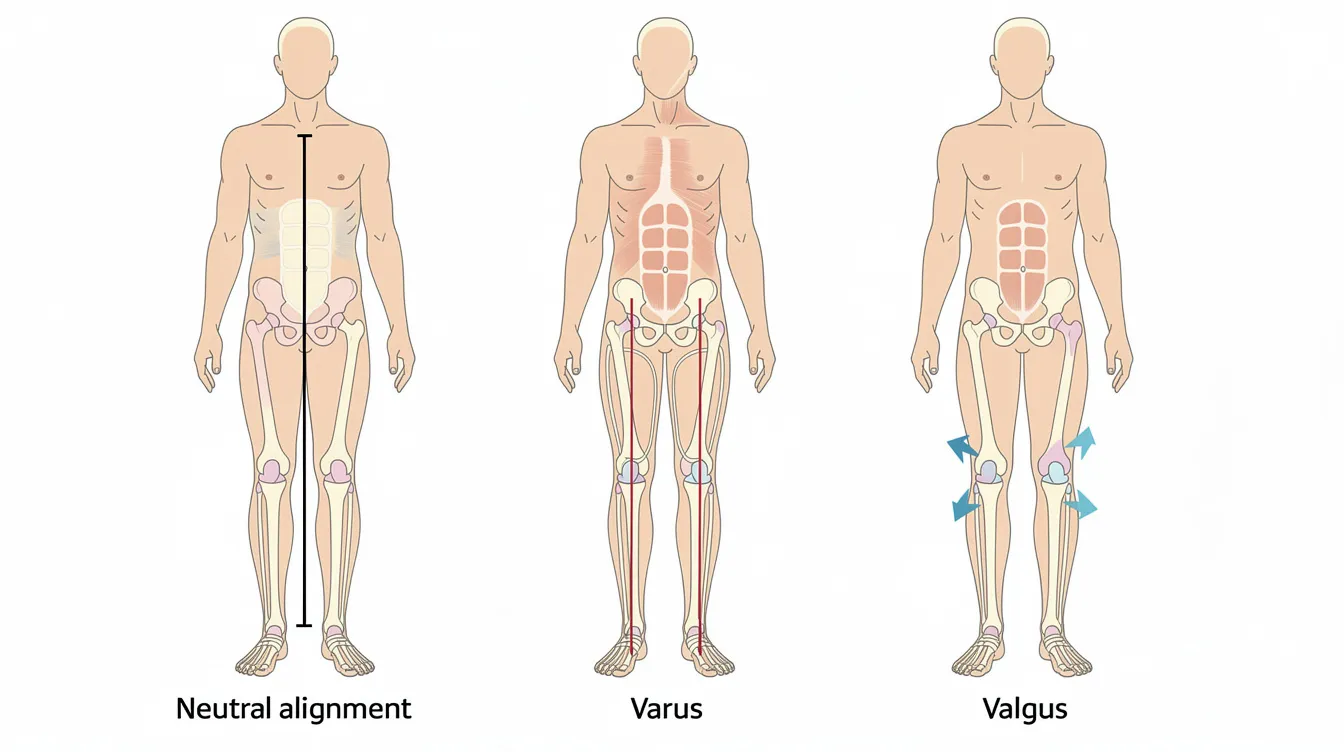
Hip internal rotation coupled with knee valgus collapse during single-leg tasks, excessive anterior pelvic tilt altering femoral positioning, and varus (bow-legged) alignment are among the most common patterns seen in Singapore’s adult population, though assessment should also distinguish mechanical findings from inflammatory causes such as rheumatoid arthritis, which can contribute to severe chronic knee pain. A study of 503 knees undergoing total knee arthroplasty in Singapore classified knees using the Coronal Plane Alignment of the Knee (CPAK) scheme and found that 59% of operated knees showed varus alignment, with CPAK-1 (varus combined with apex-distal joint line obliquity) representing roughly 44% of all cases. Among Chinese and Indian patients, CPAK-1 was approximately 46%, compared to about 29% in Malay knees – indicating that alignment norms and risks differ across ethnic groups within Singapore. Symptoms can overlap between the hip and knee, so broader knee problems still need a whole-chain assessment rather than a knee-only view.
Stress Concentration Points and Knee Pain
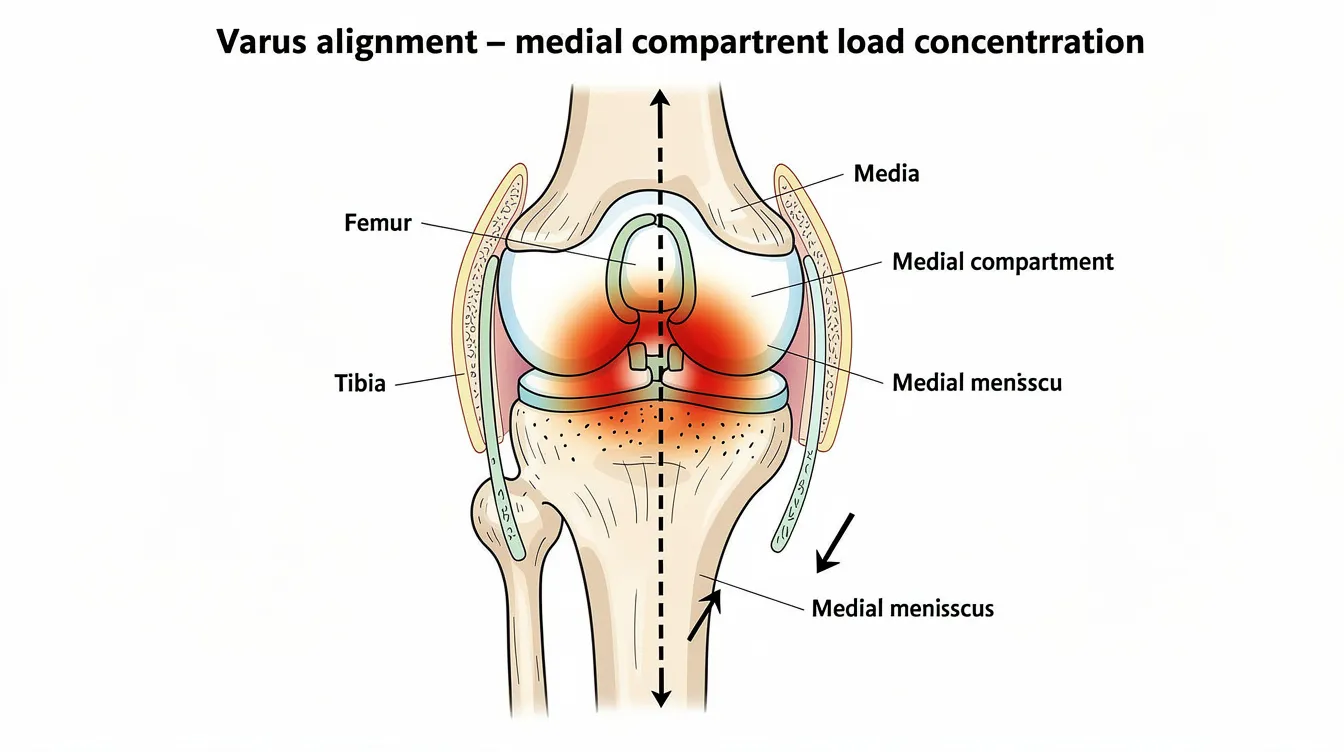
Medial tibiofemoral compartment overload occurs when varus alignment increases adduction moments at the knee during stance, shifting contact forces toward the inner knee compartment. This is the most common pattern leading to knee osteoarthritis in Singapore’s surgical population. Knee issues can increase stress on the hip joint as well, creating a cascading effect.
Patellofemoral stress develops when increased femoral internal rotation and hip adduction cause lateral tracking of the kneecap. This pattern increases patellofemoral joint stress, leading to pain that makes daily activities progressively more difficult and pain worse over time.
Hip compensation emerges when spinal malalignment – reduced lumbar lordosis or increased pelvic tilt – limits hip extension. Research on adult spinal deformity patients (527 patients) showed that increasing deformity severity is associated with greater knee flexion (β ≈ 0.215) and decreased hip extension, meaning the spine’s position directly forces the knee into stress-producing postures.
Progressive Damage Timeline
The progression from misalignment to surgical threshold follows a predictable path. Acute compensation involves pain, altered gait, and muscle tension as the body shifts load away from discomfort – muscle weakness in hip abductors leads to valgus collapse and increased knee adduction moments. Chronic adaptation follows as joint cartilage wears asymmetrically, subchondral bone thickens, and meniscal degeneration begins – this is the stage where knee conditions become radiographically visible. The surgical threshold arrives when mechanical pain, functional limitation, and alignment deformity reach a point where non-surgical methods alone cannot provide adequate relief, and knee replacement surgery or realignment osteotomy is considered.
The Singapore CPAK data confirms this progression: the high rates of varus-aligned knees in the TKA population show that uncorrected alignment patterns drive many patients toward joint replacement. Understanding these patterns creates the foundation for targeted chiropractic solutions that address root causes rather than symptoms alone.
Chiropractic Alignment Methods for Joint Health and Stress Relief
Building on the understanding of how misalignment creates surgical-level stress, the practical question becomes: what can be done to correct these patterns before further damage occurs? Chiropractic alignment methods target the root biomechanical causes – spinal positioning, pelvic symmetry, hip mobility, and muscle balance – with precision that addresses each patient’s specific alignment profile.
Spinal Alignment for Hip-Knee Function
Spinal adjustments improve lower extremity alignment when spinopelvic imbalance is contributing to compensatory knee flexion or hip extension limitation. A study on pelvic incidence minus lumbar lordosis (PI-LL) mismatch found that a PI-LL value exceeding approximately 42.5° predicted clinically significant knee extension discrepancy (≥10° difference between supine and standing), directly linking spinal alignment to knee function.
The treatment process typically follows these steps:
-
Initial assessment and postural analysis – Full postural evaluation measuring lumbar lordosis, pelvic tilt, sagittal vertical axis, and hip-knee-ankle angles to identify specific misalignment patterns. Regular posture checks can help prevent joint discomfort from developing undetected.
-
Targeted spinal adjustments for pelvic positioning – Restoring lumbar lordosis to match pelvic incidence reduces forward-leaning compensations that force the knee into flexion during standing and walking.
-
Hip mobility restoration techniques – Improving hip extension and internal/external rotation through manual therapy and mobilization. Improving hip flexibility reduces strain on the knees by eliminating compensatory movement patterns. When hip extension is limited, the knee may hyperextend or flex excessively, increasing joint stress.
-
Knee tracking correction methods – Strengthening hip abductors, external rotators, and the VMO through targeted exercises, combined with proprioception training and stabilizing the core to enhance lower limb alignment.
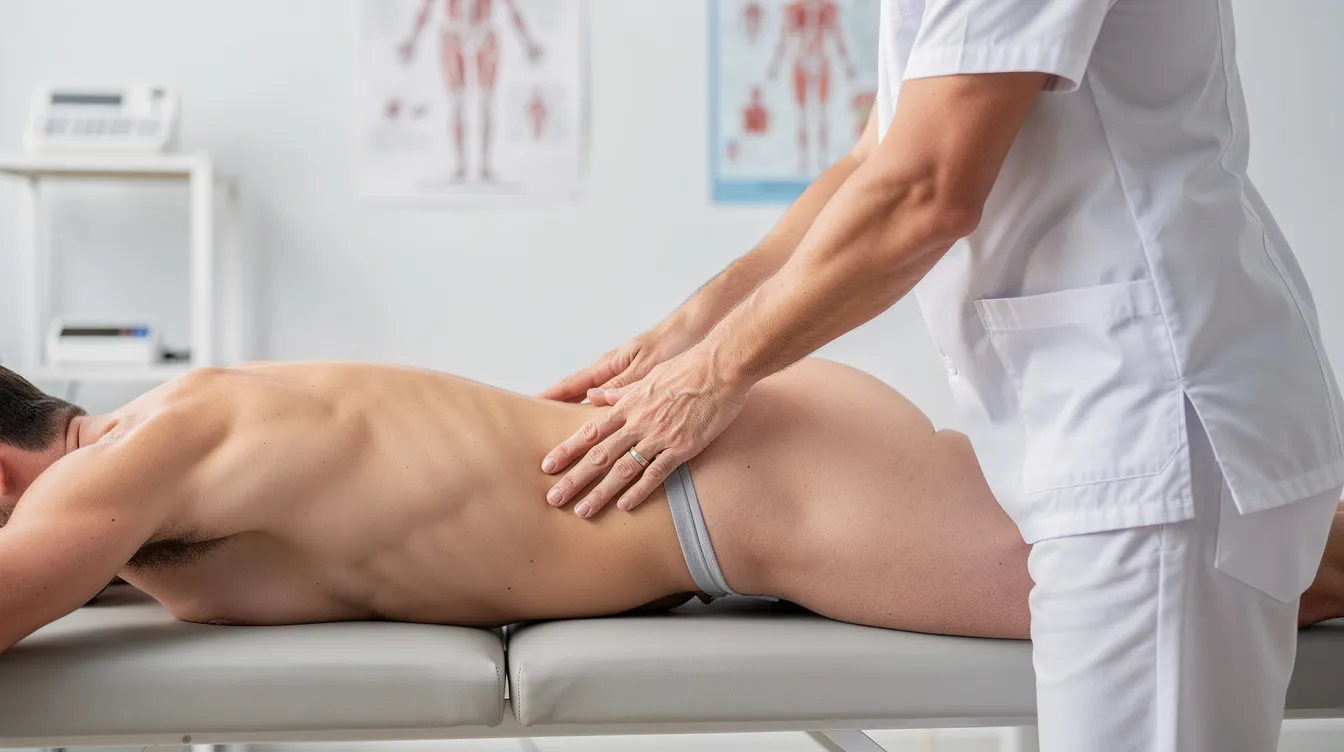
For guidance on how often to see a chiropractor for optimal health in Singapore, treatment frequency depends on the severity of misalignment and the patient’s response to initial corrections.
Exercise Prescription vs. Physical Therapy and Manual Therapy Comparison
Many patients wonder whether physical therapy exercises alone can achieve similar results to chiropractic manual therapy. The evidence suggests that combining both approaches produces the best outcomes for knee function and pain management.
|
Criterion |
Manual Therapy / Chiropractic Care |
Exercise Prescription Alone |
|---|---|---|
|
Speed of results |
Immediate alignment changes within sessions; symptom relief often within weeks |
Measurable biomechanical changes typically require 8–12+ weeks |
|
Precision of correction |
External adjustment of spinal/pelvic position; direct joint mobilization changing mechanics |
Relies on internal force generation and neuromuscular adaptation; depends on correct movement execution |
|
Long-term outcomes |
Best when combined with exercise; addresses structural alignment directly |
Strong evidence for long-term knee osteoarthritis management; sustained gains require ongoing compliance |
|
Patient compliance |
Fewer sessions needed but requires follow-up appointments |
Requires daily discipline; higher dropout risk |
|
Measurable improvements |
Changes in HKA angle, reduced PI-LL mismatch, immediate range of motion gains |
Improvements in WOMAC/KOOS scores, reduced knee adduction moment over time |
Physical therapy can improve knee function and reduce pain, and resistance training is key for managing knee pain. Combining manual care and exercise can also improve seating and movement mechanics that keep the knees slightly lower than the hips when appropriate to reduce strain. However, the synthesis is clear: an integrated approach combining chiropractic alignment correction with targeted exercise prescription maximizes benefit for Singapore patients seeking to potentially avoid surgery. Exercises like squats and lunges target key muscle groups, while bodyweight exercises can effectively strengthen knee-supporting muscles – but these work best when the underlying alignment has been addressed first. Integrated rehab may also use cold therapy after exercise sessions to reduce swelling and support pain management, and practices such as yoga or Tai Chi may help reduce stress while reinforcing controlled movement patterns.
Common Alignment Problems and Solutions
Singapore’s desk-bound population faces specific alignment challenges that compound over long periods of sitting. Here are the three most prevalent problems and their evidence-based solutions.
Forward Head Posture Affecting Knee Function
Forward head posture increases thoracic kyphosis, shifting the center of gravity forward. To compensate, the pelvis tilts, lumbar lordosis alters, and knee flexion increases – loading the patellofemoral joint and knee extensor mechanism with extra stress. Bad posture can exacerbate knee and hip pain over time, and the research confirms this: increased sagittal vertical axis correlates with increased knee flexion during gait loading.
Solution: Chiropractic cervical and thoracic adjustments to reduce forward head posture; postural retraining using mirror feedback; ergonomic workstations can improve posture and joint health. Strengthening deep neck flexors, stretching the chest and shoulder girdle, and maintaining good posture throughout the workday all contribute. For practical tips, see these guides on the best ways to correct posture and curing ‘Tech Neck’ for office workers.

Hip Flexor Tightness and Knee Compensation
Tight hip flexors (iliopsoas and rectus femoris) reduce hip extension, a critical movement for normal gait. During walking, limited hip extension forces compensation: increased anterior pelvic tilt, hyperlordosis, or knee hyperextension. These patterns transmit abnormal stress to the patellofemoral joint and posterior knee structures. Regular stretching prevents tight muscles from misaligning the knees, and this is especially important for people who sit for long periods.
Solution: Manual therapy to release hip flexors combined with targeted stretching of the hip flexor group. Active hip extension mobilization through lunges and hip-hinge movements, movement pattern correction practicing walking with extended hips, and strengthening hip extensors and gluteus maximus. Glute bridges are particularly effective for activating underused hip extensors. Low-impact exercises help strengthen muscles without overloading the joints during the rehabilitation process. Using proper biomechanics prevents unnecessary loading of the knee during these corrective exercises.
Pelvic Asymmetry Creating Uneven Knee Loading
Pelvic obliquity – where one side sits higher than the other – creates functional leg-length differences that shift load unevenly to one knee or hip. This asymmetry causes unequal compressive stresses, accelerates meniscal wear, and can drive early knee osteoarthritis or hip osteoarthritis in the overloaded joint. Every extra pound adds three pounds of pressure on knees, and when that pressure is distributed unevenly due to pelvic asymmetry, cartilage wear accelerates dramatically on the loaded side. A 200-pound person feels 600 pounds of pressure walking, and as Dr. Alan Beyer of Hoag Orthopedic Institute often emphasizes, maintaining a healthy weight matters because excess weight increases joint load before alignment issues are even factored in. That means more strain on the knees and hips, while losing weight can reduce stress on overloaded joints when alignment is also corrected.
Solution: Chiropractic pelvic adjustments to restore symmetry, soft tissue release of tight gluteals and hip adductors, and strengthening hip abductors on the weaker side. Strengthening surrounding muscles stabilizes the knee and relieves stress. Gait retraining helps eliminate limping or asymmetric stepping patterns, and orthotic inserts may be recommended if structural leg-length discrepancy exists. Proper footwear also plays a role in supporting corrected alignment. Weight management is key to easing knee joint pressure – maintaining a healthy weight helps protect hip and knee joints, and even modest changes through healthy eating can support results. A Mediterranean diet can reduce inflammation when it includes healthy fats such as olive oil, nuts, seeds, legumes, and oily fish, while limiting high-fat dairy and refined sugar. Calcium-rich foods support strong bones and strengthen bones and joints.
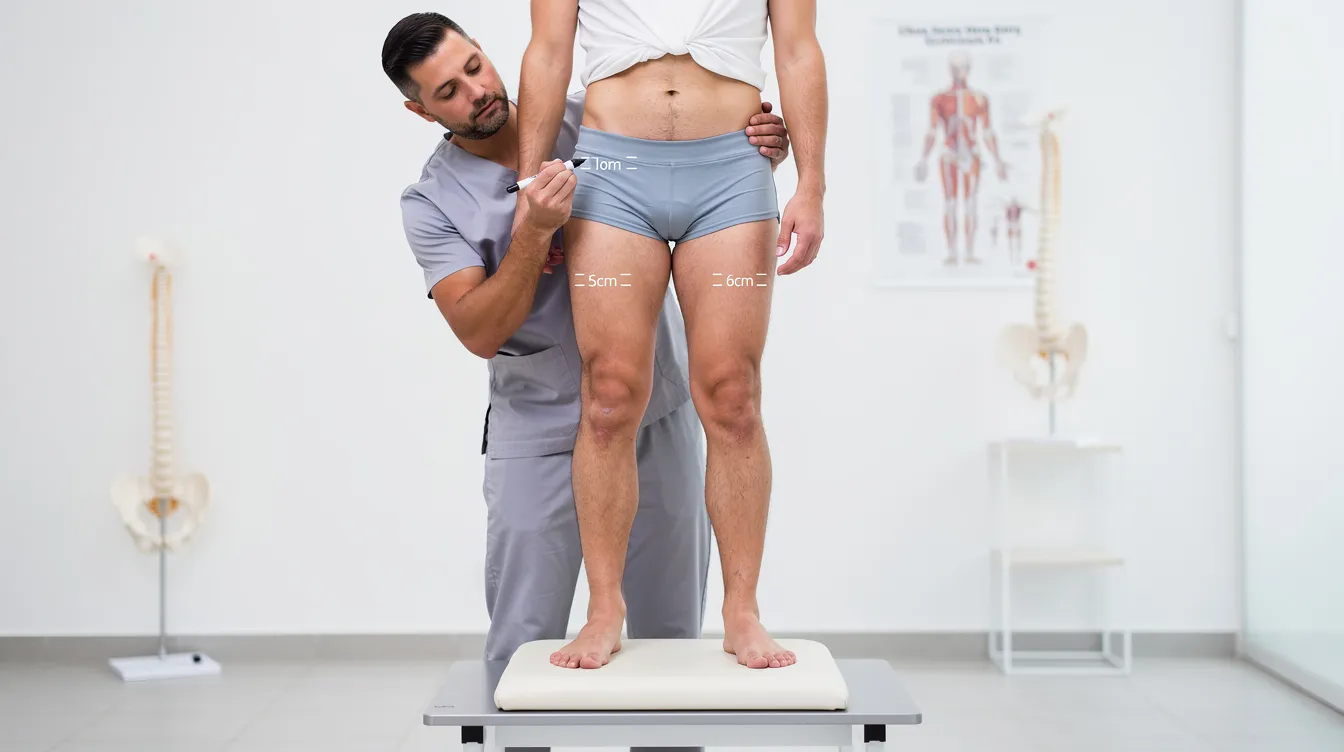
Evaluating persistent pain or instability may benefit knee function, and these common problems underscore why a personalized assessment – rather than a one-size-fits-all approach – produces the best outcomes for avoiding joint replacement surgery.
Conclusion and Next Steps
Proper hip and knee alignment through chiropractic care addresses the biomechanical root causes that drive many patients toward knee replacement or hip replacement surgery. By correcting spinal positioning, restoring pelvic symmetry, improving hip mobility, and strengthening the muscles that stabilize the knee, it is possible to reduce joint stress to levels where cartilage preservation and pain relief occur without surgical intervention. Maintaining proper alignment can delay or eliminate the need for surgery – and Singapore-specific data showing that 59% of knees reaching TKA had varus misalignment confirms that alignment correction represents a significant opportunity for prevention.
Your immediate next steps:
-
Schedule an alignment assessment to identify your specific misalignment patterns and create a baseline for tracking improvement
-
Begin daily posture awareness – set reminders to check your posture every 30 minutes during desk work, and improve posture with evidence-based techniques
-
Implement workspace ergonomics – adjust monitor height, chair positioning, and use ergonomic tools to support good posture throughout the workday
-
Start low-impact strengthening – wall sits, glute bridges, and bodyweight squats with feet shoulder width apart to build knee-supporting muscle without overloading joints
-
Follow a personalized treatment plan combining chiropractic adjustments with targeted exercise, and monitor progress through regular reassessment
For those managing additional musculoskeletal concerns, related topics such as scoliosis treatment, age-related mobility preservation, and comprehensive movement maintenance all connect to the same alignment principles covered here. Advanced non-surgical options – including Platelet-Rich Plasma therapy, which can improve knee function in osteoarthritis, advanced unloading braces that can reduce knee joint stress, and corticosteroid injections that reduce inflammation in knee pain – may complement alignment-based care for patients with more advanced disease progression.
Strengthening leg muscles reduces load on knees and hips, proper techniques in daily activities improve knee alignment, and calcium-rich foods along with eating fresh fruits and vegetables aid joint health by helping maintain strong bones and strengthen bones and joints, while maintaining a healthy weight helps reduce joint stress over time. The path to avoiding knee surgery begins with understanding your alignment and taking corrective action before irreversible damage occurs.