
Introduction
If you’ve been searching “is chiropractic safe for a 5 year old” at midnight while your child sleeps with one shoulder visibly higher than the other, you’re not alone. Many parents in Singapore wrestle with the same question – wanting to help their child’s posture or nagging back discomfort but unsure whether chiropractic care is appropriate at such a young age. The short answer: gentle, paediatric-style chiropractic care is generally considered safe for healthy 5‑year‑olds when performed by a properly trained kids chiropractor in Singapore.
This guide focuses on typically developing children around age 5 (roughly K1 to P1), musculoskeletal and posture-related concerns, and what parents in Singapore can realistically expect at a reputable family chiropractic clinic like Everton Chiropractic. It does not replace medical advice, emergency care, or a paediatrician’s role in your child’s health. If your child has red-flag symptoms – fever, sudden weakness, severe constant pain – see a doctor or another appropriate healthcare professional first.
For most 5‑year‑olds without red-flag symptoms, a chiropractic assessment followed by gentle, low-force care has a strong safety record, with serious adverse events being extremely rare in published research. The safety record shows chiropractic care safe for many children when delivered by chiropractors trained in age appropriate techniques and who work collaboratively with medical professionals.
What you’ll learn in this guide:
-
The safety basics of pediatric chiropractic care for 5‑year‑olds, backed by current evidence
-
How kids’ chiropractic adjustments differ from adult chiropractic care
-
When to consider chiropractic for your child – and when to see a doctor instead
-
What a first visit at a Singapore clinic actually looks like, step by step
-
How to choose a safe, gentle kids chiropractor in Singapore
This guide also includes a simple step‑by‑step checklist for your child’s first visit, a quick summary box for skim-readers, and photo suggestions throughout so you know what a child-friendly clinic environment should look like.
Understanding Chiropractic Care for 5‑Year‑Olds
Chiropractic is a healthcare profession that focuses on the spine and nervous system, along with posture and movement. Rather than prescribing medication or performing surgery, chiropractors use their hands – and sometimes small instruments – to gently improve how the spine and joints move. Chiropractic care is considered complementary and alternative healthcare in Singapore, and professional bodies set ethical and training standards for chiropractors practising here.
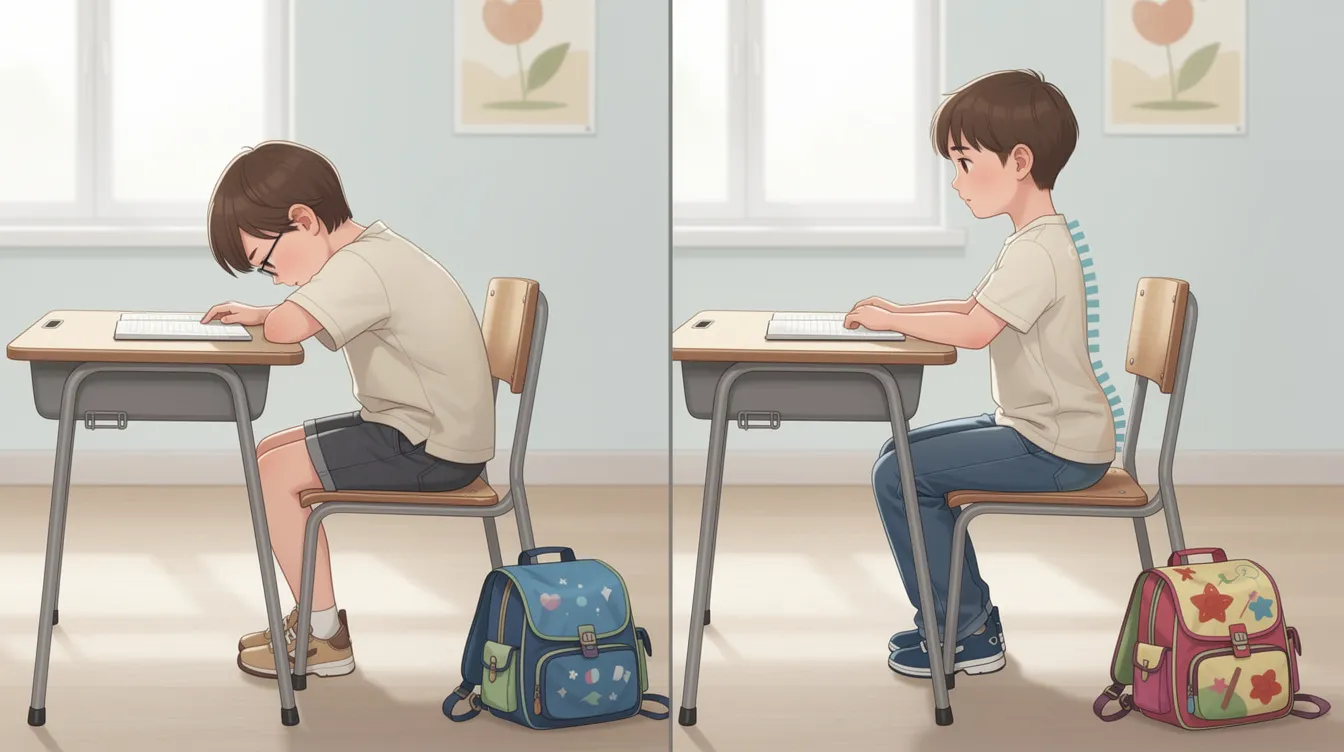
Age 5 is a pivotal stage in a child’s development. In Singapore, this is when many children transition from kindergarten to Primary 1, which often means heavier school bags, longer hours of sitting at a desk, more enrichment classes, and increased screen time. Rapid growth spurts at this age affect coordination, spinal alignment, and posture patterns. Many parents begin noticing poor posture – slouching during homework, a tilted head while watching a tablet, or complaints of a “tired back” after a long school day.
When most people think of chiropractic, they imagine loud “cracking” sounds and firm pressure. Pediatric chiropractic care is fundamentally different. The techniques are specifically adapted for younger children, using extremely gentle techniques that look and feel nothing like an adult session. Think of it as the difference between shaking an adult’s hand firmly and gently holding a child’s fingers.
How a 5‑Year‑Old’s Spine and Nervous System Are Different
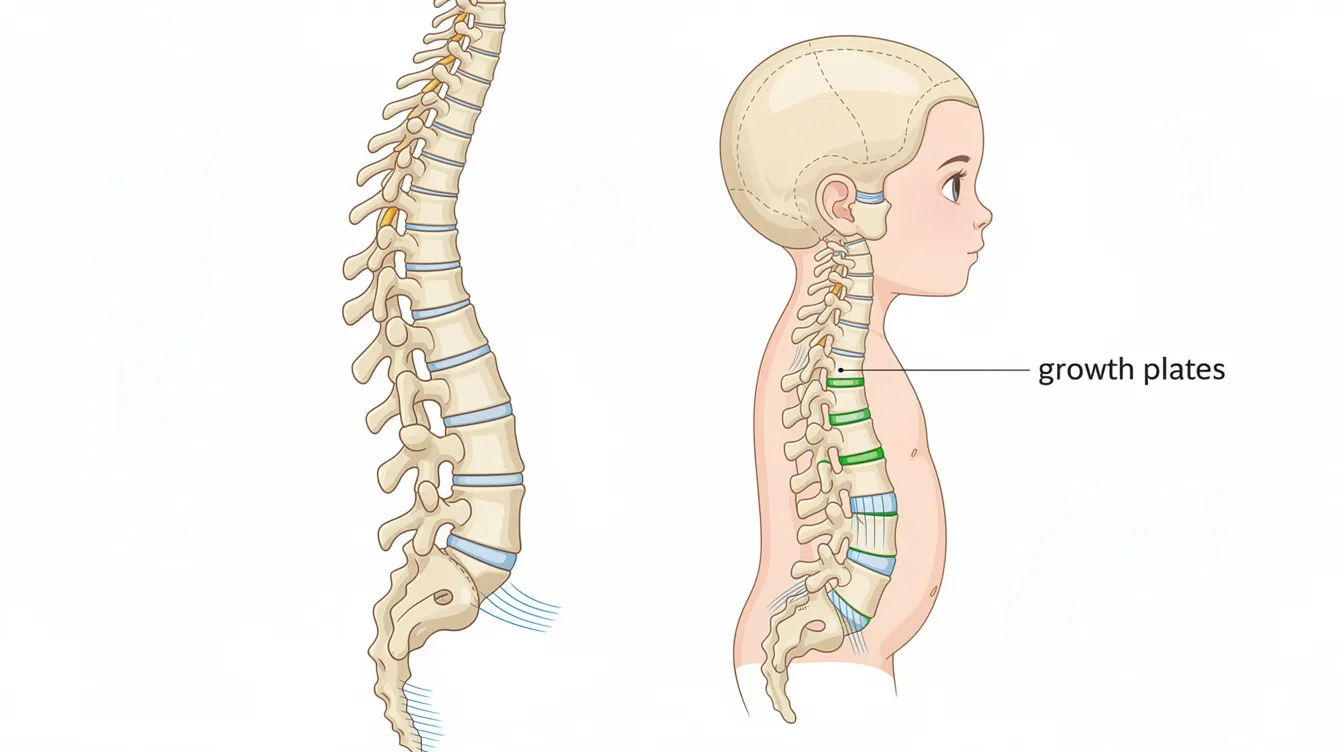
A child’s spine at age 5 is still developing. Compared to an adult, it contains significantly more cartilage, has open growth plates, and features vertebrae that haven’t fully ossified. The spinal cord is well-protected but the surrounding structures are more flexible and less rigid. This differs from a newborn, when parents may be more concerned about a baby’s neck after the birth process. These anatomical differences are precisely why chiropractic care for children must be adapted – forces are much lighter, treatment duration is shorter, and a play‑based, reassuring approach is essential.
At age 5, neurological development is still in full swing. The nervous system is maturing rapidly, which means movement patterns, balance, and coordination are all works in progress. Regular chiropractic checks can support developmental milestones in children by ensuring the spine and nervous system function without mechanical interference.
Parents in Singapore often recognise these everyday examples in their 5‑year‑olds:
-
W‑sitting on the floor during play or screen time
-
Slouching deeply into the sofa or leaning over a tablet with forward head posture
-
Complaining that their school bag is “too heavy” after just a short walk
-
Walking or running in an uneven or slightly clumsy way compared with classmates
-
Tilting their head to one side habitually when drawing or watching TV
These are common movement and posture features at this child’s age – not necessarily problems, but worth monitoring. When they persist or cause discomfort, a chiropractic assessment can help clarify whether gentle care might be beneficial.
What “Gentle Pediatric Chiropractic Care” Really Means
When we say “gentle chiropractic care” for a 5‑year‑old, we mean something very specific: light fingertip pressure, low‑force instruments (such as small handheld activators), and slow, cooperative positioning rather than fast, heavy thrusts. Chiropractors may use handheld instruments for gentle adjustments, or rely solely on their fingertips. There should be no forceful twisting or cracking of a child’s spine. Paediatric chiropractic care focuses on precision and comfort, not force.
“Gentle” does not mean “ineffective.” Gentle adjustments are targeted and purposeful – they aim to support spinal alignment and comfort in a frame that is smaller, more flexible, and more sensitive than an adult’s. Pediatric chiropractic care uses very low-force techniques because that is all a child’s body needs.
Parents are present during the entire chiropractic examination and treatment. Everything is explained in child‑friendly language. The child can say “stop” at any time, and care involves constant checking of the child’s comfort level.
What your child might feel during gentle care:
-
Light pressure, like someone pressing gently with a fingertip
-
A mild stretching sensation
-
A gentle tap from a small instrument
-
A sense of relaxation or tiredness afterwards
What your child should NOT experience:
-
Sharp or sudden pain
-
Fear or being physically held down
-
Loud cracking sounds (most paediatric adjustments produce no audible sound at all)
-
Being rushed or forced into positions

Is Chiropractic Safe for a 5‑Year‑Old in Singapore?
Let’s revisit the core question directly: is chiropractic safe for your 5‑year‑old? The most common fears parents express are: “Will their bones crack?”, “Is the pressure too strong for a small body?”, and “What if something goes wrong?” These are valid concerns, and the evidence – while still growing – offers reassurance.
The current research landscape on pediatric chiropractic shows a very low rate of serious adverse events when care is performed by trained professionals using age appropriate care techniques. A rapid review focused on children under 10 found that serious adverse events associated with spinal manipulative therapy are extremely rare. Mild discomfort can occur post-treatment in children, but serious complications are rare. Evidence is stronger for musculoskeletal and posture issues (back or neck pain, stiffness, movement concerns) and weaker for non‑musculoskeletal conditions like ear infections, digestive issues, or sleep disturbances – parents should be cautious of claims that chiropractic can treat systemic medical conditions.
In Singapore’s local context, chiropractic practices are subject to self-regulation rather than statutory registration. Chiropractic is a self-regulated industry in Singapore, overseen by professional associations rather than a dedicated government board. The Ministry of Health currently views chiropractic as low risk but continues to monitor the profession. Under the 2026 Healthcare Services (Exemption) Order, chiropractors advertising their services must disclose that their qualification is a traditional and complementary therapy qualification. This makes choosing a reputable kids chiropractor in Singapore especially important for your child’s safety.
Summary Box – Key Safety Messages:
Gentle pediatric chiropractic care is generally considered safe for healthy 5‑year‑olds without red-flag symptoms.
Serious adverse events are extremely rare in published research; mild reactions (temporary soreness, tiredness) occur in roughly 0.5–1% of patients.
Singapore does not statutorily regulate chiropractic, so parents must verify the chiropractor’s qualifications, paediatric training, and professional association membership.
Chiropractic adjustments do not replace pediatricians or conventional medical treatments – they are complementary.
When Chiropractic Is Generally Considered Safe for a 5‑Year‑Old
Gentle chiropractic assessment and care are typically appropriate in these low-risk scenarios:
-
Mild posture issues noticed by parents or teachers – slouching, uneven shoulders, forward head posture
-
Recurring but non-severe back or neck pain, such as a “tired back” from carrying a school bag
-
Growing pains that have been assessed by a doctor and found to have no underlying pathology
-
Movement stiffness or soreness after a minor playground fall that has already been medically checked
-
General wellness checks for school aged children entering Primary 1
At Everton Chiropractic, all 5‑year‑olds receive a thorough health history review and physical examination before any care is considered. No adjustment is automatic or guaranteed – a proper assessment always comes first. Chiropractors must assess a child’s health history before treatment, and chiropractic care for children should be age-appropriate and gentle.
For healthy kids, the risk profile of gentle chiropractic is comparable to other manual therapies like paediatric massage or supervised stretching, when performed correctly. A retrospective study of young children at a chiropractic teaching clinic found a reaction rate of approximately 1 per 749 treatments – all mild, none serious.
When Your 5‑Year‑Old Should See a Doctor Before a Chiropractor
Consultation with a pediatrician or family doctor is advised before chiropractic treatment if your child has any of the following red-flag symptoms. This is a safety checklist you can scan quickly before booking:
-
Fever alongside back or neck pain
-
Unexplained weight loss
-
Severe, constant pain that doesn’t improve with rest
-
Sudden weakness or numbness in arms or legs
-
Incontinence (loss of bladder or bowel control)
-
Recent significant trauma – a hard fall, car accident, or sports collision
-
Suspected fracture or visible deformity
-
Signs of infection – redness, swelling, warmth over the spine
Responsible kids chiropractors in Singapore will refer your child to a doctor or another healthcare professional, or co-manage the case, when red-flag symptoms are present. They will not treat emergency conditions or health conditions that require medical care first. A comprehensive health history and physical assessment are essential before treatment – any chiropractor who skips this step is a red flag in itself.
What the Research Currently Says About Safety
The available evidence, while limited in volume, consistently shows that paediatric chiropractic care carries a low risk of harm when gentle techniques are used. A prospective cohort study involving over 500 children found adverse event prevalence of approximately 0.67% based on chiropractor reports and 4.45% when parents reported new or worsened symptoms – the difference highlighting that active surveillance reveals more mild reactions. Critically, no severe adverse events were identified in that cohort.
A cluster randomised controlled trial comparing active versus passive surveillance of adverse events in children under 14 found that 8.8% of visits flagged mild reactions under active surveillance versus just 0.1% under passive reporting. Again, all identified events were mild and self-limiting – temporary soreness, brief irritability, or tiredness. Adverse events from pediatric spinal manipulation are difficult to quantify precisely because reporting methods vary widely, but the pattern is consistent: mild reactions are uncommon and serious harm is exceedingly rare.
Clinical evidence supporting chiropractic treatment for common childhood conditions beyond musculoskeletal complaints – such as asthma, ADHD, or ear infections – is limited. At Everton Chiropractic, this research guides a conservative, safety-first approach: honest about where evidence is strong (musculoskeletal pain, mobility, posture) and transparent where it is weak or inconclusive.
Why Parents in Singapore Consider Chiropractic for Their 5‑Year‑Old
Now that we’ve established the safety picture, let’s look at the real-life reasons many parents in Singapore seek out a kids chiropractor. It often starts with something small: a child complaining of aches after school, a teacher mentioning posture issues during a parent-teacher meeting, or a parent spotting uneven shoulders in a family photo. Chiropractic care can help with poor posture in children, and it fits naturally into a broader, proactive wellness approach – not as a replacement for paediatrics or emergency medical care, but as a complementary layer of support for a child’s development.
Common Concerns in 5‑Year‑Olds That May Lead to a Chiropractic Visit
These are the concrete, everyday scenarios that bring many parents through our doors:
-
Slouching at the study desk or during enrichment classes, with rounded shoulders and a curved upper back
-
Complaints of a “tired back” after carrying a school bag to and from school or the library
-
Head tilted to one side in photos or when watching TV – a subtle but persistent head position issue
-
Walking or running that looks clumsy or uneven compared with peers, possibly related to spinal imbalances
-
Frequent headaches after long screen sessions or homework marathons
-
Stiffness or soreness after swimming, sports, or playground falls
-
Neck tension or neck pain after looking down at tablets for extended periods
Common conditions treated include back pain and muscle tension. At Everton Chiropractic, our chiropractors focus on movement, posture, and comfort. We do not claim to “cure” non‑musculoskeletal diseases, feeding difficulties, breastfeeding difficulties, flat head syndrome, or conditions like digestive issues that require medical investigation. We are transparent about where chiropractic care supports your child’s health and where other healthcare professionals are better suited.
How Chiropractic Can Support Growth, Posture and Play
When a child’s spine moves well and spinal alignment is balanced, everyday activities become more comfortable. Gentle adjustments can improve a child’s posture and movement patterns, making it easier for them to sit at a desk, write without fatigue, run on the playground, and enjoy sports. Chiropractic care supports healthy spinal mobility and can contribute to optimal spinal alignment during a period of rapid growth.
Chiropractic care may enhance a child’s comfort during physical activities. Parents often report anecdotally that after a course of gentle care, their child seems more comfortable, is more willing to be physically active, and maintains better sitting posture during homework. Some parents also anecdotally notice better sleep quality after care, though this varies from child to child. Chiropractic care supports healthy neurological development in children by helping ensure the spine and nervous system function without unnecessary mechanical stress. Chiropractic can also support coordination and balance in toddlers and younger children, though results differ by child, and realistic expectations are always set at the initial assessment.
Gentle mobility exercises are recommended for some musculoskeletal problems in children, and these are often incorporated into home-care advice alongside chiropractic treatment – simple stretches, posture reminders, and movement breaks that support lifelong wellness habits.
What to Expect at a Kids Chiropractic Visit in Singapore
If you’ve decided to explore chiropractic for your 5‑year‑old, knowing exactly what happens at the first visit removes much of the anxiety – for both you and your child. The first appointment is mostly talking, observing, and gentle checks. Pediatric chiropractic visits typically last 20-45 minutes, and there is no expectation that “everything gets adjusted” on day one.
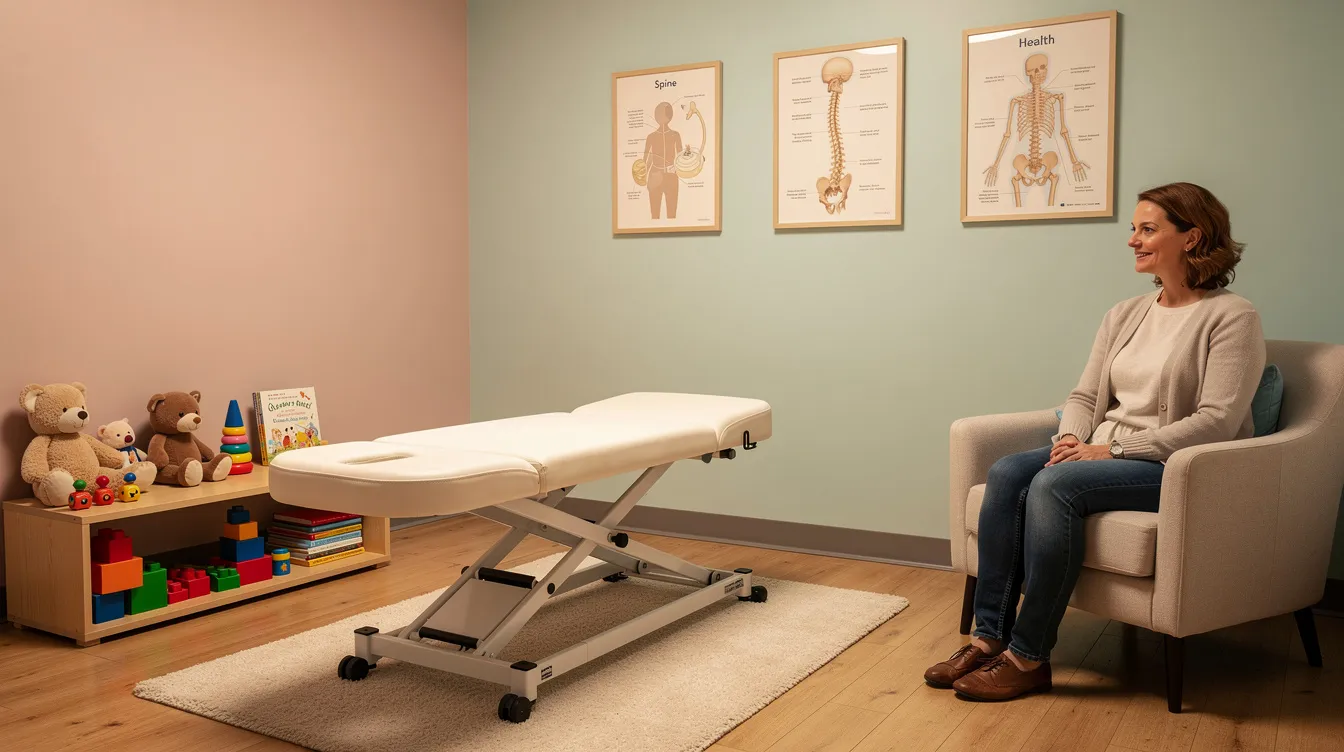
At Everton Chiropractic, the environment is designed to be calm and child-friendly. The treatment room is spacious enough for a parent to sit comfortably beside the child, and there is nothing intimidating in sight – no loud machines, no cold metal. Parents are present during the entire chiropractic examination.
Step‑by‑Step: Your 5‑Year‑Old’s First Visit
Here is exactly what happens, step by step:
-
Booking and pre-visit information – You can book online via our Book Now link or call the clinic. Before the visit, you’ll fill in a short health history form covering your child’s birth process, growth milestones, daily activities, school bag habits, screen time, and current symptoms. Bring any previous scans, medical reports, and your child’s favourite toy or comfort item.
-
Meeting your chiropractor – Introductions happen at the child’s level. The chiropractor kneels or sits so they’re face-to-face with your 5‑year‑old, explains what will happen in simple language (“I’m going to have a gentle look at how your back moves”), and lets the child explore the room and ask questions.
-
Talking through history – Initial consultations include a detailed health history review. The chiropractor asks about birth history, developmental milestones, play habits, injuries, school bag use, screen time, sleep quality, and current symptoms. This conversation helps identify whether chiropractic is appropriate or whether a referral to a doctor is needed first.
-
Gentle examination – Posture photos may be taken (with your consent). Your child performs simple movements: “Can you touch your toes?”, “Look up at the ceiling for me”, “Walk to the door and back.” The chiropractor uses light palpation – gentle fingertip pressure along the child’s spine and joints – to assess mobility and areas of muscle tension. Everything happens with you present and watching.
-
Explaining findings – Using models, simple drawings, or posture photos, the chiropractor explains what was found. They’ll discuss whether chiropractic care is recommended, optional, or not necessary for your child. This is where expectations are set honestly.
-
First gentle adjustment (if appropriate) – If care is recommended and you consent, the first adjustment is brief – often just 5–10 minutes of hands-on work. Chiropractic adjustments for children are lighter than for adults. Your child lies on a small, cushioned table (or sits on your lap for very nervous children). The chiropractor uses light fingertip pressure or a small handheld instrument. They check your child’s comfort constantly: “Does that feel okay? Can I keep going?” Care for babies involves no more pressure than testing fruit ripeness, and for a 5‑year‑old, the pressure is only slightly more.
-
After-care guidance and next steps – You’ll receive clear information on what to watch for at home (mild temporary soreness is normal; what to do if anything unusual occurs), simple stretching or posture tips, and a recommended follow-up schedule. You’ll also understand the care plan and cost before committing to anything.
Kid‑Friendly Techniques Used for 5‑Year‑Olds
At Everton Chiropractic, the techniques used for a 5‑year‑old might include:
-
Light manual adjustments – The chiropractor uses their fingertips to apply gentle, precise pressure to specific spinal segments. Chiropractic adjustments for infants use light fingertip pressure; for a 5‑year‑old, force is only marginally greater. Adjustments for children are lighter than those used in adult care and are always specifically adapted to the child’s age and size.
-
Low-force instrument-assisted adjustments – A small, spring-loaded handheld device delivers a controlled, gentle tap to a joint. It feels like a light flick and is often less intimidating than hands-on work for nervous children.
-
Gentle mobilisation and soft tissue work – Slow, rhythmic movements to improve joint range of motion, combined with light massage to release neck tension or muscle tightness in the upper back. These are extremely gentle techniques with no sudden movements.
The force is adapted to the child’s size – chiropractors use gentle techniques like fingertip pressure for children, and many adjustments produce no audible sound at all. Children may be positioned lying face-down on a small padded table, lying on their side, or sitting on a parent’s lap. Play, stories, or counting games are used to keep the child relaxed and engaged.

Helping Your Child Feel Comfortable and In Control
Preparing your 5‑year‑old is simple. Use language they understand: “We’re visiting a back doctor who helps your body move better.” Avoid words like “crack,” “fix,” or “injection.” Let them know they’re in charge – if they want to stop, the chiropractor will stop immediately.
Practical tips for parents:
-
Bring a comfort item – a favourite soft toy or small blanket
-
Model calm, relaxed behaviour; if you’re anxious, they’ll sense it
-
Let your child watch you sit in the chair or lie on the table first if they’re nervous
-
Avoid scheduling immediately after a tiring school day – a rested child cooperates better
At Everton Chiropractic, children are invited to give feedback, choose small preferences (“Which side shall we start on?”), and take breaks whenever they feel unsure. Here are some reassuring phrases the chiropractor might use:
-
“I’m just going to touch your back very gently – like this.”
-
“You’re doing brilliantly. Tell me if anything feels funny.”
-
“We can stop any time you want. You’re the boss.”
-
“That little tap helps your spine move better. Did you feel it? Pretty easy, right?”
How to Choose a Safe, Gentle Kids Chiropractor in Singapore
Safety doesn’t start on the treatment table – it starts with choosing the right provider. In a busy city like Singapore with many chiropractic clinics, not all have the same level of experience with treating children. Taking a few minutes to verify credentials can make all the difference for your child’s care.
Qualifications, Experience and Questions to Ask
Key credentials to look for when choosing the right family chiropractor in Singapore for your child:
-
A recognised chiropractic degree from an accredited institution (look for universities accredited by the Council on Chiropractic Education or equivalent bodies)
-
Membership in a local professional association such as The Chiropractic Association (Singapore) or international bodies
-
Demonstrated experience with children – ask how often they see patients aged 5–7
-
Additional training or seminars in paediatric care, scoliosis screening, or craniosacral therapy
Parents should check the specific pediatric training of chiropractors. Here’s a mini checklist of questions to ask during a discovery call or first visit:
-
“How often do you see children aged 5–7, and what conditions do you commonly help with?”
-
“What techniques do you use for kids, and how are they different from adult techniques?”
-
“What signs would make you refer my child to a medical doctor instead of treating them?”
-
“How do you explain treatment to children so they feel safe and not scared?”
-
“Can I stay in the room during the entire visit?”
At Everton Chiropractic, our approach centres on thorough chiropractic assessment, conservative care plans, a strong focus on movement and posture, and readiness to co-manage with paediatricians, GPs, or physiotherapists. Clear communication and a careful assessment process can also help parents feel confident they have found the right family chiropractor. You can read about our chiropractors’ training and approach on our About Us page.
Clinic Environment, Communication and Practical Details
A calm, spacious, child-friendly environment supports safety because it allows more time to build trust and reduces rushing. When visiting a clinic for the first time, look for:
-
A clean, welcoming space with room for parents to sit close by
-
Non-slippery floors and appropriately sized treatment tables
-
Easy access via MRT or bus for families (Everton Chiropractic is centrally located for convenient access)
-
A chiropractor who takes time to explain – not one who rushes through adjustments
Transparency about fees matters. Look for clear pricing: child rates versus adult rates, first-visit assessment versus follow-up costs, and no pressure to sign long, inflexible treatment packages. Realistic expectations about outcomes should be set from the start.
Ready to learn more? Visit our About Us page to read about our team, or Book Now if you’d like to schedule an introductory assessment for your child.
Common Challenges Parents Face – and How to Navigate Them
Even when the safety evidence is reassuring, parents often face practical doubts, time pressures, and mixed opinions from friends or relatives. Here’s how to navigate the most common concerns.
Worried About “Cracking” Sounds or Pain
For 5‑year‑olds, many chiropractic adjustments are so gentle that no audible sound occurs at all. When there is a sound, it’s simply gas release from the joint – not bones grinding or anything breaking. If you’d like to understand the science behind this, our guide on what actually happens during a chiropractic adjustment explains it clearly. There should be no forceful adjustments for children. A practical tip: ask the chiropractor to demonstrate the pressure on your own hand first, so you can feel exactly how light it is before they touch your child.
Unsure How Many Visits Are Really Necessary
At Everton Chiropractic, child care plans are typically structured as: initial assessment, a short trial period of 3–4 visits, a review of changes, and then spacing out visits as improvements hold. We encourage parents to ask for clear, measurable goals – fewer complaints of pain, improved posture in photos, better range of motion – and to reassess regularly. For guidance on visit frequency, our article on how often to see a chiropractor provides a useful framework, though children’s schedules are typically lighter than adults’.
Balancing Chiropractic with Other Activities and Therapies
Many children in Singapore are already juggling school, enrichment classes, sports, and sometimes physiotherapy or occupational therapy. Chiropractic can complement these activities without overloading the child’s schedule. A good family chiropractor will coordinate with your child’s doctor or another healthcare professional. At Everton Chiropractic, we’re happy to write brief reports or share findings with physiotherapists or doctors to ensure your child’s care is joined up and efficient.
Conclusion and Next Steps for Parents
Gentle, well-delivered chiropractic care is generally safe for many 5‑year‑olds in Singapore. When performed by chiropractors trained in paediatric techniques, using age appropriate care and low-force methods, it can meaningfully support posture, spinal health, movement, and comfort during a critical stage of your child’s development. It is not a cure-all, and it does not replace medical care – but for musculoskeletal and posture-related concerns, it offers a conservative, hands-on option with a reassuring safety profile.
If this sounds like your child – complaining of a tired back after school, slouching at the desk, showing uneven shoulders or posture issues, or just seeming less comfortable during physical play – a gentle chiropractic assessment may be a sensible next step.
Here’s what to do next:
-
Check the red-flag list – If any symptoms from the earlier section are present (fever, severe pain, sudden weakness, incontinence), see a paediatrician or GP first.
-
Observe and note your child’s posture, complaints, and daily habits for 1–2 weeks. Write down what you notice.
-
Learn about your chiropractor – Read about the Everton Chiropractic team and approach on our About Us page.
-
Book an introductory kids assessment via our Book Now link or by calling the clinic directly.
-
Bring your questions to the first visit and involve your child in decisions in an age-appropriate way – let them feel heard and in control.
Giving your child a strong foundation for a healthy spine, good posture, and comfortable movement from age 5 sets them up not just for Primary 1, but for every stage of growth that follows.
Quick Safety & Comfort Checklist for Your 5‑Year‑Old’s First Visit
Screenshot or print this checklist to keep handy before, during, and after your child’s first visit.
Before the visit:
-
☐ No red-flag symptoms present (fever, severe pain, sudden weakness, incontinence, recent major trauma – if present, see a doctor first)
-
☐ Your child knows they are visiting a “back doctor” who will be gentle, and they can say “stop” at any time
-
☐ You have written down your questions for the chiropractor
-
☐ You’ve brought any relevant medical reports, scans, or school health assessments
-
☐ A comfort item (favourite toy, small blanket) is packed
At the clinic:
-
☐ The chiropractor takes time with history and examination before suggesting any care
-
☐ Techniques and pressures are demonstrated and explained clearly to you
-
☐ You are in the room for the entire visit
-
☐ Your child seems reasonably at ease and is not forced or rushed into anything
-
☐ The chiropractor asks for your informed consent before any hands-on work
After the visit:
-
☐ You understand that mild temporary soreness may occur and know what to watch for
-
☐ You know what to do and who to contact if anything unusual happens
-
☐ You have a follow-up plan you understand, with clear goals and costs
-
☐ Your child’s feedback has been acknowledged – they felt heard
Additional Resources for Singapore Parents
These are optional further reading – helpful extras, not requirements.
From Everton Chiropractic:
-
About Us – Chiropractor bios, qualifications, paediatric training, and clinic values
-
8 Best Ways to Correct Posture – Practical posture tips applicable to school aged children and adults alike
-
Core Stability and Spine Health – How core strength supports spinal health from a young age
External, neutral resources:
-
Singapore Ministry of Health – Chiropractor Regulation and Consumer Protection – Understand the current regulatory framework and your rights as a consumer
-
Health Promotion Board guidelines on screen time for children – Useful benchmarks for managing your child’s daily screen exposure and reducing neck tension
These links are provided as informational references, not endorsements of any specific competing clinic or product.