Key Takeaways
Understanding the differences between clinical approaches is essential for anyone dealing with chronic discomfort. This article examines why tailoring your care path leads to better health outcomes.
- Physiotherapy focuses on functional movement and targeted muscle rehabilitation.
- Chiropractic care emphasizes joint alignment and nervous system health.
- Choosing between them often depends on whether your pain stems from mechanical restriction or muscular imbalance.
- Both practitioners frequently utilize modern assessments to uncover the actual source of knee issues.
- A multidisciplinary approach can often provide the most effective recovery route for persistent pain.
Fundamental differences in approach to knee pain
When you are struggling with discomfort, you naturally want to know the most effective path to recovery. Researching the difference between a physiotherapist and a chiropractor for knee pain can feel overwhelming, but it essentially comes down to the underlying philosophy of care. While both professions aim to alleviate pain, they prioritize different aspects of your physical health.
Focused movement patterns and functional rehabilitation
Physiotherapists focus heavily on restoring how you move through space. They assess how you walk, squat, and climb stairs to identify weaknesses in the muscular chain. By rebuilding specific movement patterns, they help ensure that your joints aren’t subjected to unnecessary stress during everyday activities like pain relief solutions.
Joint alignment and the musculoskeletal system
Chiropractors look at the structural integrity of your entire body, recognizing that a misalignment in your spine or pelvis can influence lower limb function. At Everton Chiropractic, we believe that restoring proper alignment allows the nervous system to communicate more effectively with your muscles. This creates a foundation for the joint to heal without the constant interference caused by poor structural positioning.
Philosophy of short-term vs. long-term recovery
Short-term relief is often the first goal for any patient in pain. However, long-term recovery requires addressing why the pain began in the first place, rather than just masking the symptoms. Both disciplines work toward lasting mobility, though their methods for achieving this resilience differ in their tactical execution.
The role of a physiotherapist in knee rehabilitation
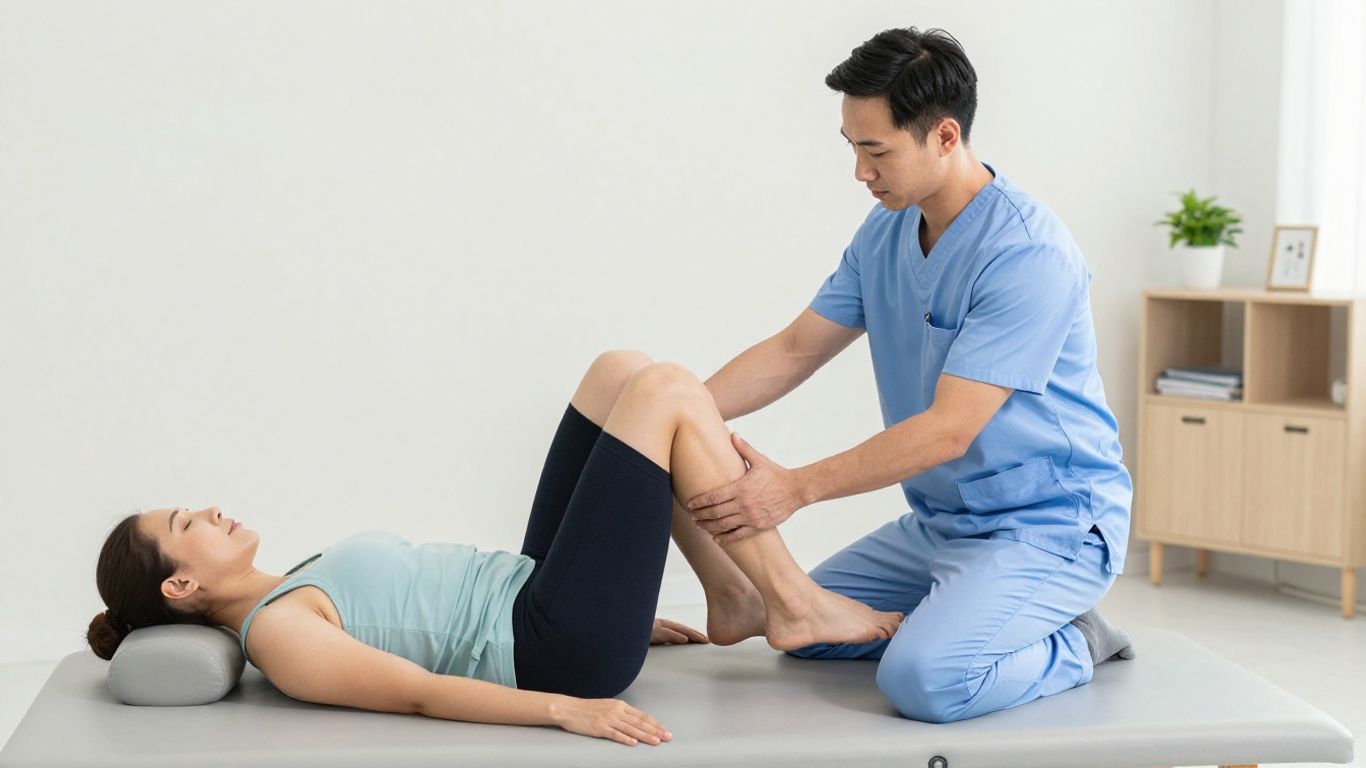
Physiotherapists are expertly trained to guide patients through structured rehabilitation processes. They emphasize building a protective muscular sleeve around your knee joint, which shields the bones from excessive pressure. By focusing on evidence-based strength programs, they ensure your tendons and stabilizers can handle daily loads effectively.
Strengthening supporting tissues and stabilizers
Building strength is the hallmark of modern physiotherapy. By targeting the gluteal muscles and quadriceps, therapists ensure that the knee joint receives adequate support during motion. This proactive strengthening minimizes the likelihood of future injury by creating a resilient biomechanical environment.
Implementing therapeutic exercise and load management
Load management is quite critical for returning to activity safely. Instead of stopping all motion, you learn how to perform movements that encourage tissue repair without overloading the joint. Practitioners help you navigate the delicate balance between rest and activity.
Restoring range of motion through soft tissue mobilization
Stiffness often limits joint function, making even simple shifts of your body quite painful. To improve your physical habits, consider these common physiotherapy goals:
- Increasing flexibility in tight muscle groups.
- Improving synovial fluid circulation within the joint.
- Reducing the tension in connective fascia layers.
This work helps prepare the surface for functional movement, ensuring you can return to your routine activities comfortably.
The role of a chiropractor in knee pain treatment
Chiropractors bring an essential perspective to knee wellness by focusing on the kinetic chain. If you have been struggling with knee pain issues, exploring your alignment might offer a different result than standard exercise alone. Dr. Richard Chew emphasizes that treating the knee requires looking at the joints above and below it, especially the pelvis and spine.
Adjusting joint restrictions in the kinetic chain
When a joint in the chain becomes restricted, it can create a ripple effect that puts your knee at risk. Adjustments facilitate freedom of movement, allowing the entire leg to function in better harmony. This holistic view helps resolve the tension that often builds up due to compensation.
Addressing pelvic and spinal alignment affecting gait
Your gait dictates how the knee tracks as you walk. A subtle tilt in the pelvis can lead to uneven weight distribution on your knees, significantly increasing fatigue on the joint. Correcting these foundations helps ensure a balanced stride.
Providing holistic alignment to reduce localized stress
Alignment serves to take the pressure off your knees, as shown in the table below regarding key structural approaches:
| Focus Area | Primary Mechanism | Benefit for Knees |
|---|---|---|
| Pelvic Stability | Symmetry Correction | Even weight bearing |
| Nerve Function | Spinal Adjustment | Reduced pain signals |
| Joint Mobility | Targeted Mobilization | Less friction internally |
These adjustments can be pivotal when you are dealing with musculoskeletal imbalances that standard exercise may struggle to isolate or correct effectively.
Comparison of standard treatment modalities

Comparing modalities requires looking at the precision behind the tools each practitioner utilizes. While both may use soft tissue techniques, the application is rarely identical between a physiotherapy vs chiropractic setting.
High-velocity, low-amplitude manipulation techniques
Chiropractors frequently employ these adjustments to restore motion to joints that have become locked or restricted. By applying a controlled force to a specific segment, they help re-establish normal joint play and improve overall nerve sensitivity.
Exercise-based protocols for muscular endurance
Physiotherapists lean into endurance protocols to ensure that muscles don’t fatigue during your day. By performing repetitions that stress the muscle in a controlled manner, you build the capacity to sustain correct joint position throughout long periods of walking or standing.
Use of adjunctive therapies like electrical stimulation and ultrasound
Adjunctive tools like electrical stimulation help modulate your perception of pain while promoting local circulation. These are typically used to set the stage for manual interventions or exercise, clearing the way for more active forms of rehabilitation later in your session.
Diagnostic assessments and identifying the root cause
Proper diagnostics prevent you from guessing what is wrong. A thorough assessment involves looking at how your structure behaves during movement, rather than just scanning a static joint. Both professions follow this principle to ensure they target the actual source of your issue.
Evaluating biomechanical imbalances in the legs and hips
Imbalances are often the silent culprits behind knee wear and tear. Practitioners examine the length and mobility of your limbs to see if one side of your body is working harder than the other, which often explains the onset of unilateral knee discomfort.
Using functional movement screening to pinpoint deficits
Screening tools quantify how well your body performs under load. By identifying where your movement breaks down, the practitioner can build a custom plan that addresses these specific deficits directly.
Interpreting clinical history and radiological imaging
History and images go hand in hand to provide a complete story. An experienced clinician will correlate your complaints with your imaging results to confirm that the treatment plan matches your specific biological reality.
Deciding which practitioner matches your specific need
Making a decision between these two options is usually based on your goals and the nature of your pain. If your pain resulted from a sudden trauma or acute injury, a therapist may be a logical first stop. If the discomfort is recurring and seems tied to your posture or chronic tightness, chiropractic alignment might be highly beneficial.
Matching treatments to acute injuries versus chronic overuse
Acute injuries often benefit from immediate stabilization and gradual range-of-motion work. Conversely, chronic overuse usually requires identifying habits in your posture or gait that are sustaining the inflammation.
Evaluating the impact of postural habits on knee stability
Posture is not just about your back; it affects every joint in your legs. If your standing habits shift your center of gravity forward, your knees take that extra pressure throughout the entire day.
Recognizing when a multidisciplinary care approach is most effective
Sometimes, the best care involves both disciplines. Because they look at your body from different angles, you might find that combining spinal alignment with muscle stabilization provides the fastest track toward getting back to the activities you love.
Conclusion
Selecting the right professional for your knee pain is a significant step toward reclaiming your quality of life. Whether you prioritize biomechanical strength training or focus on structural alignment, both paths offer valuable evidence-based techniques to help you stay mobile and pain-free. At Everton Chiropractic, we encourage you to listen to your body and explore the options that best address the unique source of your discomfort.
Frequently Asked Questions
Which practitioner is better for acute knee injuries?
Acute injuries often require immediate assessment by a professional who can rule out structural damage and help stabilize the area, which is a common starting point for physiotherapy care.
Can chiropractic adjustments fix my knee mechanics?
Adjustments focus primarily on the joints and nervous system, which can alleviate the stress your knees experience from sub-optimal spinal and pelvic mechanics.
Do I need a doctor’s referral to see either professional?
In many regions, you can access these services directly without a prior referral, though it is always wise to check your local insurance coverage details first.
How long until I see results with these treatments?
Results depend heavily on the severity of your specific issue and your body’s response to the chosen modality, so your practitioner will provide an expected timeline during your initial assessment.
Does exercise replace the need for manual therapy?
Exercise is often the primary driver for long-term health, but manual therapy acts as a valuable tool to remove specific restrictions that might prevent you from performing those exercises correctly.
Are these treatments safe for older adults with arthritis?
Both professions offer gentle, modified techniques specifically designed for older populations, focusing on improving comfort and mobility while respecting the limitations of joint wear and tear.
What should I bring to my first session?
Bring any previous imaging reports, a list of current symptoms, and comfortable clothes that allow the clinician to observe your movement patterns clearly.