We live in a culture that normalizes lower back pain. If your back aches at the end of the day, friends will tell you, “It’s just part of getting older,” or “It’s because you sit at that desk all day.”
It’s time to stop accepting these excuses.
Aging, sitting long hours, and bending forward are part of life, but they are not valid causes for chronic back pain. If your spine is structurally sound, your body should be able to handle daily life without crippling pain.
Blaming age or your office chair is dangerous because it ignores the root cause: structural decay in your spine that is actively damaging your discs and nerves.
The biggest mistake people make is waiting.
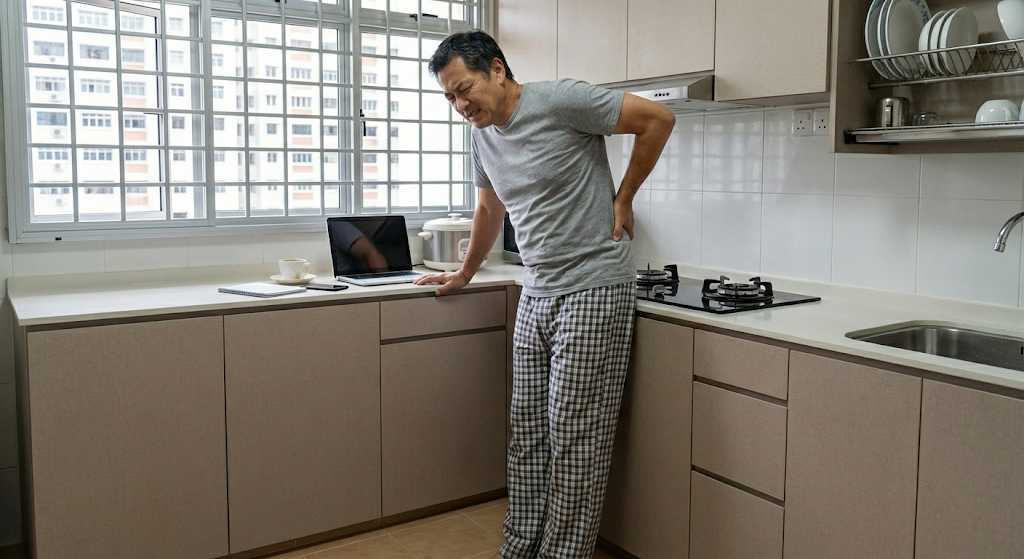
Lower back pain rarely starts as a debilitating, 9 out of 10 agony. It usually begins quietly. It’s an “on and off” ache. A little stiffness in the morning. A twinge when you tie your shoes.
Most people ignore this. They take a pain killer and push through.
This is a critical error. That “on and off” pain is not a tired muscle. It is often the earliest sign of nerve impingement.
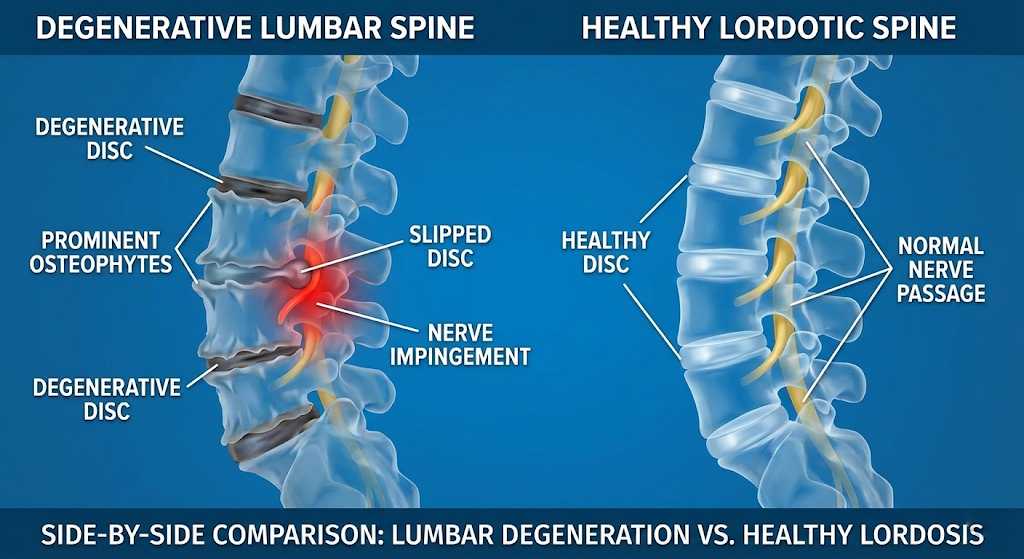
Your spine is designed to protect the spinal cord and the delicate nerve roots that exit between the vertebrae. When the structure of your spine shifts out of alignment, pressure is placed on the discs, the shock absorbers between the bones.
Over time, this uneven pressure causes the disc to bulge or herniate, putting direct pressure on nearby nerves. That “twinge” is your body’s fire alarm going off, warning you that nerve damage is beginning.
If you wait until the pain becomes frequent or intense, significant structural degeneration has already occurred. You have ignored the alarm until the house is actually on fire.
Before the agonizing pain sets in, your body gives you subtle clues that your lower back structure is failing. You might not even associate these with a back problem yet.
Are you experiencing these “invisible” signs of degeneration?

If pain medication only masks the symptom, how do we fix the structure?
This is the specific focus of chiropractic care. Unlike approaches that only address muscle tension, chiropractic addresses the architectural integrity of the spine.
A healthy lower back is not straight; it has a distinct inward curve (lordosis). This curve is vital. It acts like a spring, absorbing the shock of walking, running, and gravity.
When you lose that curve due to misalignment and degeneration, your lower back stops acting like a spring and starts acting like a rigid pillar. Pillars crack under pressure.
Chiropractic adjustments are designed to mobilize the joints of the spine to restore normal motion and, crucially, encourage the return of that healthy, weight-bearing curve. By restoring the spine’s natural structure, we return its inherent strength and stability, taking the pressure off the discs and allowing nerves to heal.
Stop waiting for the pain to become unbearable. Stop blaming your age.
Look at your future pathway. It is a binary choice.
Are you ready to take action to stand tall and move upright for years to come? Or will you continue to ignore the signs, slouch further, and eventually become bent over by time and structural neglect?
Schedule a consultation with us at Everton Chiropractic today to assess the true structure of your spine.
Outram Park MRT, Purple Line Exit 5
Bus to Blk 3: 61, 197, 166
From the carpark. 6A Everton Park MSCP