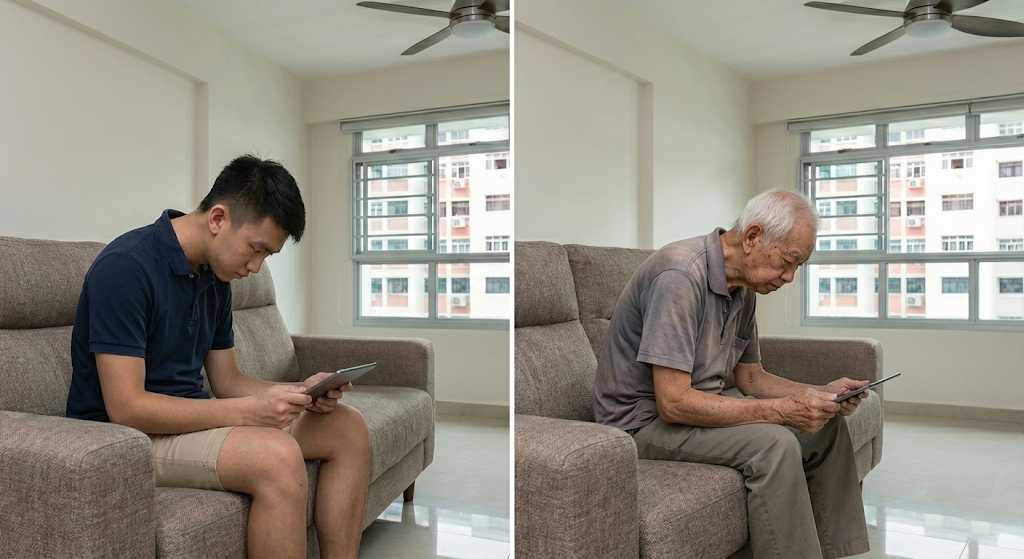
Hunched posture, often clinically referred to in its advanced stages as thoracic hyperkyphosis, is fast becoming a defining physical characteristic of the modern era. It is rarely the result of a single traumatic event; rather, it is a cumulative injury born of sustained, poor ergonomics.
Whether stemming from prolonged desk work, hours spent curled on a couch reading, or the downward gaze required by smartphones (“text neck”), the mechanism is the same: the body is adapting physiologically to the positions it holds most frequently. While slouching may feel comfortable in the moment due to reduced muscular effort against gravity, this passive positioning has severe, long-term implications for musculoskeletal health.
Understanding the progression of a hunch from a correctable habit to a fixed structural issue is vital for preventing permanent deformity.
The human body operates on the principle of adaptation. It constantly remodels its tissues based on the demands placed upon them. When the spine is held in flexion (slouched forward) for hours a day, the body begins to perceive this as the “new normal” and optimizes its structure for that position.
This adaptation occurs through several mechanisms:

The transition from poor posture to structural dysfunction manifests through specific physiological symptoms that extend beyond mere aesthetics.
The earliest sign is significant stiffness upon standing after sitting. This evolves into a deep, nagging dull ache between the shoulder blades and at the base of the neck. This pain is the result of muscles being under constant, low-grade tension as they struggle to support the head, which effectively feels heavier the further forward it migrates.
A rounded thoracic spine physically compresses the ribcage. For the lungs to fill completely, the ribs must expand outwards and upwards. A severe slouch restricts this rib excursion, forcing shallow "chest breathing" rather than deep diaphragmatic breathing. This reduced oxygen intake can lead to premature fatigue during work and decreased overall stamina.
The most telling signs of structural rigidity are found when testing the spine against a flat surface:
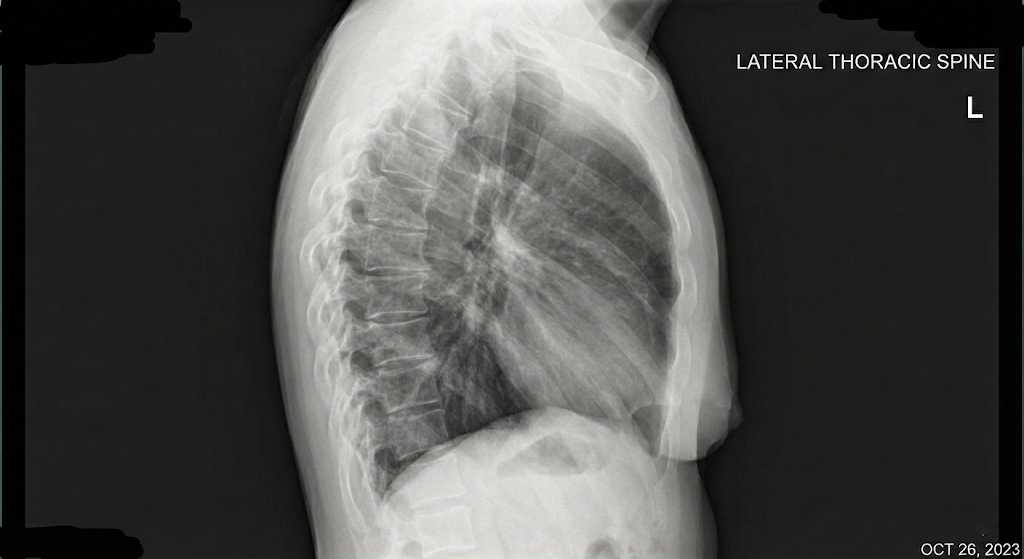
It is critical to distinguish between a functional hunch and a structural one.
A functional hunch is a postural habit you can actively correct by “standing up straight.” A structural hunch means the bones, ligaments, and joints have physically changed, making voluntary correction impossible.
If left unaddressed, functional poor posture will inevitably progress into permanent structural deformity. Intervening while the joints still possess mobility is crucial.
Chiropractic care is uniquely suited to address the mechanical roots of hunched posture. Rather than solely treating the muscular symptoms with massage or stretching, chiropractic adjustments focus on restoring necessary motion to the frozen joints of the thoracic spine and ribcage. This breaks the cycle of rigidity, allowing for proper realignment.
Do not wait until your spine loses the intrinsic ability to straighten. If you are experiencing constant back aches, difficulty breathing deeply, or cannot lie flat on the floor without pain, professional assessment is necessary.
Contact Everton Chiropractic today. Let us evaluate your spinal biomechanics and begin the process of restoring your posture before the changes become permanent.
Outram Park MRT, Purple Line Exit 5
Bus to Blk 3: 61, 197, 166
From the carpark. 6A Everton Park MSCP