
Introduction
Many recurring headaches that people in Singapore attribute to stress, screen time, or poor sleep are actually cervicogenic headaches – secondary headaches driven by neck strains, compressed upper cervical nerves, and muscle tension at the base of the skull. Understanding cervicogenic headaches and neck strains – how decompression relieves tension at the base of the skull – is the first step toward lasting pain relief rather than another round of painkillers that wear off by evening.
Cervicogenic headaches account for 15–20% of chronic headaches, yet they are often misdiagnosed as migraines or tension headaches because the head pain they produce can feel identical. The root cause, however, lies in the cervical spine: stiff upper cervical joints, irritated occipital nerves, and overworked suboccipital muscles that refer pain signals into the head. If your headache pain starts at the base of the skull and radiates forward – especially on one side – there is a strong chance the underlying neck problem is driving it.
The direct answer: Cervical decompression gently separates the upper cervical joints (particularly around C1–C3), reducing compressive loading on discs, nerves, and facet joints. This decrease in mechanical pressure allows tight suboccipital muscles to relax and calms nerve irritation, which in turn eases the referred pain that the brain interprets as a headache.
This article focuses on mechanical, musculoskeletal headaches – not emergency causes such as stroke, aneurysm, or brain tumour. Red-flag symptoms are covered later and always require urgent medical care. The intended audience is adults in Singapore with recurrent neck related headaches, desk workers dealing with “tech neck,” and anyone who has tried nonsteroidal anti inflammatory drugs or over-the-counter medication without lasting relief.
By the end you will:
-
Understand what cervicogenic headaches are and why they start in the neck
-
Recognise common symptoms of upper cervical nerve compression and suboccipital tension
-
Learn exactly how decompression and suboccipital release work to relieve headaches
-
See what a treatment session looks like at Everton Chiropractic in Singapore
-
Walk away with practical self-care steps you can start today
Understanding Cervicogenic Headaches and Neck Strain
A cervicogenic headache is a secondary headache caused by dysfunction in the structures of the upper neck – joints, discs, ligaments, and neck muscles – rather than by a primary disorder of the brain itself. When neck strain develops from poor posture, repetitive loading, or old injuries, the resulting muscle tension and joint stiffness at the base of the skull can trigger pain that travels into the head.
Because the head pain can mimic migraine headaches or ordinary tension headaches, many people self-treat with painkillers for months or years without ever identifying the cervical spine as the pain source. An accurate diagnosis requires looking beyond the headache itself and examining the neck.
What Happens at the Base of the Skull (Upper Cervical Anatomy)
The upper cervical spine is a remarkably specialised region. It consists of the occiput (the skull base, sometimes called C0), the atlas (C1), the axis (C2), and the C3 vertebra. These cervical vertebrae are connected through the atlanto-occipital and atlanto-axial joints, which together allow the fine head movements you use dozens of times per minute – nodding, turning, and tilting.
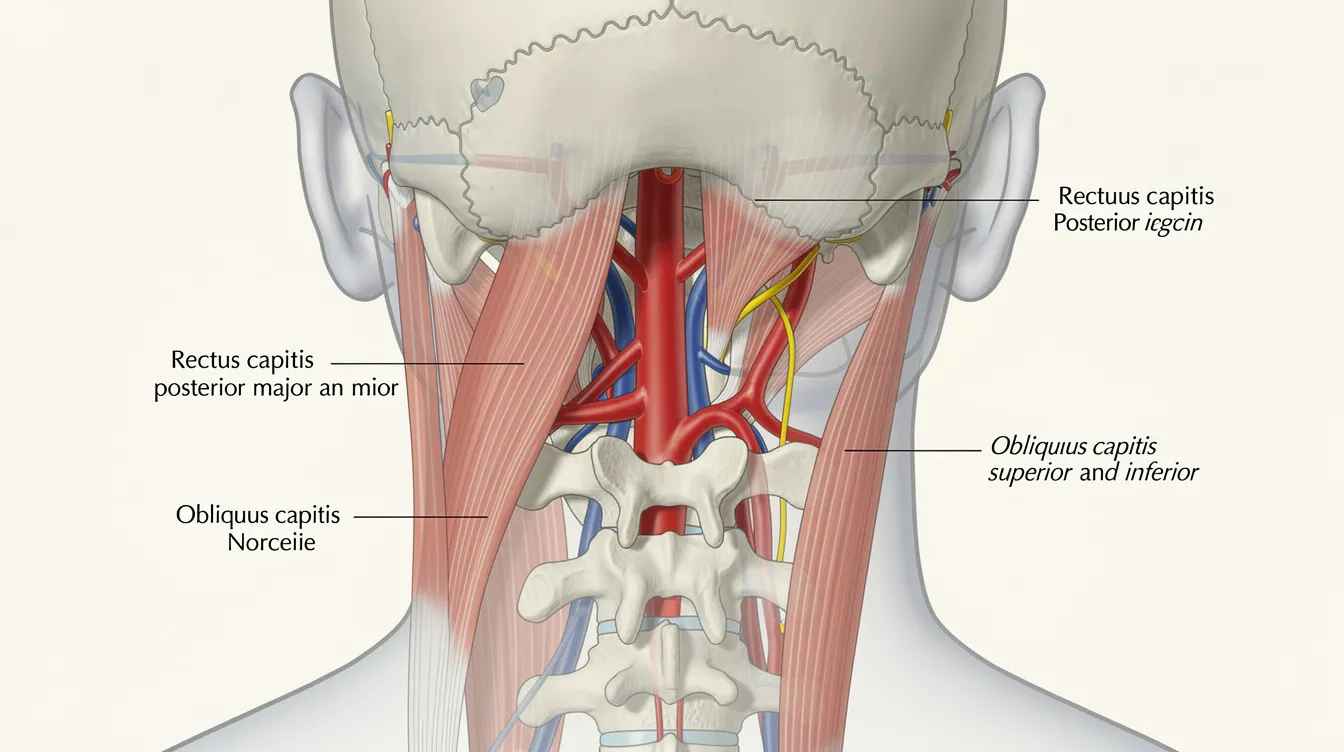
Sitting directly beneath the skull base are the suboccipital muscles: the rectus capitis posterior major, rectus capitis posterior minor, obliquus capitis superior, and obliquus capitis inferior. These small, deep muscles are responsible for precise head control and eye-head coordination. They drape over critical structures including the greater occipital nerve (arising from the C2 dorsal ramus) and the lesser occipital nerve. When these nerves are irritated by tight muscles or compressed upper cervical joints, the result is often a deep ache or throbbing pain that wraps from the back of the skull to behind the eyes or up to the crown.
A fibrous structure known as the myodural bridge connects the suboccipital muscles to the spinal dura mater. Tension here can transmit mechanical stress directly to the protective membranes around the spinal cord, potentially adding another layer to headache pain and neck stiffness.
How Neck Strain Leads to Cervicogenic Headaches
Forward head posture – common among Singapore’s office workers, students, and commuters – dramatically increases the load on the upper cervical joints and suboccipital muscles. For every centimetre the head drifts forward, the upper neck muscles must work harder to keep the eyes level. Over hours of desk work or smartphone scrolling, this creates a chain reaction:
-
Muscle overuse leads to tight, fatigued suboccipitals
-
Increased compression develops around the C1–C2 joints
-
Occipital nerves become irritated by surrounding muscle strain and joint crowding
-
Referred pain travels into the head, perceived as a headache
Even mild whiplash from a car accident or a minor sports collision years earlier can leave residual ligamentous stiffness or joint dysfunction that becomes symptomatic much later, particularly when combined with modern desk-bound lifestyles. Research suggests that C2–3 facet joints are implicated as a primary pain source in roughly 70% of cervicogenic headache cases.
The trigeminal-cervical nucleus converges sensory nerves from the cervical vertebrae and trigeminal nerve, forming a shared processing centre in the upper spinal cord. In plain terms, irritated upper cervical nerves share pathways with the trigeminal nerve system, so the brain can confuse neck pain for head pain. This explains why cervicogenic headaches can worsen with neck movement or specific positions yet feel as though they originate behind the eye or at the temple.
Understanding this mechanism helps explain how decompression and suboccipital release provide deep relief – by treating the actual source in the neck rather than chasing the symptom in the head.
Recognising a Headache That Comes from Your Neck
Cervicogenic headaches often start in the neck or base of the skull, and pain from cervicogenic headaches usually affects one side of the head. Hallmark features include:
-
One sided head pain starting at the skull base and spreading forward
-
Headache pain that worsens with specific neck movements or prolonged sitting
-
Tenderness when pressing just below the skull at the back of the neck
-
Neck stiffness that accompanies or precedes the headache
-
A dull ache rather than a pulsating aura-driven episode
Compared with migraine headaches, cervicogenic headaches involve less nausea, vomiting, and light sensitivity, and they are more consistently provoked by neck movement or sustained head posture. Compared with general tension headaches, they are more often unilateral, reproducible with pressure on specific neck structures, and tied to identifiable triggers such as a long Zoom meeting, working on a laptop at a café, or sleeping on a high pillow.
Quick self-check – if you notice three or more of these signs, your headache may be cervicogenic:
-
[ ] Pain starts at the back of the neck and moves into the head
-
[ ] Headache is usually worse on one side
-
[ ] Pressing firmly under the skull reproduces your headache
-
[ ] Turning your head or looking up triggers pain
-
[ ] Pain improves when you lie down with your neck well supported
-
[ ] Painkillers reduce intensity temporarily but headaches tend to return
Upper Cervical Nerve Compression and Suboccipital Tension
With the anatomy and mechanism now clear, we can look more closely at the two central problems that sustain cervicogenic headaches: upper cervical nerve compression and persistent suboccipital muscle tightness. Importantly, “compression” does not always mean a severe disc herniation visible on MRI. Even subtle joint crowding, early degenerative disc disease, and chronic muscle spasm around the upper neck can generate enough nerve irritation to fuel recurring head pain.
Upper Cervical Nerve Compression: What It Is and Why It Hurts
When spacing between C1, C2, and C3 decreases – whether from poor posture, early spondylosis, or residual injury – the pathways for the C2 nerve root and occipital nerves become narrower. This is a form of nerve compression that produces a deep, persistent ache at the skull base, sometimes accompanied by electric or burning pain into the back of the head. Some patients describe scalp sensitivity, a “heavy head” feeling, or even occasional dizziness.
Reducing mechanical irritation in the neck can decrease incoming pain signals contributing to headaches. Pain signals from the neck can be misinterpreted by the brain as headaches – a phenomenon driven by the convergent wiring of the trigeminocervical nucleus. Functional movement testing often reveals more about the clinical significance of these issues than imaging alone; many people with minimal MRI findings have substantial movement restriction and headache frequency, while others with visible disc changes remain asymptomatic.
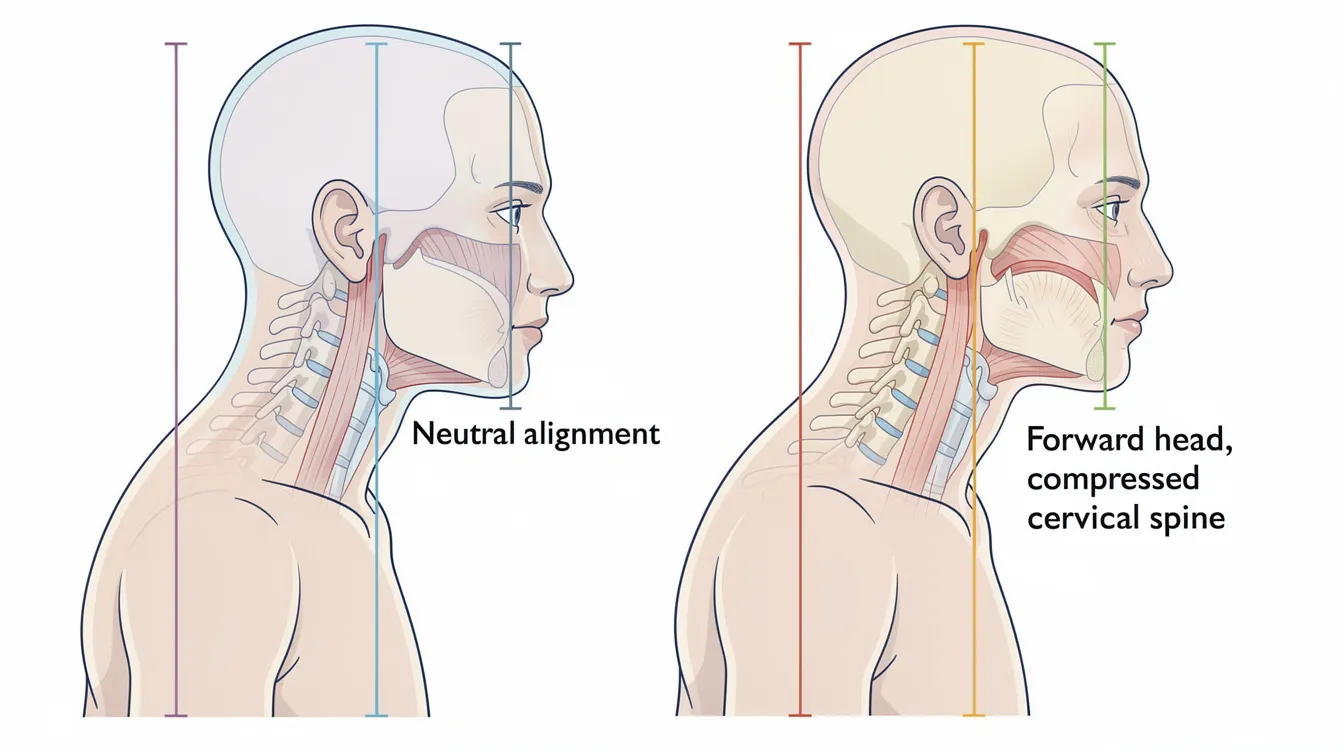
Common symptoms of upper cervical nerve compression include:
-
Deep ache or pressure at the base of the skull
-
Shooting or burning pain along the back of the head (sometimes resembling occipital neuralgia)
-
Scalp tenderness or sensitivity when brushing hair
-
A sensation of heaviness or “fogginess” in the head
-
Symptoms that worsen after long periods of sitting or looking down
Suboccipital Muscle Tightness and Trigger Points
Suboccipital muscles are located at the base of the skull and are among the hardest-working deep muscles in the body. During desk work, driving, or scrolling, they remain constantly active – stabilising the head in a slightly forward position. This prolonged static load leads to micro-spasm, trigger point formation, and chronic tension in suboccipital muscles that can lead to postural issues over time.
Suboccipital muscle strain can trigger cervicogenic headaches through a characteristic pattern of referred pain. Trigger points in these tiny muscles typically refer pain to the base of the skull, around the ear, behind the eye, and sometimes as a tight band around the head – referred pain patterns that closely mimic tension headaches. Strained suboccipital muscles can cause neck stiffness and pain while also reducing the fine motor control needed for smooth head movements.
On palpation, a practitioner often finds ropey bands, exquisite tenderness just below the skull ridge, and painful “knots” that reproduce the patient’s familiar headache when pressed. Muscle guarding in the neck can lead to reduced movement and increased pain, creating a self-reinforcing cycle: tight muscles compress nerves, nerve irritation increases muscle guarding, and headache pain persists.

The Headache Circuit: How Neck Signals Become Head Pain
The trigeminocervical nucleus acts as a “junction box” in the upper spinal cord where sensory information from the upper cervical nerves (C1–C3) converges with input from the trigeminal nerve – the main sensory nerve of the face and front of the head. When upper cervical nerves are over-stimulated by joint compression or muscle tension, the brain can interpret those signals as headache pain around the eye, forehead, or temple.
Neck strains can create referred pain in the head due to these shared pain pathways. Neck strains can also cause cervicogenic headaches through convergent input in the nervous system that effectively blurs the boundary between “neck problem” and “head problem.” Injured cervical structures can lead to referred head pain that feels indistinguishable from a primary headache disorder.
This shared circuitry is precisely why treating the neck – rather than just the head – can dramatically reduce symptoms. To break this circuit, you need to reduce mechanical pressure and release muscle tension at the base of the skull. That is where decompression comes in.
How Decompression Relieves Tension at the Base of the Skull
Decompression is a controlled way to gently stretch and “unload” the upper cervical joints and soft tissues, directly addressing the mechanical forces that sustain cervicogenic headaches. The focus here is on non-surgical decompression as used in chiropractic practice – particularly at Everton Chiropractic in Singapore – rather than surgical procedures, though we will briefly note when surgery may be considered.
What Is Cervical Decompression?
Cervical decompression reduces pressure on discs and nerves in the cervical spine by applying gentle traction to increase joint spacing and relieve compressive loading. Decompression therapy applies gentle traction on the cervical spine to reduce mechanical stress, and it can be delivered in several ways:
-
Manual decompression – the chiropractor uses hands-on techniques to gently distract the cervical vertebrae, with precise control over angle, force, and duration
-
Mechanical traction – a motorised table or device applies measured, sustained or intermittent traction to the neck
-
Targeted upper cervical distraction – specific low-force techniques designed to decompress the C0–C2 region where most cervicogenic headache pathology concentrates
Cadaveric research demonstrates that manual cervical distraction with forces up to approximately 119 N can reduce intradiscal pressure by as much as 168.7 kPa across adjacent cervical levels, confirming the biomechanical rationale for decompression.
Decompression is typically pain-free. Most patients describe the sensation as a pleasant “lengthening” along the neck and skull base, with immediate awareness of reduced tightness.
How Decompression Changes What You Feel
Cervical decompression creates space between vertebrae and reduces compressive loading on irritated joints. The biomechanical effects include increased spacing between cervical vertebrae, reduced facet joint surface compression, improved joint lubrication, and decreased tension on surrounding ligaments and soft tissues. Decompression improves blood flow and oxygenation to injured cervical tissues, supporting healing in structures that have been chronically stressed.
These mechanical changes translate into neurological benefits: less irritation of occipital nerves and upper cervical nerve roots, calmer pain signals into the trigeminocervical nucleus, and a “reset” opportunity for tight suboccipital muscles. Cervical traction may reduce muscle guarding and improve neck range of motion, often reducing headache intensity within minutes of treatment.
Before vs after a decompression session – what patients commonly report:
-
Heavy, pressure-filled head → lighter, clearer head
-
Sharp skull-base pain → mild background ache or no pain
-
Stiffness turning the head → noticeably freer neck movement
-
Pressure behind the eye → significant reduction or resolution
-
Constant low-grade neck tension → relaxed upper shoulders and neck
Suboccipital Release: The Perfect Partner to Decompression
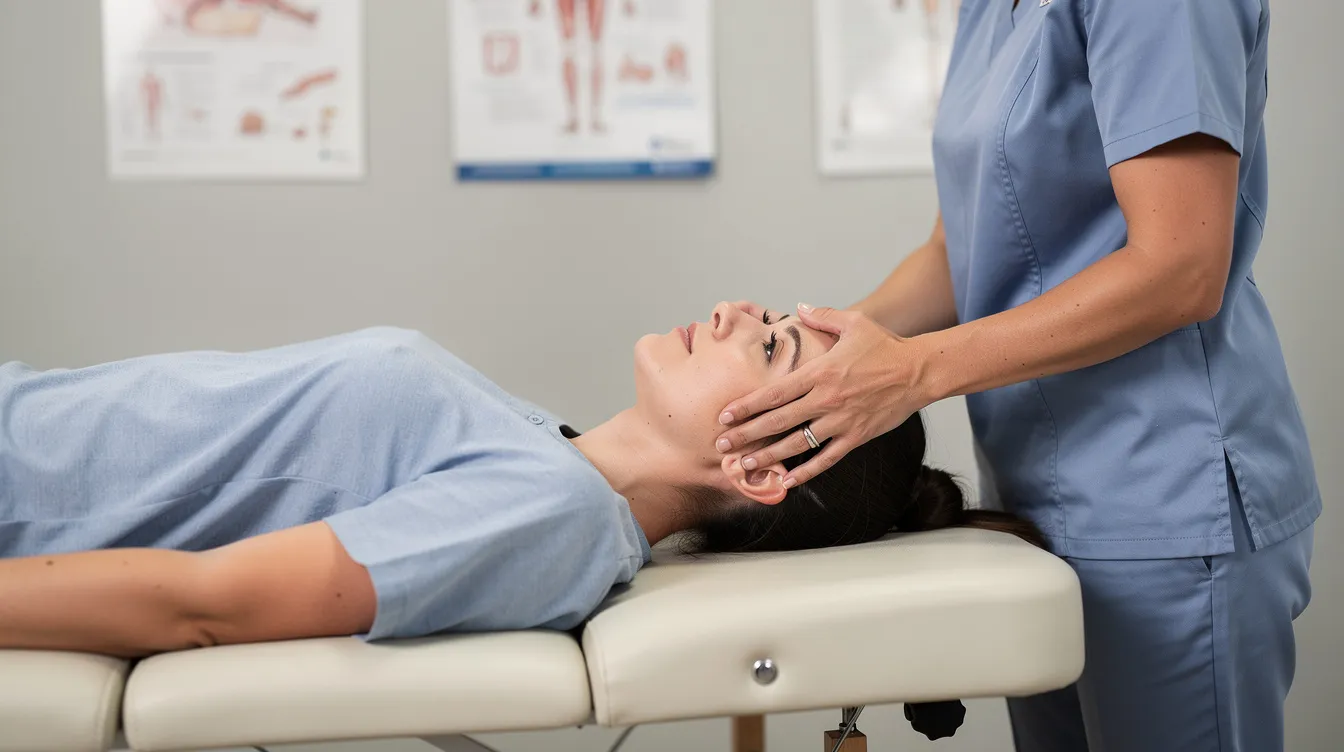
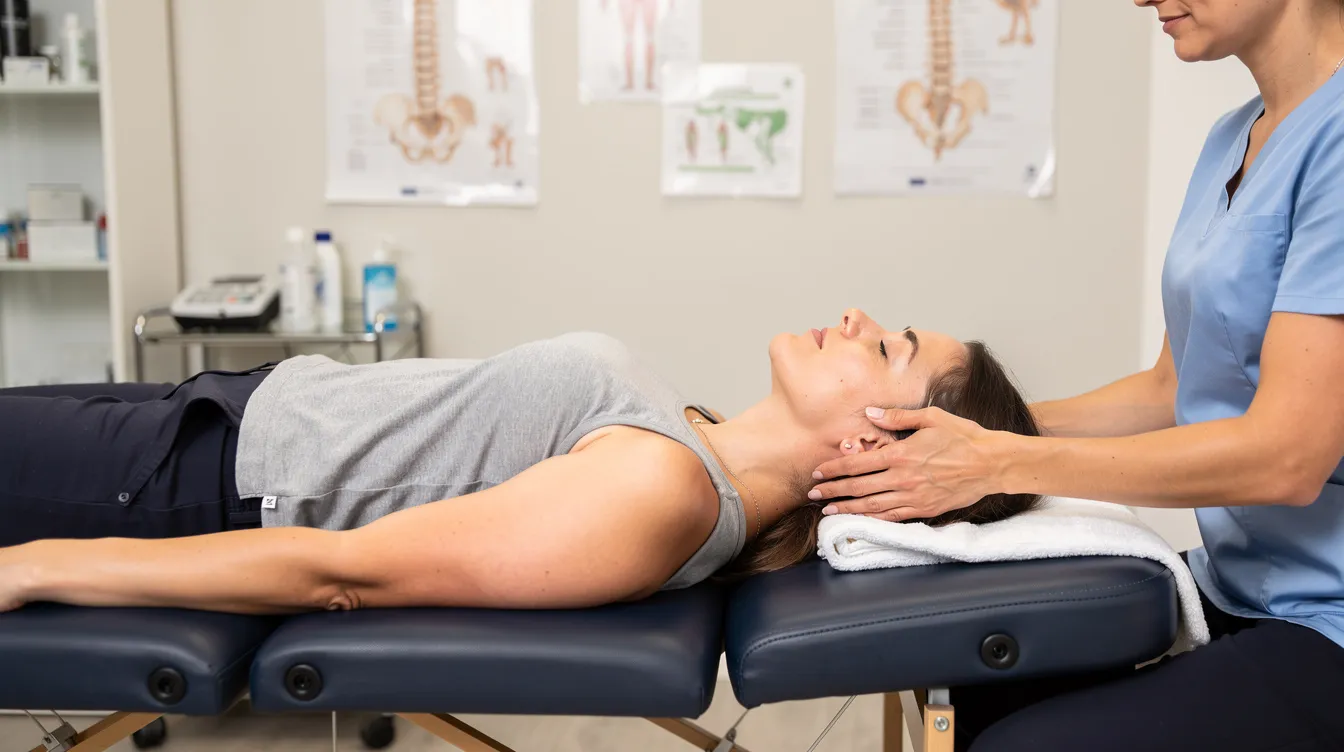
Suboccipital release is a specific manual therapy technique targeting the tiny deep muscles under the skull. The patient typically lies face up while the practitioner positions their fingertips just beneath the skull ridge, applying gentle sustained pressure and light traction for two to five minutes. This allows the suboccipital muscles to gradually lengthen and the nervous system to down-regulate.
A randomised controlled trial comparing manual suboccipital inhibition, instrument-assisted release, and a combination with upper cervical manipulation found that all groups improved in pain, cervical range of motion, and pressure pain thresholds – with the best results in the combination group. This underscores why combining decompression (joint-focused) with suboccipital release (muscle-focused) addresses both the structural and soft-tissue components of cervicogenic headaches.
Gentle traction can help relax tight muscles around the skull, and when paired with skilled suboccipital release, the effect on headache pain is often more complete than either approach alone.

Chiropractic Decompression and Headache Care at Everton Chiropractic
At Everton Chiropractic, the clinical focus for neck related headaches centres on upper cervical alignment, posture correction, and sustainable movement improvement. Care is evidence-informed, non-invasive, and tailored to each person’s daily demands – whether that involves long desk hours, caregiving, or active sports. Spinal decompression therapy targets structural triggers of neck strains and cervicogenic headaches as part of a broader rehabilitation framework.
Your First Visit: Assessment Focused on the Skull Base
The introductory visit begins with a detailed history: when headaches started, what triggers them, how they behave throughout the day, and any previous injuries (including seemingly minor ones like a minor car accident or sports knock). A postural analysis evaluates forward head posture, shoulder asymmetry, and overall spinal alignment.
The physical examination then zeroes in on the upper cervical spine:
-
Range-of-motion testing in flexion, extension, rotation, and lateral flexion to identify restricted segments
-
Palpation of suboccipital muscles, C1–C3 joints, upper trapezius, and levator scapulae to locate tender points and trigger points
-
Neurological screening for upper limb symptoms that might suggest a pinched nerve or more widespread cervical involvement
When indicated, existing X-rays or MRI are reviewed. If imaging is needed to rule out serious pathology, the chiropractor will refer appropriately. The goal is an accurate diagnosis that differentiates cervicogenic headache from migraine or tension headache based on pattern, triggers, and examination findings – because the treatment plan depends on identifying the true pain source.
The Decompression and Release Treatment Plan
A typical initial treatment plan spans four to eight weeks, with more frequent visits in the early phase and gradual tapering as symptoms improve. Exact timelines depend on how long the problem has been present, how severe the headache frequency is, and how well the body responds. Multimodal treatment approaches for cervicogenic headaches are generally preferred over reliance on traction alone.
Key treatment elements include:
-
Gentle cervical adjustments focused on the upper cervical joints (C0–C2 as appropriate), restoring normal joint motion. Chiropractic adjustments can restore normal neck joint motion and are explained in detail here
-
Targeted cervical decompression using manual or table-assisted traction to reduce nerve compression and improve spacing
-
Suboccipital release and soft-tissue work on the upper trapezius, levator scapulae, and other neck muscles contributing to muscle tension
-
Posture retraining with focus on reversing forward head posture
Force is carefully controlled, particularly in the upper neck. For patients uncomfortable with audible joint releases, alternative low-force mobilisations or instrument-assisted techniques are available. A 2022 randomised controlled trial found that higher-load mechanical intermittent cervical traction (12 kg) produced significantly greater improvements in headache intensity, frequency, and neck disability compared with lower loads, highlighting the importance of clinician-prescribed, properly calibrated traction.
Expected progression: initial reduction in headache frequency and intensity within the first two to four visits, followed by a shift toward posture correction, strengthening of deep neck flexors, and lifestyle modifications to prevent recurrence.
Supporting Therapies: Posture, Strength, and Daily Habits
Cervical decompression may be one component of a broader rehabilitation program. At Everton Chiropractic, common complementary strategies include:
-
Ergonomic coaching for desk and phone use – critical in Singapore’s office culture where tech neck is widespread
-
Pillow and sleep-position advice to maintain neutral cervical alignment overnight
-
Home exercises such as chin tucks (activating deep neck flexors), scapular retraction (drawing shoulder blades together), and thoracic mobility drills designed to offload the upper neck
A study of 60 patients with chronic cervicogenic headaches found that adding a cervical extension traction orthotic to standard multimodal care produced significantly greater improvements in headache frequency, disability, and cervical lordosis – with benefits maintained at one- and two-year follow-ups. This evidence reinforces that improving workplace ergonomics, strengthening postural muscles, and restoring spinal curves together produce far better outcomes than manual therapy alone.
Example scenario: A Singapore-based finance professional experiencing three to four headaches per week – each starting as neck tension and building into one sided head pain behind the right eye – underwent six weeks of decompression, suboccipital release, and posture retraining. By week four, headaches had dropped to one mild episode per week. After integrating a standing desk routine, chin tuck exercises between meetings, and a suitable pillow, she reduced episodes to occasional mild discomfort triggered only by unusually long travel days.
Step-by-Step: What a Typical Decompression Session Looks Like
If you have never had cervical treatment before, knowing what to expect can ease any anxiety. Sessions at Everton Chiropractic are designed around comfort, communication, and measurable progress. Traction should be prescribed and adjusted by a qualified clinician, and every session is tailored to your current presentation.
From Arrival to Relief: Session Flow
-
Symptom check-in – brief review of headache frequency, intensity, and any changes since your last visit
-
Quick reassessment – neck range-of-motion testing and palpation of the skull base to identify today’s priority areas
-
Warm-up soft-tissue work – gentle release of the upper neck, upper shoulders, and surrounding superficial muscles to prepare the area
-
Upper cervical adjustment or mobilisation – targeted, low-force technique to restore mobility at restricted segments (if indicated)
-
Cervical decompression – manual or table-assisted traction applied with the cervical spine in a specific position; the chiropractor explains what you should feel during the process
-
Suboccipital release – sustained fingertip pressure under the skull base while you lie relaxed, often with dimmed lighting; typically two to five minutes to allow deep muscles to let go
-
Re-test – neck movements and headache intensity are reassessed to track immediate change and guide the next session
-
Home advice review – brief reinforcement of exercises, hydration, and posture cues; next session scheduled
Safety, Comfort, and What You Might Feel After
Common immediate sensations after a session include feeling “taller,” a lighter head, warmth or tingling at the base of the skull, and mild post-treatment soreness similar to what you might feel after a workout. These typically resolve within 24 hours.
Neck decompression is not appropriate for everyone and should be assessed by a clinician. Everton Chiropractic screens for contraindications – including acute fractures, severe osteoporosis, rheumatoid instability, and vascular compromise – before initiating any cervical treatment.
Contact the clinic if you experience: severe new neurological symptoms (numbness, weakness in limbs), intense or worsening dizziness, or unrelenting pain that does not settle. These reactions are rare but warrant prompt evaluation.
Common Challenges and How to Overcome Them
Even with effective treatment, certain habits and misconceptions can slow recovery from cervicogenic headaches. Below are the most common obstacles and practical solutions.
Problem 1: Headaches Return After Long Desk Days
Prolonged static posture reloads the suboccipital muscles and upper cervical joints, undoing some of the gains from treatment. Poor posture can lead to increased neck tension and headaches, especially during back-to-back meetings or focused project work.
Solutions:
-
Set a timer for 30–45 minute movement breaks – even standing and rolling the shoulders counts
-
Perform a quick “chin tuck and shoulder roll” micro-routine at your desk
-
Adjust monitor height so the top of the screen sits at eye level; for detailed desk setup guidance, small changes make a significant difference
Problem 2: Relying on Painkillers Instead of Addressing the Neck
Frequent use of nonsteroidal anti inflammatory drugs or paracetamol can mask symptoms while the mechanical cause worsens. Over time, analgesic overuse can even contribute to medication-overuse headaches, adding complexity to an already frustrating cycle.
Solution: Use medication only as needed for acute episodes while committing to a defined trial of decompression, posture correction, and exercise. Track your headache frequency weekly – most patients notice a meaningful reduction within four to six weeks of consistent care, allowing medication use to taper naturally.
Problem 3: Fear of Neck Treatment or “Cracking”
Anxiety about cervical manipulation is common and completely understandable. The upper neck feels vulnerable, and the idea of someone adjusting it can provoke emotional stress.
Solution: Everton Chiropractic offers multiple treatment options including gentle mobilisations, instrument-assisted techniques, and traction-based decompression that do not involve audible joint releases. Treatment is always consent-based, and you can request a specific approach at any time. Learn more about what actually happens during an adjustment.
Problem 4: Inconsistent Home Care
Sporadic exercises and posture changes limit the long-term benefits of decompression. Muscle imbalances and postural habits built over years do not resolve from occasional effort.
Solutions:
-
Link exercises to existing daily routines – chin tucks after brushing teeth, scapular retraction between meetings
-
Use phone reminders or a simple checklist on your desk or fridge
-
Keep exercises short (two to three minutes) so compliance stays high
-
Remember that a light cardio routine such as brisk walking also supports blood flow and general neck muscle recovery
Self-Management: Simple Ways to Reduce Skull-Base Tension at Home
Self-care is not a replacement for professional assessment and treatment, but it is an essential complement that can meaningfully reduce headache frequency and intensity between visits. The strategies below are low-risk and can be started immediately.
Posture and Workstation Tweaks
Forward head posture increases neck muscle strain significantly, and improving workplace ergonomics can reduce neck strain and headaches. Key adjustments:
-
Position your monitor so the top of the screen is at eye level – use a stand or stack of books if needed
-
Set chair height so hips sit slightly above the knees, feet flat on the floor
-
Keep the keyboard close enough that your arms rest naturally without chin poking forward
-
If using a laptop, pair it with a separate keyboard and raise the screen
-
Take a side-view photo of yourself at your desk to check head posture – your ear should align roughly over your shoulder
-
For detailed posture strategies, see this guide on correcting posture
Gentle Skull-Base Stretches and Self-Release
These exercises target the suboccipital region and upper cervical spine. Keep all movements gentle – these are not power stretches.
-
Chin nods – Sit tall, gently tuck your chin as if making a small “double chin,” hold for five seconds, release. Repeat ten times. This activates the deep neck flexors and lengthens the suboccipitals.
-
Upper cervical flexion stretch – Sit with good posture, place both hands behind your head, and gently draw the chin toward the chest. You should feel a stretch at the base of the skull, not sharp pain. Hold 15–20 seconds, repeat three times.
-
Tennis ball self-release – Lie on your back with a tennis ball or soft massage ball positioned just below the bony ridge at the back of your skull. Allow your head weight to create gentle pressure. Slowly nod “yes” and “no” in tiny movements for 60–90 seconds to release suboccipital tension.
Safety notes: Keep movements gentle and controlled. Avoid strong thrusts or forceful rotation. If symptoms worsen, become sharp, or you feel dizzy, stop immediately and consult your chiropractor. Deep breathing during these exercises helps the nervous system relax and enhances the release effect.
Sleep Setup: Pillows and Positions that Protect the Neck
Chronic tension in suboccipital muscles can lead to postural issues that persist even during sleep if the pillow height is wrong. The goal is to maintain a neutral nose-to-sternum line whether you sleep on your back or side.
-
Back sleepers: Choose a pillow that supports the cervical curve without pushing the head forward. The forehead and chin should be roughly level.
-
Side sleepers: The pillow should fill the gap between the ear and the mattress so the spine stays straight. Too thin forces lateral flexion down; too thick forces it up.
-
Avoid: Sleeping on multiple stacked pillows, which forces the upper cervical spine into sustained flexion. Stomach sleeping is also best avoided as it demands prolonged neck rotation.
For pillow recommendations tailored to neck issues, see this guide on the best pillows for tech neck.
When to Seek Professional Help (and When It’s an Emergency)
Most cervicogenic headaches are mechanical and highly manageable with appropriate care. But some symptoms demand urgent medical attention, and knowing the difference matters.
Signs You Should Book a Chiropractic Assessment
Consider professional evaluation if you experience:
-
Headaches that start at the base of the skull and radiate forward into the head
-
Head pain provoked by neck movement, prolonged sitting, or sustained head posture
-
Recurring episodes for more than two to three weeks despite rest and self-care
-
Minimal or short-lived response to usual headache medications
-
One-sided, repeatable headache pain that improves when lying down with neck supported
-
Neck stiffness often worsens headaches with specific movements
If these patterns sound familiar, an introductory visit at Everton Chiropractic can clarify the cause, rule out other conditions, and determine whether decompression is appropriate for your situation. Physical therapy focuses on improving upper cervical mobility, and chiropractic care offers a targeted, hands-on approach to the same goal.
Red Flags: When Your Headache Might Be More Than a Neck Issue
Seek immediate medical attention (A&E / hospital) if you experience:
-
A sudden “worst-ever” thunderclap headache
-
Change in consciousness or confusion
-
Slurred speech, facial droop, or visual disturbance
-
Weakness or numbness in limbs
-
Fever combined with a stiff neck
-
Headache following recent serious trauma
These symptoms may indicate stroke, meningitis, or other emergencies that require hospital-based care. Everton Chiropractic is committed to referring patients promptly whenever such signs are detected during assessment. Surgical decompression may be considered for cervicogenic headaches linked to specific structural issues, and nerve blocks can temporarily numb irritated cervical nerves when conservative approaches alone are insufficient – your chiropractor can guide appropriate referrals.
Conclusion and Next Steps
Cervicogenic headaches arise from a clear mechanical source: upper cervical nerve compression, suboccipital muscle strain, and joint stiffness at the base of the skull. Cervical decompression therapy alleviates pressure within the cervical spine, restores joint mobility, and calms the nerve irritation that drives referred pain into the head. When combined with suboccipital release, posture correction, and consistent self-management, this approach offers both immediate pain relief and long-term reduction in chronic headaches.
A 2026 network meta-analysis of 41 randomised controlled trials confirmed that manual therapies and traction rank among the most effective non-pharmacological treatments for managing cervicogenic headaches, particularly when treatment type, dosage, and patient adherence are carefully managed.
Your next steps:
-
Track your headache patterns for one week – note timing, triggers, location, and intensity
-
Adjust your desk setup and pillow height using the guidance above
-
Try one or two gentle skull-base stretches daily (chin nods, tennis ball release)
-
If neck-related signs are present and pain persists beyond two to three weeks, book an assessment at Everton Chiropractic to explore decompression and release options
-
Consider that addressing posture and spinal alignment now can also prevent future issues like shoulder pain, mid-back stiffness, or early degenerative changes
Frequently Asked Questions
Can decompression really stop my cervicogenic headaches long term?
Cervical decompression restores joint mobility in the cervical spine and reduces compressive forces on the nerves that drive cervicogenic headaches. When combined with posture correction, strengthening of the deep neck flexors, and ergonomic changes, many patients experience sustained reductions in both headache frequency and intensity. A study using cervical extension traction demonstrated maintained improvements at one- and two-year follow-ups. However, outcomes depend on the severity and chronicity of the problem, age, and consistency with home care.
How many decompression sessions do I usually need before feeling a difference?
Many patients notice a change in headache pain within two to four visits, particularly in how their head and neck feel immediately after treatment. More stable, lasting improvement typically develops over four to eight weeks of consistent care. The chiropractor tailors session frequency after the initial assessment – starting more frequently and tapering as the upper cervical joints stabilise and muscle tension decreases.
Is cervical decompression and suboccipital release safe for everyone?
Most adults with mechanical neck pain and cervicogenic headaches are good candidates. However, cervical decompression is not appropriate for individuals with acute fractures, severe osteoporosis, rheumatoid instability, or certain vascular conditions. Evidence for cervical decompression therapy effectiveness specifically for cervicogenic headaches is growing but still developing, which is why a thorough screening – including medical history, physical examination, and review of imaging when relevant – is always performed before treatment begins.
What’s the difference between decompression at a chiropractic clinic and just “pulling” my own neck?
Professional cervical decompression involves controlled angles, specific force dosage, patient-specific positioning, and real-time feedback from a trained clinician. Self-manipulation – pulling or twisting your own neck – lacks this precision and can overload already irritated joints, worsen muscle guarding, or create hypermobility in segments that do not need more movement. At Everton Chiropractic, every decompression technique is applied with careful attention to the unique anatomy and presentation of your cervical spine.
Can I still come to Everton Chiropractic if I also get migraines?
Absolutely. Many patients have overlapping headache types – cervicogenic headaches alongside migraine headaches or tension headaches. Chiropractic care focuses on reducing the neck-driven component, which often lowers the overall headache burden and can alleviate pain from the cervical contribution. However, migraine-specific management (including medication) may still be needed through a medical doctor, and co-management between providers is common.
Will I need decompression forever?
Decompression is typically used more frequently during the initial corrective phase and then tapered as alignment, posture, and strength improve. Cervical decompression can improve neck range of motion and reduce stiffness to the point where the joints and muscles maintain themselves with proper habits. Long-term maintenance varies individually – some patients benefit from occasional check-ups every few months, while others manage well with home exercises alone after completing their treatment plan.
Do you show patients their neck alignment and progress?
Yes. Everton Chiropractic uses postural photos, range-of-motion testing, and – when relevant – imaging findings to explain the starting point clearly. As care progresses, the same measurements are repeated so you can see functional improvements over time: freer neck movement, reduced headache frequency, and visible changes in head posture. This objective tracking helps both you and your chiropractor make informed decisions about the pace and direction of care.