If your back pain started recently or you can see swelling, reach for ice. If it’s a dull, ongoing ache or stiffness that’s been hanging around for weeks, heat works better. Both are genuinely safe for most people when you follow basic time and temperature limits, but neither one fixes what’s actually wrong with your spine.
TL;DR:
- Ice is most effective within the first 24 to 72 hours after injury to reduce swelling and numb acute pain, especially if visible redness or warmth is present.
- Heat works best for chronic, stiff, or aching back pain without swelling, helping to relax muscles and increase tissue elasticity.
- Combining ice immediately after injury followed by heat once swelling subsides supports better recovery and mitigates recurring pain.
- Both therapies are safe when used correctly, adhering to the 20/20 rule, avoiding direct skin contact, and avoiding heat over inflamed or swollen areas.
- Persistent back pain despite home treatments may indicate structural issues needing professional assessment and targeted therapy.
Table of Contents
- Heat vs Ice Back Pain: A Quick Decision Guide
- How Heat and Cold Actually Work on Your Back
- When Ice Is the Right Call for Acute Back Pain
- When Heat Helps More: Subacute and Chronic Back Pain
- Combining Ice and Heat: The Sequencing That Actually Works
- Safety Rules You Shouldn’t Skip
- What the Research Actually Shows About Ice and Heat for Back Pain
- When to Stop Self-Treating and See a Professional
- A Practitioner’s View on Home Care Versus Professional Assessment
- Everton Chiropractic: When Heat and Ice Aren’t Enough
- Sources
- FAQ
Heat vs Ice Back Pain: A Quick Decision Guide
The confusion around heat vs ice back pain usually comes down to one missed detail: timing matters more than personal preference. Your back doesn’t care whether you like the feeling of a heating pad. It cares whether the tissue is inflamed or just tight.
Here’s a fast way to sort it out before you grab anything from the freezer or the microwave.
Ask yourself these three questions first:
- Did this pain start within the last 24 to 72 hours, or after a specific movement, fall, or lift?
- Is there visible swelling, warmth, or redness over the painful area?
- Does the area feel like a muscle spasm (tight, guarded, hard to move) or more like general stiffness that’s been building for weeks?
If you answered yes to the first two, ice is your starting point. If it’s been going on for a while with no swelling and just feels stiff or achy, heat is the better call.
Step-by-step for the first decision:
- If the injury is fresh (during the acute phase) or you see swelling, apply ice for about 20 minutes, then leave it off before reapplying.
- If the pain is chronic, subacute, or purely stiffness without swelling, apply moist heat for about 20 minutes.
- Reassess after a day. If swelling has gone down but stiffness remains, you can transition to heat.
- If pain worsens, spreads, or new symptoms appear (numbness, weakness), stop self-treatment and get it checked.
A frozen bag of peas works as well as a commercial ice pack, and a damp towel warmed in the microwave often outperforms a dry electric heating pad because moist heat transfers into tissue more efficiently. Skip both if the skin is broken, numb, or if you have poor circulation in the area, and skip heat entirely if the spot is visibly inflamed.
How Heat and Cold Actually Work on Your Back
The reason ice and heat produce such different sensations is that they trigger opposite responses in your blood vessels.
Cold causes vasoconstriction. Blood vessels narrow, which slows blood flow to the area, limits swelling, and dulls the nerve endings that are firing pain signals. That’s why ice feels almost numbing after the first uncomfortable minute or two. It’s the right tool when tissue is inflamed and the goal is to calm things down.
Heat does the reverse. It causes vasodilation, widening blood vessels and increasing circulation to the area. More blood flow means more oxygen and nutrients reaching tight, stiff muscle tissue, and the added warmth also increases tissue elasticity, which is why a heating pad makes it easier to stretch or move afterward. Heat also seems to relax the muscle fibers directly, easing spasm and tightness rather than numbing pain the way cold does.
Put simply: cold shuts things down to control inflammation, and heat opens things up to restore movement. That’s why sharp, swollen, acute pain responds to ice, while dull, stiff, chronic aching responds to heat. Trying to reverse the two, like applying heat to a swollen, inflamed area, can actually make swelling worse because you’re increasing blood flow into tissue that’s already retaining fluid. This mechanism gap is the entire reason the “heat vs ice back pain” question has a real, evidence-backed answer instead of just being a matter of taste.
When Ice Is the Right Call for Acute Back Pain
Ice is the go-to for what clinicians call the acute phase, generally the first 24 to 72 hours after an injury, strain, or flare-up. Some clinical guidance extends the cold-therapy window further for certain injuries, but for a typical back strain, the first two to three days are when ice does the most good.
How to apply it correctly:
- Wrap a gel pack, ice pack, or bag of frozen vegetables in a thin towel. Never place ice directly on bare skin.
- Apply for about 20 minutes, then remove for at least 20 minutes before reapplying, following the 20/20 rule used across clinical practice.
- Repeat several times a day during the acute phase after the injury.
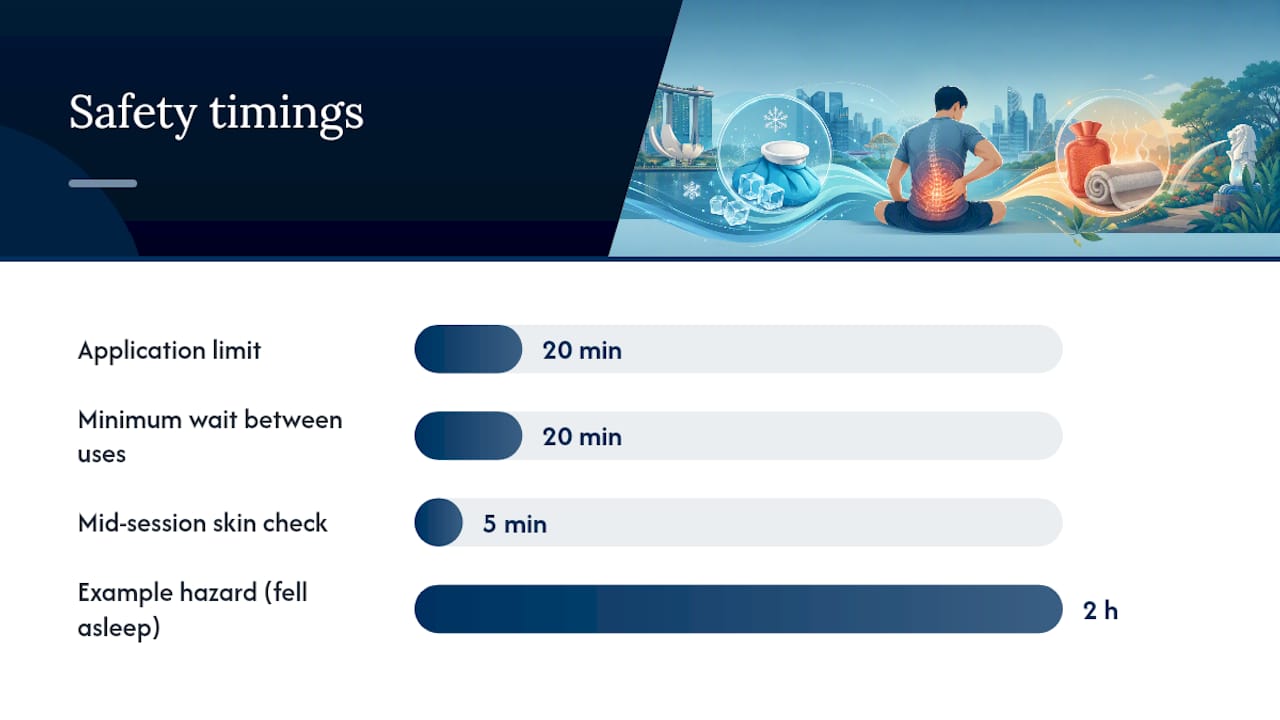
- Check the skin at the five-minute mark for excessive redness or numbness, especially if you have reduced sensation in the area.
Frozen peas mold to the curve of your lower back better than most rigid ice packs, which is a small but genuinely useful trick if you’ve never tried it.
Skip ice, or use extra caution, if you have Raynaud’s disease, poor circulation, diabetes-related nerve damage, or any open wound over the painful area. Cold therapy can worsen circulation problems and, in people with reduced sensation, mask the early warning signs of skin damage before you feel it.
Pro Tip: Keep a reusable gel pack in the freezer at all times if back flare-ups are a recurring issue for you. Running out to buy one after you’ve already thrown your back out is a bad time to discover you don’t have one.
When Heat Helps More: Subacute and Chronic Back Pain
Heat earns its place once the acute inflammation has settled, typically for pain that’s been present for more than a few days without swelling, or for ongoing issues like general stiffness, muscle tightness, or arthritis-related discomfort in the lower back.
The goal with heat is to raise tissue temperature enough to loosen things up without burning the skin. Clinical guidance from Harvard Health suggests aiming for a tissue temperature increase of roughly 9 to 12°F, while keeping the skin surface below about 113°F to avoid burns. Moist heat, like a damp heating pad or warm towel, transfers heat more efficiently than dry heat, so you often need less intense settings to get the same relief.
Applying heat safely:
- Use a moist heating pad, warm damp towel, or warm bath rather than a dry heat source when possible.
- Apply for about 20 minutes at a time, with a cloth barrier between the heat source and skin.
- Space sessions out, giving skin time to return to normal temperature between applications.
- Avoid falling asleep on a heating pad. Prolonged, unmonitored exposure is how most heat-related skin injuries happen.
Never apply heat over an area that’s visibly swollen, red, or hot to the touch, since increasing blood flow to actively inflamed tissue tends to worsen the swelling rather than relieve it. People with diabetes, peripheral neuropathy, or any condition that reduces skin sensation need to check the area more frequently, because they may not feel a burn developing until real damage is done.
Combining Ice and Heat: The Sequencing That Actually Works
Most back injuries don’t stay in one category forever, which is why treating “heat vs ice back pain” as a one-time choice misses how recovery actually unfolds.
A practical sequencing protocol looks like this:
- Immediately after a new injury or flare-up, apply ice for the first 24 to 72 hours to control swelling and numb acute pain.
- Once visible swelling has gone down and pain shifts from sharp to more of a dull, stiff ache, switch to heat to loosen the muscle and restore movement.
- For general muscle soreness after exercise, sometimes called delayed onset muscle soreness, some people find alternating between the two brings more relief than either alone, cold first to blunt inflammation, then heat a few hours later to ease stiffness.
- If you’re unsure which phase you’re in, default to ice for the first three days. Switching to heat too early on inflamed tissue is the more common mistake.
This ice-then-heat pattern shows up constantly in clinical practice for muscle strains, and it reflects a simple logic: control the inflammation first, then work on restoring flexibility.
Safety Rules You Shouldn’t Skip
Both therapies are low risk when used correctly, but the injuries that do happen (burns, frostbite, skin damage) are almost always caused by skipping one of these basic rules.
The single most important rule is the 20/20 rule: limit each application of heat or cold to about 20 minutes, then wait at least 20 minutes before reapplying. This gives your skin and underlying tissue time to return to a normal temperature and dramatically cuts the risk of thermal injury.
Other safety practices worth building into habit:
- Always place a thin towel or cloth barrier between your skin and the ice pack or heating pad. Direct contact, especially with anything frozen, increases frostbite risk fast.
- Check your skin after about five minutes into any session, and again at the end, looking for excessive redness, blistering, or numbness.
- Never combine heat therapy with topical analgesic rubs (the kind with menthol or capsaicin). The combination can cause a serious burn because the cream can trap and intensify heat against the skin.
- Never apply heat directly to a joint or area that’s visibly inflamed, swollen, or hot to the touch.
People with diabetes, peripheral neuropathy, vascular disease, or any condition that dulls sensation need an extra layer of caution with both modalities, since they may not feel early damage forming. If that describes you, shorter sessions, more frequent skin checks, and a lower threshold for stopping altogether are worth building into your routine.
Pro Tip: Set a timer on your phone every time you use heat or ice. It sounds unnecessary until you’re the person who fell asleep with a heating pad on your lower back for two hours.
What the Research Actually Shows About Ice and Heat for Back Pain
The evidence behind heat and cold therapy for back pain is more modest than most people assume, and it’s worth being honest about that upfront.
A Cochrane systematic review analyzing nine trials and 1,117 participants found moderate evidence that heat wrap therapy produces a small, short-term reduction in pain and disability for people with mixed acute and subacute low back pain. Evidence for cold therapy alone was far more limited and largely inconclusive, not because cold doesn’t work, but because far fewer well-designed trials have tested it directly.
A separate review published through PMC looked at a broader set of trials and found mixed, sometimes contradictory results. Some studies found hot packs and cold packs performed about equally well, while others favored ice massage over heat depending on the type of injury and the outcome being measured. The consistent theme across this research is heterogeneity: study designs, injury types, and outcome measures varied enough that firm, universal conclusions are hard to draw.
| Evidence source | What it found | Strength of evidence |
|---|---|---|
| Cochrane review (9 trials, 1,117 participants) | Heat wrap therapy gives small, short-term pain relief for mixed acute/subacute low back pain | Moderate for heat, limited for cold |
| PMC systematic review | Mixed results across trials; some favor hot packs, others favor ice massage | Low to moderate, high heterogeneity |
The honest takeaway is that both heat and cold therapy provide genuine but modest, short-term symptom relief. Neither one is a cure, and the research consistently points toward better outcomes when heat therapy is paired with active treatment like structured exercise rather than used as a standalone fix. If your back pain keeps returning after the swelling or stiffness fades, that’s usually a sign the underlying mechanical issue hasn’t been addressed, only the symptom has.
When to Stop Self-Treating and See a Professional
Heat and ice are for managing symptoms, not diagnosing what caused them. Certain signs mean it’s time to stop experimenting at home and get assessed.
See a clinician promptly if you notice:
- Progressive weakness, numbness, or tingling running down one or both legs.
- Any change in bowel or bladder control alongside back pain.
- Fever, unexplained weight loss, or pain that started after a significant fall or impact.
- Pain that hasn’t improved, or has gotten worse, after several days of appropriate heat or ice use.
A clinician’s job at that point is straightforward: a focused physical exam, imaging only when there’s a specific reason to order it, and a plan built around active rehabilitation, targeted exercise, manual therapy, or referral, rather than more passive symptom management. If the pain traces back to a mechanical issue in the spine, ongoing chiropractic care and posture-focused treatment tends to address more of the actual cause than another round of heating pads ever will.
A Practitioner’s View on Home Care Versus Professional Assessment
Home heat and ice therapy have earned their place, and the evidence backs modest, real relief for both. Where things go wrong is when people treat symptom relief as the finish line instead of the starting point.
A heating pad can loosen a stiff lower back enough to get through a workday. It does nothing to correct the postural pattern or spinal misalignment that made the muscle tighten up in the first place. That’s the gap most self-care advice skips over: the ache always seems to come back, and people assume that’s just how backs are as they get older. It usually isn’t.
Chiropractic assessment exists to find what’s driving the recurring pattern, not just to quiet it down for a few hours. Dr. Richard’s approach at Evertonchiropractic centers on exactly that distinction: use home care to manage flare-ups, but build a real plan around movement and structural correction so the flare-ups happen less often over time.
— Aman
Everton Chiropractic: When Heat and Ice Aren’t Enough
If you’ve been cycling through ice packs and heating pads for weeks with no lasting change, that’s usually a sign the pain has a structural cause that self-care alone won’t reach. A chiropractic clinic offers a focused physical assessment that identifies what’s actually driving your back pain, then a treatment plan built around your specific movement patterns and goals, not a generic stretch sheet.
A chiropractic consultation starts with understanding how your spine moves and where it’s compensating, which home therapy simply can’t assess. From there, spinal alignment treatment and posture-focused care work on correcting the mechanical issue rather than just easing the ache around it, and if leg pain or numbness is part of the picture, sciatica treatment targets that nerve involvement directly. A focused chiropractic approach emphasizes that recurring back pain isn’t just something to manage with heat and ice forever. It is something worth actually correcting. If your back pain keeps returning despite trying home care, consider consulting a professional for a real assessment of what’s going on.
Sources
- Superficial heat or cold for low back pain — Cochrane
- Superficial heat or cold for low back pain — PMC/NIH
- Cold versus heat for pain relief: How to use them safely and effectively — Harvard Health
- When to use ice vs. heat for pain — Nebraska Medicine
This article is general information, not a substitute for advice from a qualified doctor. Consult a qualified healthcare professional about your own circumstances before acting on anything here.
FAQ
Is It Better to Sit or Lie Down With Lower Back Pain?
Lying down with knees slightly elevated tends to relieve pressure on the lower back better than prolonged sitting, especially in a slouched position. Movement in moderation is still important. Staying completely still for long stretches can increase stiffness once acute pain settles.
What’s the Worst Thing to Do for Back Pain?
Prolonged bed rest is one of the most common mistakes, since it tends to increase stiffness and can delay recovery compared to staying gently active. Ignoring red flag symptoms like leg weakness or bladder changes and continuing to self-treat is the other major error.
When Should You Not Use Heat for Back Pain?
Skip heat if the area is visibly swollen, red, or hot to the touch, since increasing blood flow to actively inflamed tissue tends to worsen swelling rather than ease it. Also avoid heat in the first 24 to 72 hours after a fresh injury, when ice is the better choice.
What Is the Fastest Way to Relieve Lower Back Pain?
For fresh injuries with swelling, ice applied for 20 minutes at a time offers the quickest symptom relief, per the 20/20 rule. For stiffness without swelling, moist heat tends to work faster than dry heat because it transfers warmth more efficiently into the tissue. If pain persists beyond a few days, a chiropractic consultation can identify the underlying cause rather than just managing the symptom.