
Cracking your back is safe when the pop happens naturally, without force, and without pain. It becomes a problem the moment you start yanking or twisting to make it happen on purpose, or when you’re chasing that pop several times a day. If you feel pain, numbness, weakness, or notice you can’t stop cracking it, that’s your cue to get a clinician to look at what’s actually going on.
TL;DR:
- Occasional, pain-free back cracking during gentle stretches is safe; forceful or repeated self-manipulation increases the risk of muscle strain and joint inflammation.
- The popping sound results mainly from gas bubble release inside joints, not from realignment, and does not indicate therapeutic benefit.
- Habitual cracking often signals underlying issues like muscular tightness, poor posture, or deconditioned core muscles, which require targeted treatment.
- Professional care, including personalized assessments and spinal alignment work, addresses root causes and reduces the need for frequent cracking more effectively than self-manipulation.
- If back pain worsens, or symptoms like numbness, weakness, or loss of bladder control occur, immediate medical evaluation is essential.
Table of Contents
- What Makes Your Back Crack or Pop in the First Place?
- When Does Cracking Your Back Turn Risky?
- Safe Stretches That Relieve Back Tension Without Cracking
- When Should You See a Doctor for Back Pain?
- How Professional Care Fixes What Self-Cracking Can’t
- A Clinician’s View on Chasing the Pop
- Book an Assessment if Self-Care Isn’t Cutting It
- Sources
- FAQ
What Makes Your Back Crack or Pop in the First Place?
That sound isn’t your spine breaking or realigning. It’s almost always synovial cavitation, the release of a small gas bubble inside the fluid that lubricates your spinal joints. When you twist or stretch, the joint capsule stretches too, pressure drops inside it, and dissolved gas (mostly carbon dioxide) forms a bubble that pops. It’s the same physics behind cracking your knuckles.
Sometimes the sound has nothing to do with gas at all. A tendon or ligament sliding slightly out of place and snapping back over a bony ridge can make a nearly identical click.
Here’s the part most people miss: the noise itself doesn’t mean anything therapeutic happened.
- The pop is a byproduct of joint mechanics, not proof of a “successful” adjustment.
- Cavitation and tendon snapping feel and sound almost identical from the outside.
- A joint can move better or worse after cracking, regardless of whether it popped.
Chiropractors target joint motion, muscle control, and posture for lasting change. The sound is just noise the process happens to make.
When Does Cracking Your Back Turn Risky?
Occasional, painless popping during a stretch or twist carries minimal risk. The trouble starts when you force a crack that isn’t ready to happen or do it so often that you’re putting repeated stress on the same segment.
Forceful or frequent self-manipulation can cause:
- Muscle strain from overstretching tissue that wasn’t warmed up.
- Joint inflammation from repeated irritation of the same segment.
- Pinched nerves if a joint shifts awkwardly during a hard twist.
Rare but serious complications, including vascular injury or aggravated disc problems, have shown up in medical literature tied to aggressive self-manipulation or being cracked by an untrained person.
There’s also a signal hiding in the habit itself. If you feel compelled to crack your back multiple times a day, that’s rarely random; it usually points to chronic tightness, deconditioned core muscles, or posture that’s loading one area of your spine too much. Cracking it again only masks that pattern for a few minutes.
Safe Stretches That Relieve Back Tension Without Cracking
These five movements loosen the same joints and muscles that make you want to crack your back, without any forced twisting. Do them slowly, breathe through each hold, and stop the moment you feel sharp pain rather than a mild stretch.
- Knee-to-chest. Lie on your back, pull one knee toward your chest with both hands, hold 20 to 30 seconds, then switch legs. Two rounds per side.
- Lying trunk rotation. Knees bent, feet flat, gently drop both knees to one side while keeping shoulders on the floor. Hold 15 to 20 seconds each side.
- Bridge. Feet flat, knees bent, lift your hips a few inches while squeezing your glutes. Hold 5 seconds, lower slowly, repeat 10 times.
- Seated lower back rotation. Sit tall, cross your arms over your chest, and rotate your torso gently to each side without forcing the range. Five slow reps per side.
- Standing gentle twist. Feet hip width apart, hands on hips, rotate your upper body side to side within a comfortable range. Ten total reps.
Run through this sequence once a day, or whenever tightness builds up. None of these should ever produce a crack on purpose. If one does, let it happen. Don’t chase it.
Pro Tip: Set a phone reminder to stand up and move every 30 to 45 minutes if you sit for work. Static posture, not “not cracking enough,” is usually what’s driving the tightness you’re trying to relieve.
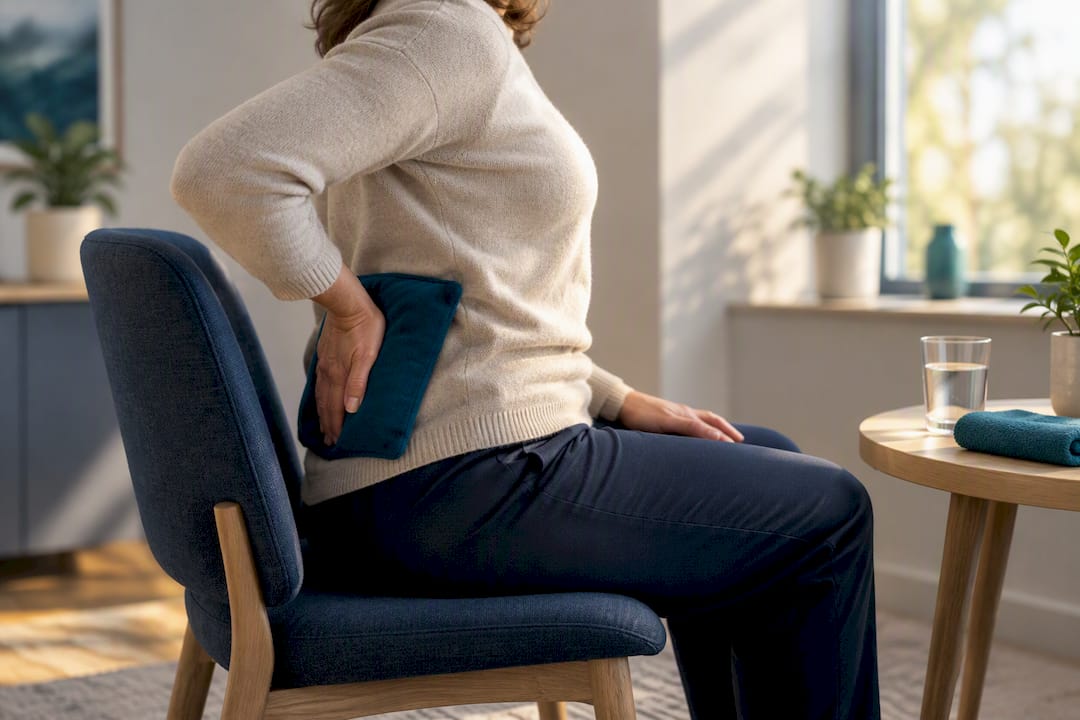
Beyond stretching, heat applied to stiff muscles for 10 to 15 minutes relaxes tissue enough to reduce that urge to crack, and a short walk after long sitting does more for spinal mobility than most people expect.
When Should You See a Doctor for Back Pain?
Some symptoms mean self-care isn’t the right tool anymore. Get evaluated the same day if you notice any of the following:
- Severe or worsening back pain that doesn’t ease with rest.
- Numbness, tingling, or weakness running down one or both legs.
- Loss of bladder or bowel control.
- Pain following a fall, car accident, or other major trauma.
Less urgent, but still worth a booked visit rather than another home stretch: daily cracking urges, stiffness that’s stuck around for weeks, or pain that’s started limiting what you can do at work or in sport.
Where you go depends on the problem. A general practitioner rules out serious causes. A physical therapist builds strength and mobility around an existing injury. A chiropractor addresses joint mechanics and posture directly, which is often the missing piece when self-cracking has become a daily habit instead of an occasional relief.
How Professional Care Fixes What Self-Cracking Can’t
A chiropractic visit doesn’t chase the pop. It starts with an assessment of how your spine moves, where you’re compensating, and what’s driving the tightness in the first place. From there, treatment usually follows a pattern: an initial mobility and strength evaluation, a plan built around your specific posture and lifestyle, targeted adjustments or spinal alignment work where appropriate, and ongoing correction as you rebuild movement habits.
That’s the real difference between the two approaches:
- Self-cracking gives temporary relief that fades within hours.
- Tailored care addresses biomechanics so the tightness stops returning as often.
- Structured treatment can reach conditions self-cracking never touches, including sciatica and postural imbalance.
Clinical guidance consistently favors conservative, supervised movement and posture correction over repeated self-manipulation for most everyday back stiffness, which is exactly the gap professional assessment is built to close.
A Clinician’s View on Chasing the Pop
The pop feels like progress because it’s instant. Real progress is boring by comparison: better ergonomics, a few minutes of daily mobility work, muscles strong enough to hold your spine in a good position without you thinking about it. If your back is popping itself during normal movement, ignore it. If you’re forcing it and reaching for it more often each week, that’s worth a second look before it becomes a bigger problem.
— Aman
Book an Assessment if Self-Care Isn’t Cutting It
A chiropractic clinic treats the tightness behind the urge to crack, not just the moment of relief. Where stretching, heat, and posture fixes only buy you a few hours, a personalized plan targets why your spine keeps tightening up in the first place.

A first visit typically starts with a full movement and posture assessment, so treatment addresses your specific pattern rather than a generic back complaint. From there, care might include a chiropractic consultation and adjustment built around your daily habits, or a structured spinal alignment treatment if your stiffness traces back to a deeper alignment issue. If your symptoms run down into a leg rather than staying in your lower back, ask about sciatica treatment at the same visit. Book a consultation and get an actual answer for why your back keeps asking to be cracked.
Sources
- Is it bad to crack your back? | Medical News Today
- Is Cracking Your Back Bad for You? | Houston Methodist
This article is general information, not a substitute for advice from a qualified doctor. Consult a qualified healthcare professional about your own circumstances before acting on anything here.
FAQ
How Can I Safely Crack My Lower Back Myself?
Let it happen during a natural stretch or gentle rotation rather than forcing it with a hard twist. If you need to yank or strain to get a pop, stop. That’s the point where risk of muscle strain and joint irritation starts climbing.
Is It Safe to Have Someone Walk on Your Back to Crack It?
No, this isn’t a recommended technique. Uncontrolled pressure from an untrained person applies force to your spine without any way to judge how much your joints and discs can actually handle, which raises the odds of strain or worse.
Is It Safe to Crack My Back by Twisting It?
A gentle, unforced twist during a stretch is generally fine. A hard, forceful twist aimed specifically at producing a pop is where forceful self-manipulation can irritate joints, muscles, and ligaments, so keep any rotation slow and within a comfortable range.
Is Self-Cracking as Effective as a Chiropractor?
No. Self-cracking only produces a short-lived release of pressure in a joint, while a chiropractor addresses the underlying biomechanics driving the tightness. Evertonchiropractic’s posture correction approach is built specifically to reduce how often you feel the urge to crack in the first place.