Strength and mobility work, done at low impact and progressed gradually, is the single most reliable way to manage knee osteoarthritis without surgery. Muscle soreness after starting is normal; sharp joint pain is not. Success looks like less morning stiffness, easier stairs, and steadier balance within a few weeks of consistent practice.
TL;DR:
- Strength and mobility exercises should be performed gradually at low impact to support tissue health and prevent stiffness without causing sharp joint pain.
- Performing 2 to 3 sessions weekly, starting with 8 to 12 reps per exercise and progressing slowly, helps build joint tolerance and avoid overstressing the knee.
- Avoid high-impact, deep-loaded, or explosive movements that spike joint forces, and monitor for sharp pain or swelling as signs to stop or modify activity.
- Incorporating walking, cycling, or swimming on non-strength days supports joint health without excessive joint load, especially when progression remains gradual.
- For persistent symptoms or difficulty with daily tasks, a professional assessment can identify underlying issues like alignment or movement compensation.
Table of Contents
- Which Knee Osteoarthritis Exercises Work Best?
- How Often Should You Do Knee Rehabilitation Exercises?
- What Should You Avoid With Knee Osteoarthritis?
- Which Low-Impact Activities Support Knee Health?
- When Does a Knee Need Professional Assessment?
- Does Weight Management Change How Your Knees Feel?
- Common Myths About Exercising With a Bad Knee
- Why Form Matters More Than Reps
- A Clinician’s Note on Staying Consistent
- A Practical Next Step If Home Exercise Isn’t Enough
- Sources
- FAQ
Which Knee Osteoarthritis Exercises Work Best?
Strength and mobility exercises are among the most effective non-surgical tools for knee osteoarthritis, according to guidance from InformedHealth.org’s NCBI Bookshelf overview. Properly dosed strengthening supports tissue health and helps prevent the stiffness and range-of-motion loss that comes from avoiding movement altogether, per the same source.
You don’t need all eleven exercises below every session. Pick three or four, rotate them across the week, and let your knee’s response guide the pace.
- Straight-leg raise. Lie on your back, one knee bent and foot flat, the other leg straight. Tighten the thigh muscle and lift the straight leg to hip height, hold two seconds, lower slowly. Start with 8 to 12 reps, one to three sets. Modify by lifting to a lower height if your lower back arches.
- Quad set. Sit or lie with the leg straight, press the back of the knee down into the floor or bed, and hold five seconds. Do 10 reps per leg. This is the safest starting point for anyone with significant pain.
- Sit-to-stand. From a firm chair, stand up using your legs, not your arms, then lower back down with control. Start with 8 to 10 reps. Progress by removing hand support; regress by using a higher seat or pushing off with your hands.
- Mini squat. Stand behind a chair for balance and bend the knees to about 45 degrees, no deeper. Do 8 to 12 reps. Deeper squats load the joint more than most arthritic knees tolerate well.
- Step-up. Using a low step or stair, step up leading with the stronger leg, then step down slowly. Start with 6 to 8 reps per side. Regress to a lower step; progress to a higher one as strength improves.
- Bridging. Lie on your back, knees bent, feet flat, and lift your hips off the floor by squeezing your glutes. Hold two seconds, do 10 to 15 reps. This builds hip strength that takes pressure off the knee.
- Hamstring stretch. Sit with one leg extended, lean forward gently from the hips until you feel a stretch behind the thigh, hold 20 to 30 seconds, twice per side.
- Calf stretch. Facing a wall, step one foot back, keep the heel down, and lean forward until you feel the stretch. Hold 20 to 30 seconds, twice per side.
- Heel raises. Standing, rise onto your toes and lower slowly. Do 10 to 15 reps. Hold a counter if balance is a concern.
- Side-lying hip abduction. Lie on your side, top leg straight, and lift it toward the ceiling without rotating the hip back. Do 8 to 12 reps per side. This targets the hip muscles that stabilize the knee during walking.
- Single-leg balance. Stand near a counter and lift one foot slightly off the ground, holding as long as comfortable, working toward 20 to 30 seconds. For a structured approach to fall-prevention balance training, this guide on safe balance exercises breaks down progressions well.
Pro Tip: Do quad sets and heel raises while brushing your teeth or waiting for coffee to brew. Stacking exercises onto habits you already have beats scheduling a dedicated “workout” you might skip.
How Often Should You Do Knee Rehabilitation Exercises?
Start every session with 5 to 10 minutes of easy movement, a brisk walk around the block or a few minutes on a stationary bike, to warm the joint before loading it. Cold muscles and stiff joints are more likely to feel cranky under load, so skipping this step is a common reason people write off exercise as painful.
From there:
- Work toward 2 to 3 strength and mobility sessions per week, building session length toward roughly 45 minutes as tolerance improves, per InformedHealth.org’s clinical guidance.
- Fill non-strength days with lighter endurance activity like walking or cycling.
- Increase reps or range of motion gradually, in small steps, rather than jumping difficulty week to week.
- Use the “morning after” rule: a little muscle soreness that eases within a day is fine; pain that’s worse the next morning means you pushed too hard.
- Stop immediately for sharp, localized joint pain rather than pushing through it.
Maintenance strength programs that continue twice weekly after initial rehab tend to hold onto gains better than programs people abandon once pain eases.
What Should You Avoid With Knee Osteoarthritis?
High-impact running, deep loaded lunges, heavy plyometrics (box jumps, jump squats), and any sudden maximal-effort move on a painful knee belong on the skip list. These movements spike joint forces faster than most arthritic knees can absorb comfortably.
The harder skill is telling the difference between productive discomfort and a warning sign:
- Dull, generalized muscle soreness that shows up a day later and fades within 48 hours is a normal training response.
- Sharp, localized joint pain during or right after an exercise is not; back off and modify.
- New or rapid swelling, a knee that locks or catches, a sense of the knee “giving way,” or a sudden drop in how far you can walk are red flags that warrant a clinician’s review rather than more home exercise.
Roughly one in five adults over 45 report knee pain consistent with osteoarthritis at some point, which is exactly why knowing these signals matters. Muscle soreness is a normal part of getting stronger; joint pain is your knee telling you to change something.
Which Low-Impact Activities Support Knee Health?
Brisk walking, cycling, and swimming are consistently recommended for building fitness without hammering the joint, according to Harvard Health’s guidance on knee osteoarthritis exercise. High-impact sports, by contrast, tend to work against the same goal.
- Walking or cycling on two or three non-strength days rounds out a weekly plan without overloading the joint.
- Swimming and water aerobics remove body weight from the equation entirely, useful on days when the knee feels irritable.
- Tai chi and gentle yoga build balance and control at a pace almost any knee tolerates.
- Cushioned, stable shoes reduce impact during walking and step-ups; a walking pole can offload a particularly sore knee when needed.
Strength work two to three days a week paired with walking or cycling on the others is a sustainable split, Harvard Health notes, and doesn’t harm knee joint health when progression stays gradual.
When Does a Knee Need Professional Assessment?
Some signs are worth a clinician’s eyes rather than another week of self-management: pain that limits daily tasks like stairs or getting out of a car, a knee that feels unstable or gives way, or mechanical symptoms like locking or catching.
A clinical assessment looks at things a mirror can’t show you, hip and glute strength, alignment through the leg, and how well the knee moves during a squat or step, then individualizes load and progression from there. That’s a meaningful difference from a generic exercise sheet, and it’s the reasoning behind guides like this comparison of physiotherapist and chiropractor roles for knee pain.
- Persistent limitation on stairs, walking distance, or standing from a chair.
- A knee that buckles, locks, or catches during normal movement.
- Swelling that appears suddenly or doesn’t settle with rest.
- Pain that isn’t easing after several weeks of consistent, appropriately dosed exercise.
Older adults in particular benefit from an individualized look before ramping up load, and this guide on chiropractic safety for elderly patients with osteoarthritis covers what that typically involves.
Does Weight Management Change How Your Knees Feel?
Every extra pound of body weight multiplies the load your knee absorbs with each step, often by a factor of three to four during walking. That’s the mechanical reason weight management shows up in nearly every knee osteoarthritis exercise plan, not as a moralizing aside, but as a direct lever on joint stress.
Losing even a modest amount of weight reduces that per-step load meaningfully, and it compounds with the muscle-strengthening work you’re already doing. Stronger quads and glutes absorb force more efficiently; a lighter frame means there’s less force to absorb in the first place. The two strategies reinforce each other rather than competing for your attention.
Nutrition plays a supporting role too. Diets built around vegetables, lean protein, and whole grains support steady weight management without the extreme calorie cuts that can sap the energy you need for consistent exercise. Crash diets often backfire here: low energy makes people skip the very strength sessions that protect the joint, undermining both goals at once.
None of this means you need to hit a specific number on a scale before starting the exercises above. Start the movement now; let weight management happen alongside it, not before it. Waiting for “ideal” weight before you begin strengthening is one of the more common reasons people delay exercise that would actually help them get there faster.
Common Myths About Exercising With a Bad Knee
The biggest myth is that exercise wears out an already damaged joint further. Guided, progressive strengthening at low impact improves function and reduces pain rather than accelerating damage, according to InformedHealth.org. Cartilage doesn’t behave like a tire tread that simply wears thinner with use; joint tissue actually responds to appropriate loading by adapting.
A second myth: rest is safer than movement. Extended rest tends to make knee osteoarthritis worse, not better, by allowing surrounding muscles to weaken, which then increases the load the joint itself has to bear. The knee that moves a little every day, even briefly, typically outperforms the knee that’s protected into stiffness.
A third myth: any pain during exercise means stop entirely and never try that movement again. Mild, dull soreness that eases within a day is part of adapting to new load. The signal to actually stop is sharp, localized joint pain, not general muscle fatigue.
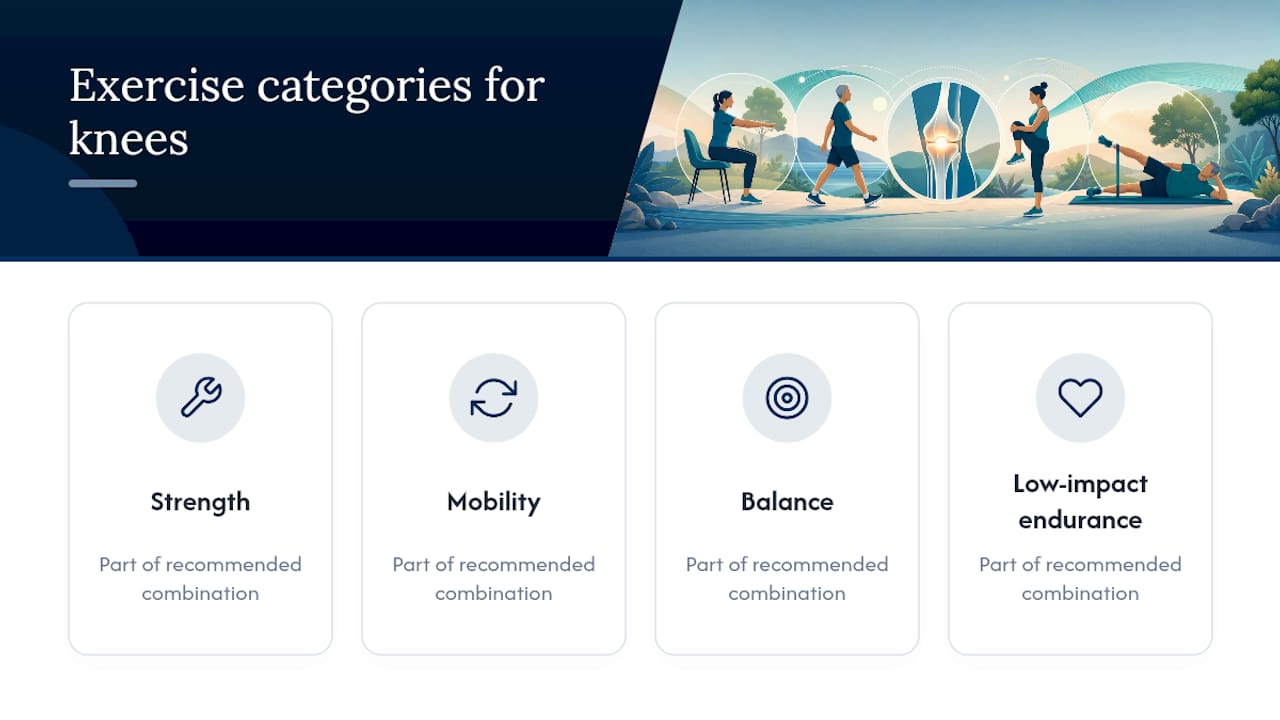
Finally, some people believe a single “best exercise” exists for knee osteoarthritis. There isn’t one. A combination, strength work, mobility, balance, and low-impact endurance, outperforms any single move done in isolation, which is exactly why the exercise list above spans all four categories rather than picking a favorite.
Why Form Matters More Than Reps
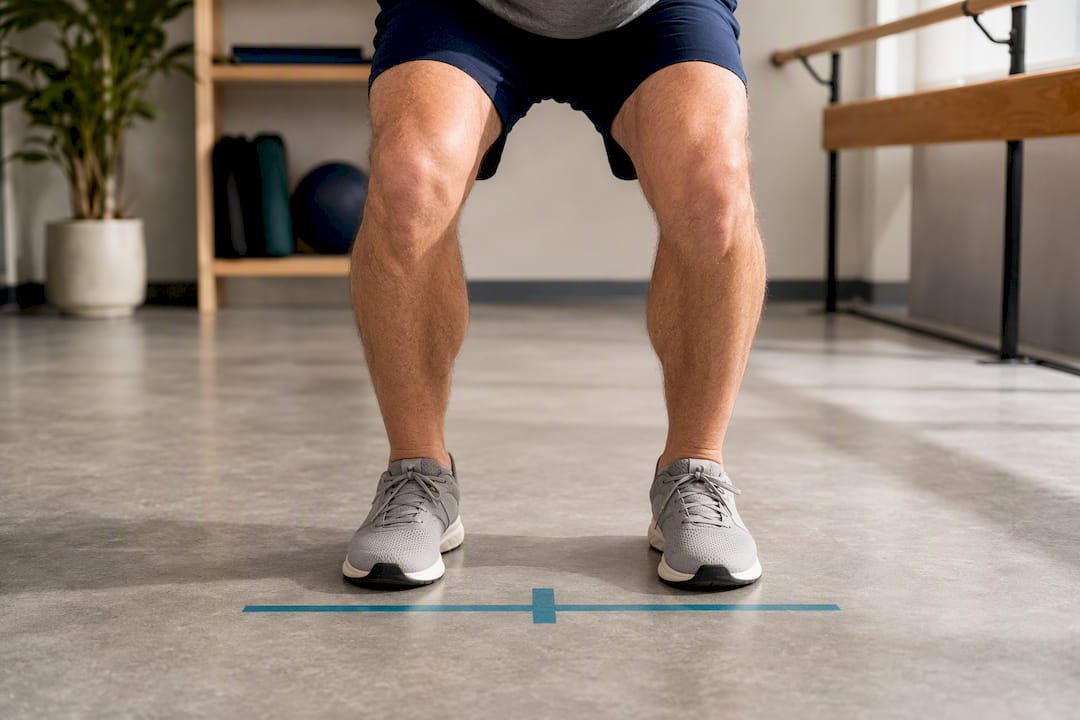
Bad form on a good exercise is worse than no exercise at all. A sit-to-stand done by lurching forward and yanking with momentum trains your knee to compensate rather than to strengthen the muscles you’re trying to build. A mini squat that lets the knees cave inward loads the joint asymmetrically, which can aggravate the exact pain you’re trying to fix.
Slow, controlled movement beats speed every time with these exercises. Two seconds up, a brief hold, two seconds down gives your muscles time to actually do the work instead of letting momentum carry the movement. If you can’t control the descent of a sit-to-stand or squat, that’s a signal to regress, not to power through.
Alignment matters as much as speed. Knees should generally track over the middle toes during squats and step-ups, not drift inward or outward. If you’re not sure your form is on target, a short session with a clinician to check movement quality once can save months of reinforcing a pattern that’s working against you, an idea covered in more depth in this piece on how alignment eases joint stress.
A Clinician’s Note on Staying Consistent
Progress on knee osteoarthritis rarely looks dramatic week to week. It looks like one more stair without wincing, or standing from a low chair without pushing off the armrest. Track those small wins instead of chasing a pain-free knee overnight.
Early soreness after starting is normal and usually fades as your body adapts. If progress stalls or pain persists past a few weeks of consistent effort, that’s the moment to get a tailored assessment rather than guessing at what to change next.
— Aman
A Practical Next Step If Home Exercise Isn’t Enough
Home exercises solve a lot of knee osteoarthritis pain on their own, but not every knee responds the same way to a generic list. Some need a closer look at hip alignment, movement compensation, or a progression plan that fits a specific job, sport, or daily routine.

Care can build around exactly that gap: hands-on assessment, movement analysis, and an individualized exercise progression rather than a one-size-fits-all handout. A visit adds what a home program can’t, a trained eye on how your hip, knee, and alignment work together, and a plan adjusted as your knee actually responds instead of guessed at in advance. If stairs, long walks, or standing from a chair still feel harder than they should after weeks of consistent home exercise, explore long-term pain relief approaches and book an assessment to find out what’s actually driving the pain.
This article is general information, not a substitute for advice from a qualified doctor. Consult a qualified healthcare professional about your own circumstances before acting on anything here.
Sources
- Osteoarthritis of the knee: Learn More – InformedHealth.org (NCBI Bookshelf)
- Walking, cycling and swimming are best exercises for knee osteoarthritis – Harvard Health
- Knee Conditioning Program – OrthoInfo – AAOS
FAQ
What Is the Most Effective Exercise for Knee Osteoarthritis?
No single exercise outperforms all others; a combination of quad strengthening, hip work like bridging and side-lying abduction, and balance training delivers the most consistent improvement in pain and function.
What Are the Four Stages of Knee Osteoarthritis?
Knee osteoarthritis is typically graded from minimal (early cartilage changes with few symptoms) through mild, moderate, and severe, where significant cartilage loss and bone changes cause persistent pain and stiffness; a clinician’s imaging and exam determine the exact stage.
What Exercises Should You Avoid With Knee Osteoarthritis?
Skip high-impact running, deep loaded lunges, heavy plyometrics like box jumps, and any sudden maximal-effort movement on a painful knee, since these spike joint forces faster than an arthritic knee typically tolerates.
Is Walking Good for Osteoarthritis in the Knees?
Yes. Brisk walking is one of the most recommended low-impact activities for knee osteoarthritis, building strength and endurance without the joint stress of high-impact sports.