Most mid back pain comes from strained muscles, stiff joints, or poor posture, not a serious spinal or organ problem. Fewer than 1% of cases trace back to a serious underlying condition. Start with gentle movement, heat or ice, and an over-the-counter pain reliever, then work in thoracic mobility drills a few times a week. If you notice numbness, fever, or pain after a fall, skip the home remedies and get checked.
TL;DR:
- Most mid back pain results from muscle strain, poor posture, or joint stiffness, with serious conditions accounting for less than 1% of cases.
- Symptoms typically include dull aches, stiffness, sharp localized pain, or nerve-related sensations, with sudden or worsening pain warranting professional assessment.
- Self-care involves ice in the first two days, then heat, pain relievers, and gentle movement, avoiding prolonged bed rest or complete inactivity.
- Targeted exercises like cat-cow, thoracic rotations, foam roller extensions, and scapular retractions improve mobility when performed consistently.
- Persistent or worsening pain requires evaluation by a healthcare professional, with treatment options including physical therapy, chiropractic care, or imaging if red flags are present.
Table of Contents
- What Causes Mid Back Pain?
- What Do the Symptoms of Mid Back Pain Feel Like?
- When Should You Worry About Mid Back Pain?
- What Self-Care Actually Helps With Mid Back Pain?
- Which Exercises Actually Improve Thoracic Mobility?
- When Should You See a Professional for Mid Back Pain?
- How Can You Prevent Mid Back Pain From Coming Back?
- How Everton Chiropractic Approaches Mid Back Pain
- The Real Problem With How Most People Treat Mid Back Pain
- Ready to Get Your Mid Back Pain Properly Assessed?
- Sources
- FAQ
What Causes Mid Back Pain?
The thoracic spine, the section between your neck and lower back, sits still for most of the day and then gets asked to twist and bend suddenly when you reach for something behind you or lift a bag off the floor. That mismatch is where most mid back pain starts.
Muscle strain and trigger points account for the majority of cases. The trapezius and rhomboid muscles, which run across your upper and mid back, tighten up from repetitive movement or from sitting hunched over a screen for hours. Small knots called trigger points form in these muscles and refer a dull ache that can feel deeper than it actually is.
Posture-related loading builds slowly. Rounded shoulders and a forward head position shift weight onto the joints between your ribs and spine, and over months that steady load turns into chronic soreness.
Spinal causes are less common but real: osteoarthritis in the small joints of the thoracic spine, disc degeneration or herniation, spinal stenosis, and compression fractures, particularly in older adults with lower bone density. Notably, most thoracic disc changes visible on an MRI cause no pain at all, so an imaging finding by itself doesn’t explain your symptoms.
Referred pain from internal organs is rare but worth knowing about. The esophagus, heart, lungs, and kidneys can all send pain signals that land in the mid back rather than where the organ actually sits. A kidney infection, for instance, sometimes shows up as a deep ache on one side of the mid to lower back rather than classic abdominal pain.
- Muscle strain or myofascial trigger points (trapezius, rhomboids)
- Sustained poor posture or repetitive loading
- Arthritis, disc degeneration, disc herniation, or spinal stenosis
- Compression fractures, more common with age or low bone density
- Referred pain from the heart, lungs, esophagus, gallbladder, or kidneys
What Do the Symptoms of Mid Back Pain Feel Like?
Pain between the shoulder blades is one of the most common ways mid back pain shows up, and it tends to fall into a handful of recognizable patterns. Paying attention to how the pain behaves tells you almost as much as where it’s located.
Muscular pain usually feels like a dull ache or persistent stiffness that gets worse with certain movements, like reaching overhead or twisting at your desk. Sharp, localized pain that spikes with a specific motion often points to a joint or ligament issue rather than a muscle.
Pain that radiates toward your chest, ribs, or flank deserves more attention, since that pattern can suggest referred pain from an internal organ rather than the spine itself. Numbness or tingling that runs down an arm or around the ribcage suggests nerve involvement and is worth mentioning to a clinician even if it’s mild.
Timing matters too. A sudden onset after lifting or a fall points to an acute strain, while pain that has built up gradually over weeks usually reflects postural or degenerative changes. Either way, pain that wakes you from sleep or keeps getting worse week over week is not something to wait out.
- Dull ache or stiffness, often worse with sustained postures
- Sharp, localized pain triggered by specific movements or deep breaths
- Radiating pain into the chest or flank, which may signal referred pain
- Numbness or tingling, suggesting nerve irritation
- Pain that wakes you up or steadily worsens over days to weeks
When Should You Worry About Mid Back Pain?
Most mid back pain resolves with simple self-care, and fewer than 1% of cases turn out to involve a serious medical condition. Still, a small set of warning signs changes the calculus entirely, and knowing them cold means you never have to guess in the moment.
- Pain following major trauma, such as a fall from height or a motor vehicle collision
- New leg weakness, numbness, or loss of bladder or bowel control
- Fever, unexplained weight loss, or pain that’s severe enough to wake you at night
- Chest pain, severe shortness of breath, or pain spreading down an arm
Any of the first three warrant a same-day visit to a doctor or urgent care clinic. The fourth category, chest pain paired with breathlessness, calls for emergency services immediately, since it can point to a cardiac or pulmonary event rather than anything musculoskeletal.
What Self-Care Actually Helps With Mid Back Pain?
The first 48 hours after an acute strain call for ice, which limits swelling and dulls the sharp edge of the pain. After that window, heat works better for loosening tight, stiff muscles and improving blood flow to the area. Alternating the two rarely hurts, so use whichever feels better once the initial injury has calmed down.

Acetaminophen and NSAIDs like ibuprofen are the standard first-line options for pain relief, and most people can use either short-term without issue. Check with a clinician before extended NSAID use if you have kidney issues, stomach ulcers, or take blood thinners, since that combination raises real risk.
Staying in motion beats prolonged bed rest. Modify how you lift, twist, or sit rather than avoiding movement altogether. A brief walk, light stretching, or simply changing position every 30 minutes keeps the thoracic spine from stiffening further.
- Ice for the first 1 to 2 days after an acute strain
- Heat for ongoing stiffness or muscle tightness
- Acetaminophen or NSAIDs for short-term pain control
- Gentle, modified activity instead of complete rest
- Topical analgesics or self-massage with a lacrosse ball for localized knots
Pro Tip: Set a phone reminder every 45 minutes during desk work. Standing up, rolling your shoulders back, and taking five deep breaths resets the muscles around your shoulder blades before they lock up.
Which Exercises Actually Improve Thoracic Mobility?
Gentle, regular movement combined with targeted strengthening is one of the most effective ways to reduce thoracic stiffness, and it beats passive treatments like heat alone for lasting relief. The exercises below target the thoracic spine specifically, which matters more than it sounds.
- Cat-cow: On hands and knees, arch your back toward the ceiling, then let it sag toward the floor, moving slowly through 8 to 10 reps. Focus the motion in your mid back rather than your lower spine.
- Thread-the-needle: From the same position, thread one arm under your body while rotating your chest toward the floor, then reverse and open toward the ceiling. Do 8 reps per side.
- Seated or lying thoracic rotation: Sitting with arms crossed over your chest, rotate your torso side to side, keeping your hips still. Ten reps per side works well.
- Foam roller extension: Lie with the roller placed horizontally under your mid back, support your head with your hands, and gently extend backward over the roller for about 90 seconds per section, moving the roller slightly between sets.
- Scapular retractions and band pull-aparts: Squeeze your shoulder blades together and hold for 3 to 5 seconds, or pull a resistance band apart at chest height, for 10 to 15 reps to build the strength that supports better posture.
Aim for this routine 2 to 3 times a week, with a shorter 5-minute version of cat-cow and thread-the-needle daily if you sit for long stretches.
The single biggest mistake people make with these drills is letting the lower back do the work. Thoracic movement has to originate in the mid back, and when someone lacks mobility there, the lumbar spine often overextends to compensate, which can aggravate the lower back instead of fixing the actual problem. Bracing your core lightly and cueing the movement to start between your shoulder blades keeps the motion where it belongs.
Pro Tip: Film yourself doing cat-cow from the side once. If your lower back is doing most of the arching while your mid back barely moves, slow down and consciously segment the motion upward from your ribs.
When Should You See a Professional for Mid Back Pain?
Self-care resolves most cases within a few weeks, but persistent, worsening, or recurring pain is a signal to bring in a professional rather than keep guessing at home.
Physical therapists build individualized programs combining manual therapy with graded exercise progressions, moving you from pain relief toward full functional strength. Chiropractic care takes a related but distinct approach, using spinal mobilization and posture-focused treatment plans that address how the whole kinetic chain, not just the sore spot, contributes to thoracic pain. Reviewing non-surgical back pain options before considering more invasive routes is worth doing for most chronic cases.
Imaging isn’t a default step. It becomes appropriate when red flags are present, when neurological symptoms progress, or when a fracture or infection is suspected based on the clinical picture. Injections or surgery stay reserved for specific, confirmed diagnoses, such as a herniated disc pressing on a nerve root that hasn’t responded to months of conservative care.
- Physical therapy for individualized, progressive rehab
- Chiropractic care for spinal mobilization and posture correction
- Imaging when red flags, neurological signs, or fracture risk are present
- Injections or surgery only for specific, confirmed structural diagnoses
How Can You Prevent Mid Back Pain From Coming Back?
Recurrence is common when the underlying posture or movement habits never change, which is why prevention deserves as much attention as the initial fix.
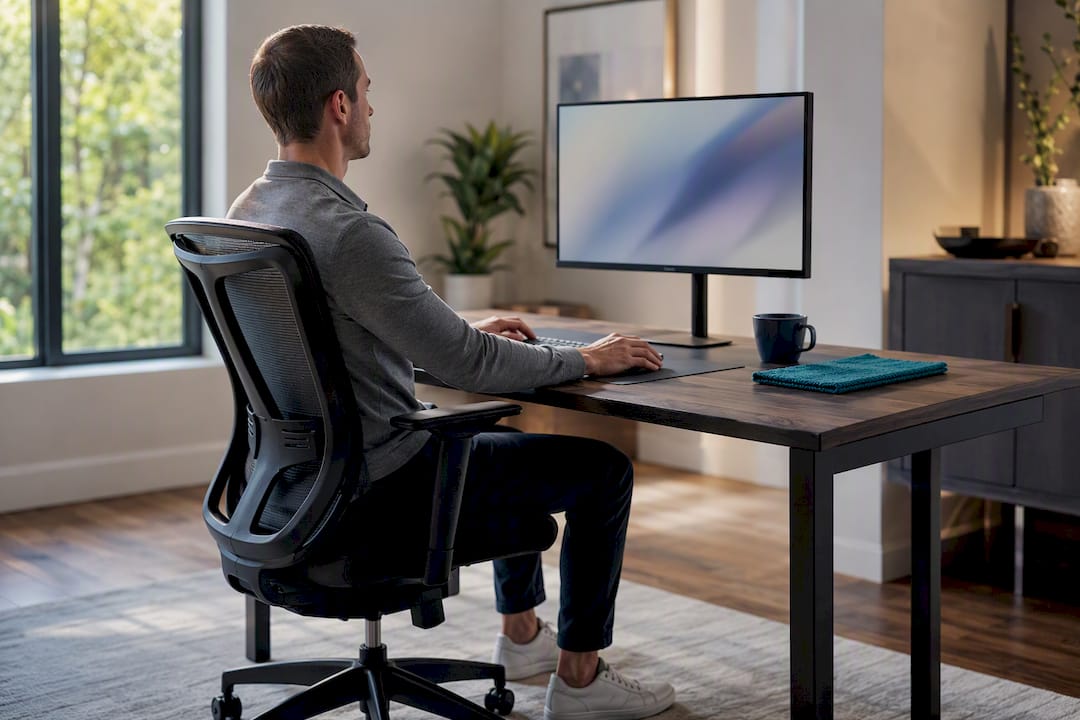
Start with your workstation. Monitor height at eye level, elbows at roughly 90 degrees, and feet flat on the floor all reduce the forward-hunch position that loads the thoracic spine over time. Small ergonomic adjustments to your desk setup make a bigger difference than most people expect.
Build in movement breaks every 30 to 60 minutes rather than sitting through an entire meeting block. Standing, walking to refill water, or simply shifting position counts.
Long-term, consistent strength work targeting the posterior chain, upper back, and core keeps the muscles that support your spine from deconditioning. Sleep position matters too: a supportive pillow that keeps your neck neutral limits the mid back strain that shows up the next morning. Managing stress and keeping your weight in a healthy range round out the picture, since both influence how much tension your back carries day to day.
- Set up your desk with monitor, chair, and keyboard positioned to reduce hunching
- Move every 30 to 60 minutes instead of staying static
- Strengthen your posterior chain and core consistently, not just when pain flares
- Address sleep position, stress levels, and body weight as part of the bigger picture
How Everton Chiropractic Approaches Mid Back Pain
Everton Chiropractic treats mid back pain as a movement problem first, not just a pain problem. Dr. Richard’s assessments start with a functional movement screen that identifies where the thoracic spine has lost range and which compensations, often in the shoulders or lower back, developed as a workaround.
From there, treatment plans are built around the individual rather than a standard protocol. That might mean manual adjustment, targeted mobility work, or a strength progression, depending on what the assessment turns up. Chiropractic care works best as one piece of a broader plan that can include physical therapy or exercise coaching, and personalized treatment plans tend to hold up better over time than generic advice pulled from a printout.
The Real Problem With How Most People Treat Mid Back Pain
Most people treat mid back pain like a single injury to fix rather than a pattern to interrupt. They stretch for a week when it flares, feel better, and stop, then wonder why it comes back three months later. The research on movement-first care backs this up consistently: mobility work alone reduces stiffness, but pairing it with strength training is what actually prevents recurrence.
The conventional wisdom oversells rest and undersells consistency. Nobody needs two weeks on the couch for a muscular strain, and nobody needs a $200 gadget either. What actually works is boring: a few minutes of mobility most days, a couple of strength sessions a week, and a desk setup that doesn’t fight your spine for eight hours straight.
If you take one thing from this, prioritize identifying whether your pain is postural, muscular, or something that needs a professional set of eyes before you commit to a fix. Guessing wrong wastes months. Getting an accurate read on the cause, then building a routine around it, is what separates people who solve this once from people stuck managing it forever.
— Aman
Ready to Get Your Mid Back Pain Properly Assessed?
If self-care and mobility drills haven’t moved the needle after a few weeks, or if the pain keeps limiting how you move, work, or sleep, that’s the point to stop guessing and get an actual assessment. Everton Chiropractic builds every plan around a functional movement screen first, so treatment targets the actual cause of your stiffness or pain rather than a generic protocol.

A visit starts with a hands-on evaluation of how your thoracic spine, shoulders, and posture work together, followed by a plan matched to your specific movement limitations and goals, whether that’s clearing up a nagging ache or building long-term resilience against it coming back. Explore long-term pain relief approaches that go beyond a quick fix, and book an assessment with Everton Chiropractic to find out what’s actually driving your pain.
Sources
For a deeper dive into thoracic pain mechanics and self-care, the NHS’s guidance on slipped discs and Hinge Health’s overview of thoracic back pain both offer solid detail beyond what’s covered here. OrthoNebraska and Cleveland Clinic provide useful anatomical context, and the PubMed record on thoracic mobility mechanics covers the lumbar compensation issue in more technical detail.
This article is general information, not a substitute for advice from a qualified doctor. Consult a qualified healthcare professional about your own circumstances before acting on anything here.
- Mid-back pain – Dynamic Health Physiotherapy
- Upper back pain: Symptoms, causes and when to see a doctor | Cleveland Clinic
FAQ
What Could Be Causing Pain in My Mid Back?
The most likely causes are muscle strain, trigger points in the trapezius or rhomboid muscles, or postural loading from sitting hunched over for long periods. Less commonly, arthritis, disc issues, or referred pain from an internal organ can be responsible.
Why Is My Back Pain in the Middle Instead of Higher or Lower?
Middle back pain often points to the thoracic spine’s rib joints and surrounding muscles, which take on strain differently than the neck or lower back. Pain that shifts toward your chest or flank can also suggest referred pain from an organ rather than the spine itself.
What Are the Red Flags for Middle Back Pain?
Seek urgent care for recent major trauma, new leg weakness or loss of bladder control, fever, unexplained weight loss, or severe pain that wakes you at night. Chest pain with breathlessness needs emergency care immediately, since it may signal a cardiac or pulmonary issue.
How Do You Decompress the Mid Back?
Foam roller extensions, where you lie over the roller placed horizontally under your mid back and gently extend backward for about 90 seconds per section, are one of the most effective decompression drills. Thread-the-needle and seated thoracic rotation also help restore motion without straining the lower back.