Introduction
Muscle tension occurs when muscles remain semi-contracted for extended periods, producing stiffness, pain, and restricted movement even when the body is at rest. It ranks among the most common musculoskeletal complaints: neck pain alone affects 30–50% of the general population each year, according to the International Association for the Study of Pain, and a 2026 Singapore cohort of 1,941 adults found that 23.3% had at least one musculoskeletal condition, with 12.2% reporting two or more.
This article covers how muscle tension develops at a physiological level, the postural and stress-related causes behind it, and specific gentle stretching protocols that calm the sympathetic nervous system and release tight back muscles. It does not address serious neurological conditions such as radiculopathy or spinal cord pathology; those require separate medical evaluation. The primary audience is adults dealing with neck, back, or shoulder tightness from poor posture, chronic stress, sedentary work, or inadequate recovery after exercise.
Muscle tension occurs when muscles remain partially contracted due to sustained motor neuron activation, accumulated metabolites, and heightened nervous system tone. Left unresolved, the body can respond with persistent stiffness, discomfort, and reduced range of motion that may last for weeks or months without intervention.
By the end of this article, you will:
-
Understand the physiological mechanisms that cause and sustain muscle tension
-
Recognize symptoms and common triggers in your daily life
-
Learn a specific rhythmic stretching protocol with breathing coordination for achieving gentle relief from muscle tension in back muscles
-
Know how to compare stretching methods and choose the right one
-
Identify when self-care is insufficient and professional chiropractic assessment is needed
Understanding Muscle Tension Fundamentals
Muscle tension refers to a state in which muscles maintain involuntary partial contraction for prolonged periods. At the cellular level, repeated activation of motor neurons causes intracellular calcium to accumulate while energy supply drops, keeping sarcomeres locked in a shortened position. Persistent muscle tension restricts blood flow and oxygen delivery to tissues, which leads to metabolite buildup (lactic acid, hydrogen ions), local ischemia, and trigger point formation. The downstream effects include muscle pain, stiffness, reduced range of motion, and increased compressive load on joints and the spine.
This matters for anyone who spends long periods sitting at a desk, commuting, or performing repetitive tasks. When muscles in the neck, shoulders, or lower back remain contracted without relief, the body loses movement quality, posture deteriorates, and pain signals intensify.
Acute vs Chronic Muscle Tension
Acute muscle tension develops after sudden strain, unaccustomed physical activity, or physical overexertion, which can lead to muscle fatigue and cramps. Symptoms appear within minutes to hours: localized soreness, inflammation, and temporary tightness. Most acute episodes resolve with rest, gentle movement, and proper warm-up or cool-down within a few days.
Chronic muscle tension builds over weeks or months. Chronic stress prevents the nervous system from signaling relaxation, leading to muscle tightness that persists even during sleep. The drivers include prolonged poor posture, repetitive low-grade loading, psychological anxiety, which over time can also contribute to stress-related disorders, and sleep disruption. Over time, chronic tension causes structural adaptation: connective tissue thickening, altered proprioception, and central sensitization of pain pathways. Symptoms of chronic muscle tension include muscle pain and stiffness, and chronic muscle tension can occur in both active and sedentary individuals.
The connection between the two is straightforward. A person who hunches over a laptop for eight hours without corrective movement (acute episode) and repeats this pattern five days a week develops persistent neck and shoulder tension (chronic pattern). Each unresolved acute episode feeds the next until the body’s baseline muscle tone shifts upward.
Physiological Response Mechanisms and the Fight or Flight Response
Stress triggers the fight-or-flight response, which causes muscle clenching throughout the body. The sympathetic nervous system releases norepinephrine and adrenaline, constricting blood vessels, reducing blood flow to muscles, and increasing excitability in motor neurons; when this pattern stays active too often, it can contribute to broader health strain, including hypertension. Cortisol, released alongside the stress response, raises baseline muscle tone, lowers pain thresholds, and impairs tissue healing.
A feedback loop sustains the cycle. According to the Johansson & Sojka occupational pain model, sustained contraction produces metabolites that stimulate group III/IV muscle afferents, which activate gamma-motoneurons, which increase muscle spindle sensitivity, which raises tone in both the affected muscle and neighboring muscles. This loop explains why stress can keep muscles contracted for long periods, particularly around the neck and shoulders, even after the original stressor has passed.
The parasympathetic nervous system works in the opposite direction: it promotes the relaxation response, restores blood flow, and lowers muscle tone. The balance between these two systems determines whether tension accumulates or resolves, which is why relaxation techniques and gentle movement play a central role in tension management, and why some mind-body practices can help people gain more control over this shift.
Common Causes and Symptom Patterns of Muscle Pain
The physiological mechanisms above do not operate in isolation. They activate in response to specific daily triggers that most adults encounter repeatedly.
Postural and Ergonomic Factors
Forward head posture increases the load on cervical extensors, upper trapezius, and levator scapulae muscles. For each inch the head shifts forward of the shoulders, the effective weight the neck muscles must support roughly doubles. Poor posture can force certain muscles to overwork to maintain balance, and prolonged tightening of muscles can alter natural posture, creating structural imbalances. This is a common concern among office workers in Singapore, where long commuting hours and desk-bound roles compound the problem. For specific strategies, see this guide on correcting posture.
Prolonged sitting with insufficient lumbar support leads to lower back tension and hip flexor tightness. A sedentary lifestyle reduces blood flow to muscles and leads to stiffness because the posterior chain (glutes, hamstrings, spinal erectors) deconditions while hip flexors shorten. Stiff muscles in the back can result in back pain, and muscle stiffness may result from prolonged inactivity or poor posture.
Repetitive asymmetric tasks; for example, using a mouse on one side for hours or cradling a phone between head and shoulder; produce imbalances that load one side of the body disproportionately.
Chronic Stress and Psychological Triggers
Emotional stress and anxiety manifest as physical muscle holding patterns. The jaw (masseter), upper trapezius, and neck muscles are particularly responsive to psychological stressors. Chronic stress can also affect psychology, because mental and physical tension often reinforce each other. Stress and anxiety can exacerbate chronic muscle tension, and muscle tension can lead to tension headaches and myofascial pain. Muscle stiffness is often associated with tension headaches.
Sleep quality directly influences muscle recovery. During deep sleep, the body removes metabolites, repairs microdamage, and regulates inflammation. Insomnia or fragmented sleep interrupts these processes. Inadequate recovery can contribute to noticeable muscular discomfort the following day. Addressing underlying stress sources is essential for effective management of muscle tension; without doing so, stretching and manual therapy may be helpful but still provide only temporary relief.
Physical Activity and Recovery Issues
Exercise-induced tension from inadequate warm-up or cool-down increases the risk of microfibrosis and delayed-onset soreness. Physical overexertion can lead to muscle fatigue and cramps, while dehydration and electrolyte imbalance can cause muscle cramps and misfires.
On the opposite end, insufficient movement can lead to stiff and inflexible muscles. Inactivity reduces flexibility and weakens core musculature, creating the same kind of imbalance that repetitive movement produces, just through a different pathway. Regular exercise can help manage stress-related muscle tension by promoting circulation and restoring balance between agonist and antagonist muscle groups. Chronic muscle tension can cause reduced range of motion, which in turn limits exercise capacity, creating a cycle of declining function.
Common symptoms across all these triggers include: aching or pain at movement initiation, feelings of knots or tight bands, referred discomfort (neck tension radiating into the head or shoulders), stiffness after sitting, and chronic muscle tension can cause tension headaches. Muscle stiffness can lead to a pinched nerve if left unaddressed for extended periods. When symptoms persist, the question becomes how to counteract the tension before it becomes entrenched.
Gentle Stretching, Progressive Muscle Relaxation, and Nervous System Regulation
Recent studies on stretching and autonomic nervous system markers show that low-intensity, rhythmic stretching activates the parasympathetic nervous system and reduces resting sympathetic tone. A 2026 study measuring muscle sympathetic nerve activity found that while passive stretching produces a brief acute sympathetic spike, baseline sympathetic activity drops below pre-stretch levels within 15–30 minutes. Research on stretching intensity and heart rate variability also found that researchers studying autonomic markers and relaxation observed higher parasympathetic activity (high-frequency HRV) and brainwave patterns associated with relaxation after low-intensity stretching, while high-intensity stretching did not.
Diaphragmatic breathing can stimulate the parasympathetic nervous system and lower muscle tone. Combining controlled breathing with gentle movement creates a calming effect that interrupts the stress response cycle at the neurological level.
Rhythmic Stretching Protocol for Back Muscles
These stretches are most effective when muscles are warm: after a brief walk, a warm shower, or applying heat therapy to increase blood flow and relax muscles. Avoid performing them during acute pain flare-ups.
-
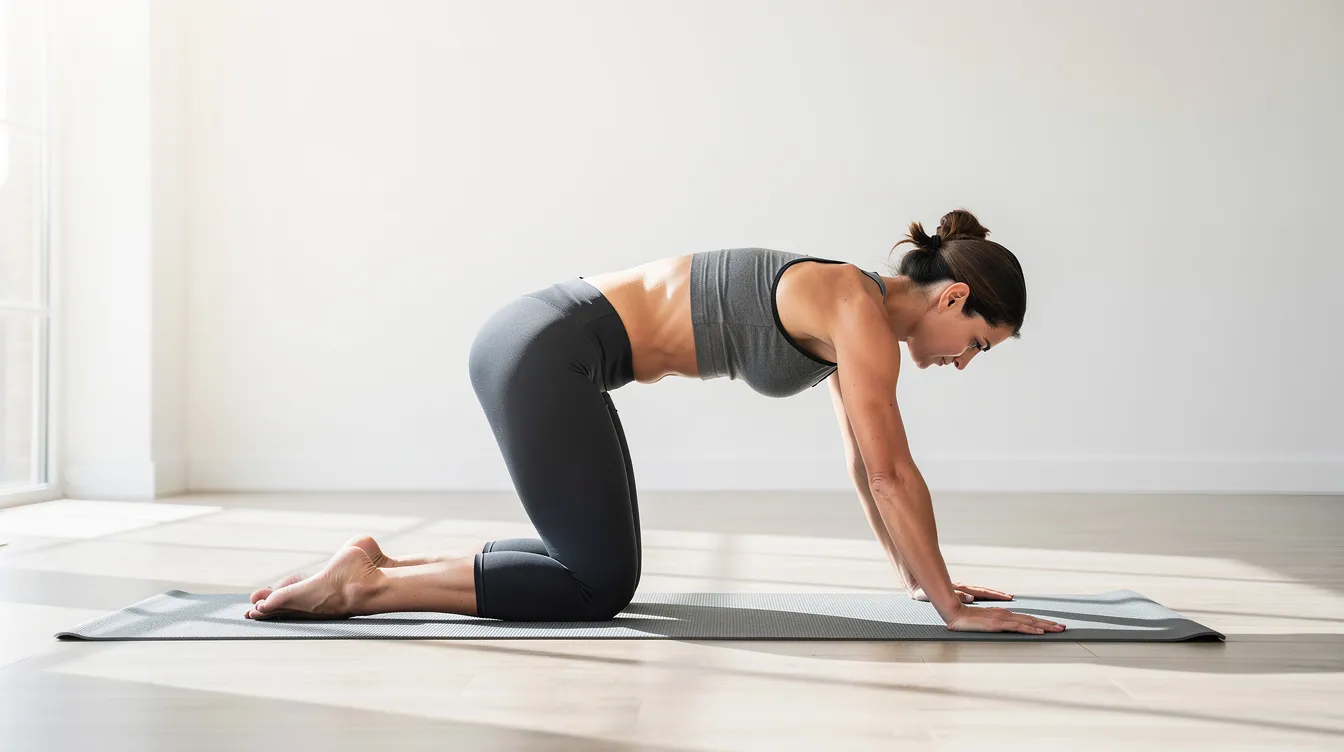
Cat-Cow Movement: Start on all fours with wrists under shoulders and knees under hips. Inhale as you drop your belly toward the floor and lift your head (cow). Exhale as you round your spine toward the ceiling and tuck your chin (cat). Perform 10–15 cycles at a pace of one full cycle per breath.
-
Gentle Spinal Twist (supine): Lie on your back with knees bent and feet flat. Let both knees drop to the right while extending arms into a T position. Turn your head to the left. Hold for 20–30 seconds, breathing deeply. Repeat on the opposite side.
-
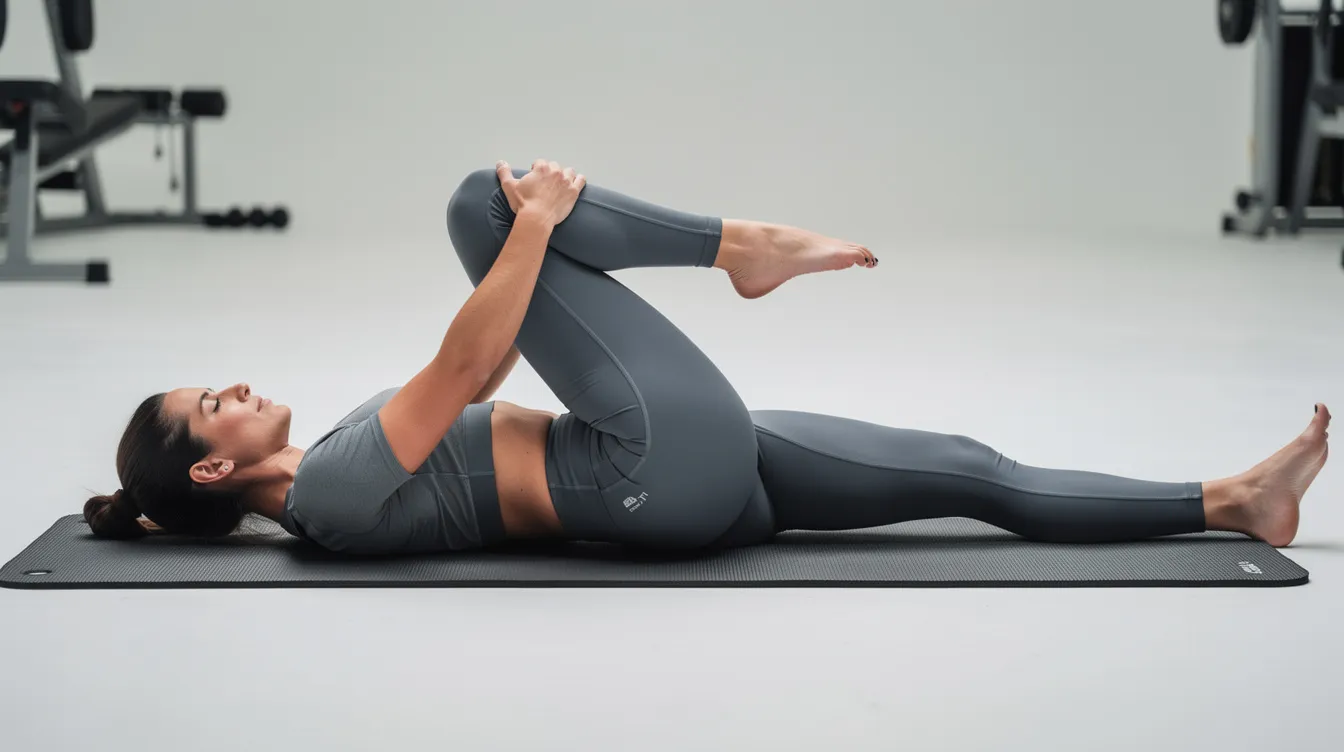
Knee-to-Chest Hold: Lying on your back, pull one knee toward your chest with both hands. Hold for 20–30 seconds. Switch sides. Then draw both knees in together and hold for another 20–30 seconds.
-
Supported Child’s Pose: Kneel and sit back on your heels. Walk your hands forward and lower your forehead to the mat. Hold for 1–2 minutes with slow diaphragmatic breathing (inhale through the nose, fill the abdomen; exhale through the mouth). This pose gently lengthens the paraspinal muscles and promotes the relaxation response.
-
Thoracic Extension on Foam Roller: Lie with a foam roller positioned under your upper back. Support your head with your hands. Gently arch over the roller, hold for 10–15 seconds, then return to neutral. Repeat 3–5 times. This targets the thoracic spine, an area that stiffens quickly with desk work. For more thoracic mobility work, see this resource on improving spinal mobility safely.
-
Hip Flexor Lunge Stretch: Step one foot forward into a lunge with the back knee on a pad or mat. Push your pelvis forward until you feel a stretch across the front of the rear hip. Hold for 20–30 seconds per side.
Breathing coordination: Match each inhale to the phase of movement that opens or lengthens the body (for example, the cow phase, the twist entry). Exhale during the phase that releases into tension. Two complete breath cycles per stretch hold help elicit deeper relaxation, and readers who already use prayer may find the same breath-paced rhythm calming.
Duration and frequency: Hold each static or rhythmic stretch for 20–30 seconds. A full routine takes 10–15 minutes. For chronic tension, perform daily. For maintenance, 3–4 sessions per week. Gentle stretching and therapeutic movement can enhance blood flow and alleviate muscle tightness when practiced with this consistency.
Stretching Methods Comparison
|
Criterion |
Static Stretching |
Dynamic Stretching |
Rhythmic Stretching |
|---|---|---|---|
|
Nervous system effect |
Initial sympathetic activation during hold; parasympathetic shift during rest phase |
Minimal sympathetic overdrive; stimulates proprioceptors and warms tissue |
Strongest parasympathetic engagement at low intensity; reduces baseline sympathetic tone and spindle hyperactivity |
|
Muscle tension relief |
Effective for lengthening chronically shortened muscles; reduces passive stiffness |
Relieves stiffness and improves mobility; less effective for deep chronic tightness |
Combines benefits of static and dynamic; smoother tension release with lower pain provocation |
|
Ease of performance |
Simple; requires no equipment |
Requires more coordination; some injury risk if form breaks down |
Requires initial guidance on breath timing; straightforward once learned |
|
Time required |
20–30 seconds per hold × multiple muscles; ~10–15 minutes total |
Shorter per movement but more repetitions needed; similar total time |
~10 minutes daily once the pattern is established |
For acute stiffness or pain, begin with gentle static or rhythmic stretches at low intensity. Avoid ballistic movements. For posture-related chronic tension, combine rhythmic stretches for shortened muscles with dynamic work for their antagonists to restore balance. Mindfulness and body scans can help identify and release areas of tension in the body before you begin. Progressive muscle relaxation, which involves tensing and relaxing muscle groups in sequence, serves as another useful entry point; it teaches the brain to distinguish between contracted and relaxed states.
Additional relaxation techniques that complement stretching include mindfulness meditation (which can lower stress levels and promote recovery), massage therapy (which can improve circulation and promote relaxation), yoga, guided imagery, cold therapy (which reduces inflammation and numbs affected areas), and acupuncture, which uses thin needles at specific points to stimulate nerve endings and support the body’s healing response. These methods support reducing stress and lowering baseline muscle tone from different angles, and national institutes resources also discuss complementary approaches along with their potential benefits and risks.
A chiropractor can assess whether spinal alignment issues are contributing to chronic tension patterns and combine manual therapy with a tailored stretching program.
Common Challenges and Solutions
Three obstacles come up repeatedly when people attempt to manage muscle tension through home care.
Inconsistent Stretching Routine
Physiological adaptation; improved muscle spindle thresholds, reduced baseline tone, restored range of motion; requires consistent stimulus over several weeks. Performing stretches only when pain spikes produces temporary relief without lasting change. The solution is to link a 10–15 minute stretching session to an existing daily habit: immediately after waking, during a lunch break, or before sleep. Keeping sessions brief and achievable matters more than occasional long sessions. Tracking streaks with a simple app or calendar creates accountability.
Worsening Pain During Stretching
Sharp pain during a stretch usually indicates one of three problems: the muscles were cold, the stretch intensity was too high, or an underlying structural issue (joint restriction, disc involvement) is present. Warm up with 3–5 minutes of gentle walking or apply heat before stretching. Reduce stretch depth to the point of mild tension only. Switch from static holds to rhythmic oscillations, which provoke less pain. If discomfort persists, schedule a chiropractic evaluation to rule out joint misalignment or nerve involvement. Neck pain that worsens with stretching, for example, warrants professional assessment before continuing a home program.
Limited Improvement Despite Home Care
If 4–6 weeks of daily stretching, posture correction, and ergonomic adjustment produce no measurable improvement in stiffness or pain, deeper mechanical issues are likely involved: altered spinal alignment, sacroiliac dysfunction, myofascial adhesions, or trigger points that self-stretching cannot reach. A chiropractor can perform postural analysis, spinal mobility testing, and muscular palpation to identify the source. Treatment options include spinal manipulation (which improves joint mechanics and reduces hypertonicity), muscle energy technique (alternating resisted contraction and stretch), and personalized exercise programming. The Canadian Chiropractic Guideline Initiative recommends spinal manipulation therapy combined with exercise as part of multimodal treatment for chronic low back pain. In Singapore, where approximately 338 work-related musculoskeletal disorder cases are reported each year (91% of which involve back injuries), early professional intervention prevents minor tension from becoming a chronic condition. Consider booking a chiropractic consultation if home care has plateaued.
Conclusion and Next Steps
Muscle tension responds to gentle, consistent intervention that targets both the muscular and nervous system components of the problem. Rhythmic stretching with coordinated breathing shifts the body from sympathetic dominance toward parasympathetic recovery, while daily practice gradually resets baseline muscle tone and restores motion.
Three concrete steps to take this week:
-
Start a 10-minute daily stretching routine using the six-stretch protocol above, performed after a brief warm-up or shower
-
Adjust your workstation ergonomics: screen at eye level, feet flat on the floor, lumbar support in place; for specifics, see this tech neck relief guide
-
Schedule a chiropractic assessment if tension has persisted for more than six weeks or if you experience numbness, tingling, or weakness in any limb
Related topics worth exploring include spinal alignment assessment for chronic posture issues, neck pain and headache management through chiropractic care, and integrating stress management practices (meditation, diaphragmatic breathing) into your daily routine to address the psychological drivers of tension.
Additional Resources
-
Ergonomic workspace setup: Position your monitor so the top third of the screen sits at eye height. Keep your elbows at 90 degrees with forearms parallel to the floor. Stand or walk for 5 minutes every 45 minutes of sitting.
-
Breathing technique for stress-related tension: Inhale through the nose for 4 counts, hold for 4 counts, exhale through the mouth for 6 counts. Repeat for 2–3 minutes. This ratio activates the parasympathetic nervous system and lowers sympathetic tone within minutes.
-
Warning signs requiring prompt chiropractic evaluation: numbness or tingling in arms or legs, pain that wakes you from sleep, loss of coordination, muscle weakness that worsens over days, pain following trauma or accompanied by fever.