
Introduction
Spinal decompression can improve posture and temporarily increase height by restoring disc hydration and proper alignment throughout the spine. The short answer is that adults experiencing spinal compression from daily activities, aging, or poor posture can realistically expect a temporary height increase of 0.25 to 0.5 inches per session, while improved posture can visually add 1 to 2 inches to your height by correcting slouching and restoring natural spinal curves.
This article covers non-surgical spinal decompression therapy, how it works to decompress the spine, the real benefits for posture correction, and realistic height expectations for adults. Whether you’re dealing with back pain, forward head posture, rounded shoulders, or simply noticing that you don’t stand as tall as you used to, understanding how compression affects your body is the first step toward meaningful improvement.
Height loss occurs due to spinal compression throughout the day – gravity, prolonged sitting, and lifting all contribute to disc flattening and postural deterioration. Decompression and posture correction together may increase measured height temporarily, but the lasting value lies in restoring spinal function and overall health.
Here’s what you’ll gain from this article:
-
A clear understanding of how spinal compression causes posture problems and height loss
-
How decompression therapy restores natural spacing between vertebrae
-
Realistic expectations for height changes and posture improvements at different timeframes
-
Actionable spinal decompression exercises you can incorporate into daily life
-
Guidance on when professional treatment makes the most difference
Understanding Spinal Compression and Its Effects
Spinal compression is the cumulative axial force exerted along the spine by gravity, body weight, and daily activities. Every moment you spend upright – standing, sitting, walking, or lifting – places constant pressure on your intervertebral discs. These discs act as cushions between vertebrae, absorbing shock and maintaining the natural spacing that keeps your spine properly aligned. Over time, this compression causes the spinal discs to lose water content and flatten, reducing the height of each disc and narrowing the space between vertebrae.

This process isn’t just about aging. Even healthy adults experience significant daily compression that affects spinal structure and overall function. The result is a measurable reduction in both disc height and standing height that accumulates throughout each day.
How Compression Affects Posture
Compressed discs directly contribute to postural deterioration. As intervertebral discs lose height, the vertebrae settle closer together, disrupting the spine’s natural curves – cervical lordosis in the neck, thoracic kyphosis in the mid-back, and lumbar lordosis in the lower back. This disruption manifests as forward head posture, rounded shoulders, and a flattened lumbar curve.
Poor posture can make you look shorter by causing slouching, and it creates a vicious cycle: the more you slouch, the more compression occurs on already depleted discs, which further degrades alignment. Spinal alignment significantly affects overall height perception – a person with a properly aligned spine appears noticeably taller than someone of the same bone length who habitually slouches. The constant pressure of gravity combined with weakened back muscles and spinal muscles accelerates this decline, making it progressively harder to stand taller without intervention.
The Natural Daily Height Cycle and Height Changes
Your body experiences a predictable height cycle every single day. Healthy adults are typically 1–2 cm taller in the morning due to disc rehydration overnight. While you sleep in a horizontal position, gravity no longer compresses your spine, allowing the discs to draw in fluid and expand. Research published in Spine found that over 8 hours of upright activity, approximately 26% of height loss occurs in the first hour alone, with gradual loss continuing throughout the day.
Gravity compresses spinal discs throughout the day, causing temporary height loss of roughly 0.5–0.75 inches (12–20 mm) by evening. A study measuring the effects of just 15 minutes of relaxed sitting found that lumbar spine vertical height decreased by approximately 12.5 mm, with stadiometric height dropping about 6.9 mm in that short period. This daily compression cycle reveals something important: if your spine naturally loses and recovers height every day, therapeutic decompression can work with this mechanism to restore – and potentially improve – your baseline alignment.
How Spinal Decompression Restores Natural Curvature
Now that we understand how compression gradually degrades posture and reduces height, the logical question is whether we can reverse that process. Decompression therapy stretches the spine to relieve pressure on discs and vertebrae, working to restore the natural curves that compression has flattened or distorted. The goal isn’t to add height beyond your natural height – it’s to recover what daily compression and poor posture have taken away.
Non-Surgical Decompression Therapy
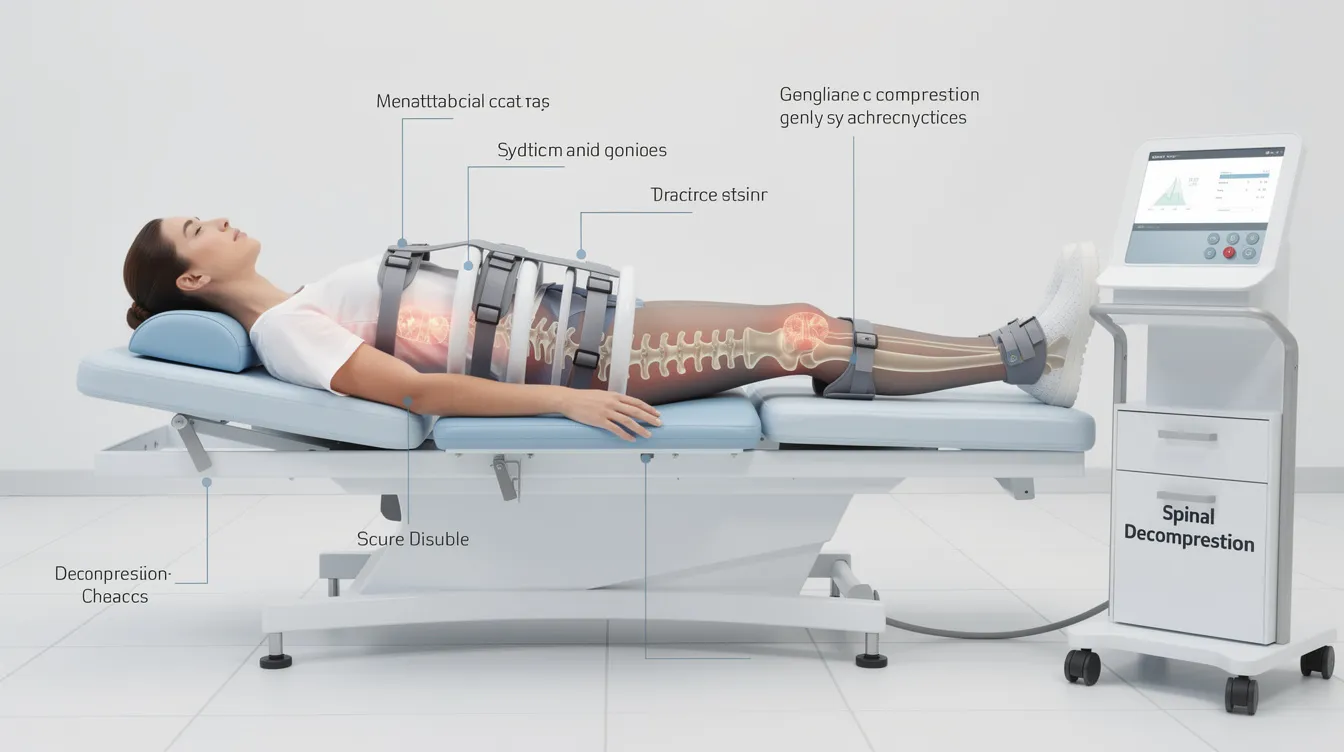
Mechanical spinal decompression uses specialized motorized tables – such as the Hill-DT or DRX9000 – that gently pull the spine using controlled, cyclical forces. A harness system connects to the pelvis and torso, and the table applies programmed cycles of traction and release. This creates negative pressure within the discs, which promotes fluid and nutrient influx into depleted disc tissue.
Non-surgical spinal decompression aims to reduce pain and improve function in specific conditions including herniated discs, degenerative disc disease, and chronic compression-related back pain. A randomized trial of 60 patients with subacute lumbar herniated discs found that ten decompression sessions over eight weeks led to reduced pain and measurable reduction in disc herniation on MRI. Spinal decompression improves disc hydration and reduces spinal compression, and many patients report feeling taller immediately after sessions – a direct result of restored disc height and improved alignment.
Manual Decompression Techniques and Spinal Decompression Exercises
Chiropractic adjustments can improve posture significantly by restoring proper vertebral positioning and improving spinal mobility. Techniques such as Cox flexion-distraction and manual distraction create space between vertebrae without mechanical equipment. A study of manual distraction techniques found that healthy adults gained approximately 6.30 mm (~0.25 inch) with manual distraction load, demonstrating that certain decompression techniques can restore some spinal height quickly after loading.
Spinal adjustments can restore the natural curvature of the spine – including cervical lordosis and lumbar lordosis – and patients may feel taller after chiropractic adjustments. Chiropractic care helps maintain spinal alignment over time, especially when combined with targeted exercises. Muscle guarding can be relieved by unloading the spine through decompression therapy, which allows the surrounding muscles to relax and support better alignment. Chiropractic adjustments can alleviate spinal compression effects that accumulate from desk work, poor ergonomics, and sedentary lifestyles common among adults in Singapore.
Postural Restoration Benefits
Decompression helps restore the natural cervical lordosis and lumbar curves that define good posture. Research using hyperextension interventions showed that nearly every subject gained measurable height through increased anterior disc heights and restoration of the lumbar lordotic angle. Improving posture can make a person appear taller without actually increasing height – and this visual effect is substantial.
Posture plays a central role in how others perceive your height and how you carry yourself. When your spine is properly aligned, you stand taller, your chest opens, your shoulders drop back, and your head sits naturally over your body rather than jutting forward. These postural corrections create the effect of feeling taller because you’re finally reaching your full height potential rather than losing inches to slouching and compression. The connection between spinal mobility and posture quality is direct – improved flexibility through decompression translates to better alignment throughout the day.
Clinical Treatment Approaches and Expected Outcomes
Professional decompression therapy follows structured protocols designed to progressively restore spinal health while managing expectations about height changes and posture improvements. Understanding what a treatment course looks like helps patients make informed decisions.
Professional Decompression Protocol
Decompression therapy is recommended when patients present with compression-related symptoms: chronic back pain, reduced mobility, measurable postural deterioration, disc herniation, or noticeable height loss. Here’s what a typical treatment plan involves:
-
Initial posture assessment and spinal alignment evaluation – including standing posture analysis, imaging (X-ray or MRI) to identify disc height loss, vertebral alignment issues, and curve abnormalities, plus screening for contraindications such as osteoporosis, spinal fractures, or previous spinal fusion hardware
-
Customized decompression therapy sessions targeting specific spinal segments – typically 15–25 sessions over 6–8 weeks, with more frequent visits early in treatment (3–5 per week) tapering to maintenance frequency; force application starts at a modest fraction of body weight and increases as tolerated
-
Progressive postural exercise integration during treatment phases – incorporating spinal decompression exercises, core strengthening, and ergonomic modifications to support treatment gains between sessions
-
Ongoing monitoring and adjustment of treatment parameters – reassessing spinal alignment, disc hydration, pain levels, and functional improvements; adjusting decompression force, session frequency, and exercise prescriptions based on progress
Decompression therapy is linked to decreased discogenic low back pain, and posture improvement requires retraining the neuromuscular system beyond spinal decompression – which is why the exercise and ergonomic components are essential. Consistent chiropractic care over the full treatment course produces the best outcomes.
Realistic Height and Posture Improvements
|
Timeframe |
Height Changes |
Posture Improvements |
|---|---|---|
|
Immediate (post-session) |
0.25–0.5 inch temporary height increase |
Improved spinal alignment, reduced tension in back muscles and spinal muscles |
|
2–4 weeks |
Enhanced disc hydration; more reliable height recovery after daily compression |
Reduced forward head posture, less rounded shoulders, improved overall function |
|
6–12 weeks |
Sustained postural height closer to morning baseline |
Restored natural spinal curves, better alignment maintained throughout the day, easier breathing |
Spinal decompression can temporarily increase height, and some patients may feel or measure slightly taller immediately after treatment, by 0.25 to 1.5 inches depending on individual factors – though the 0.25 to 0.5 inch range represents the most common and well-documented outcome per session. A case series of six patients with herniated or bulging discs who underwent multimodal rehabilitation with decompression showed measurable disc height increases on radiographs and increased overall height, alongside significant pain reduction.
The key insight is that postural improvements create more lasting benefits than temporary height gains. While the small increase in disc height after each session gradually diminishes under daily compression, the cumulative effect of correcting posture – retraining how you stand, sit, and move – produces visible changes that persist. Improved posture can visually add 1 to 2 inches to your height, making the posture correction component arguably more valuable than the direct height effect.

Common Challenges and Solutions
Setting realistic expectations is essential for getting the most from decompression therapy. Here are the most common concerns patients raise – and honest answers.
Temporary Nature of Height Gains
Height changes from spinal decompression are not permanent in the sense that a single session won’t add lasting inches. The lost height you recover through decompression follows the same pattern as overnight disc rehydration – under renewed compression from gravity and upright posture, discs gradually flatten again. However, consistent treatment can help your spine maintain better alignment throughout the day, reducing the total height loss you experience during daily compression. The focus should be on spinal health and posture rather than chasing a specific height number. Patients often feel taller after spinal decompression sessions because their spine is functioning closer to its natural capacity.
Maintaining Treatment Benefits with Consistent Chiropractic Care
The most effective strategy combines regular decompression sessions with targeted spinal decompression exercises performed at home. Key exercises include:
-
Cat-Cow stretch – the cat cow stretch increases flexibility and encourages good posture by alternating spinal flexion and extension on hands and knees, improving mobility throughout the thoracic and lumbar spine
-
Child’s Pose – child’s pose alleviates low back tension and improves spinal alignment by gently stretching the hips, legs, and lower back while allowing gravity to decompress the spine
-
Cobra Pose – stretches and strengthens the spine, promoting good posture by extending the chest and arms while engaging the back muscles
-
Hanging bar stretch – creates a mild traction effect on the spine using body weight, helping to reduce tension between vertebrae
-
Wall stretch – improves spine alignment and shoulder mobility by pressing the back flat against a wall with arms extended
Ergonomic improvements – including proper workplace setup, lumbar support during sitting, and regular movement breaks – are equally critical. Research has shown that seated postures with lumbar support increased spinal height by approximately 4.74 mm compared to 2.94 mm without support, confirming that even simple ergonomic changes produce measurable results.
Individual Response Variations
Not all patients respond identically to decompression therapy. Age is a significant factor – younger adults (20–40) typically have more hydrated, elastic discs that respond more readily to decompression than those with advanced degenerative changes. The severity of existing compression, baseline spinal structure, body composition, and commitment to complementary exercises and lifestyle changes all influence outcomes.
Important contraindications must be screened before treatment: pregnancy, osteoporosis, spinal fractures, tumors, spinal fusion hardware, and certain vascular conditions. A systematic review noted that while risks of non-surgical decompression are relatively low (temporary soreness, occasional muscle spasms), the evidence base still needs larger, higher-quality randomized controlled trials to definitively compare decompression therapy outcomes with standard conservative treatments. This is why working with a qualified chiropractor who conducts thorough assessment – rather than pursuing aggressive claims of dramatic height gain – delivers the best patient outcomes.
Conclusion and Next Steps
Spinal decompression delivers real benefits for posture and provides modest temporary height increases through improved disc hydration, restored spinal curves, and better alignment. While you won’t permanently grow taller from decompression alone, you can recover your natural height lost to daily compression and poor posture – and the postural improvements alone can make you look and feel significantly taller. Spinal decompression helps restore natural spacing between vertebrae, and when combined with chiropractic adjustment, targeted exercises, and ergonomic changes, the results compound meaningfully over time.
Here are your immediate next steps:
-
Schedule a posture assessment – get a professional evaluation of your spinal alignment, disc health, and postural habits to establish a baseline
-
Discuss decompression options with a qualified chiropractor – determine whether mechanical decompression, manual techniques, or a combination is most appropriate for your situation
-
Start daily postural exercises today – begin with the cat cow stretch, child’s pose, and wall stretch to maintain mobility and reduce tension between sessions
-
Audit your workspace ergonomics – ensure proper lumbar support, screen height, and regular break schedules to minimize daily compression
If you’re also dealing with neck pain or tech neck from desk work, these conditions compound postural problems and should be addressed alongside any decompression program. Long-term spine maintenance – including regular movement, core strengthening, and periodic chiropractic care – is the most reliable path to standing at your full height potential every day.