
Introduction
Sitting at a desk for eight hours compresses your spinal discs by up to 40%, flattens your spine’s natural curves, and progressively weakens the muscles meant to protect your back. Spinal decompression-through targeted stretches, ergonomic corrections, and professional chiropractic care-is the most effective way for Singapore’s corporate professionals to reverse this daily damage and reclaim their spinal health.
This article is written for office workers and desk workers who spend 6–10 hours a day seated at a computer, experiencing stiffness, back pain, neck tension, or shoulder tension that worsens through the workweek. It covers evidence-based decompression techniques you can perform at your desk, at home, and with professional support. Surgical interventions, severe spinal pathologies, and conditions like cauda equina syndrome fall outside its scope.
Here’s the direct answer: daily spinal decompression through morning mobility work, hourly micro-breaks, end-of-day recovery stretches, and workstation modifications can effectively counteract disc compression and muscle tension accumulated during a full workday-and when combined with regular chiropractic adjustments, these practices address the root causes of desk-induced spinal deterioration.
By the end of this article, you will understand:
-
The mechanics of how prolonged sitting damages your spine, discs, and posture hour by hour
-
Immediate relief techniques you can perform in under 2 minutes at your desk
-
A complete daily decompression protocol structured around a typical Singapore corporate schedule
-
Ergonomic modifications that passively decompress your spine while you work
-
When self-care isn’t enough and professional chiropractic care becomes necessary
Understanding Spinal Compression from Prolonged Sitting
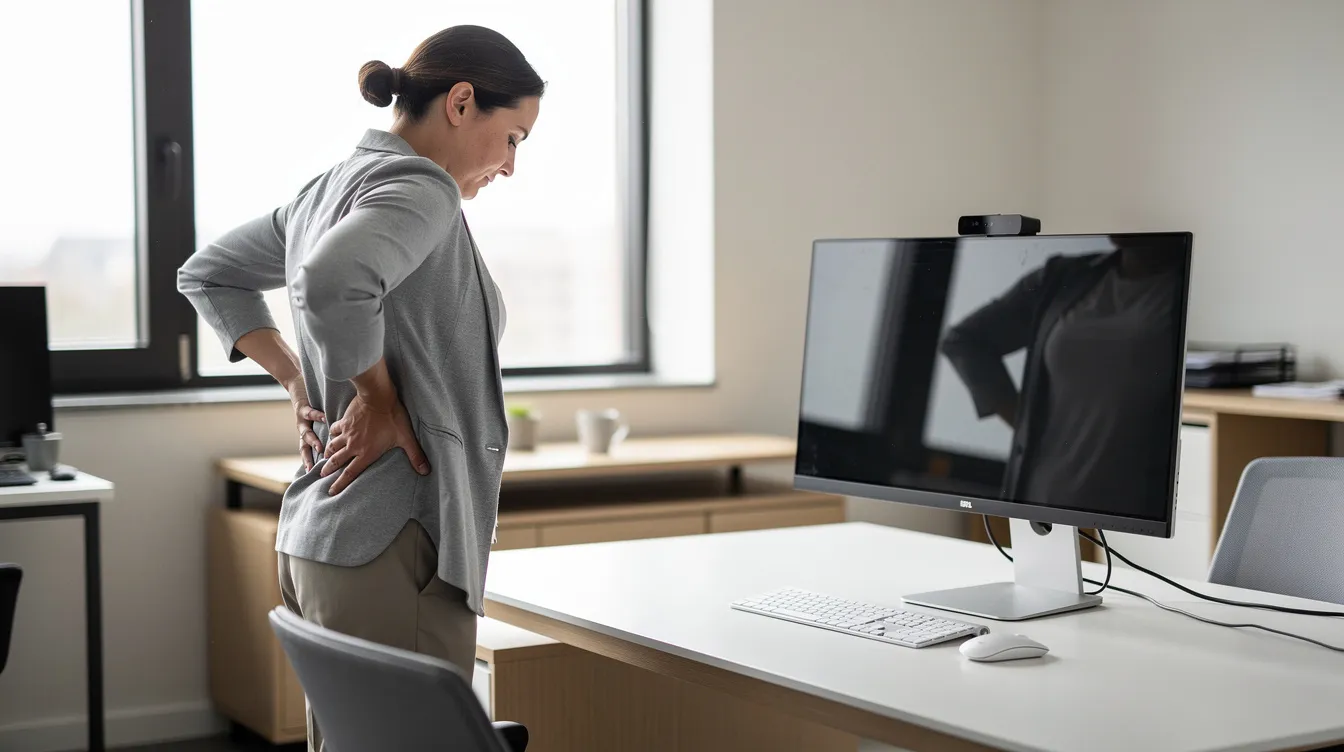
Spinal compression refers to the increased axial load placed on your vertebrae and intervertebral discs when gravity pushes down on a stationary body. For Singapore’s desk-bound workforce-where work-related musculoskeletal disorders average ~338 cases per year with 91% involving back injuries-this isn’t an abstract concept. It’s a daily reality that pain affects career performance and overall well being.
When you sit for extended periods, cumulative stress builds across your vertebrae, spinal discs, and supporting muscles. Lower back pain affects up to 80% of office workers, and a study of 324 Singapore office workers found that 73.4% experienced pain in at least one body area-with neck pain at 46%, shoulder pain at 42%, and low back pain at 42%. Women reported significantly higher rates (~78.8%) than men (~63.9%).
The Mechanics of Desk-Induced Compression and Poor Posture
Prolonged sitting flattens the spine’s natural curves-particularly your lumbar lordosis and cervical lordosis-and dramatically increases intradiscal pressure. A 2022 meta-analysis comparing intradiscal pressure between sitting and standing found that lumbar disc pressure is significantly higher in seated positions, with a standardized mean difference of approximately 0.87. Sitting compresses spinal discs by up to 40%, and poor posture can flatten the spine’s natural curves even further, creating a cascade of strain through ligaments, the annulus fibrosus, and surrounding musculature.
Forward head posture compounds the problem enormously. Your head weighs about 10–12 pounds in a neutral position. But bending toward a low computer screen strains the cervical spine: at just 15° of forward tilt, cervical load jumps to roughly 27 pounds; at 30°, it reaches 40 pounds; and at 60°-the typical angle when leaning forward to read a laptop screen-your neck muscles bear approximately 60 pounds of force. Systematic reviews confirm that adults with neck pain consistently demonstrate greater forward head posture than pain-free individuals, and this posture directly correlates with pain severity and disability. Neck stretches can alleviate headaches and upper back tightness caused by this forward loading pattern.
The damage extends below your spine as well. Remaining seated tightens the hip flexors and alters spinal alignment. A cross-sectional study of desk job workers found a moderate positive correlation (r ≈ 0.63–0.65) between iliopsoas tightness and excessive lumbar lordosis. Sitting for long periods limits core muscle activation, and this combination of shortened hip flexors and weakened core muscles creates muscle imbalances that pull the pelvis forward, increasing compressive load on the lower lumbar segments even after you stand up.
Progressive Impact on Corporate Professionals
The effects of desk work compound predictably over time, and understanding this progression reveals why daily decompression is non-negotiable rather than optional.
Short-term (within 2–4 hours): Muscle fatigue sets in, stiffness increases, and poor circulation develops in compressed tissues. One experimental study found lumbar stiffness increased measurably in men after just 1 hour of continuous sitting. Static posture weakens deep core and back stabilizers over time, and even within a single workday, you lose lumbar flexibility and develop increased passive flexion stiffness. Movement breaks can alleviate stiffness associated with prolonged seating.
Medium-term (weeks to months): Prolonged sitting weakens postural muscles. Adaptive changes include chronic muscle shortening in hip flexors and hamstrings, reduced lumbar and cervical curves, compensatory thoracic extension, and decreased spinal mobility. These repetitive stress patterns create tension headaches, persistent shoulder tension, and chronic discomfort that begins to feel “normal.”
Long-term (months to years): Without intervention, prolonged sitting can lead to chronic pain over time-including intervertebral disc degeneration, chronic neck pain, sciatica, and significantly reduced functional capacity. These future issues don’t just affect comfort; they threaten career longevity and overall health for professionals who depend on long hours at a desk.
Understanding how compression builds makes the case for decompression clear-so let’s examine exactly how decompression reverses these effects.

How Spinal Decompression Works
Now that you understand how eight hours of sitting systematically compresses your spine, decompression becomes the logical therapeutic counteraction-strategically unloading your vertebrae, restoring natural curves, and getting blood flowing back to starved tissues.
Physiological Mechanisms of Decompression
Spinal decompression creates negative pressure within your spinal discs (the nucleus pulposus), which promotes nutrient influx through the vertebral endplates and helps expel metabolic waste through diffusion. Think of your discs as sponges: compression squeezes fluid out, while decompression draws fresh, nutrient-rich fluid back in.
Circulation improves significantly when compressed tissues are unloaded. The small paraspinal muscles, intervertebral ligaments, and surrounding soft tissues receive increased blood flow during decompression versus their compressed state-restoring oxygenation that sustained sitting restricts. Frequent movement breaks restore blood flow and unload spinal pressure, which is why even brief decompression intervals produce noticeable relief.
Restoring your spine’s natural curves through decompression reduces shear stress on individual vertebrae, relieves pressure on nerve roots exiting spinal foramina, and decreases muscle fatigue by reducing the overactivation of static postural muscles. Proper sitting posture supports the spine’s natural alignment, and decompression resets your body toward that alignment after hours of deviation.
Types of Decompression Relevant for Office Workers
Passive decompression involves positions where your body relaxes and gravity does the work-lying supine over a foam roller, gentle hanging from a doorframe, or supported stretching positions that take weight off the spine. Gentle hanging can relieve discomfort, though it’s not a treatment for underlying structural problems. These methods are ideal for end-of-day recovery when energy is low.
Active decompression uses controlled movements to create space between vertebrae: spinal extensions, mobility drills, core strengthening exercises, hip flexor stretches, and lumbar multifidus activation. Building a strong core supports natural posture, and muscle-strengthening activity is recommended as part of overall physical activity. Weak core muscles increase the risk of poor posture, making active decompression both corrective and preventive.
Professional decompression through chiropractic adjustments provides precision manipulation of vertebrae, instrument-assisted techniques, and non-surgical decompression that targets specific segments. Chiropractic adjustments improve nerve function and spinal integrity, and chiropractic treatment includes tailored exercises for desk workers designed to complement daily self-care.
Immediate vs. Long-term Benefits
Immediate relief occurs within 10–15 minutes of targeted decompression: reduced muscle tension, improved circulation, and decreased stiffness. Stretching helps relieve tension caused by prolonged sitting, and even brief interventions produce measurable changes in comfort and mobility.
Daily benefits accumulate when decompression becomes routine: enhanced posture throughout remaining work hours, reduced end-of-day fatigue, improved comfort during sitting, and fewer acute pain flare-ups. Alternating between sitting and standing can reduce low-back discomfort throughout the workday. Regular stretching improves flexibility and reduces muscle tightness.
Long-term advantages emerge over weeks and months: prevention of disc degeneration, sustained spinal health, maintained productivity, reduced need for pain medication, and fewer ergonomic injuries. Regular chiropractic care can enhance overall function and resilience, keeping your spine healthy throughout a decades-long career. Regular physical activity is recommended for self-management of low-back pain, and the World Health Organization recommends 150–300 minutes of moderate-intensity aerobic activity per week to support musculoskeletal health.
Let’s translate this understanding into a structured daily protocol you can implement immediately.
Daily Decompression Protocol for Desk Workers
The following protocol is designed around the reality of Singapore’s corporate schedule-early mornings, packed calendars, and limited workspace privacy. Each segment uses evidence-backed exercises with specific durations proven effective in clinical research.
Morning Pre-Work Preparation (5 minutes)
Preparing your spine before sitting down prevents compression from starting at its worst. Not maintaining good posture from the first hour creates a deficit that’s harder to recover from later.
-
Cat-cow stretches (10 repetitions): On hands and knees, alternate between arching your back upward and extending it downward. This mobilises your entire spinal column-research shows daily spinal mobility exercises produce statistically significant improvements in pain and function after 8–12 weeks of consistent practice.
-
Standing chest doorway stretch (30 seconds): Place forearms on a doorframe and lean forward to open the chest. This counteracts the anticipated forward posturing your body will assume at the desk.
-
Hip flexor stretches (30 seconds each leg): In a lunge position with rear knee down, press hips forward gently. Studies on hip flexor stretching in patients with chronic low back pain used 30-second holds, showing reduced pain and decreased excessive lumbar lordosis versus control groups.
-
Spinal extension against wall (30 seconds): Stand with your back against a wall and gently press your lumbar curve into a neutral spine position to reinforce the natural curve before it gets flattened by sitting.

Hourly Micro-Decompression Breaks (2 minutes each)
Stand and stretch every 30–60 minutes to promote circulation. Intervention trials using workplace prompts demonstrated measurable decreases in disability scores among desk workers with chronic low back pain when movement breaks were incorporated systematically. Walk around every 30 to 60 minutes to break prolonged sitting.
-
Standing spinal extension with arms overhead (30 seconds): Stand, interlace fingers, and reach upward while gently extending your upper back. Finite element analysis confirms that even small spinal realignment significantly lowers intradiscal pressure compared to slumped sitting.
-
Seated spinal twist (15 seconds each direction): Place one hand on the opposite knee and rotate your torso. Spine twists can help release lower back stress from sitting. This maintains rotational mobility without leaving your chair.
-
Neck decompression with gentle self-traction (20 seconds): Place both hands behind your head and gently lift upward while keeping shoulders relaxed. This relieves cervical compression from forward head posture accumulated during screen work.
-
Walking (60 seconds): A brisk walk to get water, use the stairs, or simply circle the office floor. A brisk 20–30 minute walk most days is beneficial for overall health, and these micro-walks accumulate toward that goal.
Shoulder shrugs improve circulation in the shoulder muscles and can be added discreetly between any of these exercises-simply raise your shoulders toward your ears, hold for 3 seconds, and release.
End-of-Workday Recovery Sequence (10 minutes)
After eight hours at a desk, your spine needs deliberate recovery. This sequence targets every region compressed during office work, using positions and durations validated by exercise intervention research in office worker populations. Regular stretches are recommended to preserve joint mobility.
-
Supine knee-to-chest stretch (1 minute each leg): Lying on your back, pull one knee toward your chest while keeping the other leg extended on the floor. This decompresses the lumbar spine and stretches the hip flexors of the extended leg.
-
Gentle spinal twist on floor (1 minute each direction): Both knees bent and dropped to one side while shoulders remain flat on the floor. Hold each position for a full minute to allow deeper release-30 seconds to 1 minute per position is the standard protocol duration.
-
Child’s pose with lateral reach (1 minute each side): From kneeling, extend forward and walk hands to one side, then the other. This provides comprehensive spinal lengthening through the thoracolumbar region.
-
Supported bridge pose (2 minutes): Lying on your back with knees bent and feet flat on the floor, lift hips and place a yoga block or firm cushion underneath your sacrum. This passively reverses hip flexor tightness and strengthens the posterior chain.
-
Progressive muscle relaxation (2 minutes): Systematically tense and release each muscle group from feet to head, releasing residual tension patterns your body has accumulated throughout the workday.
Ergonomic Decompression Modifications
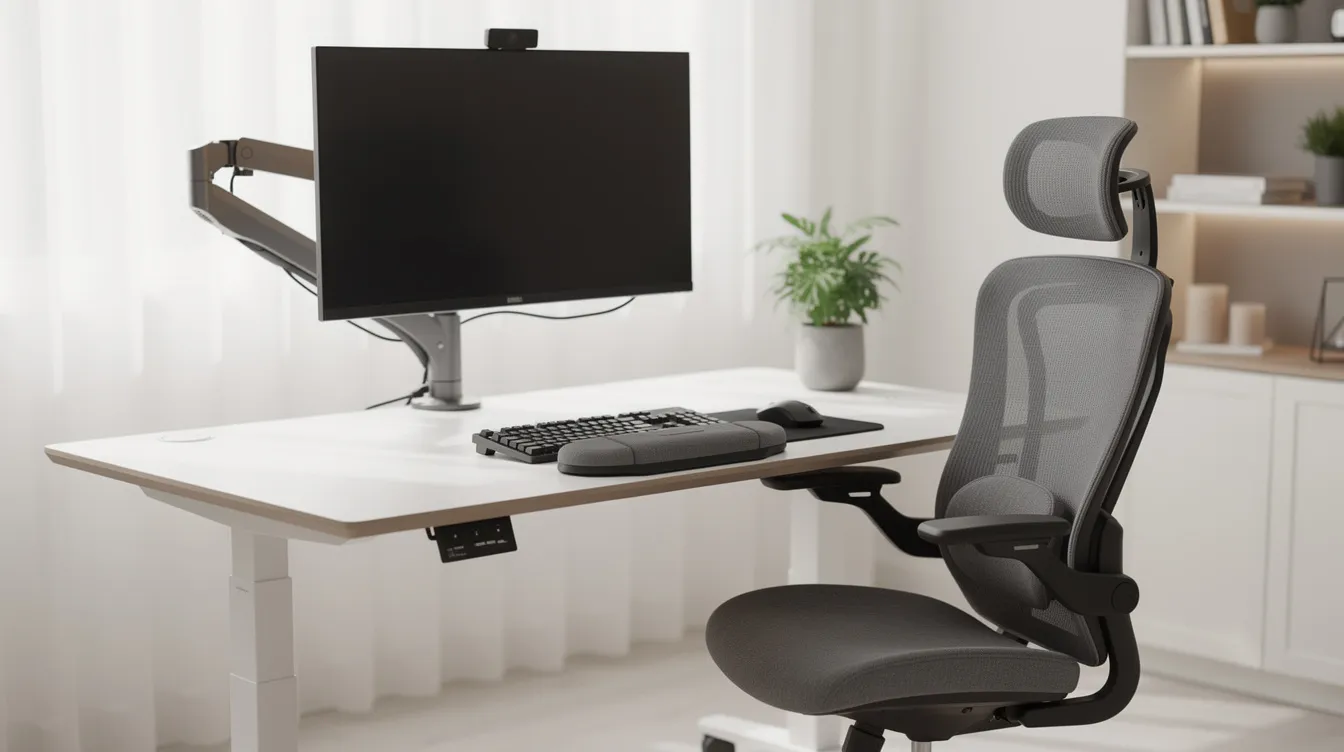
Your workstation can either compress or decompress your spine passively throughout the day. Ergonomic workplace adjustments can help reduce low-back pain. Posts around the monitor setup can help maintain a neutral spine-here’s how to optimize every element:
|
Workstation Element |
Compression-Causing Setup |
Decompression-Supporting Modification |
|---|---|---|
|
Monitor Height |
Below eye level causing forward head posture and 40–60 lb cervical load |
Position your monitor so the top is at eye level, maintaining neutral cervical spine at 10–12 lb load |
|
Chair Support |
Lack of lumbar support flattening the natural curve, increasing disc pressure ~20–30% |
Use lumbar support to maintain your lower back’s natural curve; adjust your chair for a 90-degree angle at hips and knees |
|
Foot Position |
Feet dangling creating hip flexion strain and increased lumbar load |
Keep feet flat on the floor or on a footrest, maintaining 90-degree knee angles |
|
Armrest Setup |
No arm support or arms too high causing shoulder elevation and tension |
Height allowing relaxed shoulders with supported forearms; elbow support reduces lumbar disc pressure by as much as 50% versus unsupported sitting |
|
Keyboard & Mouse |
Placed too far away, causing leaning forward and upper body strain |
Keep your keyboard and mouse at elbow height for comfort and within easy reach |
Raise your screen so the top is at eye level-this single adjustment reduces cervical load by up to 80%. Adequate support from your chair’s lumbar mechanism maintains lordotic curvature that slumped sitting eliminates. For Singapore office workers dealing with standardised corporate furniture, even a rolled towel behind the lower back provides meaningful support.
These modifications work best when combined with the movement protocol above. But real-world implementation presents challenges worth addressing directly.
Common Challenges and Solutions
Singapore’s demanding corporate culture creates specific barriers to consistent spinal decompression. Here are the most common obstacles and evidence-based solutions.
Limited Time During Busy Workdays
In Singapore’s fast-paced corporate environment, even micro-breaks may feel like lost productivity. The solution: integrate micro-decompression exercises into existing activities. Stand during phone calls, perform seated spinal twists while reading emails, and do neck decompression during loading screens in your browser. Behavioural trials confirm that coupling movement into existing tasks is both effective and feasible without reducing work output. Take a break every 30–60 minutes to stand and stretch-even these brief intervals produce measurable benefit.
Lack of Privacy in Open Office Environments
Open-plan offices make full stretching routines impractical. Focus on seated decompression techniques that draw no attention-seated twists, neck traction using your hands, and shoulder shrugs are essentially invisible to colleagues. For standing exercises that require more space or movement, use stairwells, unused meeting rooms, or bathroom breaks as mini decompression zones.
Persistent Back Pain Despite Consistent Self-Care
When pain persists despite weeks of consistent stretching, posture correction, and ergonomic fixes, the issue likely involves spinal misalignments that self-care cannot resolve. Chiropractic care addresses spinal misalignment from prolonged sitting, and chiropractic care helps reduce tension and improve mobility at a structural level. Schedule a professional evaluation to identify underlying issues-persistent neck pain and headaches in particular often have cervical misalignment as their root cause.
Difficulty Remembering Hourly Breaks
Habit formation is the real challenge. Set smartphone reminders at 60-minute intervals, use desktop apps for break notifications, or establish visual cues-like placing your water bottle across the room so you must stand to drink. Research confirms that wearables and software prompts significantly increase break frequency and improve back pain scores among desk workers over time.
Conclusion and Next Steps
Daily spinal decompression effectively counteracts eight hours of sitting compression without requiring major life changes. The protocol outlined here-5 minutes of morning preparation, 2-minute hourly breaks, and 10 minutes of evening recovery-represents roughly 35 minutes of total investment to protect a spine that bears compressive load for 8+ hours a day.
Implement this week:
-
Start the morning preparation routine tomorrow-set an alarm 5 minutes earlier
-
Set hourly break reminders on your phone or computer right now
-
Modify your workstation ergonomics today using the table above as a checklist
-
Add the end-of-workday recovery sequence to your evening routine
Over the next 2–4 weeks: Monitor your symptoms. Track stiffness levels, pain frequency, and energy at end-of-day. Most desk workers notice meaningful improvement within 2–3 weeks of consistent daily practice. If chronic pain persists or worsens, that’s the signal to seek professional support-regular adjustments from a qualified chiropractor address structural issues that stretching alone cannot resolve.
For further reading, explore how to improve spinal mobility safely and consider investing in ergonomic equipment-such as pillows designed for tech neck-that supports decompression passively throughout your life outside the office.
Professional Decompression Support in Singapore
When self-care decompression plateaus-when you’ve maintained consistent stretching, corrected your ergonomics, and still experience persistent discomfort, stiffness, or pain that limits your focus and productivity-professional intervention addresses what daily routines cannot reach.
Everton Chiropractic specialises in treating Singapore’s corporate professionals dealing with postural compression from long hours of desk work. Through precision spinal adjustments, therapeutic decompression techniques, and movement rehabilitation specifically designed for desk worker needs, our approach targets the structural misalignments that develop over months and years of sustained sitting. Chiropractic treatment includes tailored exercises for desk workers that complement and enhance the self-care protocols outlined above.
Professional techniques available include spinal manipulation to restore vertebral alignment, instrument-assisted decompression for targeted disc relief, and personalised rehabilitation programmes that strengthen the specific core muscles and postural stabilisers weakened by your work pattern. Understanding how often to see a chiropractor depends on the severity of your symptoms and the duration of your compression history.
If you’re a Singapore professional experiencing persistent back pain, neck tension, or tension headaches despite consistent self-care, schedule an introductory consultation for a comprehensive spinal assessment and a customised decompression treatment plan built around your specific desk job demands, symptom profile, and health goals.