Mobility declines with age because several body systems lose reserve capacity at once, not because of one failing part. Muscles lose power faster than they lose raw strength, joints stiffen and hurt, nerve signals slow down, senses that keep you balanced dim, and the heart and lungs deliver less oxygen to working muscles. Chronic disease and medications pile on top of all this. The long-running InCHIANTI study tracked older adults for nine years and confirmed this isn’t a single-cause problem: it’s an interaction between muscle, bone and joint health, the nervous system, and energy metabolism.
The major contributors, in the order they tend to show up:
- Sarcopenia — age-related loss of muscle mass and, more importantly, muscle power
- Joint disease — osteoarthritis stiffening hips, knees, and ankles
- Nervous system slowing — delayed reflexes and coordination changes
- Sensory decline — weaker vision, inner-ear balance, and hearing
- Reduced cardiovascular reserve — fatigue that sets in earlier during daily tasks
- Medications and environment — drug side effects and unsafe home layouts
Roughly a third to half of adults over 65 experience some degree of mobility loss, according to Harvard Health, and the CDC estimates that some American adults report mobility issues affecting walking or climbing stairs.
If mobility drops suddenly rather than gradually, or comes with new numbness, one-sided weakness, confusion, or a sharp increase in falls, that’s not “normal aging.” It warrants prompt medical evaluation, not a wait-and-see approach.
Key Takeaways
Mobility declines with age through the combined effect of muscle power loss, joint stiffness, slower nerve signaling, sensory decline, and reduced cardiovascular reserve, and most of these factors respond to targeted intervention.
| Point | Details |
|---|---|
| Multiple systems, not one cause | Muscle, joint, nerve, sensory, and cardiovascular changes interact rather than acting alone, per InCHIANTI findings. |
| Power matters more than raw strength | Calf and ankle dorsiflexor weakness are strong predictors of future mobility loss and respond well to speed-focused training. |
| Age 70 is a useful benchmark | Gait speed typically stays stable until around age 70; sharp changes before or after that point deserve evaluation. |
| Medication review is a low-effort, high-value step | Each additional medication correlates with higher mobility-related fatigue, making a full review worthwhile. |
| Most reversible losses respond within weeks | Supervised strength and balance work often shows measurable gains within 8 to 12 weeks. |
| Chiropractic fits as one part of a broader plan | Evertonchiropractic’s functional movement assessments support spinal mobility and movement quality alongside medical and physical therapy care. |
Table of Contents
- What Causes Age-Related Mobility Decline? A Quick Overview
- How Does Muscle Loss (Sarcopenia) Affect Walking and Stairs?
- Why Do Nerve and Brain Changes Slow Down Movement?
- How Does Osteoarthritis Limit Joint Movement and Gait?
- How Do Vision and Balance Problems Increase Fall Risk?
- Why Does Endurance Drop and Cause Fatigue During Daily Tasks?
- Which Medications and Chronic Diseases Reduce Mobility?
- Can Fear of Falling and Home Hazards Cause Mobility Loss?
- How Is Mobility Measured, and What’s the Normal Age Timeline?
- What Exercises and Treatments Actually Improve Mobility?
- How Should Caregivers Start Addressing Mobility Decline?
- Can Older Adults Actually Regain Lost Mobility?
- Where Does Chiropractic Care Fit Into a Mobility Plan?
- How Everton Chiropractic Supports a Mobility-Focused Care Plan
- Sources
- FAQ
What Causes Age-Related Mobility Decline? A Quick Overview
Understanding why mobility declines with age starts with recognizing that it’s rarely one system failing in isolation. The InCHIANTI cohort found that impairments stack: someone with mild muscle weakness and mild joint stiffness moves far worse than the sum of those two problems suggests, because the body compensates for one deficit by leaning harder on another.
Here’s the fuller list of what typically contributes, roughly in the order clinicians see it matter:
- Sarcopenia and power loss — muscles, especially in the calves and hips, lose the ability to contract quickly, which affects walking speed more than raw strength does
- Central nervous system changes — slower nerve conduction affects reaction time and step timing
- Joint disease and range-of-motion loss — osteoarthritis in the hips, knees, and ankles shortens stride and changes gait mechanics
- Sensory loss — declining vision, vestibular function, and hearing all feed into balance control
- Cardiovascular and energy limits — reduced oxygen delivery causes fatigability during ordinary tasks
- Medication effects and chronic disease — polypharmacy and conditions like diabetes or heart failure compound the above
- Fear of falling and deconditioning — psychological avoidance that accelerates the very decline it’s trying to prevent
- Environmental hazards — poor lighting, loose rugs, and stairs without handrails turn manageable weakness into real risk
One number worth remembering: usual walking speed tends to stay fairly stable through most of adulthood and only starts dropping noticeably around age 70, according to the Merck Manual. That threshold matters because a sudden drop in gait speed before that age, or a sharp drop after it, is a signal worth investigating rather than dismissing as inevitable.
How Does Muscle Loss (Sarcopenia) Affect Walking and Stairs?
Sarcopenia is the progressive loss of muscle mass and function that comes with aging, and it’s the single most cited physiological driver of slower walking. But here’s the detail most people miss: strength and power are not the same thing, and power fades faster.
Strength is how much force a muscle can generate. Power is how quickly it can generate that force, and power is what actually gets you up out of a chair or catches you when you stumble. A leg muscle can retain most of its strength while losing much of its power, which is exactly why an older adult might still be able to push a heavy object but struggle to recover balance after a stumble.
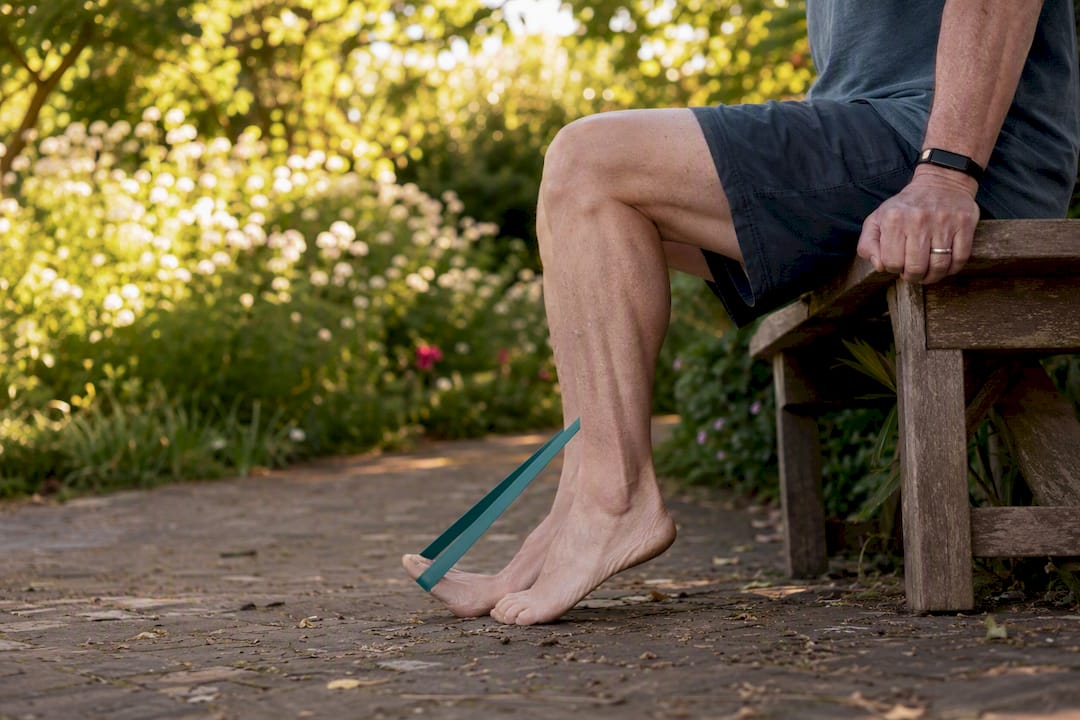
The calf muscles and ankle dorsiflexors deserve special attention here. Calf strength drives forward propulsion with every step, and weakness there is a major reason walking speed drops, according to research from the Physiological Society. Ankle dorsiflexion strength (the muscles that lift your foot as you swing your leg forward) turned out to be one of the strongest independent predictors of future mobility loss in the InCHIANTI cohort, ahead of several measures clinicians traditionally focused on more.
| Marker | Typical pattern with age | Clinical relevance |
|---|---|---|
| Usual gait speed | Stable until roughly age 70, then declines | Used as a predictor of broader health outcomes, including hospitalization risk |
| Grip strength | Gradual decline from midlife onward | Common proxy for overall muscle power in geriatric screening |
| Ankle dorsiflexion strength | Often weakens before it’s noticed functionally | Independent predictor of incident mobility disability in longitudinal cohorts |
| Hip flexion range of motion | Narrows with joint stiffness and disuse | Independent predictor alongside muscle measures |
The encouraging part: muscle power responds to training at almost any age. A practical approach caregivers can support includes:
- Progressive resistance work using bands or body weight, two to three sessions a week
- Power-focused moves like sit-to-stand repetitions done at a faster, controlled pace rather than slowly
- Calf raises and ankle strengthening, given how much that muscle group predicts future mobility
- Gradual load increases only after form is consistent and confident
Pro Tip: Watch how someone rises from a chair. If they lead with their hands and hips instead of pushing up mostly through their legs, that “hip-heavy” pattern often signals calf and quad weakness before it shows up as an obvious mobility problem. For anyone with existing balance issues, new strength work should be supervised at first rather than self-directed.
Why Do Nerve and Brain Changes Slow Down Movement?
Walking looks automatic, but it depends on constant, fast communication between the brain, spinal cord, and muscles. As the nervous system ages, that communication slows down. Central processing takes longer, peripheral nerve conduction velocity drops, and reflexes that should stay suppressed sometimes re-emerge, subtly changing how a person places each foot.
Tremor and Parkinsonian signs, even mild ones, disrupt the timing and rhythm that smooth walking depends on. Someone with early Parkinson’s disease often shows shortened steps and reduced arm swing well before a formal diagnosis, because the basal ganglia’s role in initiating and sequencing movement is compromised.
Several neurologic conditions show up as recognizable mobility patterns:
- Stroke — asymmetric weakness, often affecting one side’s ability to clear the foot during a step
- Parkinson’s disease — shuffling gait, reduced arm swing, difficulty initiating movement
- Peripheral neuropathy — numbness in the feet that impairs balance feedback, common with diabetes
- Early cognitive impairment — slower, more variable gait, and reduced ability to walk while performing another task like talking
A sudden onset of one-sided weakness, new “freezing” episodes where the feet seem stuck to the floor, or a fall accompanied by new confusion are not things to monitor at home. Those combinations call for urgent medical assessment, because they can signal a stroke or another acute neurologic event rather than a gradual mobility decline.
How Does Osteoarthritis Limit Joint Movement and Gait?
Osteoarthritis in the hips, knees, and ankles is one of the most common reasons older adults shorten their stride. Cartilage wear reduces the joint’s smooth range of motion, and pain triggers protective compensation. The result is often an antalgic gait: shorter time bearing weight on the painful side, a shifted center of gravity, and stiffness that ripples into how the whole leg moves.
Hip arthritis in particular tends to reduce hip flexion range of motion, which the InCHIANTI research identified as an independent predictor of future mobility loss, separate from muscle weakness alone.
The good news is that joint pain from osteoarthritis responds to a range of conservative measures before surgery ever enters the conversation:
- Targeted exercise that strengthens muscles around the affected joint without aggravating it
- Weight management, since every extra pound adds several times that in load through the knee during walking
- A medication review to check whether pain relievers are being used effectively and safely
- Physical therapy focused on range-of-motion restoration and gait retraining
- Assistive devices like a cane or walker when a joint needs temporary offloading
| Option | Best used when | Discuss with |
|---|---|---|
| Exercise therapy | Early to moderate stiffness, mild to moderate pain | Physical therapist or chiropractor |
| Weight management | Excess load is aggravating a weight-bearing joint | Primary care physician |
| Medication review | Pain relief seems inconsistent or side effects appear | Primary care physician or pharmacist |
| Assistive devices | Pain limits distance or balance is compromised | Physical therapist or occupational therapist |
| Surgical referral | Conservative measures plateau and function keeps declining | Orthopedic specialist |
How Do Vision and Balance Problems Increase Fall Risk?
Balance depends on three senses working together: vision for spotting obstacles and judging distance, the vestibular system in the inner ear for sensing head position and motion, and hearing for picking up environmental cues about your surroundings. Weaken any one of them and the brain has to work harder with the remaining two. Weaken two, and balance often becomes noticeably unsteady.
Vision loss from cataracts or macular degeneration makes curbs, steps, and uneven surfaces harder to judge. Vestibular decline, common with aging, causes that subtle unsteadiness people describe as feeling “off” when turning quickly. Hearing loss, less obviously, removes ambient cues, like an approaching car or a person calling out, that help with spatial awareness and reaction time.
Caregivers can run a few simple checks at home:
- Ask about difficulty reading small print or adjusting to dim rooms, and schedule an optometry visit if it’s been over a year
- Watch for hesitation or dizziness when turning the head quickly, and consider an ENT or vestibular rehab referral
- Notice if the person turns up the TV volume unusually high or asks for repetition often, and arrange an audiology check
Pro Tip: Small home changes often restore confidence faster than any exercise program: brighter bulbs in hallways and stairwells, contrast tape on the edge of steps, and nightlights along the path to the bathroom. These cost very little and directly reduce the sensory guesswork that makes balance harder at night.
Why Does Endurance Drop and Cause Fatigue During Daily Tasks?
Fatigability, the tendency to tire faster than expected for a given task, is different from simple tiredness. It shows up as someone who can walk to the mailbox fine but needs to sit down halfway back, or who avoids the stairs not because of pain but because of how winded they feel afterward. Reduced cardiovascular reserve, meaning a heart and lungs that deliver oxygen to muscles less efficiently, is the underlying driver.
Chronic conditions like heart failure and COPD compound this directly, since both limit the oxygen supply muscles need during sustained activity. Diabetes contributes too, both through vascular effects and through the fatigue that comes with poorly controlled blood sugar.
The systematic review of indoor mobility challenges found that fatigability affected nearly a quarter of participants during transfers and basic movement, and that it correlated with medication burden and mood, not just cardiovascular fitness (see the systematic review of indoor mobility barriers).
Aerobic conditioning improves this, but it needs to start low and build gradually. Public health guidance for older adults recommends working toward 150 minutes of moderate aerobic activity weekly, split across several sessions, alongside strength and balance work. For someone starting from a low baseline, that might mean five minutes of walking twice a day in week one, building slowly from there rather than attempting the full target immediately.
Which Medications and Chronic Diseases Reduce Mobility?
Several common medication classes interact with aging bodies in ways that specifically hurt mobility. Sedatives and sleep aids slow reaction time and increase fall risk. Certain blood pressure medications can cause orthostatic hypotension, a drop in blood pressure on standing that produces dizziness at the exact moment balance matters most. Some anticholinergic drugs, used for a range of conditions, can cause confusion and slowed reflexes in older adults even at standard doses.
The link between medication count and mobility isn’t abstract. One systematic review found each additional medication was associated with roughly a 10% higher likelihood of mobility-related fatigue during indoor movement, underscoring why a full medication review matters as much as any exercise program (source: indoor mobility barriers review).
Chronic diseases layer on top of normal aging rather than replacing it. Parkinson’s disease affects movement initiation and rhythm. Stroke causes asymmetric weakness. Diabetic neuropathy removes sensory feedback from the feet. Osteoarthritis limits joint range. Heart failure and COPD limit endurance. Each interacts with the muscle and nerve changes already happening, so the combined effect is often larger than any single condition would predict.
Pro Tip: Before a medication review appointment, bring a written list of every medication, including over-the-counter drugs and supplements, along with notes on when dizziness, falls, or unusual fatigue occurred relative to dosing times. That timing detail often points a clinician straight to the culprit.
Can Fear of Falling and Home Hazards Cause Mobility Loss?
Fear of falling creates a cycle that feeds on itself. A near-fall or a fall causes anxiety, anxiety leads to avoiding activity, avoided activity accelerates muscle loss and joint stiffness, and that physical decline makes the next fall more likely. Roughly a third of older adults report meaningful fear of falling, according to the same systematic review, and that fear alone measurably reduces how much people move.
A basic home safety pass catches most of the common hazards:
- Bright, even lighting in hallways, stairwells, and bathrooms
- Secure handrails on both sides of any staircase
- Loose rugs removed or secured with non-slip backing
- Clear pathways free of cords, clutter, and low furniture
- Grab bars near the toilet and shower
When a home has multiple hazards or the person has already fallen more than once, an occupational therapy home assessment is worth requesting. Steps that help break the cycle once it’s started:
- Address the physical deficit driving the fear, usually through supervised strength and balance work
- Modify the environment so the risk that triggered the fear is actually reduced
- Rebuild activity gradually, starting with short, safe walks in familiar spaces
- Track small wins to counter the anxiety with real evidence of improved stability
How Is Mobility Measured, and What’s the Normal Age Timeline?
Clinicians rely on a handful of simple, well-validated measures rather than complex imaging to track mobility. Usual gait speed, timed over a short walk, is one of the most predictive single measures in geriatric medicine. Grip strength serves as a proxy for overall muscle power. The Timed Up and Go test, which measures how long it takes to rise from a chair, walk a short distance, turn, and sit back down, captures balance and coordination in one quick assessment.
| Measure | What it captures | Why it matters |
|---|---|---|
| Usual gait speed | Overall walking function | Strong predictor of hospitalization and broader health outcomes |
| Grip strength | General muscle power | Correlates with overall functional reserve |
| Timed Up and Go | Balance, coordination, transfer ability | Flags fall risk and functional limitation |
The typical trajectory, per the Merck Manual’s geriatric gait guidance, holds walking speed fairly stable through most of adulthood, with a noticeable decline generally starting around age 70. That’s a useful benchmark precisely because deviations from it are meaningful: a sharp decline well before 70, or a rapid drop at any age, points toward a specific medical cause rather than ordinary aging.
A gradual slowing over several years is common. A rapid decline over weeks or months, especially paired with unexplained weight loss, new neurologic symptoms, or a sudden increase in falls, is not typical aging and deserves prompt evaluation.
What Exercises and Treatments Actually Improve Mobility?
The evidence here is more encouraging than most people expect. Resistance and power training, balance programs, and aerobic conditioning all have real data behind them, and they work at almost any age, including well into the eighties and nineties for people without severe limiting disease.
Strength and power training builds the muscle capacity that sarcopenia erodes, with the clearest gains coming from programs that include speed-focused movements, not just slow, heavy lifting. Balance training, done consistently, reduces fall risk directly by retraining the coordination between vision, the vestibular system, and muscle response. Aerobic activity rebuilds the cardiovascular reserve that fatigability depletes, and even modest amounts produce measurable benefit.
A reasonable protocol template to bring to a clinician or physical therapist looks like this:
- Start with a baseline assessment — gait speed, grip strength, and a Timed Up and Go test to establish where things stand
- Begin resistance work two to three times weekly — bands or body weight, focusing on legs, hips, and core
- Add balance training — single-leg stands, heel-to-toe walking, or a formal balance class, two to three times a week
- Build aerobic activity gradually — working toward the 150 minutes weekly moderate-intensity target recommended by the NHS, starting from whatever baseline is comfortable
- Reassess at 8 to 12 weeks — repeat the baseline measures to track real progress and adjust the plan
Beyond structured exercise, several treatment options fit into a broader mobility plan depending on what’s driving the decline:
- Physical therapy for gait retraining, joint-specific strengthening, and fall-risk reduction
- Occupational therapy for home safety assessment and adaptive strategies
- Vestibular rehabilitation for inner-ear balance disorders
- Chiropractic care as part of a multidisciplinary approach addressing spinal mobility and movement quality alongside the above
Walking alone, while valuable, has a limitation worth knowing: it maintains cardiovascular fitness but does relatively little to build leg strength on its own. Adding incline or light resistance work alongside a walking routine, as the Merck Manual notes, preserves muscle strength that flat walking alone won’t touch.
The NHS guidance makes one point worth repeating for anyone who feels discouraged by physical limitations: partial or adapted activity still produces real benefit. Someone who can’t hit 150 minutes weekly still gains meaningfully from doing what they can.
Pro Tip: Fit strength work into existing routines rather than treating it as a separate task. Calf raises while brushing teeth, sit-to-stand repetitions during television commercial breaks, and a short balance exercise while waiting for the kettle to boil all add up without requiring a dedicated gym session.
How Should Caregivers Start Addressing Mobility Decline?
Getting started doesn’t require a major overhaul. A structured but simple approach works better than trying to fix everything at once.
- Do a safety check first — walk through the home looking for the hazards listed earlier, and fix the easy ones immediately
- Get baseline measurements — ask a primary care provider or physical therapist to check gait speed, grip strength, and balance
- Start simple home exercises — body-weight sit-to-stands, calf raises, and short walks, building gradually
- Request a medication review — bring the full medication list and any notes on falls or dizziness timing
- Schedule a clinical assessment if any red flags are present, including rapid decline, new neurologic symptoms, or frequent falls
Questions worth bringing to that clinical visit:
- Can you check my gait speed and tell me how it compares to what’s expected for my age?
- Would a referral to physical therapy for a personalized strength and balance program make sense?
- Can we review my medication list together for anything affecting my balance or energy?
- Should a functional or spinal mobility assessment be part of this evaluation?
One safety note that matters as much as any of the above: high-load or high-intensity exercise should never be started unsupervised in someone who is frail, has significant balance problems, or has an unaddressed cardiac condition. Build the foundation with lighter, supervised work first.
Can Older Adults Actually Regain Lost Mobility?
Yes, in many cases, and often more than people expect. The distinction that matters is between what’s typically reversible and what usually requires ongoing management rather than a cure.
- Often reversible: muscle power lost to inactivity, deconditioning after illness or hospitalization, balance deficits from disuse, and mild joint stiffness
- Usually requires ongoing management: advanced neurologic disease like Parkinson’s or post-stroke deficits, and severe osteoarthritis that hasn’t responded to conservative treatment
For the reversible category, supervised strength and balance programs often produce noticeable improvement within 8 to 12 weeks, though meaningful change can start showing up even sooner in gait speed and confidence. The earlier someone starts, the better the outcome tends to be, largely because less ground needs to be recovered and less compensatory weakness has built up in surrounding muscle groups.
Where Does Chiropractic Care Fit Into a Mobility Plan?
Spinal alignment and joint mobility influence how efficiently force transfers through the body during walking, which is why chiropractic care can play a supporting role in a broader mobility plan. Everton Chiropractic, led by Dr. Richard, approaches this as part of a multidisciplinary picture rather than a stand-alone fix.
What chiropractic care can reasonably help with: spinal joint mobility, pain reduction that’s limiting movement, and improving overall movement quality and compensation patterns. What it does not replace: neurologic diagnosis and treatment, joint replacement surgery, or structured cardiopulmonary rehabilitation for conditions like heart failure or COPD.
A safe, evidence-informed evaluation should include a functional movement assessment and a clear explanation of findings before any treatment plan starts, with referral to physical therapy, a medical specialist, or imaging recommended whenever findings suggest something outside chiropractic’s scope.
Pro Tip: If a chiropractic evaluation doesn’t include some form of functional movement or gait assessment, ask about it directly. It’s a key piece of understanding whether spinal mobility is actually contributing to the walking or balance issue at hand.
A Practitioner’s View on Reversing Mobility Decline
What stands out across the research is how often the “irreversible” story turns out to be wrong. Someone written off as simply “getting old” frequently has a stack of reversible contributors, weak calves, stiff hips, unaddressed medication side effects, hiding underneath. Prioritizing early strength and balance work, even modestly, tends to produce gains that surprise both the patient and whoever’s been worried about them. The mistake isn’t inaction. It’s waiting for a crisis before treating decline as something workable rather than inevitable.
How Everton Chiropractic Supports a Mobility-Focused Care Plan
Addressing mobility decline works best with a full picture of how your spine, joints, and movement patterns function together, not just a symptom-by-symptom approach. Evertonchiropractic’s functional movement assessment looks at spinal mobility, posture, and compensation patterns to build a plan around your actual goals, whether that’s climbing stairs without hesitation or staying active while traveling.

Where a generic exercise printout treats everyone the same, Evertonchiropractic builds personalized care plans around your specific joint restrictions, pain points, and activity goals, with Dr. Richard adjusting the approach as your mobility changes rather than handing you a one-size-fits-all sheet. This is not a substitute for urgent medical care: if you’re experiencing sudden weakness, confusion, or repeated falls, contact your primary care provider first. For everyone else looking to address the everyday stiffness and imbalance chipping away at their independence, booking a functional movement assessment is a practical next step toward a plan built around how you actually move.
Sources
- Physiological Factors Contributing to Mobility Loss Over 9 Years of Follow-Up—Results From the InCHIANTI Study
- Gait Disorders in Older Adults – Geriatrics – Merck Manual Professional Edition
- Mobility – Harvard Health
- Physical activity guidelines for older adults – NHS
FAQ
Why Do People Lose Mobility as They Age?
Mobility loss happens because muscle power, joint flexibility, nerve signaling speed, and cardiovascular capacity all decline gradually, and chronic disease or medications often accelerate these changes together rather than one at a time.
At What Age Does Mobility Start to Decline?
Usual walking speed tends to stay fairly stable through most of adulthood and only starts dropping noticeably around age 70, according to the Merck Manual, though individual factors like disease or inactivity can shift that timeline earlier.
Can Seniors Regain Mobility?
Yes, for many contributors to mobility loss. Muscle power lost to inactivity, general deconditioning, and balance deficits often improve meaningfully with supervised strength and balance training, sometimes within 8 to 12 weeks.
Can a 70 Year Old Regain Flexibility?
Range of motion in joints often improves with consistent, gentle stretching and mobility work, even after age 70, though the extent of improvement depends on whether stiffness comes from disuse or from structural joint disease like advanced osteoarthritis.
Does Chiropractic Care Help With Age-Related Mobility Loss?
Chiropractic care can support spinal mobility and reduce pain that limits movement, and Evertonchiropractic incorporates functional movement assessments to fit this into a broader plan alongside physical therapy and medical care when needed.
Recommended
- How to Prevent Mobility Decline at Any Age – Everton Chiropractic
- Traveling in Retirement: How to Travel Without Needing Frequent Rests – Target Mobility for Aging Travelers – Everton Chiropractic
- How Spinal Health Affects Independence as You Age – Everton Chiropractic
- 9 Ways Chiropractic Delays Physical Decline as You Age – Everton Chiropractic