
Gentle chiropractic adjustments are often the right first-line choice for Singapore patients because they deliver targeted spinal correction with significantly less force than traditional high-velocity thrusts, making them safer and more comfortable for a wide range of bodies. Low-force and instrument-assisted techniques work particularly well for:
- Seniors and patients with osteoporosis or prior fractures, where reduced axial load protects fragile bone and joint tissue
- Pregnant people, infants, and children, where anatomy and tissue tolerance demand a lighter, more precise approach
- Nervous first-time patients, post-operative patients, and desk-bound office workers with postural strain who need a comfortable entry point into care
The sections below walk through the main techniques used in Singapore, the patient groups who benefit most, how clinicians decide which method to use, and what to expect at your first appointment.
Key Takeaways
Gentle chiropractic adjustments suit most Singapore patients with musculoskeletal complaints because low-force and instrument-assisted techniques deliver targeted spinal correction with a safety and comfort profile that fits a wide range of bodies, from seniors with bone fragility to pregnant patients and desk-bound office workers.
| Point | Details |
|---|---|
| Who benefits most | Seniors, pregnant patients, children, anxious first-timers, and desk workers with postural strain are the strongest candidates for low-force care. |
| Techniques available | KST, Activator Method, Thompson drop-table, Webster Technique, and modified Diversified are the main gentle options used in Singapore. |
| Evidence base | Short-term pain relief and functional improvement are the best-supported outcomes; long-term results improve with multimodal care. |
| Safety profile | Serious adverse events are rare when clinicians screen for contraindications and match technique to patient risk. |
| Evertonchiropractic | Dr. Richard’s assessment-first approach at Evertonchiropractic matches the technique and force level to each patient’s specific presentation and goals. |
Table of Contents
- What gentle chiropractic techniques are used in Singapore?
- Which Singapore patients benefit most from gentle adjustments?
- How does a clinician decide which technique is right for you?
- What conditions respond well to gentle chiropractic adjustments?
- What happens during a gentle adjustment appointment in Singapore?
- What does the research say about low-force chiropractic safety?
- How Evertonchiropractic approaches personalized, gentle care
- How to choose a Singapore chiropractor who practices gentle adjustments
- Balancing comfort and clinical results
- Evertonchiropractic offers assessment-first gentle chiropractic care in Singapore
- Sources
- FAQ
What gentle chiropractic techniques are used in Singapore?
Several low-force methods are practiced locally. Each delivers spinal correction differently, and clinicians typically keep more than one in their toolkit because patient anatomy, age, and comfort preferences vary considerably.
| Technique | Best for | How force is delivered | Session comfort | Typical conditions | Typical course |
|---|---|---|---|---|---|
| Koren Specific Technique (KST) | Sensitive patients, complex spinal patterns | Handheld Arthrostim instrument; low-force impulses | No audible pop; minimal discomfort | Postural distortion, chronic spinal tension, TMJ | several sessions with a reassessment partway through |
| Activator Method | Elderly, children, anxious patients | Spring-loaded handheld instrument; precise low-force thrust | No pop; very gentle | Neck pain, lower back pain, headaches | a short course of weekly sessions initially |
| Thompson Drop-Table | Adults who prefer no manual thrust; lumbar/pelvic issues | Segmented table drops with light clinician pressure | Mild drop sensation; no pop | Lower back pain, sciatica, pelvic imbalance | a series of sessions over a few weeks |
| Webster Technique | Pregnant patients | Gentle sacral and soft-tissue contacts; no high-velocity thrust | Very comfortable; no pop | Pregnancy-related pelvic pain, sacral misalignment | Throughout pregnancy; frequency varies |
| Diversified (modified/low-force) | Adults tolerating moderate manual contact | Controlled hand thrust, reduced amplitude | Possible light pop; well-tolerated | Mechanical neck and back pain, joint restriction | multiple sessions over several weeks |
| Instrument-assisted/low-force methods | Post-surgical, osteoporotic, or highly sensitive patients | Various handheld instruments; minimal force | No pop; highly comfortable | Broad spinal and extremity complaints | Individualized |
Clinical evidence on instrument-assisted methods confirms they are well-tolerated for patients who cannot manage high-force manual thrusts, though high-quality comparative trial data between specific instruments remain limited.
Clinicians keep multiple low-force options available for a practical reason: no single technique fits every body. A 70-year-old with moderate osteoporosis needs a different approach than a 32-year-old office worker with acute neck stiffness. Comorbidities, pain sensitivity, and even a patient’s previous experience with chiropractic care all shape the selection. The goal is always to match the force level to what the tissue can tolerate while still achieving a specific segmental correction.
Which Singapore patients benefit most from gentle adjustments?
The short answer is: most patients with musculoskeletal complaints who have any of the following characteristics tend to do better with low-force care from the start.
Seniors and patients with bone fragility
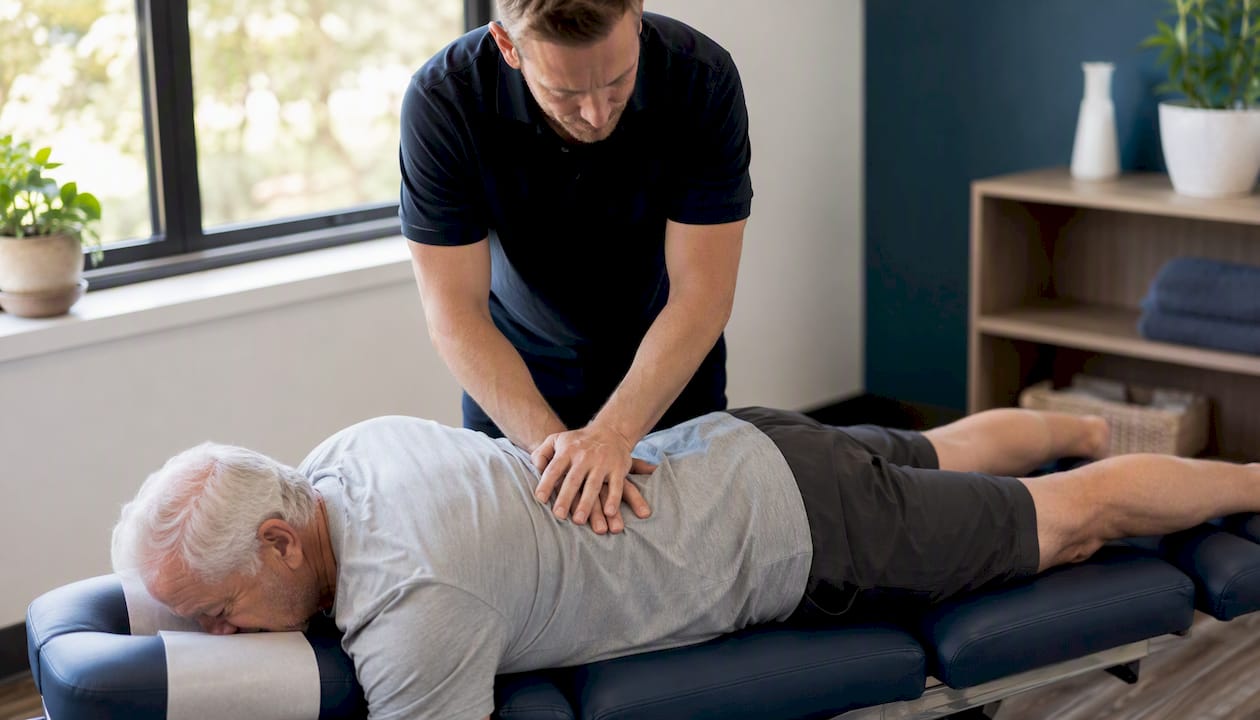
Aging reduces bone density and joint resilience. High-velocity thrusts carry a higher risk of micro-fracture or joint irritation in patients with osteoporosis or prior vertebral compression fractures. Instrument-assisted techniques apply precise impulses at specific segments without the rotational load of a manual thrust. Controlled trials in elderly and pediatric populations suggest low-force methods are tolerable and potentially beneficial, though more age-specific, high-quality trials are still needed.
Pregnant patients
The Webster Technique is specifically designed for pregnancy. It addresses sacral misalignment and associated soft-tissue tension without placing the patient in positions that compress the abdomen or apply force to the uterine ligaments. Chiropractic care during pregnancy is most commonly sought for pelvic girdle pain and lower back discomfort, both of which respond well to gentle sacral contacts and soft-tissue work.
Infants and children
Pediatric chiropractic uses fingertip-level pressure, not the thrusts used on adults. The clinical rationale is straightforward: a child’s spine is still developing, and the forces required to restore segmental mobility are a fraction of what an adult needs. Pediatric chiropractic safety depends heavily on clinician training and appropriate technique selection.
Nervous or first-time patients
Patient anxiety is a legitimate clinical variable. Muscle guarding during a high-velocity adjustment reduces its effectiveness and increases discomfort. Starting with an instrument-assisted or low-force approach lets the nervous system settle, builds trust, and makes it easier to track functional progress from session to session.
Desk-bound office workers
Singapore’s office workforce spends long hours in sustained flexion, which loads the cervical and lumbar spine unevenly over time. These patients often present with postural strain rather than acute injury, meaning the tissue is irritated but not acutely inflamed. Gentle, repeated adjustments combined with postural advice tend to produce steady improvement without aggravating already-sensitized tissue.
Physiological rationale: Low-force techniques work by applying a controlled impulse to a specific spinal segment, which biomechanical reviews suggest may improve joint mobility and modulate pain pathways in the short term. The reduced force means less soft-tissue irritation, lower risk of post-treatment soreness, and better tolerance of the repeated sessions often needed for postural or chronic complaints.
Three brief clinical scenarios that illustrate typical reasoning:
- A 68-year-old woman with a previous wrist fracture presents with mid-back stiffness. The clinician selects the Activator Method to avoid rotational loading on potentially fragile vertebrae.
- A 29-year-old in her second trimester has left-sided pelvic pain that worsens when walking. Webster Technique contacts address the sacrum and round ligament tension without any prone positioning.
- A 35-year-old software developer has chronic upper-trap tightness and cervical stiffness from 10-hour screen days. KST is used to address specific cervical segments while the patient sits upright, avoiding the neck rotation that triggers his anxiety.
Pro Tip: If you are unsure whether gentle adjustments are right for you, ask the clinic to describe exactly how they assess your suitability before booking a full treatment session. A good clinician will offer a consultation before committing to any technique.
How does a clinician decide which technique is right for you?
Technique selection is not guesswork. It follows a structured assessment that gathers enough information to match the method to the patient’s specific presentation and risk profile.
- Detailed history: The clinician asks about your chief complaint, symptom onset, aggravating and relieving factors, past injuries, surgeries, medications, and any diagnosed conditions (osteoporosis, cancer, inflammatory arthritis, blood-thinning medication use).
- Red-flag screening: Specific questions and tests identify signs that require urgent medical referral rather than chiropractic care. These include unexplained weight loss, night pain that wakes you, bowel or bladder changes, fever with spinal pain, or recent significant trauma.
- Posture and movement exam: The clinician observes your standing posture, spinal curves, and range of motion in the neck, thoracic spine, and lumbar spine to identify restricted or hypermobile segments.
- Orthopedic and neurological tests: Targeted tests assess nerve root tension, joint provocation, and muscle strength. These help distinguish mechanical pain (which chiropractic addresses well) from radicular or systemic causes.
- Imaging review: If you have recent X-rays or MRI scans, the clinician reviews them. New imaging is ordered when clinical findings suggest it is necessary, not routinely.
Common contraindications that steer clinicians away from high-force methods include:
- Unstable fracture or acute bone injury at the target segment
- Severe or unstable osteoporosis
- Active spinal infection or malignancy
- Ligamentous instability (e.g., Down syndrome, rheumatoid atlantoaxial instability)
- Certain vascular conditions affecting the vertebral or carotid arteries
- Active inflammatory arthritis in a flare
Patient selection, clinician training, and dose all strongly influence outcomes and risk profiles, which is why a thorough first-visit assessment is non-negotiable rather than optional. When red flags are identified, prompt referral to a medical specialist is the accepted standard across professional bodies, including the World Federation of Chiropractic.
Pro Tip: At your first visit, ask: “How will you measure whether I’m improving, and when will we review my progress?” A clinician who cannot answer that clearly is not running an outcome-focused practice.
What conditions respond well to gentle chiropractic adjustments?
Gentle techniques are not a compromise. For the right conditions, they are often the most appropriate tool.
- Mechanical neck pain: Responds well to cervical mobilization and low-force adjustments. When pain is purely mechanical (no neurological deficit, no red flags), conservative chiropractic care fits naturally into the management pathway. Combine with physiotherapy exercises if range-of-motion recovery stalls.
- Tension headaches: Cervicogenic headaches linked to upper cervical joint restriction often improve with gentle cervical adjustments. If headaches are frequent, severe, or accompanied by visual changes, neurological review is needed first.
- TMJ discomfort: KST and other low-force methods can address jaw and upper cervical tension contributing to temporomandibular joint pain. Dental evaluation should run alongside chiropractic care for confirmed TMJ disorders.
- Lower back pain: The most common reason Singaporeans seek chiropractic care. Gentle techniques work well for mechanical lower back pain without neurological compromise. Spinal manipulation delivers short-term pain and function benefits for some patients, though effect sizes vary.
- Sciatica with mechanical features: When sciatica stems from lumbar joint restriction or mild disc irritation rather than large disc herniation or stenosis, gentle lumbar adjustments and drop-table work can reduce nerve tension. Imaging and neurological assessment are important before starting care.
- Pregnancy-related pelvic pain: Webster Technique addresses the sacroiliac and pubic symphysis dysfunction that causes pelvic girdle pain in pregnancy. Chiropractic during pregnancy is generally considered safe when performed by a trained clinician.
- Postural strain in desk workers: Chronic cervical and thoracic postural loading responds to repeated gentle adjustments combined with ergonomic advice. Chiropractic alone is rarely enough; exercise and workstation changes matter.
- Pediatric issues: Colic, torticollis, and plagiocephaly are sometimes managed with gentle pediatric chiropractic, though evidence quality varies and parents should discuss this carefully with both their pediatrician and chiropractor.
Referral cues that require urgent medical review before or instead of chiropractic care:
- Bowel or bladder dysfunction alongside back pain (possible cauda equina syndrome)
- Severe or rapidly worsening neurological deficit (foot drop, arm weakness)
- Spinal pain with unexplained fever, night sweats, or significant weight loss
- Pain following significant trauma (fall, motor vehicle accident) without imaging
- Known or suspected malignancy with new spinal pain
For complex presentations, the best outcomes usually come from combining chiropractic with physiotherapy or medical management rather than relying on any single modality.
What happens during a gentle adjustment appointment in Singapore?
A first appointment typically runs 45–60 minutes. Follow-up sessions are shorter, usually 20–30 minutes.
- Arrival and triage: You complete a health history form covering your chief complaint, medical history, medications, and any previous imaging. The clinic reviews this before the clinician enters.
- Detailed history and consent: The clinician discusses your history in depth, explains what the examination will involve, and obtains informed consent before touching you. You can ask questions at any point.
- Examination and posture scan: Posture, spinal range of motion, and targeted orthopedic or neurological tests are performed. The clinician identifies which segments need attention and which techniques are appropriate.
- Technique selection and explanation: The clinician explains which method they plan to use, why, and what you will feel. For instrument-assisted techniques, they may demonstrate the device before applying it.
- Treatment: The adjustment itself is brief. Instrument-assisted methods feel like a light tapping or clicking. Drop-table techniques produce a mild dropping sensation. Modified manual techniques may produce a light pop, though many gentle methods produce none.
- Immediate recovery and aftercare: You sit up slowly, and the clinician checks how you feel. Most patients notice mild relaxation or a slight increase in mobility immediately. Some experience mild muscle soreness for 24–48 hours, which is normal.
Cleveland Clinic’s patient guidance on chiropractic adjustments confirms that common immediate effects include relief, relaxation, and occasionally mild temporary soreness.
Post-treatment advice:
- Drink water and avoid strenuous activity for the rest of the day
- Apply ice (not heat) if you notice localized soreness in the first 24 hours
- Note any changes in your symptoms, positive or negative, to report at your next visit
- Call the clinic if you experience new neurological symptoms (numbness, weakness, loss of bladder/bowel control) after treatment
Timeline guidance: For acute complaints, sessions are typically multiple sessions per week initially, tapering as symptoms improve. Chronic or postural conditions often start at once or twice weekly and taper over a series of sessions over a few weeks. A formal reassessment at sessions 4–6 is standard practice. For ongoing guidance on how often to see a chiropractor, frequency should always be driven by your response, not a fixed package.
What does the research say about low-force chiropractic safety?
The evidence base for gentle and low-force chiropractic methods is genuinely encouraging for short-term outcomes, with important caveats about long-term data.
Systematic reviews and randomized trials show that spinal manipulation and manual therapies can provide short-term reductions in neck and lower back pain and improved function for some patients. Effect sizes vary, and evidence quality across studies is uneven. The strongest signal is for short-term symptom relief in mechanical spinal conditions.
Instrument-assisted low-force methods are well-tolerated and suitable for patients who need reduced manual force, but high-quality comparative trials between specific instruments remain limited. This means clinicians rely on a combination of published evidence, clinical training, and patient response to guide decisions.
Safety reviews consistently show that serious adverse events after chiropractic spinal manipulation are rare when clinicians screen appropriately for contraindications and select technique and dose to match patient risk. The risk profile for low-force and instrument-assisted methods is lower still, given the reduced mechanical load.
Key evidence summary: Short-term pain relief and functional improvement are the best-supported outcomes for spinal manipulation. Long-term outcomes are less well-studied, and multimodal care combining chiropractic with exercise, physiotherapy, or lifestyle modification tends to produce better sustained results than chiropractic alone.
Clinician safety checklist (how qualified practitioners minimize risk):
- Screen every new patient for red flags and contraindications before any treatment
- Select technique and force level based on patient risk profile, not habit or convenience
- Obtain informed consent and document the clinical reasoning for technique selection
- Reassess at defined intervals rather than continuing care without measuring response
- Refer promptly when findings exceed chiropractic scope or when progress stalls
Evidence is stronger for short-term symptom relief in some conditions than for long-term structural change. For complex or chronic conditions, consult a healthcare provider to determine whether chiropractic fits into a broader management plan.
How Evertonchiropractic approaches personalized, gentle care
At Evertonchiropractic, Dr. Richard’s approach starts with a question most clinics skip: what does this specific patient’s body actually need, and what can it safely tolerate today?
The clinic’s workflow is assessment-first. Before any technique is selected, Dr. Richard conducts a full history, postural analysis, and targeted orthopedic examination. That assessment determines not just which technique to use, but at what force level, how often, and with what measurable goals attached. Technique selection is revisited at every reassessment, not locked in at the first visit.
Two principles define the clinic’s approach. First, personalization: no two care plans look the same because no two patients present identically. Second, evidence-informed technique mix: Dr. Richard draws on KST, the Activator Method, Thompson drop-table, Webster Technique, and modified Diversified approaches depending on what the assessment shows, not what is easiest to deliver. Measurable outcomes, not session counts, determine when care is working and when the plan needs to change.
If your goals are better mobility, less pain, and a body that keeps up with your life as you age, an assessment at Evertonchiropractic is a practical next step.
How to choose a Singapore chiropractor who practices gentle adjustments
Not every clinic that advertises “gentle” care actually delivers it. Here is what to look for.
Credentials and signals to verify:
- Registered with the Allied Health Professions Council (AHPC) of Singapore, the governing body for chiropractors in the country
- Postgraduate training or documented experience with instrument-assisted techniques (Activator, KST, or similar)
- Specific experience with your patient group (seniors, pregnant patients, children) if relevant
- Transparent pricing and a written care plan before treatment begins
- Willingness to discuss risks, alternatives, and referral pathways
Five questions to ask when booking:
- “Which low-force or instrument-assisted techniques do you use, and are you trained in them?”
- “How do you assess whether a patient is suitable for gentle versus high-force adjustments?”
- “How will you measure my progress, and when will we review my care plan?”
- “What happens if I don’t improve as expected? Will you refer me?”
- “Can you explain your fee structure and what a typical course of care looks like?”
Red flags to walk away from:
- Pressure to sign multi-session packages before any assessment has been done
- Refusal to discuss risks or contraindications
- No physical examination before treatment
- Dismissal of your request for a referral or second opinion
- Claims that chiropractic can cure systemic or non-musculoskeletal conditions
Professional standards from the World Federation of Chiropractic emphasize patient-centered care, safety screening, and interprofessional referral as core practice principles. A chiropractor who operates by those standards will welcome your questions, not deflect them.
For a broader comparison of conservative care options in Singapore, the TCM vs. chiropractic comparison at Evertonchiropractic’s site is a useful starting point.
Balancing comfort and clinical results
Comfort matters in chiropractic care, but it is not the only measure of success. A session that feels pleasant but produces no measurable change in function or pain is not a good outcome. The best gentle adjustment is one that is both tolerable and clinically effective.
The approach that tends to work is progressive dosing: start with the lowest force level that achieves the target correction, measure the response over the first few sessions, and escalate only if the evidence supports it. Most patients who begin with instrument-assisted care and respond well never need to move to higher-force techniques. Some do, and that is fine too. The key is that the decision is driven by data, not assumption.
Shared decision-making matters here. You should know what your clinician is trying to achieve, how they will know if it is working, and what the plan is if it is not. That conversation is not a luxury; it is the foundation of care that actually holds up over time.
Evertonchiropractic offers assessment-first gentle chiropractic care in Singapore
Evertonchiropractic gives you a concrete alternative to generic pain management: a structured, assessment-first chiropractic service in Singapore where Dr. Richard matches the technique to your body rather than applying the same approach to every patient.
The difference is in the starting point. Before any adjustment, you get a full clinical assessment that identifies which low-force method suits your presentation, your risk profile, and your goals. Whether you are managing postural strain from desk work, pregnancy-related pelvic pain, or a chronic lower back complaint, the care plan is built around measurable outcomes, not session packages. For patients who want long-term pain relief approaches grounded in evidence, that distinction matters. You can also explore the evidence behind spinal adjustments before you book.
Book your assessment at Evertonchiropractic and find out which gentle technique fits your needs.
Sources
The claims and clinical guidance in this article draw on peer-reviewed systematic reviews, randomized trials, biomechanical research, and trusted patient-education resources. The sources below are the primary references.
This article is general information, not a substitute for advice from a qualified doctor. Consult a qualified healthcare professional about your own circumstances before acting on anything here.
FAQ
Is chiropractic care safe in Singapore?
Chiropractic care is generally safe in Singapore when performed by a registered Allied Health Professional who screens for contraindications before treatment. Safety reviews confirm that serious adverse events are rare with appropriate technique selection and patient screening.
Which patients are best suited to gentle or low-force adjustments?
Seniors with bone fragility, pregnant patients, children, anxious first-time patients, and office workers with postural strain are the strongest candidates for low-force or instrument-assisted chiropractic care.
How much does a chiropractic session cost in Singapore?
Session fees at Singapore chiropractic clinics are not publicly standardized and vary by clinic, clinician experience, and session length. Contact the clinic directly for current pricing; Evertonchiropractic provides fee information at the time of booking.
Is a chiropractor a medical doctor?
Chiropractors are not medical doctors. In Singapore, they are regulated as Allied Health Professionals under the Allied Health Professions Council (AHPC) and hold recognized chiropractic degrees, but they do not prescribe medication or perform surgery.
How many sessions does gentle chiropractic care typically take?
Acute complaints often improve within a course lasting a few weeks, while chronic or postural conditions may require multiple sessions over several weeks with a formal reassessment at sessions 4–6. Frequency and duration depend on your individual response, not a fixed package.
Recommended
- How Much Do Chiropractic Adjustments Cost in Singapore? (2026 Guide) – Everton Chiropractic
- How Much Do Chiropractic Adjustments Cost in Singapore? (2026 Guide) – Everton Chiropractic
- How Much Do Chiropractic Adjustments Cost in Singapore? (2026 Guide) – Everton Chiropractic
- How Much Do Chiropractic Adjustments Cost in Singapore? (2026 Guide) – Everton Chiropractic