Key Takeaways
Prolonged sitting can leave the spine, hips, shoulders, and supporting muscles working in less comfortable ways. A practical decompression plan focuses on changing position, moving gently, improving the workstation, and paying attention to symptoms.
- Break up sitting with brief standing and walking periods throughout the workday.
- Use gentle mobility and low-load strengthening rather than forceful stretching.
- Adjust the chair, screen, keyboard, and mouse so your body does not constantly compensate.
- Track when discomfort appears and whether movement changes it.
- Seek professional evaluation for persistent, worsening, radiating, numb, or weak symptoms.
How prolonged sitting affects the spine and surrounding tissues
A desk day does not damage every spine in the same way, but remaining in one position for hours can make ordinary tissues feel overloaded. Muscles may stay lightly contracted, joints may move less often, and the body can gradually settle into a posture that feels difficult to leave. The wider health effects of inactivity are also worth considering, as outlined in this discussion of prolonged sitting risks.
What happens to spinal loading during a workday
The spine is designed to share load while the body changes position. Sitting shifts the relationship between the pelvis and trunk, and leaning toward a screen can increase the work required from the back and neck muscles. The issue is rarely one perfect or imperfect posture; it is often the accumulation of the same position without enough variation.
A comfortable chair can reduce some strain, but it cannot make eight hours of stillness equivalent to eight hours of movement. Small position changes, a few steps to refill water, or standing during a phone call can give tissues a different demand before discomfort builds.
Why hip immobility can increase strain on the lower back
When the hips spend much of the day bent, the surrounding muscles and joints receive little opportunity to move through their fuller range. Some people then compensate through the pelvis or lower back when standing, walking, or reaching. That compensation may feel like stiffness rather than sharp pain, especially at first.
Rather than forcing the hips into a deep stretch, begin with easy movement and notice whether the back remains relaxed. A short walk followed by controlled hip extension is often more practical than one intense session after work.
How rounded shoulders and forward-head posture develop
Screens and documents naturally draw the eyes forward. Over time, the head may drift ahead of the shoulders while the upper back rounds and the chest remains relatively closed. The muscles at the back of the neck and between the shoulder blades may then work continuously to hold the head up.
This pattern is usually a habit shaped by the environment, not a permanent structural change. Raising the screen, bringing the keyboard closer, and allowing the shoulders to rest can reduce the need to reach forward. Gentle chest opening and upper-back movement can complement those changes.
When ordinary desk discomfort may signal a larger problem
Mild stiffness that eases after changing position is common, but symptoms deserve more attention when they become frequent, increasingly intense, or unrelated to the length of the workday. Pain that limits sleep, walking, lifting, or ordinary tasks should not be dismissed as normal desk soreness.
A clinical assessment can help sort out whether the problem is primarily related to work habits or needs a broader evaluation. Everton Chiropractic provides chiropractic services for people seeking help with pain relief and mobility, while any urgent or unusual symptom should be discussed with an appropriate licensed healthcare professional.
What “decompression” means for desk workers
For desk workers, decompression is best understood as a change in load and movement rather than a special maneuver that physically resets the spine. It may include standing, walking, breathing, gentle mobility, or a light strengthening exercise. The goal is to interrupt prolonged sitting and give the body a more varied working rhythm.
The approach should feel calm and repeatable. If a technique causes sharp pain, spreading symptoms, or a sense of instability, it is not a useful reset for that person.
Passive spinal traction versus active movement
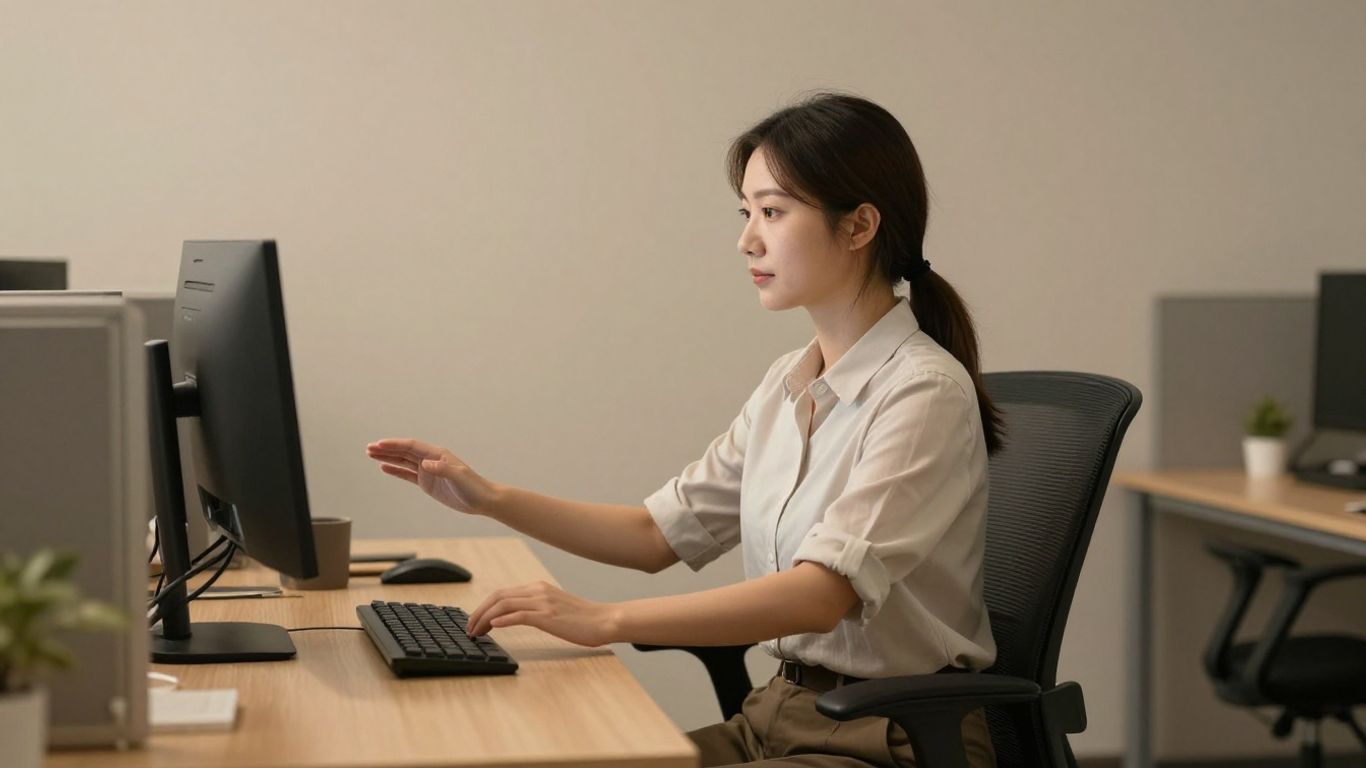
Passive traction uses an external force or a supported position to create a sensation of length through the spine. Active movement asks the person to control the position with their own muscles. For a desk break, active movement is often easier to perform regularly because it can happen beside the chair without special equipment.
Neither approach should be treated as automatically suitable for everyone. The more useful question is whether the chosen method leaves you moving more comfortably afterward and whether it fits safely into the workday.
How changing positions reduces accumulated pressure
A position that feels fine for ten minutes may feel very different after two hours. Changing from sitting to standing, walking briefly, or resting one foot on a low support alters the demands on the hips, pelvis, and trunk. These changes do not need to be dramatic to be worthwhile.
Think of decompression as distributing the day’s demands. A short break taken before stiffness becomes distracting is generally easier to repeat than waiting until the back feels locked or the neck feels exhausted.
The role of breathing, mobility, and muscle activation
Slow breathing can make it easier to stop bracing the shoulders and jaw. Pairing relaxed breathing with gentle spinal, hip, or shoulder movement gives the body both motion and a chance to reduce unnecessary tension. A few controlled bridges, heel raises, or standing reaches can also wake up muscles that have been quiet while sitting.
Keep the effort low enough that you can breathe normally. Comfortable repetition matters more here than chasing a strong stretch or a difficult exercise.
Why decompression is not a literal reset for the spine
The word decompression can sound as though pressure is being removed from a structure in one instant. In everyday desk work, it is more accurate to describe the process as reducing sustained loading, restoring movement variety, and helping symptoms settle. It does not promise to reverse every cause of back or neck pain.
That distinction keeps expectations realistic. A decompression break is one part of a broader plan that may include workstation changes, general activity, sleep, and professional guidance when symptoms persist.
Assessing your posture, symptoms, and work habits
Before changing everything at once, observe what your workday actually looks like. Notice whether discomfort begins after a particular task, chair position, meeting pattern, or stretch of uninterrupted concentration. This simple assessment makes the plan more personal and less dependent on generic posture rules.
Posture is not a fixed pose to hold all day. It is a moving relationship between the body and the task in front of it, so the best setup is one that lets you change position without fighting the furniture.
Signs your desk setup may be contributing to discomfort
A monitor that is too low may encourage you to bend the neck, while a keyboard that is too far away may pull the shoulders forward. A seat that is too deep can make it difficult to use the backrest, and a chair that is too high can leave the feet unsupported. Each small mismatch may be manageable alone but tiring in combination.
Look for repeated reaching, leaning, shrugging, or twisting. If you regularly finish work with one shoulder higher than the other or with your chin projected toward the screen, the setup deserves a careful adjustment.
Tracking when pain or stiffness appears during the day
For several workdays, record the time symptoms begin, what task you were doing, how long you had been sitting, and whether a short movement break helped. Also note sleep, travel, exercise, and unusually demanding tasks. A brief record is enough; it does not need to become another project.
Patterns often appear after a few days. You may find that discomfort is linked less to total hours at the desk than to long meetings, intensive mouse use, or skipping lunch breaks.
Distinguishing temporary soreness from persistent symptoms
Temporary stiffness often changes with movement and settles when the body is rested or repositioned. Persistent symptoms may keep returning, become more limiting, or remain present away from the desk. The distinction is not always obvious, which is why duration and change over time matter.
A symptom diary can help you describe the problem clearly during an appointment. Everton Chiropractic offers chiropractic services, but self-care should not delay evaluation when pain is severe, progressive, or accompanied by neurological changes.
How previous injuries and health conditions affect your approach
A previous disc problem, surgery, fracture, inflammatory condition, pregnancy, or other health concern can change which movements are appropriate. Even a familiar exercise may need a different range, pace, or starting position. Current medications and recent changes in activity may also be relevant.
When your history is complicated, ask a qualified clinician for individual guidance rather than copying a routine from a video. A cautious plan that you can follow consistently is preferable to an aggressive one that repeatedly aggravates symptoms.
Decompression techniques to use during the workday
Workday decompression does not require a full workout or a change of clothing. The most useful techniques are quiet, low-load movements that fit between tasks and do not leave you too fatigued to work. Start with a range that feels easy and build only when your response is predictable.
The following ideas are options, not a prescription. Move slowly, keep the breath relaxed, and stop if symptoms become sharp, spreading, or clearly worse.
Standing and walking breaks that interrupt prolonged sitting
Stand for a minute or two between focused work blocks, walk to another room, or take a brief lap before returning to the screen. If meetings are audio-only, consider standing or walking when practical. These small interruptions can be easier to maintain than one ambitious exercise session at the end of the day.
A simple sequence is to stand, let the arms swing naturally, walk for a minute, and sit again with the feet supported. The point is to change the demand on the body, not to accumulate a specific number of steps.
Gentle spinal extension and rotation movements
From standing, place your hands lightly on your hips and extend the upper body only as far as comfortable. You can also rotate the trunk gently from side to side while keeping the movement controlled. Avoid forcing the end range or using momentum to create a stronger sensation.
If extension or rotation repeatedly increases back pain, leave it out. A short walk or a neutral standing position may provide a better break for your body on that day.
Hip flexor, hamstring, and chest-opening mobility
A supported hip-flexor stretch, an easy hamstring hinge, or a doorway chest stretch can address areas that feel restricted after sitting. Keep the pelvis steady and the stretch mild. You should be able to breathe normally and come out of the position without a sudden pull.
Try one movement at a time so you know how your body responds. Alternating sides and using a shorter hold can make the sequence more comfortable for people who are new to mobility work.
Low-load core and glute exercises for support
Light activation can remind the hips and trunk to share work after a long seated period. Options include glute squeezes, supported sit-to-stands, heel raises, or a gentle bridge if getting onto the floor is practical. The movement should remain controlled, with no need to hold your breath.
A compact set might include the following, performed within a comfortable range:
- Five to eight supported sit-to-stands.
- Eight to ten slow heel raises.
- Five gentle glute squeezes held for a few seconds.
- Three relaxed standing reaches on each side.
Afterward, notice whether you feel warmer and easier to move, rather than judging the session by muscle fatigue. If symptoms are worse afterward, reduce the range or choose walking instead.

Building a desk setup that reduces spinal strain
A workstation should support movement, not force you into one rigid posture. Adjust one element at a time and work for a neutral, comfortable starting point. You may need to revisit the setup as your tasks, equipment, or body change.
Ergonomics cannot remove every source of discomfort, but it can reduce repeated reaching and awkward angles. Pair the setup with regular position changes rather than expecting furniture to do all the work.
Adjusting chair height, seat depth, and lumbar support
Set the chair so the feet are supported and the knees are comfortable, with the hips roughly level with or slightly higher than the knees if that feels natural. Use the backrest without forcing the lower back into an exaggerated arch. If the seat is too deep, a small cushion behind the back may help you maintain contact with the backrest.
Lumbar support should feel supportive rather than intrusive. Make small changes, then work for a few minutes before deciding whether the adjustment helps.
Positioning the monitor, keyboard, and mouse
Place the monitor directly in front of you and high enough that you do not need to keep bending your neck toward the screen. Keep the keyboard and mouse close enough for the elbows to stay near the body, and avoid lifting the shoulders while typing.
Frequently used items belong within easy reach. If you spend much of the day looking down at documents, a document holder or occasional screen-height adjustment may reduce repeated neck flexion.
Using sit-stand options without standing rigidly all day
A sit-stand desk is most useful when it allows frequent, comfortable transitions. Standing motionless for long periods can create its own fatigue, especially if the surface, footwear, or screen height is unsuitable. Alternate positions before either one becomes uncomfortable.
Shift weight gently, take a few steps, or rest one foot briefly on a low support. The aim is a varied workday, not a new rule that standing must replace sitting completely.
Choosing footwear and work surfaces for better alignment
If you work at home, a hard floor and unsupportive footwear may add fatigue during standing breaks. Choose a stable surface and footwear that feels comfortable for the amount of standing and walking you actually do. A small mat may improve comfort, but it should not be so soft that balance becomes difficult.
Keep cables, bags, and other obstacles out of walking paths. A safe, uncluttered workspace makes brief movement more likely and reduces the chance of an avoidable stumble.
Creating a practical eight-hour decompression routine
The best routine is one that survives busy days. Rather than setting aside a demanding block every hour, attach short resets to natural transitions such as sending a project update, finishing a meeting, or making a drink. A longer break can then provide more deliberate movement without carrying the entire burden.
Use reminders if you routinely lose track of time, but treat them as prompts rather than alarms to obey rigidly. Your symptoms, workload, and energy still matter.
A two-minute reset between focused work blocks
When a work block ends, stand up and let the arms relax. Take several easy steps, perform a few shoulder rolls, and make one or two gentle hip movements before sitting again. If the back feels stiff, pause in a comfortable neutral position rather than immediately stretching hard.
A reset this short is valuable because it is repeatable. It can fit into a day of calls, writing, analysis, or screen-based creative work without requiring a full change of context.
A longer movement break for lunch or midafternoon
Use lunch or a midafternoon pause for a walk, followed by a few mobility movements if they feel good. Even a modest change of scenery can make it easier to move than remaining at the desk while eating. Keep the pace comfortable and return to work before fatigue becomes another problem.
Guidance on balancing sitting and standing can help you think about the whole workday rather than treating one posture as universally correct. The useful target is regular variation.
An end-of-day mobility sequence
At the end of work, choose three or four movements that feel restorative: an easy walk, gentle chest opening, controlled hip motion, and relaxed spinal movement. Hold nothing aggressively. The sequence should help you transition out of work rather than become a second training session.
If a movement consistently causes symptoms later that evening, remove it and discuss the pattern with a qualified professional. A smaller routine performed comfortably is still a successful routine.
How to progress frequency and intensity gradually
Begin with brief breaks that you can complete on most workdays. After a week or two of a stable response, you might add one extra walking break or a small number of repetitions. Change only one variable at a time so you can tell what helped or irritated you.
Progress should be measured by easier movement and better work tolerance, not by how intense the stretch feels. Consistency usually gives clearer information than occasional bursts of effort.
Staying safe and measuring whether the plan works
Decompression is not a test of toughness. A plan is working when it helps you move more comfortably, recover more easily, or tolerate work with fewer interruptions from symptoms. If it repeatedly makes you worse, the plan needs to be changed rather than pushed through.
Keep a simple record of symptoms and function for several weeks. This gives you something concrete to review with a clinician and helps separate a genuinely useful adjustment from a temporary good day.
Movements to avoid when symptoms worsen
Avoid any movement that produces sharp pain, marked pinching, new tingling, or symptoms that travel farther into an arm or leg. Forceful twisting, bouncing stretches, and exercises performed through loss of control are poor choices during a flare. Resting completely for long periods may also increase stiffness for some people, so gentle walking can be preferable when tolerated.
Return to the easiest comfortable movement and reduce the range, repetitions, or frequency. If the worsening continues, pause the routine and seek advice rather than experimenting with more intensity.
When numbness, weakness, or radiating pain needs evaluation
Numbness, noticeable weakness, pain that radiates into an arm or leg, or a clear change in coordination deserves professional assessment. Seek urgent medical care for severe or rapidly worsening symptoms, significant trauma, or problems involving bladder or bowel control. These signs are not appropriate for a self-directed desk routine.
Even without urgent warning signs, persistent pain that limits daily activity should be evaluated. Everton Chiropractic offers chiropractic services, and a practitioner can help determine an appropriate next step or advise when another form of medical assessment is needed.
How to modify decompression for neck and lower-back pain
For neck pain, prioritize screen height, relaxed breathing, and small shoulder and upper-back movements. For lower-back pain, try brief walking and supported position changes before adding stretches. In either case, keep the movement within a range that does not increase or spread symptoms.
People respond differently, so avoid assuming that a movement that helps one colleague will help you. Professional guidance is particularly useful when neck and lower-back symptoms occur together or when pain keeps returning.
Measuring improvements in comfort, mobility, and work tolerance
Choose a few measures that matter in your own day: how long you can work before stiffness appears, how easily you can stand after a meeting, whether you sleep more comfortably, or how often you need to stop because of pain. Record these at similar times rather than judging progress from memory alone.
A useful plan may show gradual improvement rather than a dramatic overnight change. If there is no meaningful improvement after a reasonable trial, or if symptoms are progressing, review the workstation and routine with a qualified professional.
Conclusion
Undoing a desk day is less about finding one perfect stretch and more about giving the body regular chances to change position, move comfortably, and recover. Adjust the workstation, interrupt prolonged sitting, keep exercises gentle, and treat persistent or neurological symptoms seriously. A steady routine, adapted to your history and response, can make the workday feel more manageable.
Frequently Asked Questions
Is prolonged sitting always harmful?
Not every period of sitting causes harm, and people vary in how they respond. The concern is usually long, uninterrupted sitting combined with too little overall movement, so regular position changes and activity are sensible priorities.
How often should I take a desk break?
There is no single schedule that suits everyone. A brief change of position every 30 to 60 minutes is a practical starting point, but you can also use natural task transitions and adjust the timing according to symptoms and workload.
Can stretching undo eight hours of sitting?
Stretching may temporarily ease a feeling of tightness, but it cannot compensate for every effect of an inactive day. Movement breaks, workstation adjustments, general activity, and appropriate strengthening usually provide a more balanced approach.
Should I use a standing desk all day?
No. Standing continuously can also create fatigue and discomfort. Alternating between sitting, standing, and walking is generally more practical than treating one position as the correct choice for the entire workday.
What is the best exercise for desk-related back pain?
There is no universal best exercise. A gentle walk, controlled mobility, or low-load strengthening may be suitable for some people, but the right choice depends on symptoms, history, and how your body responds.
When should desk pain be checked by a professional?
Arrange an assessment for persistent, worsening, or activity-limiting pain. Numbness, weakness, radiating pain, major trauma, or changes in bladder or bowel control require prompt medical attention.
Can better posture prevent all desk discomfort?
No. Posture is only one part of the picture. Workload, stress, sleep, previous injuries, movement habits, and the amount of time spent in one position can all influence discomfort, so posture changes work best alongside regular movement and appropriate care.