
Common examples of repetitive strain injuries (RSIs) include carpal tunnel syndrome, tennis elbow, golfer’s elbow, De Quervain’s tenosynovitis, trigger finger, rotator cuff tendinopathy, bursitis, and cubital tunnel syndrome. These eight conditions cover the majority of diagnosed RSIs according to Cleveland Clinic and NINDS. These conditions share one root cause: tissue damage from repeated movement, sustained force, or awkward posture without enough recovery time. The NHS confirms that RSIs can affect the shoulders, elbows, forearms, wrists, hands, and fingers, and many cases improve with self-care when caught early. The Cleveland Clinic and NINDS both recognize this same cluster of conditions under the broader repetitive motion disorder category.
Here is a quick reference for the most common RSIs and where they show up:
- Carpal tunnel syndrome — wrist and hand (median nerve compression)
- Tennis elbow (lateral epicondylitis) — outer elbow and forearm
- Golfer’s elbow (medial epicondylitis) — inner elbow
- De Quervain’s tenosynovitis — thumb side of the wrist
- Trigger finger (stenosing tenosynovitis) — finger tendons, usually the ring or middle finger
- Rotator cuff tendinopathy — shoulder, especially with overhead movement
- Bursitis — any bursa-cushioned joint: shoulder, hip, knee, or elbow
- Cubital tunnel syndrome — ulnar nerve at the inner elbow, radiating to the ring and little fingers
Table of Contents
- What are the most common types of repetitive strain injuries?
- How are RSIs diagnosed, and when should you see a doctor?
- What are the best treatments for repetitive strain injuries?
- How can you prevent repetitive strain injuries at work and in sport?
- What does the research actually show about RSI treatment?
- How long does recovery from an RSI take?
- Key Takeaways
- Why the “wait and see” approach to RSIs costs more than people realize
- Useful sources
- FAQ
What are the most common types of repetitive strain injuries?
The term “RSI” is actually an umbrella label. A clinical review in PMC makes the point that clinicians prefer precise diagnoses because management decisions, whether to splint, inject, or refer for surgery, depend on which specific structure is involved. Here is what each major condition actually is.
Carpal tunnel syndrome
Compression of the median nerve as it passes through the carpal tunnel in the wrist. Typing, assembly work, and any task requiring sustained wrist flexion or extension are common triggers. The signature symptom is numbness and tingling in the thumb, index, and middle fingers, often worst at night.
Tennis elbow (lateral epicondylitis)
Overload of the tendons that attach to the outer elbow, caused by repetitive wrist extension or gripping. Despite the name, it is just as common in painters, plumbers, and keyboard users as in tennis players. Pain radiates down the forearm and flares with gripping or lifting.
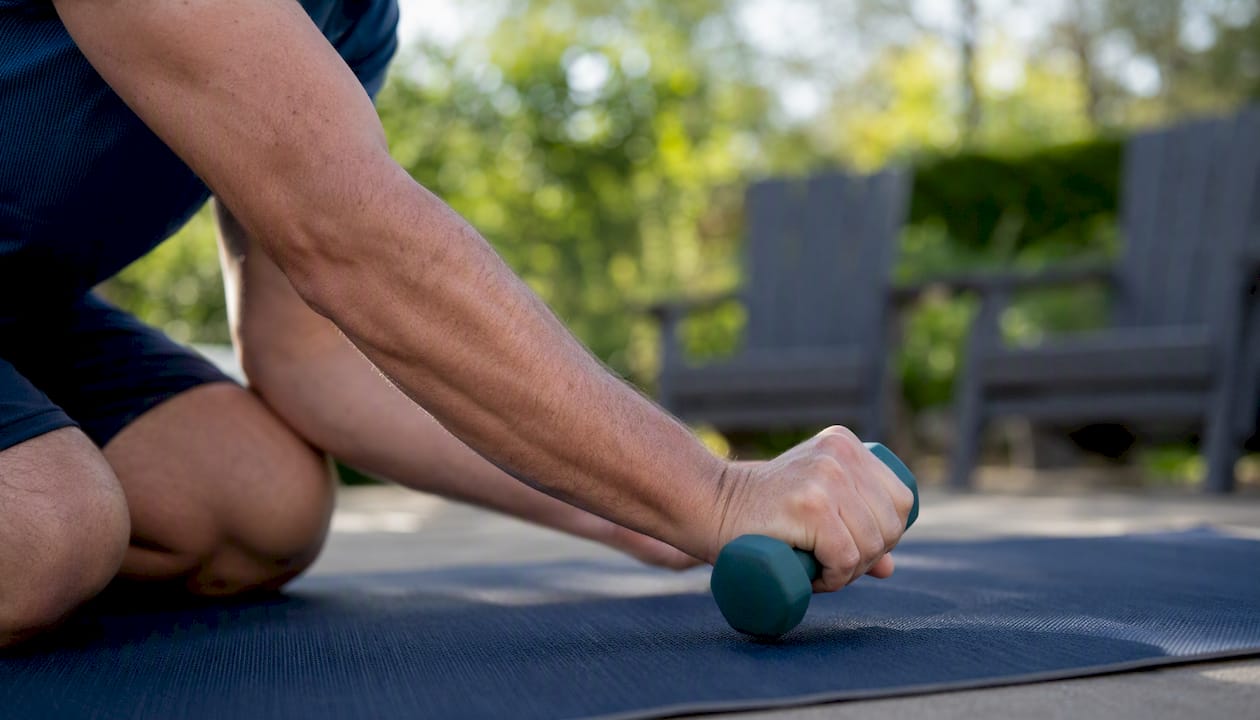
Golfer’s elbow (medial epicondylitis)
The inner-elbow counterpart to tennis elbow, affecting the flexor tendons. Golfers, climbers, and anyone doing repeated wrist curls or throwing motions are at risk. Pain is localized to the bony bump on the inside of the elbow and can radiate into the forearm.
De Quervain’s tenosynovitis
Inflammation of the tendons running along the thumb side of the wrist. New parents lifting infants, hairdressers, and assembly workers are frequently affected. The Finkelstein test, tucking the thumb under the fingers and bending the wrist toward the little finger, reproduces sharp pain and is the classic diagnostic clue.
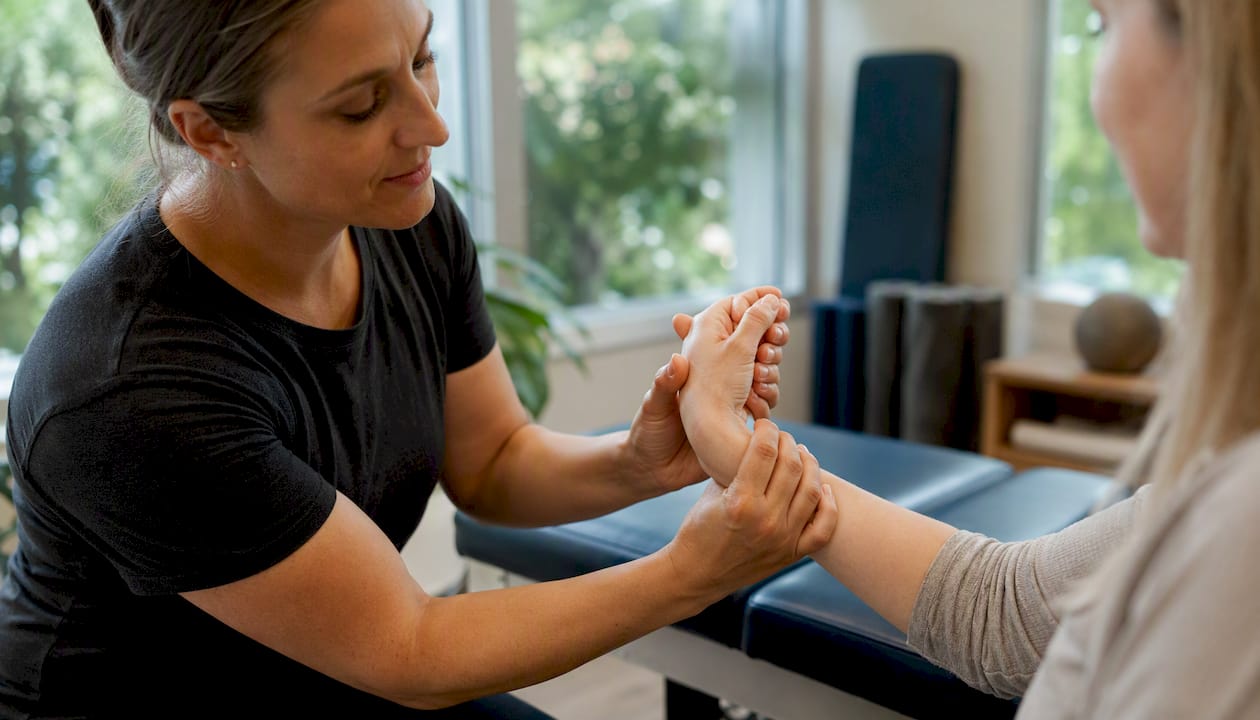
Trigger finger (stenosing tenosynovitis)
The tendon sheath around a finger becomes thickened and inflamed, causing the finger to catch, click, or lock in a bent position. Repeated gripping, especially with tools or instruments, is the usual cause. Diabetics and people with rheumatoid arthritis have higher rates.
Rotator cuff tendinopathy
Gradual degeneration or irritation of the rotator cuff tendons from overhead work, swimming, throwing, or sustained shoulder loading. Pain sits deep in the shoulder, worsens with reaching overhead or behind the back, and can disturb sleep when lying on the affected side.
Bursitis
Inflammation of a bursa, the fluid-filled sac that cushions a joint. The shoulder, elbow (olecranon bursitis), hip, and knee are the most common sites. Repetitive pressure or friction, like leaning on an elbow or kneeling on hard floors, is a frequent cause. The area may feel tender and occasionally swollen.
Cubital tunnel syndrome
Compression of the ulnar nerve at the inner elbow, often from prolonged elbow flexion (think: holding a phone to your ear for hours). Numbness and tingling in the ring and little fingers are the hallmark. Severe cases can cause weakness in the hand muscles.
Less common but clinically important RSIs
Intersection syndrome affects the forearm about 4–6 centimeters above the wrist, where two muscle groups cross. It is common in rowers and weightlifters and produces a creaking sensation with wrist movement. Shin splints (medial tibial stress syndrome) are a lower-limb RSI caused by repetitive impact, common in runners and military recruits. Both conditions are frequently misidentified, which delays appropriate care.
Pro Tip: If your pain is worst first thing in the morning or wakes you at night, that pattern points toward nerve involvement (carpal tunnel, cubital tunnel) rather than a pure tendon problem. Mention it specifically when you see a clinician, because it changes the diagnostic approach.
How are RSIs diagnosed, and when should you see a doctor?
Diagnosis starts with a detailed history: what activities you do, how long symptoms have been present, what makes them better or worse, and whether there is any nighttime or resting pain. A physical exam follows, including provocative tests specific to each condition (Phalen’s and Tinel’s tests for carpal tunnel, Finkelstein’s for De Quervain’s, lateral epicondyle palpation for tennis elbow). For suspected nerve entrapment, nerve conduction studies and electromyography (EMG) provide objective confirmation.
See a clinician promptly if you notice any of these:
- Symptoms that are rapidly worsening over days rather than weeks
- Persistent numbness or tingling that does not resolve with rest
- Weakness that limits everyday tasks like gripping, lifting, or writing
- Visible swelling, redness, or warmth that suggests infection or inflammatory arthritis
- Symptoms in both limbs simultaneously, which can indicate a systemic cause
For most people with mild, activity-related symptoms of less than a few weeks’ duration, a trial of self-care is reasonable before booking an appointment. When symptoms persist beyond four to six weeks, worsen despite rest, or include any of the red flags above, a GP or primary care provider is the right first stop. They can refer to a physiotherapist, hand surgeon, or neurologist depending on the suspected diagnosis. Early assessment genuinely improves outcomes for nerve compression conditions like carpal tunnel, where prolonged untreated compression can cause permanent nerve damage.
What are the best treatments for repetitive strain injuries?
Most RSIs respond to a stepped approach: start conservative, escalate only if needed. The Cleveland Clinic and NHS both recommend conservative care as the first line for the majority of cases.
Immediate self-care:
- Rest or modify the aggravating activity (complete rest is rarely necessary; reducing load is usually enough)
- Ice for acute flare-ups (15–20 minutes, several times daily); heat for chronic stiffness
- Over-the-counter NSAIDs (ibuprofen, naproxen) for short-term pain and inflammation
- Splinting or bracing to offload the affected structure, particularly useful for carpal tunnel (wrist splint worn at night) and De Quervain’s (thumb spica splint)
Formal conservative care:
- Physiotherapy: targeted exercises to restore strength and flexibility, manual therapy, and activity modification guidance
- Occupational therapy: ergonomic assessment and tool or workstation modifications
- Chiropractic care for overuse injuries addresses soft tissue dysfunction and postural contributors, particularly relevant when neck or thoracic spine involvement is contributing to upper-limb symptoms
- Graded return to activity rather than abrupt rest-then-return
Procedures (when conservative care is insufficient):
- Corticosteroid injection: useful for trigger finger, De Quervain’s, and bursitis; provides short-term relief but does not address the underlying cause
- Surgery: carpal tunnel release, trigger finger release, and rotator cuff repair are well-established procedures for cases that fail conservative management
Pro Tip: Wear a carpal tunnel wrist splint at night, not just during the day. Nighttime wrist flexion during sleep is one of the main drivers of nocturnal symptoms, and a neutral-position splint interrupts that cycle without requiring any change to your daytime routine.
For readers dealing with chronic pain from repetitive actions, exploring long-term pain relief approaches that go beyond short-term medication is worth considering.
How can you prevent repetitive strain injuries at work and in sport?
Prevention comes down to four levers: reduce repetition, reduce force, improve posture, and increase recovery time. Applied together, they cut risk substantially more than any single change alone.
A practical prevention checklist:
- Schedule microbreaks: regular microbreaks during repetitive work help interrupt the accumulation cycle; movement breaks and spine health guidance from Evertonchiropractic explains how to build this habit
- Set up your workstation correctly: keyboard at elbow height, mouse close to the body, monitor at eye level, wrists neutral; desk worker posture guidance covers the specifics
CDC/NIOSH recommends organizational ergonomic programs that combine engineering controls, task rotation, and training, because workplace-level changes consistently outperform individual behavior change alone.
Pro Tip: Track your symptom pattern for one week before your first clinical appointment. Note which activities trigger pain, how long symptoms last afterward, and whether rest resolves them. That log cuts diagnostic time significantly and helps your clinician identify the specific structure involved.
What does the research actually show about RSI treatment?
Honest answer: the evidence base is thinner than most people expect. A systematic review on NCBI Bookshelf found no strong evidence supporting any single conservative treatment for upper-limb RSIs. What the review did find was limited evidence favoring multidisciplinary rehabilitation, ergonomic interventions, exercise, and combined manual therapy approaches over single-modality care.
Key finding: The NCBI systematic review concluded that combined, multidisciplinary approaches and ergonomic changes show the most consistent benefit for upper-limb repetitive strain injuries, while single conservative treatments lack strong supporting evidence.
Why is the evidence so mixed? Several reasons:
- “RSI” groups together structurally distinct conditions, so trials that lump them together produce noisy results
- Many trials are small, short-term, and use different outcome measures, making comparison difficult
- Placebo effects are substantial in pain research, inflating apparent treatment benefits in unblinded trials
What this means practically: no single treatment is a guaranteed fix. A combination of activity modification, targeted exercise, ergonomic change, and professional guidance gives you the best odds. The PMC clinical review reinforces this, noting that precise diagnosis of the specific tissue or nerve involved, rather than relying on the non-specific “RSI” label, is what allows treatment to be properly targeted.
How long does recovery from an RSI take?
Many RSIs improve within weeks to a few months with consistent conservative care. The trajectory depends heavily on how long the condition was present before treatment started and whether the person can reduce or modify the causative activity.
A rough timeline:
- Acute phase (days to 3 weeks): pain and inflammation are the main problems; rest, ice, and splinting are most useful here
- Subacute phase (3 weeks to 3 months): tissue is remodeling; this is when physiotherapy, graded exercise, and ergonomic changes have the most impact
- Chronic phase (beyond 3 months): recovery slows; multidisciplinary care, possible injection, and specialist review become more relevant
Condition-specific notes matter. Mild carpal tunnel syndrome often resolves with splinting and ergonomic changes within 6–12 weeks. Rotator cuff tendinopathy can take 3–6 months of consistent rehabilitation. Trigger finger that has progressed to a locked position frequently requires injection or surgical release.
Factors that slow recovery:
- Continuing the causative activity without modification
- Delayed start to treatment
- Comorbidities: diabetes, hypothyroidism, and inflammatory arthritis all impair tendon and nerve healing
- Smoking, which reduces tissue perfusion
- Poor adherence to rehabilitation exercises
If weakness is persisting, function is not returning, or numbness is progressing after 6–8 weeks of appropriate conservative care, that is the signal to seek specialist review. Progressive numbness in particular warrants prompt nerve conduction testing, because prolonged nerve compression can cause permanent damage that surgery cannot fully reverse.
Key Takeaways
RSIs are diagnosable, treatable conditions, and recognizing the specific type early is the single most important step toward effective care.
| Point | Details |
|---|---|
| Eight core RSI types | Carpal tunnel syndrome, tennis elbow, golfer’s elbow, De Quervain’s tenosynovitis, trigger finger, rotator cuff tendinopathy, bursitis, and cubital tunnel syndrome cover the majority of cases according to Cleveland Clinic and NINDS. |
| Gradual onset is the norm | Symptoms typically build slowly; nighttime numbness or pain at rest signals a more advanced stage that needs clinical assessment. |
| No visible signs possible | NINDS confirms that significant nerve or tendon damage can be present with no external swelling or redness. |
| Combined care works best | The NCBI systematic review found the strongest benefit from multidisciplinary rehabilitation and ergonomic changes, not single treatments. |
| Seek care within 4–6 weeks | Persistent or worsening symptoms beyond 4–6 weeks, especially with weakness or progressive numbness, warrant professional evaluation. |
Why the “wait and see” approach to RSIs costs more than people realize
Most people sit on an RSI for months before seeking care. The logic is understandable: it started as a minor ache, it comes and goes, and surely it will sort itself out. Sometimes it does. But the conditions that do not resolve on their own, carpal tunnel with progressive nerve compression, rotator cuff tendinopathy that transitions to a partial tear, trigger finger that locks, are precisely the ones where delay narrows treatment options and extends recovery.
The research picture reinforces this. The NCBI systematic review found limited evidence for single conservative treatments, which some people read as “nothing works, so why bother.” The actual takeaway is the opposite: no single passive treatment works well in isolation, but a combination of precise diagnosis, activity modification, targeted exercise, and ergonomic change does produce consistent benefit. That combination requires professional input to execute properly.
Chiropractic care fits into this picture not as a standalone cure but as one component of a multidisciplinary approach, particularly for RSIs where posture, spinal alignment, or referred nerve symptoms from the neck are contributing factors. Evertonchiropractic’s approach to personalized chiropractic treatment is built around identifying the specific structural contributors to a patient’s pain rather than applying a generic protocol. For nerve-compression RSIs like carpal tunnel or cubital tunnel syndrome, addressing nerve pain at its source rather than managing symptoms alone is what produces durable results.
The honest clinical message: if you have had activity-related pain for more than four to six weeks and it is not improving, get it assessed. The window for conservative care is real, and it closes.
Useful sources
These sources represent the most authoritative publicly available guidance on repetitive strain injuries and their management.
- Repetitive strain injury (RSI) – NHS
- Repetitive Strain Injury (RSI): Causes, Symptoms & Treatment – Cleveland Clinic
- Repetitive Motion Disorders – NINDS
- Biopsychosocial rehabilitation for upper limb repetitive strain injuries in working age adults. – NCBI Bookshelf
- Repetitive strain injury: clinical and occupational aspects – PMC
- Ergonomics and Musculoskeletal Disorders – NIOSH/CDC
- Avoiding a Repetitive Strain Injury | Mass General Brigham
FAQ
What are the most common examples of RSI?
The most frequently diagnosed repetitive strain injuries are carpal tunnel syndrome, tennis elbow, golfer’s elbow, De Quervain’s tenosynovitis, trigger finger, rotator cuff tendinopathy, bursitis, and cubital tunnel syndrome, according to Cleveland Clinic and NINDS.
What does a repetitive stress condition do to muscles and tendons?
Repeated stress causes micro-tears in tendons and muscles that accumulate faster than the tissue can repair, leading to inflammation, pain, weakness, and, in nerve-compression cases, numbness and tingling.
How do you treat a repetitive strain injury?
Start with rest or activity modification, ice or heat, and a splint if appropriate, then progress to physiotherapy and ergonomic changes. Cases that do not improve within 4–6 weeks may need corticosteroid injection or, in severe cases, surgery.
What can repetitive motion cause if left untreated?
Untreated repetitive motion injuries can progress from intermittent pain to chronic pain, permanent nerve damage (as with advanced carpal tunnel syndrome), tendon rupture, or significant loss of grip strength and hand function.
Is RSI the same as tendinitis?
Not exactly. “RSI” is a broad umbrella term covering many conditions, including tendinitis, bursitis, and nerve entrapment syndromes. Tendinitis refers specifically to tendon inflammation and is one type of RSI, not a synonym for the whole category.
This article provides general health information only and is not a substitute for professional medical advice. Consult a qualified clinician or your primary care provider for diagnosis and treatment guidance specific to your situation.
Recommended
- Manage Overuse Injuries with Chiropractic Care – Everton Chiropractic
- Frozen Shoulder vs Rotator Cuff Strain: Identifying Your Shoulder Pain – Everton Chiropractic
- Chiropractic Sports Techniques: 8 Examples for Athletes – Everton Chiropractic
- How Chronic Postural Stress Creates Compensation in Muscles and Joints – Everton Chiropractic