
Chiropractic care can genuinely improve an athlete’s range of motion and movement readiness, particularly when joint restriction, soft-tissue tension, or mechanical pain is limiting movement. The strongest evidence points to injury prevention and short-term ROM gains rather than raw performance enhancement in symptom-free athletes.
What the evidence supports:
- Reduced lower-limb muscle strain incidence when sports chiropractic is added to standard care
- Short-term, transient improvements in ankle plantarflexion, lumbar joint position sense, and quadriceps strength in some trials
- High rates of self-reported ROM improvement, recovery, and pain reduction among strength athletes in pilot surveys
Realistic expectations: Chiropractic delivers its clearest benefits when there is an actual clinical problem — stiffness, restricted motion, pain, or a movement fault with a mechanical cause. For symptom-free athletes, the evidence for objective performance gains is exploratory at best. The strongest case for chiropractic in sport is as part of a multidisciplinary plan, not as a standalone performance booster.
Table of Contents
- How chiropractic interventions change your range of motion
- Common techniques used in chiropractic treatment for sports
- What the research actually shows about chiropractic and athletic range
- What to expect: assessment, timeline, and costs
- How chiropractic fits into your overall training plan
- Safety, risks, and when chiropractic is not appropriate
- Key Takeaways
- A clinician’s perspective on range of motion and chiropractic
- Evertonchiropractic: personalized care for athletes who need to move better
- FAQ
How chiropractic interventions change your range of motion
Understanding the mechanisms helps you set realistic expectations and get more from each session.
Mechanical effects on joints. High-velocity low-amplitude (HVLA) adjustments and mobilizations act directly on the joint capsule and surrounding connective tissue. By restoring normal arthrokinematics — the small gliding and rolling motions inside a joint — these techniques can allow greater passive and active joint excursion almost immediately. You feel it as a sudden reduction in end-range resistance.
Neurophysiological effects. The nervous system governs how much range your muscles actually allow. Spinal manipulation modulates proprioceptive input, reduces reflex-driven muscle guarding, and can transiently alter motor cortex excitability. The result is that muscles around a restricted joint relax their protective tone, letting you access range that was always anatomically available but neurologically blocked.
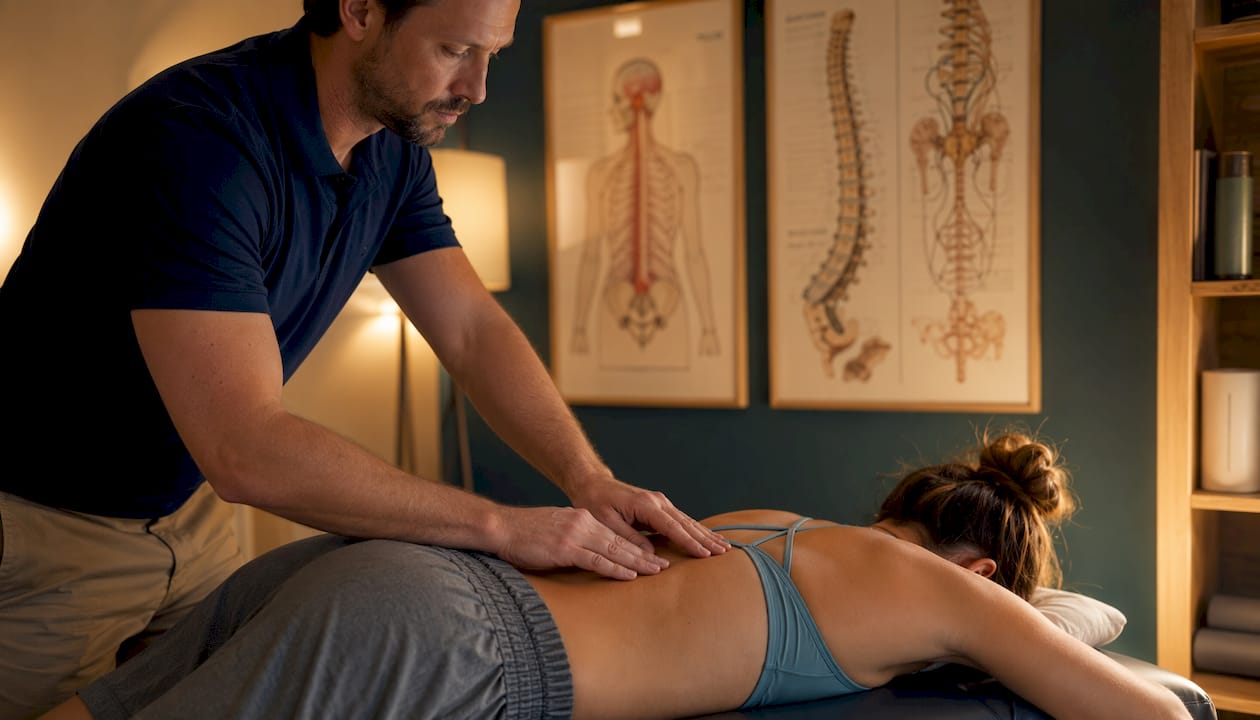
Soft-tissue effects. Myofascial release and instrument-assisted soft-tissue mobilization (IASTM) target adhesions, fascial thickening, and localized muscle tension that physically limit joint travel. These techniques address the tissue layer that joint adjustments alone cannot reach. A sports-related spinal stress pattern, for example, often involves both joint restriction and layered soft-tissue tightness that need separate but coordinated treatment.
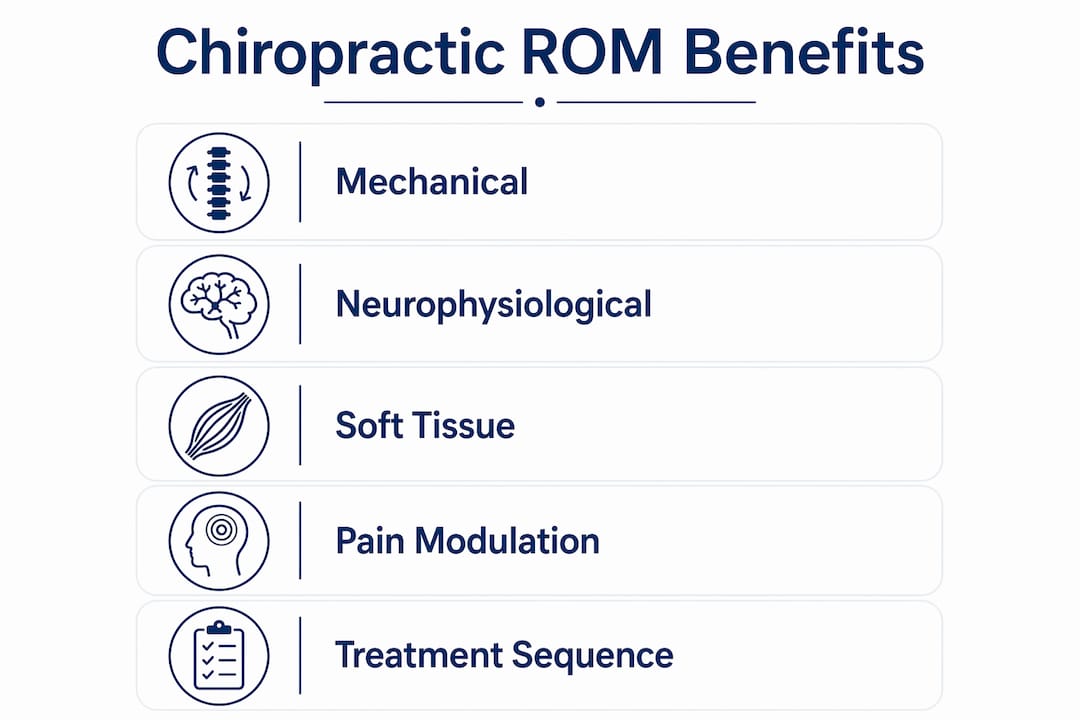
Pain modulation and sensorimotor confidence. Pain inhibits movement. When treatment reduces local nociceptive input, athletes move with more confidence and less protective guarding. Some of what feels like “improved range” after a session is genuinely better tissue mobility; some is reduced fear-avoidance. Both matter for performance.
Pro Tip: Sequence matters. Soft-tissue work first reduces muscle tension, making the joint technique more effective and requiring less force. Follow with targeted mobility drills while the nervous system is still in a receptive state. That order tends to produce more durable range gains than adjustment alone.
Common techniques used in chiropractic treatment for sports
A real sports chiropractic session rarely involves just one technique. Here is what athletes typically receive and why each matters for range:
- HVLA spinal adjustments: The classic “crack.” Used for facet joint restrictions in the lumbar, thoracic, or cervical spine. A restricted thoracic segment, for instance, directly limits shoulder elevation and rotation — thoracic HVLA can restore several degrees of overhead range in one visit.
- Joint mobilization: Lower-velocity, oscillatory joint movement for athletes who are not candidates for HVLA or where a gentler approach is preferred. Produces similar neurophysiological effects with less force.
- Instrument-assisted soft-tissue mobilization (IASTM): Tools like Graston-style instruments detect and treat fascial adhesions and scar tissue. Particularly useful for localized restrictions from old muscle strains or tendon injuries.
- Active release technique (ART) and soft-tissue therapy: Manual pressure combined with active patient movement to break adhesions and restore tissue glide. Common for hamstring, hip flexor, and rotator cuff restrictions.
- Dry needling: Used by some chiropractors (where scope of practice permits) to release trigger points contributing to restricted motion and referred pain.
- Pelvis and lumbar HVLA for hamstring restrictions: When hamstring tightness has a lumbar or sacroiliac component, addressing the spinal segment often produces immediate hamstring length changes that stretching alone cannot achieve.
- Exercise and rehab prescription: Chiropractic sports techniques are most durable when paired with targeted mobility and strength drills. The chiropractor prescribes specific movements to reinforce the range gained in-session.
A typical visit follows this structure: movement screening and joint assessment → targeted technique (soft tissue, then adjustment) → immediate reassessment of the restricted motion → prescribed follow-up drills for home or training.
What the research actually shows about chiropractic and athletic range
The evidence is real but nuanced. Treating it as proof of guaranteed performance gains would be a mistake; ignoring it entirely would be equally wrong.
The injury-prevention RCT. A randomized controlled trial in semi-elite Australian Rules footballers found that adding sports chiropractic (manipulation, mobilization, and soft-tissue therapies) to best-practice care produced a significant reduction in lower-limb muscle strains (p = 0.025) and fewer weeks missed due to non-contact knee injuries (χ² = 6.70, p = 0.01). That is a meaningful clinical finding for any athlete whose season depends on availability.
The 2019 systematic review. A review published in Chiropractic & Manual Therapies screened 1,415 articles and identified 20 studies meeting criteria. The conclusion: spinal manipulation generally does not enhance performance in asymptomatic athletes, but a subset of studies reported immediate, small improvements in ankle plantarflexion, quadriceps maximal voluntary contraction, and lumbar joint position sense. One trial even reported a 2.4% immediate improvement in basketball free-throw accuracy after cervical manipulation — an interesting finding, but from a single underpowered study.
Athlete self-report data. A pilot survey of strength athletes found that A majority of strength athletes reported ROM improvement after spinal manipulation (mean score 7.3/10), with a majority reporting decreased pain and many reporting better recovery. These are subjective findings, but they reflect what athletes actually value from care.
| Study | Design | Outcome measured | Key finding | Main limitation |
|---|---|---|---|---|
| BMC Musculoskeletal Disorders RCT | RCT (semi-elite footballers) | Lower-limb muscle strain incidence; weeks missed | Significant reduction in strains (p = 0.025) and missed weeks (p = 0.01) | Single sport; Australian context |
| Chiropractic & Manual Therapies 2019 review | Systematic review (20 studies) | ROM, neuromuscular performance, sport-specific outcomes | No consistent performance effect; some transient ROM/neuromuscular gains | Small samples, heterogeneous measures |
| Parker University pilot survey | Survey (pilot survey of strength athletes) | Self-reported ROM, recovery, pain, strength | A majority of strength athletes reported ROM improvement; many reported less pain | Subjective only; no control group |
Limitations worth knowing: Most trials use small samples, measure outcomes immediately after treatment, and use heterogeneous methods that make comparison difficult. The gap between a transient lab finding and a durable performance change in competition is real and largely unstudied.
What to expect: assessment, timeline, and costs
Before you book, flag these red flags at intake: recent major trauma, progressive neurological symptoms (numbness, weakness spreading distally), unexplained weight loss, fever with spinal pain, or a history of cancer. These warrant medical evaluation before chiropractic care begins.
What a good assessment covers:
- Movement screening (functional movement patterns, sport-specific positions)
- Joint-specific mobility tests (passive and active ROM, end-feel assessment)
- Load history and training volume review
- Neurological screen (reflexes, sensation, strength)
- Sport-specific movement analysis where relevant
Typical treatment timeline for range improvement:
- Acute restriction (new onset): Often 2–4 visits over 2–3 weeks produces measurable change; reassess at visit 4.
- Chronic or training-related restriction: A plan of 1–2 visits per week for 4–6 weeks, then tapering to maintenance (monthly or as needed), is common. Results depend heavily on the underlying problem and whether home drills are followed.
- Single-session maintenance: Some athletes book periodic sessions during a season to address accumulating restrictions before they become injuries.
Cost frame (US market): A single chiropractic visit typically runs $65–$200 depending on location, provider experience, and whether additional modalities are included. Many plans offer package pricing. Check whether your health insurance covers chiropractic — most major US insurers do, with varying visit limits and copays. A personalized chiropractic treatment plan will clarify what is included per session.
Questions to ask a prospective sports chiropractor:
- Do you have postgraduate training in sports chiropractic or a relevant certification?
- How do you measure and track ROM changes between visits?
- Will you communicate with my strength coach or physical therapist?
- What home exercises will you prescribe alongside in-clinic treatment?
- How will you know when I no longer need regular visits?
How chiropractic fits into your overall training plan
Chiropractic works best as one layer in a coordinated care plan, not as a standalone fix. Consider an athlete with restricted hip extension limiting stride length and squat depth. A well-integrated plan looks like this: the chiropractor assesses the lumbar spine, sacroiliac joint, and hip capsule, applies targeted HVLA and soft-tissue work to the restricted segments, then prescribes hip flexor lengthening and glute activation drills. The strength coach programs these drills into warm-up. Progress is tracked with a goniometer at each visit.
Timing matters. Receiving an HVLA adjustment immediately before a max-effort lift is generally not ideal — the transient neurophysiological changes need time to settle, and the athlete may feel temporarily unfamiliar with their movement pattern. Schedule adjustments on lighter training days or at least a few hours before high-intensity sessions. For return to sport after injury, chiropractic fits naturally alongside physiotherapy: the chiropractor addresses joint and soft-tissue restrictions while the physio manages progressive loading and neuromuscular rehab.
Tracking longitudinal health data — ROM measurements, training load, and subjective readiness scores — across the care period gives both the athlete and clinician an objective picture of progress. Without tracking, it is easy to mistake placebo-driven confidence for genuine tissue change.
Safety, risks, and when chiropractic is not appropriate
Chiropractic care has a strong safety record for musculoskeletal complaints, but athletes should know the full picture.
Red flags that require medical clearance first:
- Unstable fractures or acute bone stress injuries
- Progressive neurological deficits (worsening weakness, spreading numbness)
- Connective tissue disorders with joint hypermobility (e.g., Ehlers-Danlos syndrome)
- Uncontrolled anticoagulation therapy
- Signs of vertebral artery insufficiency before cervical manipulation
Common, low-risk side effects:
- Transient soreness at the treated site (24–48 hours, similar to post-exercise soreness)
- Mild headache after cervical treatment
- Temporary fatigue
Serious adverse events — such as vertebral artery dissection following cervical manipulation — are rare but documented. A competent sports chiropractor screens for vascular risk factors before cervical HVLA and obtains informed consent. If you experience sudden severe headache, dizziness, or neurological symptoms after a cervical adjustment, seek emergency care immediately.
If a treatment causes an adverse response: Stop treatment, document the symptoms with time and description, and contact the treating clinician. If symptoms are neurological or severe, go to an emergency department rather than waiting for a follow-up appointment.
For athletes managing overuse injuries, chiropractic can be part of the solution — but only when the underlying load management issue is also addressed.
Key Takeaways
Chiropractic care improves athletic range of motion most reliably when it targets a real mechanical restriction and is integrated with progressive exercise and coordinated sports medicine care.
| Point | Details |
|---|---|
| Best use case | Chiropractic produces clearest ROM gains when joint restriction, soft-tissue tension, or mechanical pain is the limiting factor. |
| Injury prevention evidence | An RCT found significant reduction in lower-limb muscle strains (p = 0.025) when sports chiropractic was added to standard care. |
| Realistic performance expectations | Systematic review evidence shows no consistent performance effect in asymptomatic athletes; transient ROM gains are possible but short-lived. |
| Integration priority | Pair adjustments with prescribed mobility drills and coordinate with your strength coach or physio for durable range improvements. |
| Evertonchiropractic | Offers personalized, evidence-informed chiropractic plans for athletes targeting range, pain relief, and long-term movement quality. |
A clinician’s perspective on range of motion and chiropractic
The conversation about chiropractic and athletic performance gets distorted in both directions. Some practitioners oversell it as a guaranteed edge; some critics dismiss it entirely because the performance-enhancement literature is thin. Both miss the point.
What actually happens in practice is more specific: an athlete comes in with a hip that won’t extend past neutral, a thoracic spine that won’t rotate, or a shoulder that loses 20 degrees of elevation under load. Those are addressable problems. The chiropractor’s job is to identify the mechanical and neurophysiological contributors, treat them with the right combination of techniques, and then hand the athlete a set of drills that reinforce the change. The evidence on spinal adjustments supports this targeted approach far more than the “adjust everyone for performance” model.
Where I think athletes underestimate chiropractic is in the injury-prevention role. The RCT data from Australian Rules football is not glamorous, but fewer missed weeks is exactly what a competitive athlete needs. Range of motion is not just about flexibility — it is about having enough movement buffer that a sudden demand does not immediately exceed tissue capacity. That buffer is where chiropractic earns its place in a serious athlete’s care plan.
Evertonchiropractic: personalized care for athletes who need to move better
Athletes dealing with restricted range, recurring soft-tissue injuries, or movement faults that training alone hasn’t fixed often need more than stretching and foam rolling. Evertonchiropractic, led by Dr. Richard, offers personalized chiropractic care built around your specific movement goals — not a generic adjustment protocol.

Every plan starts with a thorough movement and joint assessment, targets the actual mechanical or soft-tissue restriction driving your limitation, and includes prescribed drills to make the change stick between sessions. Whether you are managing a chronic hip restriction, recovering from a lower-limb strain, or trying to add overhead range before your next competition, the approach is the same: find the problem, treat it specifically, track the result. Book a consultation at Evertonchiropractic to get a clear picture of what is limiting your range and a plan to address it.
FAQ
Does chiropractic help athletic performance?
Chiropractic care supports athletic performance most clearly through injury prevention and range-of-motion improvement when a mechanical restriction is present. Systematic review evidence does not support consistent performance gains in symptom-free athletes, but RCT data shows significant reductions in lower-limb muscle strains when chiropractic is added to standard sports care.
Why do some doctors discourage chiropractors?
Some physicians express concern about the evidence base for certain chiropractic claims, particularly around performance enhancement in healthy athletes, and about rare but serious adverse events associated with cervical manipulation. A qualified sports chiropractor who screens appropriately, communicates with the medical team, and makes evidence-based claims addresses most of these concerns directly.
Did Michael Jordan use a chiropractor?
Michael Jordan is widely reported to have used chiropractic care during his career, and many elite athletes do. However, individual athlete endorsements are not clinical evidence — they reflect personal preference and perceived benefit rather than controlled outcomes.
Can a chiropractor fix overpronation?
Overpronation involves foot mechanics, tibial rotation, and hip control — chiropractic can address contributing factors like restricted ankle dorsiflexion, hip mobility deficits, or lumbar alignment issues, but it works best alongside foot orthotic assessment and targeted strengthening rather than as a standalone fix.
This article provides general information about chiropractic care and athletic performance. It is not a substitute for professional medical or chiropractic advice. Consult a qualified clinician to assess your specific situation before beginning any treatment.
Recommended
- Chiropractic Benefits for Performance: Athletes’ Guide – Everton Chiropractic
- Chiropractic Sports Techniques: 8 Examples for Athletes – Everton Chiropractic
- Chiropractic Care Explained for Fitness Enthusiasts – Everton Chiropractic
- How Chiropractic Supports Return to Sport Safely – Everton Chiropractic