
Yes, lifestyle counseling is a core part of chiropractic care in Singapore, not an optional add-on. Chiropractors assess how you sleep, sit, move, and manage stress because those factors directly shape how well your spine responds to treatment. Adjustments alone rarely hold if the daily habits driving the problem stay unchanged.
Two things make this clinically meaningful. First, structured counseling produces modest but statistically significant improvements in symptoms and adherence compared to standard care alone. Second, intervertebral discs rely on motion for nutrient exchange, so movement and hydration prescriptions are biology, not wellness fluff.
What lifestyle counseling typically covers in a chiropractic visit:
- Posture and ergonomics (desk setup, screen height, sitting habits)
- Movement prescriptions and exercise guidance
- Sleep position and sleep hygiene
- Stress management strategies
- Hydration targets
- Basic nutrition guidance
Table of Contents
- What does lifestyle counseling actually mean in a chiropractic setting?
- How does lifestyle counseling integrate into chiropractic care?
- What does the research say about outcomes?
- What can a chiropractor advise on, and when should they refer?
- What should you expect during your first few visits?
- Practical steps you can start between visits
- A clinic example: how a lifestyle plan gets built
- Is integrated chiropractic care worth pursuing?
- Key Takeaways
- Why counseling changes the outcome, not just the visit
- Evertonchiropractic offers care that goes beyond the adjustment
- Useful sources
- FAQ
What does lifestyle counseling actually mean in a chiropractic setting?
Lifestyle counseling in a clinical context is not a pep talk about eating more vegetables. It is a structured, behavior-focused process where a clinician assesses specific habits, sets measurable goals with the patient, and monitors progress across visits. The aim is to change the daily inputs that either support or undermine recovery.
In chiropractic practice, the core domains are:
- Movement and posture: How you carry yourself during the day, including sitting posture and how often you change positions.
- Ergonomics: Workstation setup, monitor height, chair support, and how office posture habits accumulate into spinal stress.
- Exercise prescription: Specific movement recommendations matched to your condition, not generic gym advice.
- Hydration: Adequate fluid intake supports disc health and tissue recovery.
- Sleep: Duration, position, and mattress support all affect spinal loading overnight.
- Stress management: Chronic stress elevates muscle tension and slows tissue healing.
- Basic nutrition guidance: General anti-inflammatory eating patterns that support recovery.
The difference between a wellness tip and clinical counseling is structure. A structured intervention includes a baseline assessment, a specific goal, a method to track it, and a follow-up. That framework is what spinal health patient education consistently identifies as the driver of better outcomes.
How does lifestyle counseling integrate into chiropractic care?
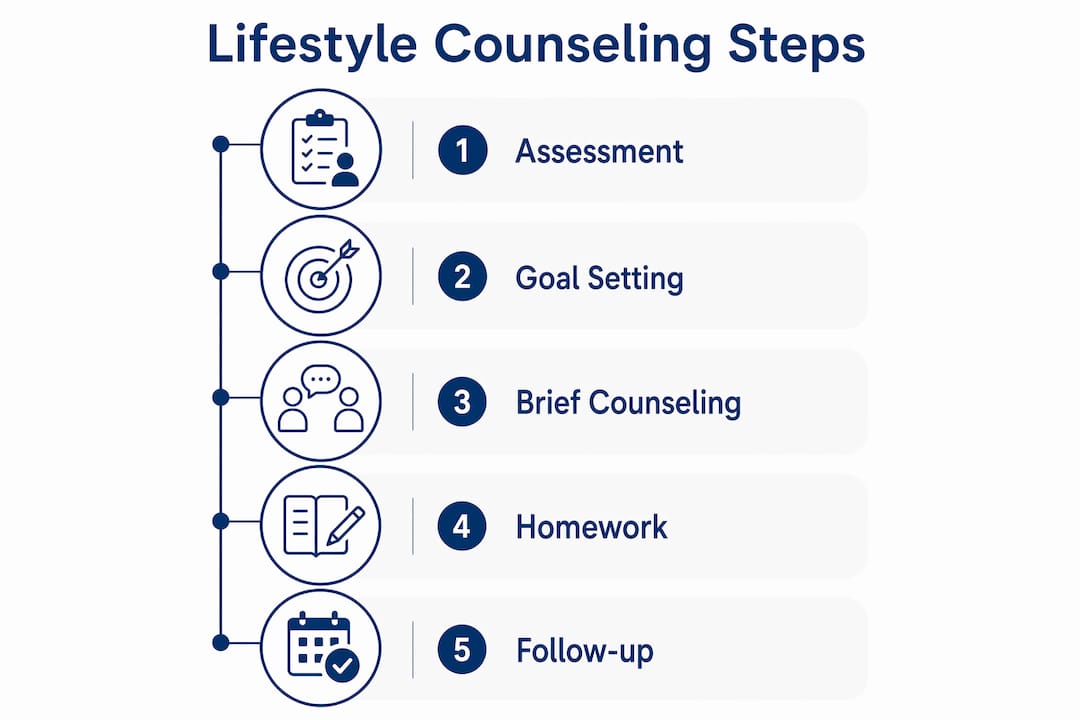
The integration happens across every phase of a visit, not as a separate appointment bolted on at the end.

Intake assessment: At the first visit, your chiropractor gathers information beyond your chief complaint. Work demands, sleep quality, stress levels, and exercise habits all feed into the clinical picture. This is how a personalized treatment plan gets built rather than a generic protocol applied to everyone with lower back pain.
Shared goal-setting: Once the assessment is complete, the clinician and patient agree on one or two measurable behavior targets. Not five. One prioritized change is more likely to stick than a list of ten.
Brief counseling during visits: Most counseling happens in short windows within a standard appointment. Clinicians use the 5A model (assess, advise, agree, assist, arrange) to keep this efficient. The whole exchange can fit inside 10 minutes without disrupting the hands-on treatment.
Home “homework”: Between visits, patients are given specific tasks: a movement micro-break schedule, a hydration target, or a sleep position adjustment. These are not suggestions; they are part of the clinical plan.
Follow-up and adjustment: At subsequent visits, the clinician checks in on the behavior target before treatment. If the goal was not realistic, it gets revised. If it was met, the next priority gets added.
Motivational interviewing sits underneath much of this. Rather than telling patients what to do, clinician-led motivational techniques help patients work through their own ambivalence about change, which is the most common reason behavior plans fail.
Pro Tip: Clinicians who focus on one behavior per visit consistently see better follow-through than those who hand patients a full lifestyle overhaul at once. Ask your chiropractor to name the single most important change for this week.
What does the research say about outcomes?
The evidence is encouraging but not dramatic. Systematic reviews consistently show that structured, multi-component counseling produces modest but statistically significant improvements in symptoms, adherence, and self-efficacy compared to standard care alone. The word “modest” matters here: counseling is not a cure, but it meaningfully shifts the trajectory.
Physical activity and weight outcomes respond better to counseling than dietary change, which tends to be harder to sustain. A systematic review of diverse primary care populations found that weight and physical activity outcomes were more amenable to change through lifestyle interventions than diet modification, with significant findings across multiple studies.
The delivery gap is striking. Health-risk counseling occurs in roughly 18% of primary-care visits, and fewer than 16% of patients receive actionable physical activity guidance. Structured counseling is valuable precisely because it is so rarely delivered well.
| Counseling Delivery Metric | Figure | Context |
|---|---|---|
| Primary-care visits including health-risk counseling | ~18% | Underdelivery is the norm, not the exception |
| Patients receiving actionable physical activity guidance | <16% | Highlights the gap structured integration fills |
| Counseling intensity needed for durable behavior change | Multiple contacts | Single-session advice rarely produces lasting change |
Stat to know: Structured counseling improves adherence and produces statistically significant symptom reductions compared to standard care alone, but durable change typically requires repeated contacts across several visits, not a single conversation.
One important limitation: effect sizes vary widely across studies because interventions, populations, and outcome measures differ. The evidence supports integration, but it does not promise a specific result for any individual patient.
What can a chiropractor advise on, and when should they refer?
Chiropractors in Singapore work outside the Medical Registration Act, which means they are not registered medical practitioners. The Singapore Ministry of Health has clear rules on the use of the title “Dr” for non-registered practitioners, and patients should ask directly about a clinician’s credentials and training.
What chiropractors commonly advise on:
- Ergonomics and workstation setup
- General movement and exercise guidance
- Hydration and basic healthy eating patterns
- Sleep position and sleep hygiene
- Stress awareness and relaxation techniques
- Postural education
When referral is appropriate:
- Registered dietitian or nutritionist: For medical nutrition therapy, eating disorders, or complex dietary management. Chiropractors can provide general nutrition guidance but should not replace specialist dietary care.
- Psychologist or counselor: For clinical anxiety, depression, or trauma that goes beyond stress management tips.
- Physiotherapist: For post-surgical rehabilitation or complex movement dysfunction.
- Physician: For any red-flag symptoms (unexplained weight loss, night pain, neurological changes) that suggest a non-musculoskeletal cause.
A good chiropractor arranges these referrals proactively rather than waiting for a patient to ask. Implementation research consistently shows that team-based care and timely referrals improve real-world outcomes when a patient’s needs exceed what brief clinic counseling can address.
Patient credential checklist: Ask your chiropractor about their training in lifestyle counseling, whether they use a structured framework, and who they refer to for nutrition or mental health needs. A clinician who cannot answer those questions clearly is worth a second look.
What should you expect during your first few visits?
The first chiropractic assessment at a clinic like Evertonchiropractic covers more than your pain location. Expect questions about your work setup, how many hours you sit, your sleep quality, stress levels, and any exercise you currently do. These are not small talk; they shape the clinical plan.
A typical visit runs roughly as follows: intake and history (15–20 minutes at the first visit), physical assessment, hands-on treatment, and a brief counseling exchange with a specific home task. Follow-up visits are shorter but still include a check-in on the behavior target before treatment begins.
Timeline for measurable change: Most patients notice some symptomatic improvement within 4–6 weeks when they follow through on both the hands-on treatment and the lifestyle homework. Structural and behavioral change takes longer, often 3–6 months of consistent effort. The visit frequency that supports this varies by condition and severity.
Cost considerations: Lifestyle counseling is typically delivered as part of the clinical visit rather than billed separately. If your needs require referral to a dietitian, psychologist, or physiotherapist, those services carry their own fees. Ask upfront whether your clinic has collaborative referral partners and what those services cost.
Practical steps you can start between visits
You do not need to wait for a formal counseling session to start improving. These steps are low-friction and directly support spinal recovery.
- Set a movement micro-break every 45–60 minutes. Stand, walk briefly, or do a few shoulder rolls. Movement breaks support disc nutrition and reduce cumulative postural load.
- Drink water consistently through the day. Aim for roughly 2 liters; disc hydration depends on it.
- Check your sleep position. Side-lying with a pillow between the knees or back-lying with a pillow under the knees reduces overnight spinal stress. A whole-body approach to sleep covers this in more depth.
- Audit your workstation once. Screen at eye level, feet flat, lower back supported. Singapore’s office culture creates predictable postural problems that a single ergonomic fix can interrupt.
- Track one behavior per week. Not five. Pick the one your chiropractor flagged and measure it simply.
Questions to ask your chiropractor:
- What is the one behavior change most likely to improve my outcome this week?
- Do you use a structured framework like the 5A model or motivational interviewing?
- Who do you refer to for nutrition or mental health needs?
- How will we measure progress between visits?
Red flags that should prompt re-evaluation: pain that worsens after 2–3 weeks of care, new neurological symptoms (numbness, weakness, bladder changes), or unexplained systemic symptoms. These warrant a physician assessment, not more chiropractic visits.
A clinic example: how a lifestyle plan gets built
Consider a 34-year-old office worker presenting with persistent lower back pain after switching to a work-from-home setup. The intake reveals 9–10 hours of daily sitting, poor screen height, disrupted sleep, and no regular exercise.
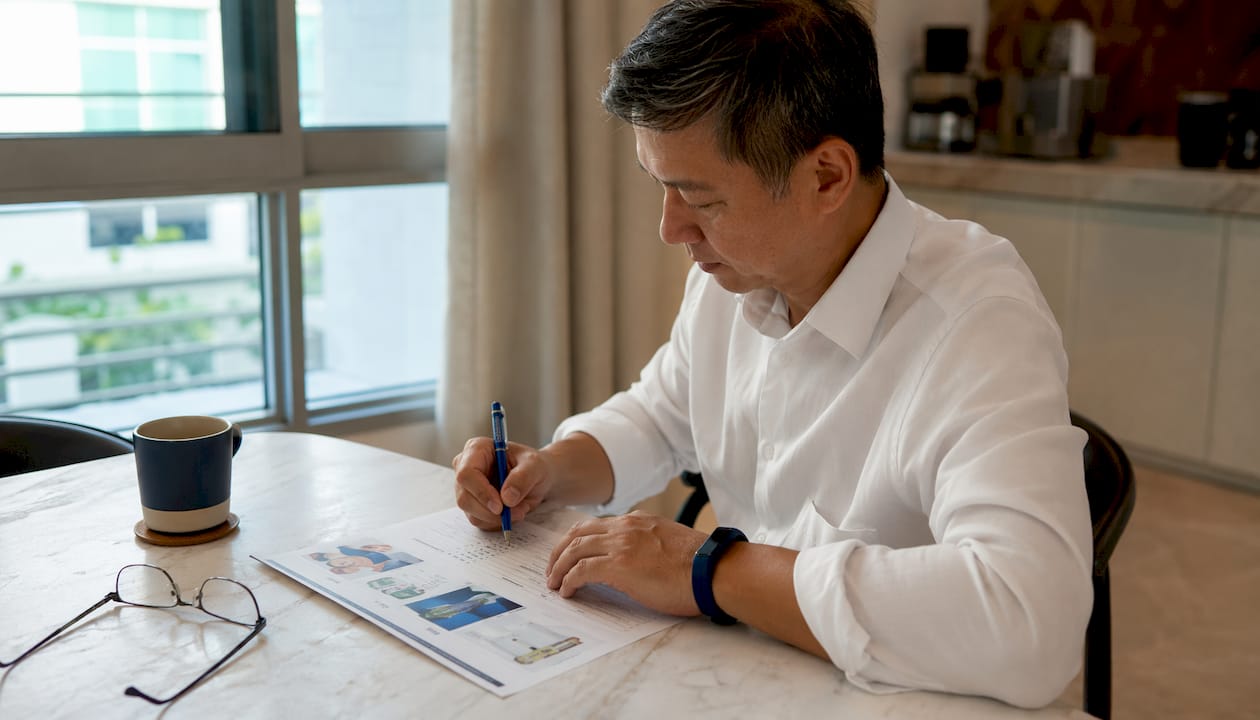
Assessment findings: Reduced lumbar mobility, forward head posture, elevated muscle tension in the thoracic region. No red flags.
Agreed goals: One prioritized behavior change for week one: a sit-stand schedule with a movement break every 50 minutes. Sleep position adjustment (side-lying with pillow support) added at visit two.
Weeks 1–2: Spinal adjustments targeting lumbar and thoracic mobility, postural education during treatment, movement schedule introduced as homework.
Weeks 3–4: Follow-up confirms the movement schedule is running about 70% of the time. Adjustment continues; hydration target added. Patient reports less morning stiffness.
Weeks 6–8: Measurable improvement in lumbar range of motion. Patient has added a 20-minute walk three times per week. Ergonomic screen height corrected at home. The personalized treatment approach adapts the plan based on what is actually working.
The key here is shared decision-making. The clinician did not hand over a printed lifestyle sheet. Each behavior was agreed on, tracked, and adjusted based on real feedback. That is what separates structured counseling from generic advice.
Is integrated chiropractic care worth pursuing?
Yes, and the reasoning is straightforward. Hands-on treatment addresses the immediate mechanical problem. Lifestyle counseling addresses the daily inputs that either reinforce or undo that work. Without both, you are managing symptoms rather than changing the pattern.
Three next steps:
- Book a comprehensive assessment that covers lifestyle factors, not just your pain location.
- Pick one behavior to track this week: movement breaks, hydration, or sleep position.
- Ask your chiropractor the four questions listed above before your next visit.
Meaningful improvement typically appears within 4–6 weeks when both treatment and lifestyle homework are followed consistently. If you are not seeing any change after 6 weeks, that is a signal to reassess the plan, not to simply continue.
Key Takeaways
Lifestyle counseling works in chiropractic care because it addresses the daily habits that drive spinal problems, and structured delivery produces measurably better outcomes than hands-on treatment alone.
| Point | Details |
|---|---|
| Counseling is clinical, not optional | Structured lifestyle counseling produces statistically significant symptom improvements compared to standard care alone. |
| Delivery gap is real | Health-risk counseling occurs in 18% of primary-care visits; structured integration is the exception, not the rule. |
| One behavior at a time | Focusing on a single prioritized change per visit improves follow-through and produces more durable results. |
| Know the referral boundaries | Chiropractors advise on ergonomics, movement, and general nutrition; complex dietary or mental health needs require specialist referral. |
| Evertonchiropractic’s approach | Evertonchiropractic builds personalized plans that integrate lifestyle counseling with hands-on care, tailored to each patient’s work, sleep, and movement habits. |
Why counseling changes the outcome, not just the visit
Most chiropractic articles treat lifestyle advice as a soft add-on, something a clinician mentions while you are getting dressed. That framing undersells what is actually happening when counseling is done well.
The patients who recover fastest are not the ones who receive the most adjustments. They are the ones who change something between visits. A movement schedule, a sleep position, a hydration habit. Small, consistent inputs that compound over weeks. The adjustment creates the window; the behavior change keeps it open.
What gets underestimated is how much the counseling conversation itself matters. Motivational interviewing is not just a technique; it is a shift in the clinical relationship. The clinician stops being the person who fixes you and becomes the person who helps you figure out what you are actually willing to change. That shift produces better adherence than any amount of instruction.
Singapore’s working culture adds a specific layer. Long hours, sedentary office setups, and high stress are not background noise; they are active contributors to the musculoskeletal load most patients present with. A chiropractor who does not ask about those factors is missing the mechanism. One who does, and who builds a plan around it, is practicing a fundamentally different kind of care.
The evidence supports integration. The biology supports it. And the patients who experience it tend to stop thinking of chiropractic as something they do when something hurts.
Evertonchiropractic offers care that goes beyond the adjustment
Evertonchiropractic, led by Dr. Richard, builds treatment plans that cover the full picture: spinal adjustments, posture correction, and structured lifestyle counseling tailored to how you actually live and work. For Singapore patients dealing with lower back pain, neck pain, or postural strain from desk work, the clinic’s intake process covers sleep, stress, movement habits, and ergonomics from the first visit.
What sets this approach apart is the personalization. You get a plan built around your specific work demands and goals, not a generic protocol. The clinic also maintains collaborative referral relationships for patients whose needs extend to nutrition or specialist care.
If you want care that addresses nerve pain at the source rather than managing symptoms visit by visit, book a comprehensive assessment with Evertonchiropractic and find out what a lifestyle-integrated plan looks like for your situation.
Useful sources
| Source | Why it is useful |
|---|---|
| Lifestyle Counseling in Primary Care: Effectiveness, Strategies, and Clinical Implications (PMC) | Systematic review supporting structured counseling outcomes and adherence improvements |
| Systematic Review of Lifestyle Counseling for Diverse Patients in Primary Care (PMC) | Evidence on physical activity and weight outcomes from multi-component counseling interventions |
| Behavioral Counseling for Cardiovascular Disease Prevention (NCBI) | USPSTF-linked review on medium-to-high intensity counseling and intermediate health outcomes |
| 5A Model for Healthy Lifestyle Promotion in Clinical Settings (AHA/Circulation) | AHA advisory on the 5A framework for efficient in-visit counseling and referral |
| Motivational Interviewing and Brief Counseling (AAFP) | Clinical perspectives on patient-centered techniques that improve adherence |
| Lifestyle Counseling Prevalence and Delivery Figures (Dove Medical Press) | Delivery statistics: ~18% of visits include health-risk counseling; <16% include physical activity guidance |
| Rules on Using “Dr” in Singapore (MOH) | Singapore regulatory context for chiropractic titles and professional scope |
| Nutritional Counseling Scope for Chiropractors (Revive Injury) | Clarifies general vs. specialist nutrition advice boundaries for chiropractors |
FAQ
What is lifestyle counseling in chiropractic care?
Lifestyle counseling in chiropractic care is a structured, goal-oriented process where the clinician assesses daily habits (sleep, movement, ergonomics, stress, nutrition) and works with the patient to set measurable behavior targets that support spinal recovery alongside hands-on treatment.
Is a chiropractor a doctor in Singapore?
Chiropractors in Singapore are not registered under the Medical Registration Act and are not recognized as medical doctors. The Singapore Ministry of Health has specific rules on the use of the title “Dr” for non-registered practitioners; patients should ask directly about credentials.
Can chiropractors give nutritional advice?
Chiropractors can provide general guidance on balanced eating and anti-inflammatory diets as part of a wellness plan, but medical nutrition therapy and complex dietary management require referral to a registered dietitian or nutritionist.
How long before lifestyle counseling shows results?
Most patients notice symptomatic improvement within 4–6 weeks when both hands-on treatment and lifestyle homework are followed consistently; structural and behavioral change typically takes 3–6 months of sustained effort.
Does Evertonchiropractic include lifestyle counseling in its assessments?
Yes. Evertonchiropractic’s intake process covers work habits, sleep, stress, and movement from the first visit, and treatment plans are built around each patient’s specific lifestyle factors rather than a generic protocol.
Recommended
- What to Expect During Your First Chiropractic Visit: A Step-by-Step Guide – Everton Chiropractic
- Chiropractor in Singapore: Complete Guide to Spinal Health and Pain Relief in 2026 – Everton Chiropractic
- Chiropractor in Singapore: Complete Guide to Spinal Health and Pain Relief in 2026 – Everton Chiropractic
- How Often to See a Chiropractor for Optimal Health in Singapore? – Everton Chiropractic