
Introduction
Spinal health is one of the biggest factors in whether adults in their 60s and 70s stay independent, and maintaining independence through spinal health is often achievable with targeted senior chiropractic care that preserves spinal alignment, supports mobility, and may lower fall risk by up to 30%. For many older adults, this directly affects balance, walking confidence, posture, and the ability to manage daily tasks without help.
This guide is written for Singapore seniors aged 60–79 who want to maintain or improve independence, as well as adult children concerned about a parent’s mobility and anyone already dealing with joint pain or stiffness. It focuses on spinal health strategies, age-related spinal changes that threaten independence, safe chiropractic care for seniors including gentle adjustments, how chiropractic compares with physical therapy and medical management, and practical ways to support daily function and prevent falls. Topics outside the scope—such as surgical treatment for severe spinal pathology or care for acute traumatic injuries—are not covered in detail.
The short answer is that maintaining spinal alignment through targeted senior chiropractic care can help seniors stay active and self-sufficient by preserving mobility, posture, and confidence for autonomous living. Research shows that older adults receiving spinal manipulative therapy had a fall rate of 3.8% compared to 5.4% in matched controls over 13 months—a meaningful difference for anyone looking for a conservative, drug-free way to support independent living.
By the end of this article, you will understand:
-
How spinal alignment affects balance, walking, and everyday independence
-
Which age-related spinal changes most often limit mobility in older adults
-
Why gentle adjustments can be appropriate for many seniors, including those with fragile joints
-
How chiropractic care compares with physical therapy and medical management
-
Practical steps to improve spinal health and reduce fall risk in daily life

Understanding Spinal Health and Independent Living in Aging
Your spine does far more than hold you upright. It houses and protects the nervous system pathways that coordinate every movement – from stepping off a curb to reaching for a shelf. When spinal health declines, the cascade of consequences reaches into every corner of daily life: walking becomes hesitant, lifting feels risky, and even sitting comfortably in a chair becomes a challenge. Independent living means being able to handle these everyday activities without assistance, and spinal function is the foundation that makes this possible.
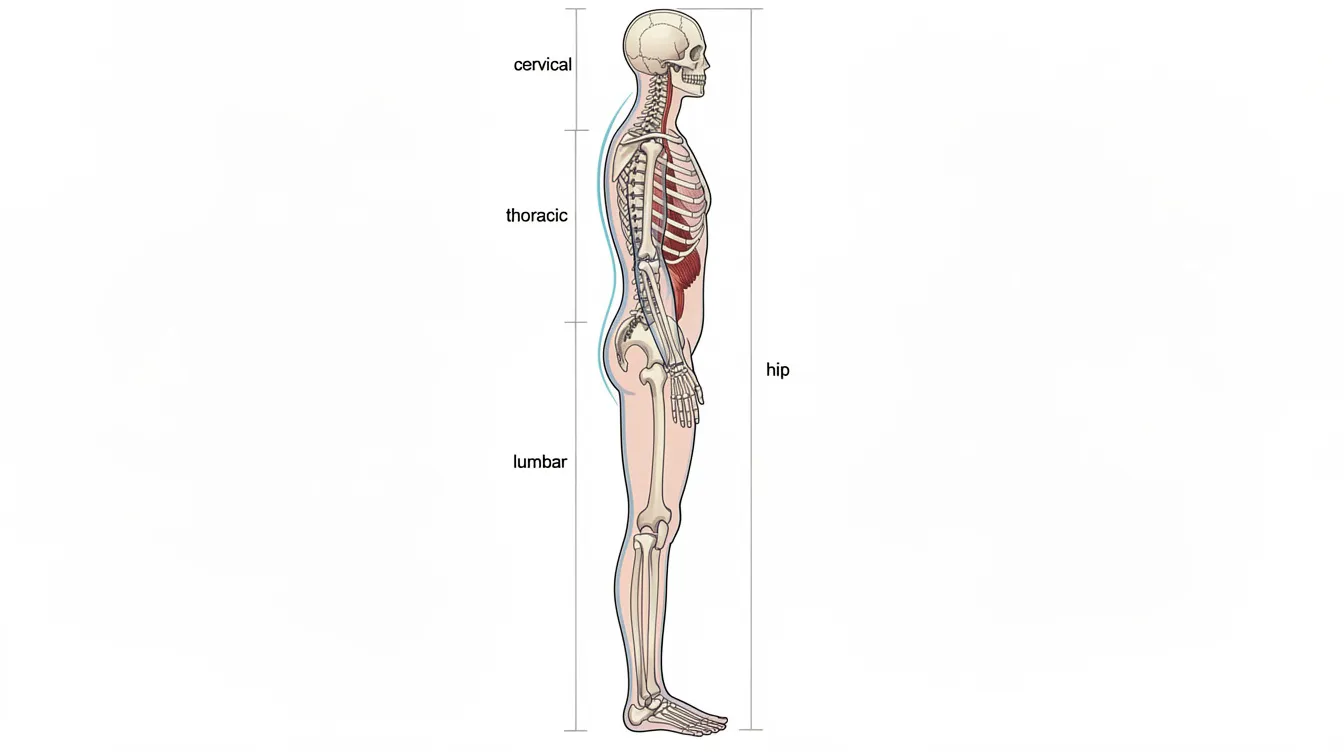
Spinal health affects daily tasks in concrete ways. Walking requires balanced sagittal alignment – the forward-to-back positioning of your spine relative to your pelvis. Poor posture can limit mobility and cause pain in seniors, making even short walks exhausting. Reaching and lifting depend on adequate lumbar lordosis (the inward curve of your lower back), which allows safe bending at the waist. Getting in and out of chairs requires coordinated trunk strength and spinal flexibility. Turning to look behind you while walking – essential for crossing streets safely – demands thoracic mobility that stiffens with age.
The Spine-Independence Connection
The relationship between spinal alignment and independent living is mediated primarily through two systems: the musculoskeletal system and the nervous system.
When vertebrae are properly aligned, nerve signals travel efficiently between the brain and body, supporting proprioception – your body’s ability to sense its own position in space. This proprioceptive feedback is critical for balance, coordination, and fall prevention. Research published in the European Spine Journal demonstrates that sagittal vertical axis (SVA) – a key measurement of how far forward your upper spine has shifted relative to your pelvis – directly correlates with postural sway and balance impairment in older adults.
Chiropractic care improves balance, helps reduce pain, and lowers fall risk by addressing these alignment issues at their source. Better spinal alignment can enhance balance and reduce fall risk, which is why improved posture reduces the risk of falls in older adults. When your spine maintains its natural curves, your eyes look forward rather than downward, your centre of gravity stays over your feet, and your muscles work efficiently rather than constantly compensating for imbalance.
Age-Related Spinal Degeneration and Changes in 60s and 70s
Aging often leads to joint pain and stiffness, but understanding why empowers you to take effective action. Several natural processes accelerate during the 60s and 70s:
Disc degeneration: Intervertebral discs gradually lose hydration and height, reducing the cushioning between vertebrae. This spinal degeneration can lead to chronic pain and stiffness, particularly in the lumbar region.
Facet joint arthritis: The small joints connecting each vertebra develop osteoarthritic changes, including bone spurs (osteophytes) that restrict movement and cause inflammation. Arthritis in these joints is a primary source of chronic back pain in seniors.
Postural changes: Thoracic kyphosis – the outward curve of the upper back – tends to increase with age, while lumbar lordosis flattens. These shifts move the body’s centre of gravity forward, demanding more muscular effort for every movement. Kyphosis can limit mobility and cause pain in seniors, creating a cycle where discomfort leads to inactivity, which accelerates further decline.
Muscle loss: Sarcopenia – the age-related loss of muscle mass – affects the paraspinal muscles (erector spinae and multifidus) that hold your spine erect. Without these muscular supports, maintaining good posture becomes increasingly difficult.
Vertebral compression fractures: Particularly common in women with osteoporosis, these fractures cause loss of height and increased thoracic curvature, often without the person realising what has happened.
These changes don’t happen overnight, and they don’t have to lead to lost independence. Proactive spinal care makes the critical difference between gradual decline and maintained function.
Common Spinal Health Challenges Affecting Independence
The age-related changes described above manifest as specific, recognisable challenges that chip away at a senior’s ability to live independently. Understanding these challenges is the first step toward addressing them – and each one has practical solutions through targeted chiropractic care and lifestyle modifications.
Postural Decline and Forward Head Position
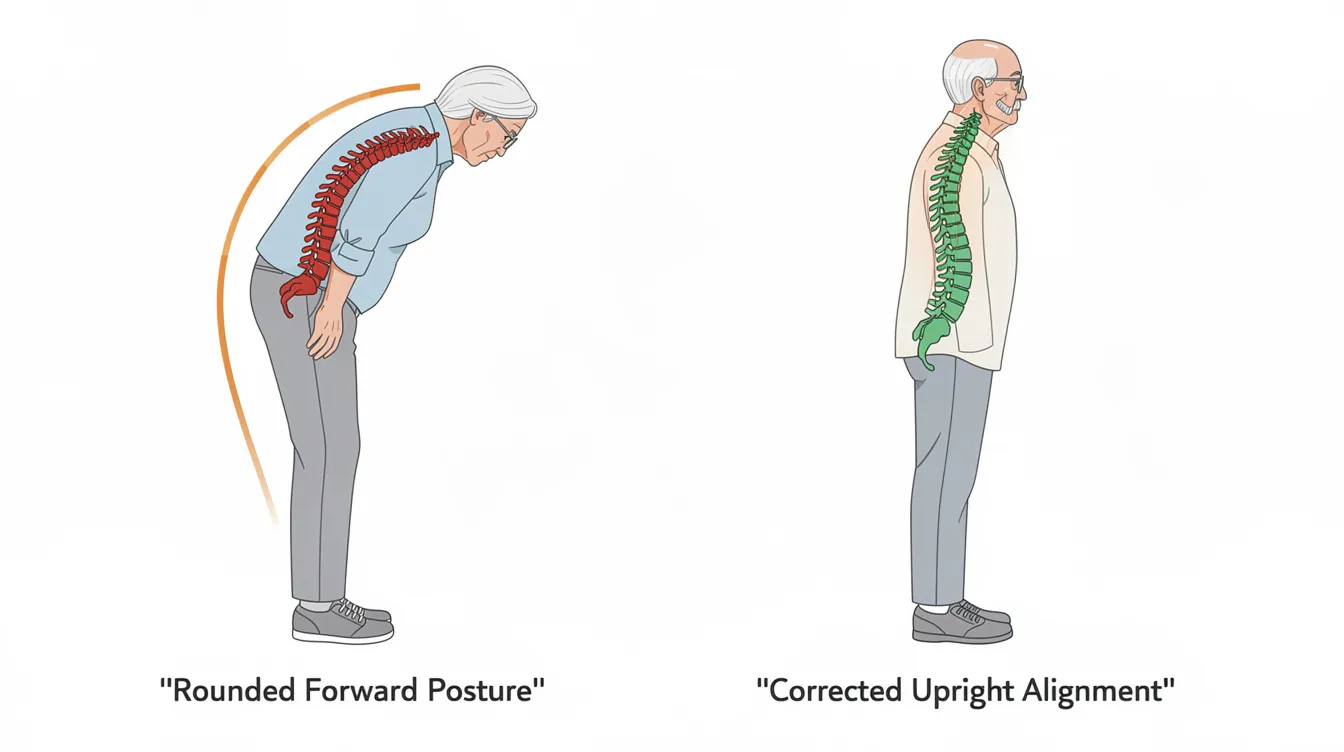
Forward head posture – where the head drifts ahead of the shoulders – combined with rounded shoulders and increased thoracic kyphosis is one of the most visible signs of spinal aging. But its consequences go far beyond appearance.
Poor posture compresses the chest cavity, reducing lung capacity and leaving seniors feeling breathless during simple activities. It shifts the visual field downward, meaning obstacles on the ground ahead may be missed while environmental awareness suffers. This directly increases fall risk. Forward head posture also compresses cervical nerves, potentially causing headaches, neck pain, and radiating arm discomfort – issues that further reduce active participation in daily life.
The practical impacts are significant: driving becomes uncomfortable as turning the neck grows difficult, cooking requires hunching further forward over countertops, and social engagement suffers as fatigue from maintaining an upright position limits time spent outside the home. Regular chiropractic sessions improve posture for seniors by addressing the structural misalignments and muscular imbalances driving these changes. Better posture enhances overall comfort and movement for seniors, helping them maintain an active lifestyle and fulfilling lifestyle for longer.
Chronic Lower Back Pain and Stiffness
Back pain in seniors is typically multifactorial – degenerative discs, facet joint arthritis, and muscle atrophy all contribute. Chiropractic adjustments target root causes of pain rather than masking symptoms, which distinguishes this approach from purely pharmacological pain relief.
The impact on independence is direct and measurable. When bending to pick something up from the floor causes sharp pain, seniors stop bending. When lifting a grocery bag triggers stiffness that lasts for days, shopping trips get shorter or stop entirely. Meal preparation, household cleaning, gardening – all require comfortable spinal movement. Chronic pain creates a vicious cycle: pain leads to reduced activity, reduced activity leads to muscle weakness and stiffness, and increased stiffness leads to more pain.
Strengthening core muscles helps support the spine and reduces chronic pain. Studies comparing chiropractic care with physical therapy for low back pain in older adults found that both approaches produced significant improvements in pain measures at 6 and 12 weeks, with chiropractic care often providing faster initial relief. Chiropractic care provides a drug-free approach to managing chronic pain in seniors, avoiding the polypharmacy risks that come with adding pain medications to an already complex medication regimen.
Reduced Spinal Mobility and Range of Motion
Stiffness in the spine doesn’t just cause discomfort – it fundamentally changes how safely and confidently a person moves through their environment. Reduced lumbar extension range is a key predictor of fall risk, because it limits the ability to recover from stumbles. Limited thoracic rotation makes it difficult to turn while walking, to look behind when backing up, or to reach for objects on a shelf.
Regular stretching and movement help maintain mobility and counteract joint stiffness, but many seniors find themselves caught in a pattern where stiffness discourages movement, and lack of movement worsens stiffness. Research on spinal alignment in community-dwelling elderly found that individuals with sagittal vertical axis measurements exceeding 40 mm had significantly higher rates of both single and multiple falls.
These challenges – postural decline, chronic pain, and reduced mobility – compound over time. A senior dealing with all three simultaneously faces a dramatically higher risk of losing independence than one who addresses even a single factor. The good news: targeted interventions can address all three simultaneously, which is exactly what senior-focused chiropractic care is designed to do.
Targeted Senior Chiropractic Care for Independence
At Everton Chiropractic, senior care is not simply standard chiropractic treatment applied to an older body. It is a specifically adapted approach that accounts for bone density changes, existing health conditions, individual needs, and the unique goals of patients who want to maintain their independence. Some seniors may also be comparing this kind of support with options in independent living facilities, but the focus here is on helping them stay capable and comfortable at home. Personalised care means every treatment plan begins with a thorough understanding of what each person needs to keep doing in their daily lives – and what is currently preventing them from doing it comfortably.
Gentle Adjustment Techniques for Seniors
Low force techniques are appropriate whenever a patient has osteoporosis, fragile joints, advanced arthritis, or simply prefers a gentler approach. Chiropractic care is safe for seniors with osteoporosis or fragile joints when proper techniques are selected and administered by experienced chiropractors.
A comprehensive safety review of chiropractic care for adults aged 55 and over analysed 412 treatment-related adverse events across 25 studies: the vast majority were mild or moderate (muscle soreness, temporary joint stiffness), with only 9 classified as severe and none as catastrophic. This safety profile supports chiropractic as a viable, low-risk intervention for seniors.
The treatment process typically follows these steps:
-
Comprehensive assessment – Full health history including fall history, osteoporosis status, medications, and comorbidities; posture analysis using digital inclinometers; range of motion testing; strength evaluation of core, back extensors, and hip stabilisers; gait and dynamic balance assessment
-
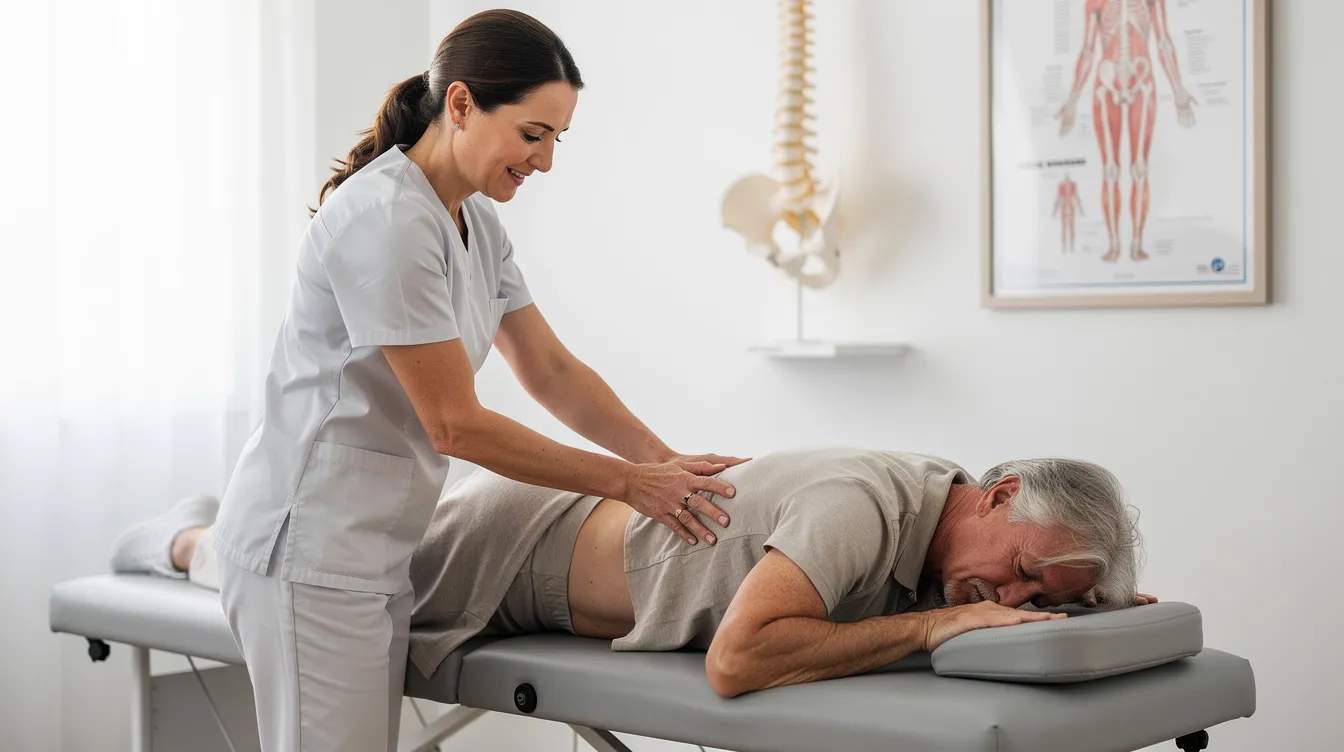
Gentle mobilization – Slow, controlled oscillatory motions and low force instrument-assisted adjustments to restore joint movement without stressing fragile structures. Gentle adjustments restore flexibility and range of motion progressively
-
Soft tissue therapy – Targeted massage, trigger point release, and myofascial work to reduce muscle tension in areas like the pectorals, suboccipital muscles, hamstrings, and lower back
-
Progressive adjustment protocols – Treatment intensity is tailored to individual tolerance, beginning conservatively and advancing as the body responds. Regular chiropractic sessions improve posture and spinal alignment over time, with an initial intensive phase (typically 2–3 sessions per week for 4–6 weeks) tapering to maintenance visits every 4–8 weeks
Gentle adjustments alleviate arthritis symptoms and enhance joint mobility without stressing bones, making this approach particularly valuable for seniors managing multiple musculoskeletal conditions simultaneously.
Comprehensive Treatment Comparison
Seniors and their families often wonder how chiropractic care compares with other available options. Understanding the strengths and limitations of each approach helps in choosing the right care pathway – or, ideally, combining approaches for the best outcome. This holistic approach to well being recognises that no single intervention addresses every aspect of spinal health.
|
Factor |
Traditional Physical Therapy |
Chiropractic Care |
Medical Management |
|---|---|---|---|
|
Primary Focus |
Strength training, flexibility, balance and gait retraining |
Spinal alignment correction, nervous system optimisation, joint function restoration |
Pain medication, injections, surgical intervention |
|
Time to Noticeable Results |
4–12 weeks for measurable strength and balance gains |
Relief often begins within 1–4 sessions; alignment improvements over several weeks |
Pharmacological relief can be rapid; surgical recovery takes weeks to months |
|
Independence Impact |
Builds muscular support for safer mobility; slower to change alignment directly |
Reduces fall risk (3.8% vs 5.4% in observational study), restores mobility, improves posture |
Addresses severe cases; medication side effects may impair function; surgery carries recovery risks |
|
Safety Considerations |
Generally very safe; requires consistent effort |
Mild soreness common; severe adverse events rare (9 of 412 AEs); adapted techniques for osteoporosis |
Polypharmacy risks; GI, kidney, cardiovascular side effects; surgical complications in older patients |
|
Best For |
Building long-term muscular endurance and strength |
Correcting alignment-driven pain, improving balance, and restoring joint mobility |
Severe structural problems, acute pain management, cases unresponsive to conservative care |
A 2025 systematic review of musculoskeletal manipulative therapies for adults aged 65 and over found improvements in pain intensity, functionality, and enhanced quality of life across multiple studies. The most effective outcomes occurred when manual therapy was combined with exercise and lifestyle guidance – suggesting that chiropractic care works best not in isolation, but as part of an integrated strategy. Nutrition and exercise advice can be part of chiropractic care for seniors, and many practitioners at quality care clinics like Everton Chiropractic include these elements as standard.
Common Independence Challenges and Chiropractic Solutions
Beyond the broad categories of posture, pain, and mobility, seniors face specific daily challenges that threaten their self determination and ability to enjoy life on their own terms. Each of these challenges has targeted spinal health solutions.
Difficulty Getting In and Out of Chairs
This seemingly simple movement requires coordinated lumbar extension, hip flexion, and trunk control. When poor posture shifts the centre of gravity forward (increased sagittal vertical axis), the muscular effort needed to stand increases substantially – sometimes beyond what weakened paraspinal muscles can generate.
Chiropractic solutions include restoring lumbar lordosis through gentle adjustments, which repositions the centre of gravity closer to the base of support. Combined with home exercise recommendations – such as seated trunk extensions, hip flexor stretches, and progressive sit-to-stand practice – these interventions make chair transitions safer and easier. Ergonomic advice about chair height, armrest placement, and appropriate home fittings further supports this essential daily task.
Balance Issues and Fall Risk
Aging increases the risk of falls due to mobility issues, but the spinal component of fall risk is often underappreciated. Chiropractic care helps seniors improve balance and coordination through several mechanisms: cervical spine adjustments support vestibular system function, thoracic and lumbar corrections improve proprioceptive feedback, and restored spinal alignment keeps the eyes looking forward rather than downward.
Regular chiropractic visits can reduce seniors’ risk of falls. The observational cohort data showing a relative risk of approximately 0.71 for falls among seniors receiving spinal manipulative therapy represents a clinically meaningful reduction. Balanced training exercises help reduce the risk of falls among older adults, and chiropractors frequently prescribe balance-specific exercises (such as Tai Chi movements, single-leg standing progressions, and vestibular exercises) alongside in-clinic care for comprehensive fall prevention.
Chronic Fatigue from Poor Posture
When the spine is misaligned, muscles work overtime to compensate. The erector spinae, trapezius, and deep cervical flexors are under constant strain in seniors with forward head posture or increased kyphosis, creating a persistent fatigue that limits how much a person can do in a day. This postural fatigue is distinct from medical fatigue – it is specifically caused by the mechanical inefficiency of holding a misaligned body upright.
Regular chiropractic sessions improve posture and spinal alignment, and better posture dramatically reduces this energy drain. Seniors consistently report improved endurance for daily tasks – longer walks, more comfortable meal preparation, and greater confidence engaging in meaningful activities and community events. Improved balance, reduced pain, and increased energy combine to support overall well being and an active lifestyle that defines a truly fulfilling lifestyle in later years.

These specific challenges – difficulty with transfers, balance impairment, and postural fatigue – represent the practical, day-to-day barriers to independence. Addressing them through targeted spinal care creates compounding benefits: solve one, and the others often improve as well, because they share common biomechanical roots.
Conclusion and Next Steps
Maintaining independence in your 60s and 70s is not about accepting gradual decline as inevitable. Spinal degeneration can lead to chronic pain and stiffness, but proactive spinal care – gentle adjustments, postural correction, targeted exercise, and ongoing maintenance – addresses these changes before they erode your ability to manage daily tasks. Regular exercise and proper nutrition promote spinal health and independence in older adults, and when combined with professional chiropractic care, these strategies form a comprehensive defence against age-related functional decline.
The evidence supports action: seniors who maintain spinal alignment through regular care have better balance, fewer falls, less pain, and more years of confident, independent living. Chiropractic adjustments target the root cause of seniors’ pain, rather than simply managing symptoms, offering a sustainable path to healthy aging.
Take these steps today:
-
Schedule a comprehensive spinal assessment at Everton Chiropractic to establish your baseline posture, mobility, and balance status
-
Begin daily posture awareness exercises – chin tucks, wall angels, and seated trunk extensions take just 5–10 minutes and yield measurable improvements
-
Implement ergonomic improvements at home – adjust chair heights, ensure good lighting along walkways, and arrange frequently used items at accessible heights
-
Establish a regular chiropractic maintenance schedule – after initial intensive care, periodic visits every 4–8 weeks help preserve gains and catch new issues early
Related topics worth exploring include nutrition for bone health (calcium and vitamin D intake), structured exercise programmes for seniors, home safety modifications to reduce fall hazards, and assistive technology options that support safe mobility at home. Gentle adjustments can enhance seniors’ flexibility and range of motion, and regular adjustments can enhance flexibility and range of motion – but these work best within a broader commitment to staying active, eating well, and engaging with your community.
Additional Resources
-
Singapore senior health support: The Health Promotion Board and community services offer fall risk screening programmes and seniors’ wellness activities across neighbourhoods
-
Home exercise for spinal health: Daily routines should include spinal extension stretches, core strengthening (modified planks, bridges), hip flexor stretches, and balance practice (single-leg stands, heel-to-toe walking)
-
Ergonomic assessment checklist: Review chair seat heights (knees at 90°, feet flat), bed firmness, bathroom grab bar placement, kitchen counter accessibility, and lighting adequacy in hallways and stairwells
-
Professional consultation: Contact Everton Chiropractic to discuss a personalised care plan designed around your unique needs, health history, and independence goals – because staying active and maintaining your quality of life in your 60s, 70s, and beyond starts with a healthy spine