Introduction
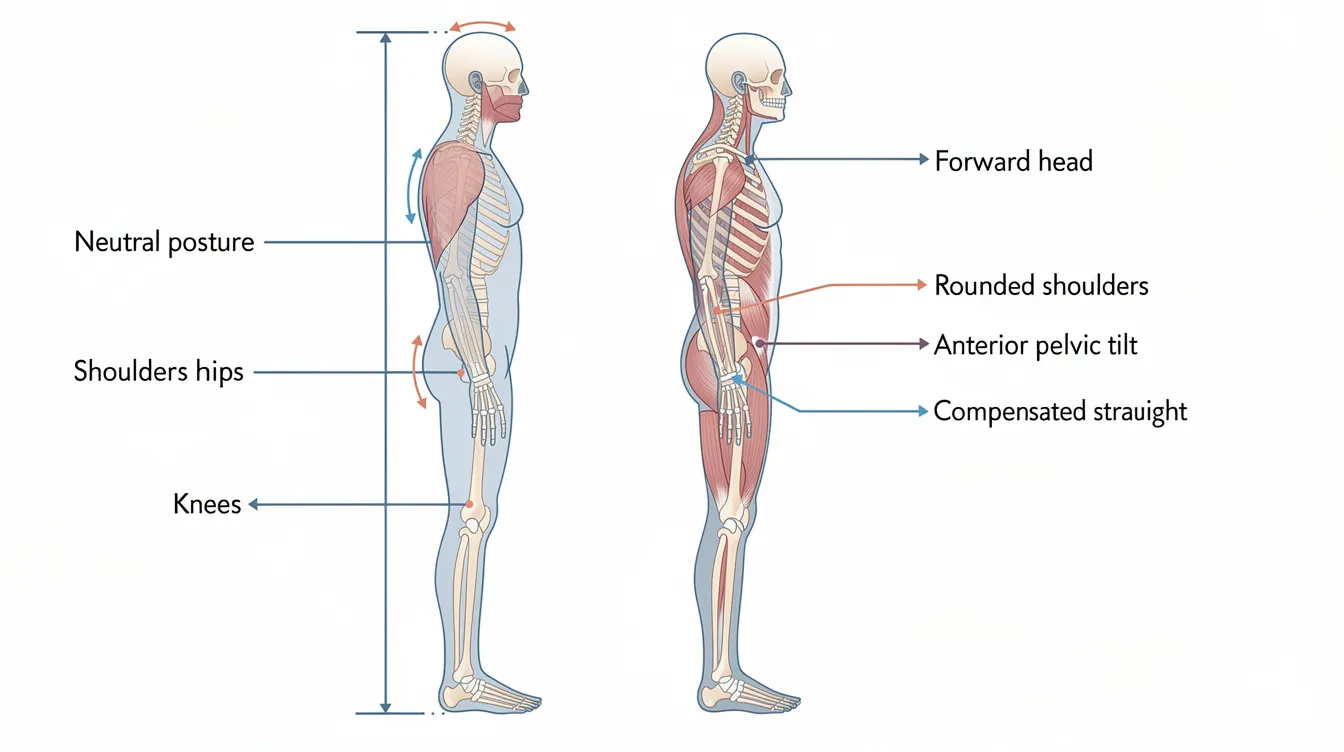
Chronic postural stress occurs when your body maintains suboptimal positions-such as a slouched spine, forward head position, or rounded shoulders-for prolonged periods, forcing certain muscles to overwork while others weaken and creating compensatory patterns that progressively strain your joints and alter spinal alignment. This isn’t a sudden injury; it’s a slow, cumulative process where your musculoskeletal system quietly reorganizes itself around dysfunction.
This article covers the specific mechanisms through which chronic postural stress creates compensation in muscles and joints, the most common muscle patterns seen in desk-bound adults, and practical prevention strategies relevant to Singapore’s office workers and technology users. Whether you’re a computer worker spending 7–8 hours seated daily, a commuter hunched over a smartphone on the MRT, or someone already experiencing neck pain and stiffness, understanding these compensation chains is the first step toward correcting them, especially since many people experience stress in ways that increase postural strain and discomfort. What falls outside this scope: acute injuries, congenital spinal conditions, and surgical interventions.
The direct answer: Chronic postural stress forces certain muscles into sustained shortening while their antagonists become overstretched and weakened. This creates muscle imbalances that alter joint mechanics, compress nerves and blood vessels, and trigger neurological adaptations in the central nervous system-stress affects these compensation patterns as well as the mechanical ones-ultimately embedding poor posture as your body’s default state.
Here’s what you’ll gain from this article:
-
A clear understanding of how compensation mechanisms develop from sustained poor posture
-
The ability to recognize early warning signs before chronic pain conditions develop
-
Knowledge of the most common compensation patterns-forward head posture, upper crossed syndrome, and lower crossed syndrome
-
Practical prevention and correction strategies including targeted exercises and stress management techniques
-
Criteria for knowing when to seek chiropractic care for professional postural assessment
Understanding Chronic Postural Stress and Poor Posture
Chronic postural stress is the biomechanical load imposed by maintaining suboptimal body posture for extended periods-typically hours each day, over weeks, months, and years-that exceeds the natural tolerance of your connective tissues, muscles, joint capsules, and nervous system. It encompasses more than just “sitting badly.” It is the accumulated effect of every prolonged non-neutral position your body holds: the forward lean toward a monitor, the neck flexion over a phone, the slumped thoracic curve during commutes.
For Singapore adults, this is particularly relevant. Office workers here average over 7–8 hours of seated work daily, with additional hours of smartphone use extending neck flexion postures well outside neutral alignment. The combination of sedentary office culture, air-conditioned environments that reduce movement motivation, and long daily commutes creates a near-constant static postural load. Many adults in their 40s through 60s are already showing reduced spinal mobility and increased prevalence of both the physical symptoms of back pain and chronic neck pain as direct consequences.
The Body’s Natural Response to Sustained Postures
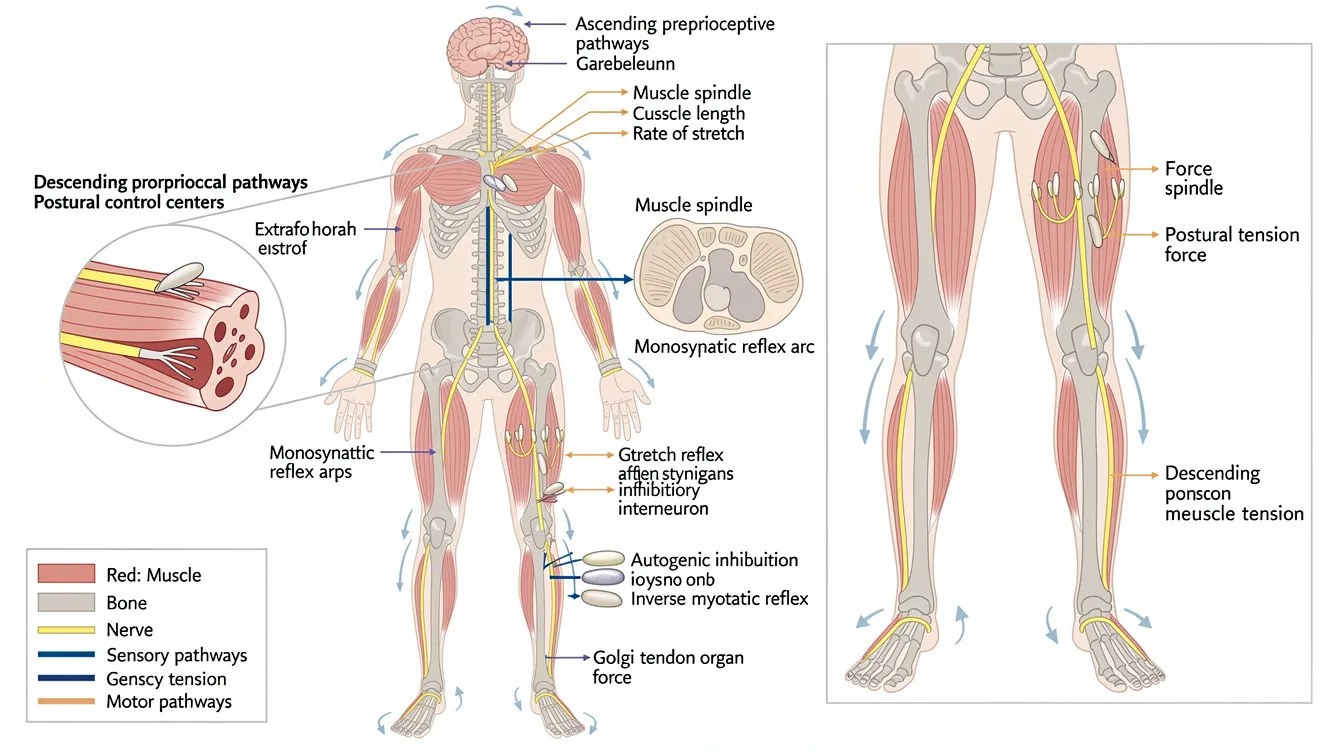
Your body posture is not maintained by conscious effort-it’s regulated involuntarily through a sophisticated network of reflex arcs, proprioceptive sensors, and postural adjustments managed by your nervous system. Muscle spindles detect length changes in muscles, Golgi tendon organs monitor force, and vestibular and visual inputs continuously refine balance. When you hold a position-say, leaning forward at a desk-low-level tonic contraction in postural muscles (predominantly slow-twitch, type I fibers) activates reflexively to maintain equilibrium.
Initially, these are protective mechanisms. The body compensates by recruiting different muscles to maintain balance-synergists step in to distribute load, energy expenditure is optimized, and stability is preserved. But here is where the problem begins: as the central nervous system “learns” this new equilibrium through repeated exposure, the compensatory patterns become automatic. Movement patterns can become automatic and reinforce poor posture, and what started as a temporary adaptation becomes the default motor program.
Research on chronic bed rest and postural instability demonstrates that static conditions don’t merely weaken muscles-they alter spinal reflex excitability and degrade sensory integration between visual, vestibular, and proprioceptive systems. The underlying stress response shifts from protective to dysfunctional. Compensatory adaptations in posture can become chronic without intervention, and the nervous system stops recognizing the compensated position as abnormal.
Fascia and Connective Tissue Adaptations
Fascia is the continuous web of dense connective tissue that envelops every muscle, bone, nerve, and organ in your body. Far from being passive wrapping, the fascia system plays an active role in force transmission, proprioception (through embedded mechanoreceptors like Ruffini and Pacini corpuscles), and structural integrity. The thoracolumbar fascia is particularly central in transferring load between the spine and pelvis during movement.
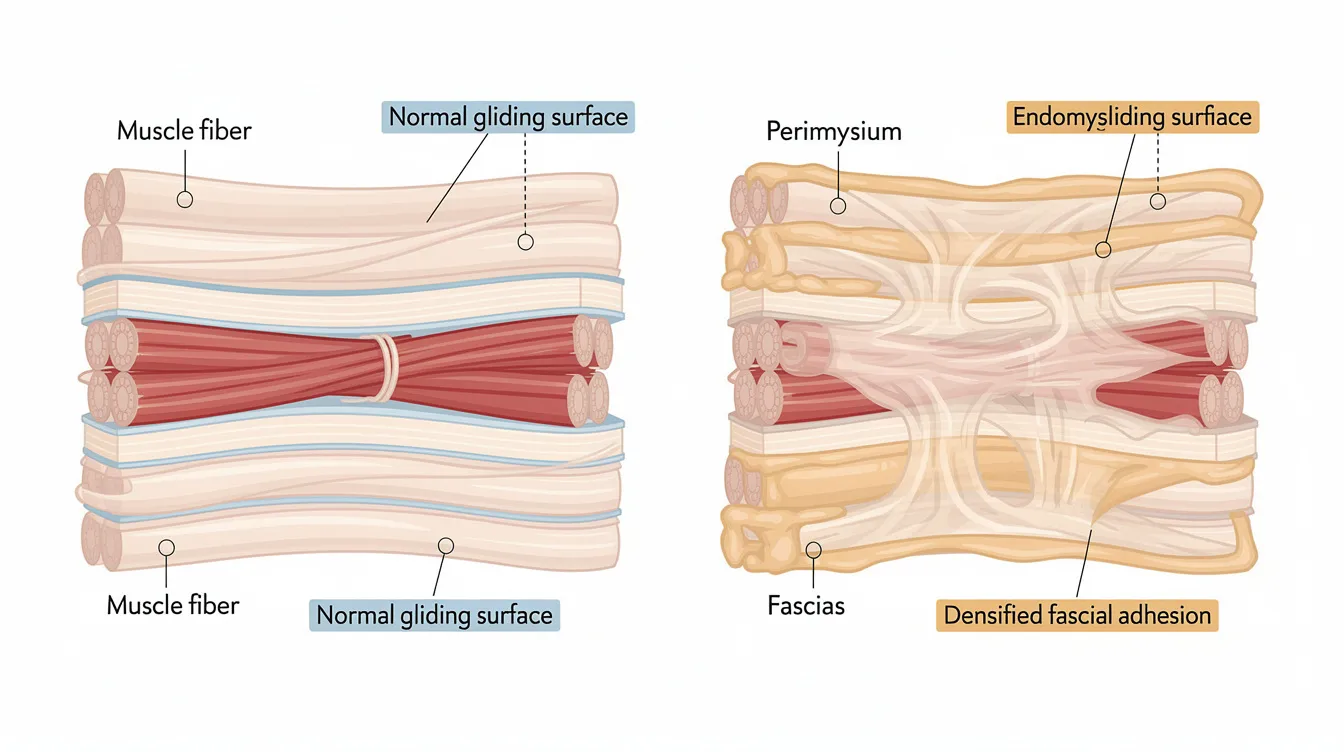
When chronic stress leads to sustained positions, fascia adapts-but not favorably. Fascia adapts to new positions by forming knots or adhesions, and excess collagen deposition, cross-linking, and changes in extracellular matrix viscosity occur. Hyaluronan-a lubricating substance within fascial layers-becomes gelatinous, restricting the gliding surfaces between tissue planes. Research published in Frontiers in Physiology shows that the thoracolumbar fascia in chronic low back pain patients demonstrates reduced shear strain, increased thickness, and greater stiffness compared to healthy controls.
These fascial restrictions directly alter how force is transmitted through your body. When the superficial back line fascia stiffens-from the plantar fascia through the calves, hamstrings, and erector spinae-the spine may be pulled into excessive kyphosis or flattened lumbar lordosis. Muscles must work harder to generate movement or maintain posture, and poor fascial proprioceptive input disrupts the body’s spatial awareness and reflex control. Muscles and connective tissues remodel based on chronic loading forces, creating a self-reinforcing cycle: fascia stiffens, muscles shorten or weaken, neural feedback degrades, and further compensation follows.
This fascial remodeling sets the stage for the specific muscle compensation patterns that develop in chronically stressed tissues.
The Compensation Process in Muscles and Joints
With fascial restrictions altering force transmission and proprioceptive feedback degrading, the stage is set for measurable changes in how your muscles and joints function. The compensation process unfolds across three interconnected systems: muscular, articular, and neurological.
Muscle Imbalance Development
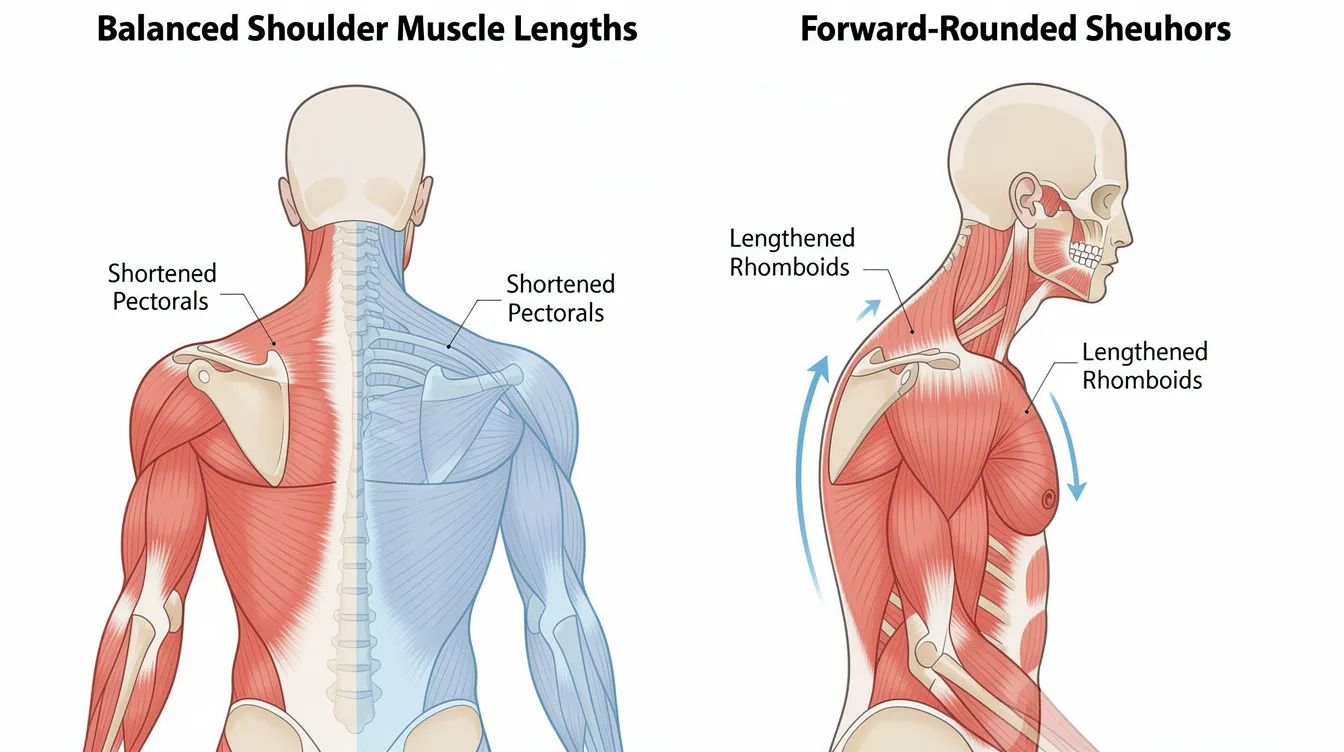
Muscles produce force most efficiently at their optimal resting length-approximately 80–120% of ideal sarcomere length, as described by the length-tension relationship. Chronic postural stress disrupts this balance in predictable ways. Muscles adapt by changing their resting length in response to habitual postures: chronically shortened muscles (such as the pectoralis minor in rounded shoulders) lose sarcomeres and operate on the ascending limb of their force curve, reducing their contractile potential. Conversely, muscles held in a stretched position become overstretched and weakened-the deep cervical flexors in forward head posture, for example, operate on the descending limb, producing force inefficiently.
Reciprocal inhibition compounds this problem. When one muscle group becomes overactive and tight, it suppresses the neural drive to its antagonist. Tight hip flexors inhibit the gluteus maximus; tight muscles in the chest inhibit the scapular retractors. Research on reciprocal inhibition techniques shows that this neural suppression is measurable and significant-and that techniques activating antagonist muscle groups improve pain and strength outcomes in forward head posture more effectively than passive stretching alone.
Chronic shortening of muscles leads to tightness and fatigue, while their antagonists progressively atrophy. What begins as a reversible adaptation-correctable with rest and movement-becomes structural over months to years as sarcomere numbers change, muscle fiber types shift, and contracture develops. Muscle imbalance contributes to functional limitations that compound with each passing month of uncorrected posture stress.
Joint Mobility Changes
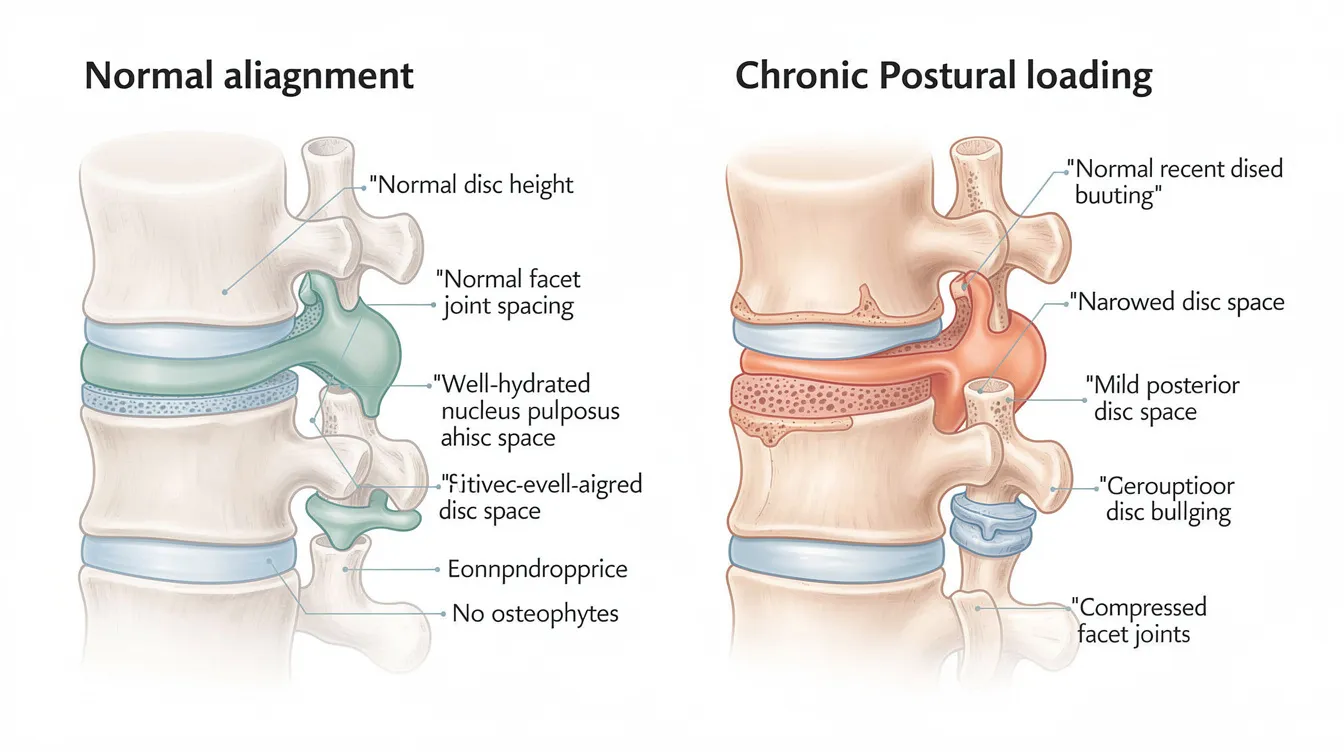
Muscle imbalances don’t exist in isolation-they directly alter joint mechanics. When tight muscles pull a joint into a non-neutral position, the contact surfaces between bones shift, range of motion becomes asymmetric, and loading patterns change. Joint misalignment accelerates wear and tear on cartilage through increased compressive forces on facets, menisci, and articular surfaces.
Research on hip joint compensation demonstrates that pelvic retroversion of approximately 6° can yield contact pressure increases of roughly 1.5 MPa in the anterosuperior acetabular cartilage. While this specific study examined developmental dysplasia, analogous stress shifts occur under chronic compensations from prolonged sitting. Poor posture increases stress on joints and ligaments across the spine, hips, knees, and ankles.
The consequences of altered joint loading are progressive. Repeated microtrauma triggers inflammation, upregulates cartilage-degrading enzymes (matrix metalloproteinases), and activates mechanosensitive ion channels that increase pain sensitivity. Over time, this leads to facet joint arthritis, disc degeneration, and osteoarthritic changes. Persistent poor posture can lead to joint instability and reduced mobility-and distal compensations cascade outward, with ankle and foot joints developing their own abnormal stress patterns to accommodate dysfunction higher up the chain.
Neurological Adaptations
Perhaps the most insidious aspect of postural compensation is how the brain adapts. The central nervous system rewires motor control so that compensated movement patterns feel normal. Anticipatory postural adjustments-the unconscious muscle activations that prepare your body for movement-change their timing and sequencing. In forward head posture, deep neck flexors activate late or weakly while suboccipital muscles overfire, but the brain registers this as standard operation.
Stress-induced muscle tension can alter movement patterns at the cortical level. Brain imaging studies reveal changes in gray and white matter structure in regions governing balance and proprioception after chronic disuse or static positioning. Synaptic efficiency in reflex arcs adjusts, interneuron circuits mediating reciprocal inhibition recalibrate, and sensory input from fascia and joints degrades through proprioceptive down-weighting. Chronic stress can lead to lasting postural habits encoded at the neurological level.
This neuroplastic adaptation explains why simply “sitting up straight” often feels exhausting or unnatural for people with chronic deformation of their postural patterns-their nervous system has literally been reprogrammed to treat the compensated position as baseline. Stress causes involuntary muscle contraction, leading to chronic tension that the conscious mind may not even register.
These neurological changes directly produce the recognizable compensation patterns most commonly seen in sedentary adults.
Common Compensation Patterns and Their Effects
With neurological adaptations cementing compensatory motor programs, distinct and predictable postural patterns emerge. Understanding these patterns allows you to recognize them early-before severe symptoms develop-and take corrective action.
Forward Head Posture Compensation Chain
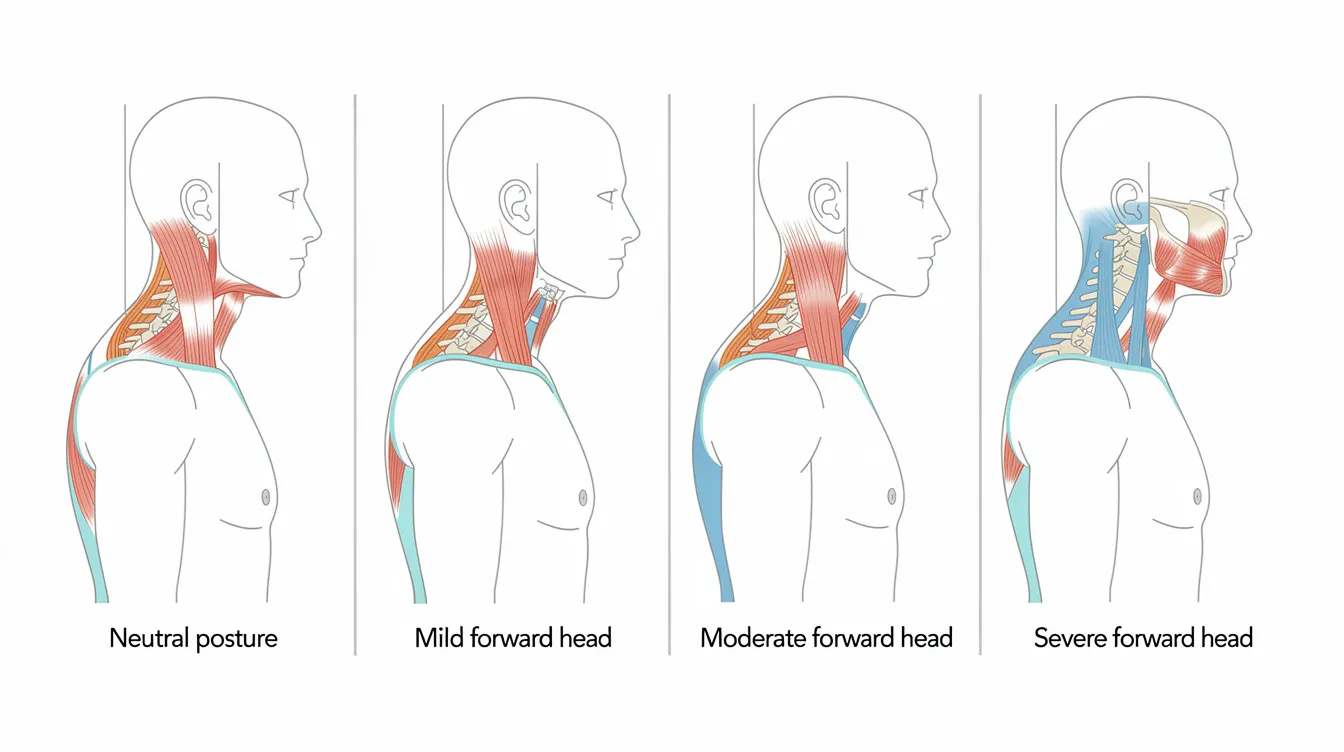
Forward head posture is the most prevalent compensation pattern among computer workers and smartphone users. It develops when the head is habitually held anterior to the body’s plumb line, typically from looking down at screens for extended periods. For every inch the head moves forward, the effective load on the cervical spine increases by approximately 10 pounds of extra pressure.
The compensation chain unfolds in stages:
-
Suboccipital shortening and upper cervical extension – To keep eyes level while the head drifts forward, the suboccipital muscles and upper cervical extensors go into chronic contraction
-
Deep cervical flexor weakening – These deep stabilizers, held in a lengthened position, become inhibited and lose strength, failing to provide anterior cervical support
-
Compensatory upper trapezius and levator scapulae overactivation – With deep stabilizers offline, these superficial neck muscles take over postural duties, leading to muscle tension, trigger points, and tension headaches
-
Secondary thoracic kyphosis – The thoracic spine increases its flexion curve to accommodate the shifted center of gravity, altering rib mechanics and contributing to difficulty breathing and reduced respiratory efficiency
-
Poor circulation effects – Forward head posture can restrict blood flow to muscles and nerves, and chronic postural stress compresses nerves and blood vessels, leading to pain, eye strain, and poor circulation in the head and neck
Forward head posture can cause tension headaches that are frequently misattributed to stress or eye strain alone. Studies confirm that degrees of forward head correlate significantly with reported neck pain scores in sedentary populations. This is one of the most common reasons Singapore residents seek neck pain relief.
Upper Crossed Syndrome Pattern
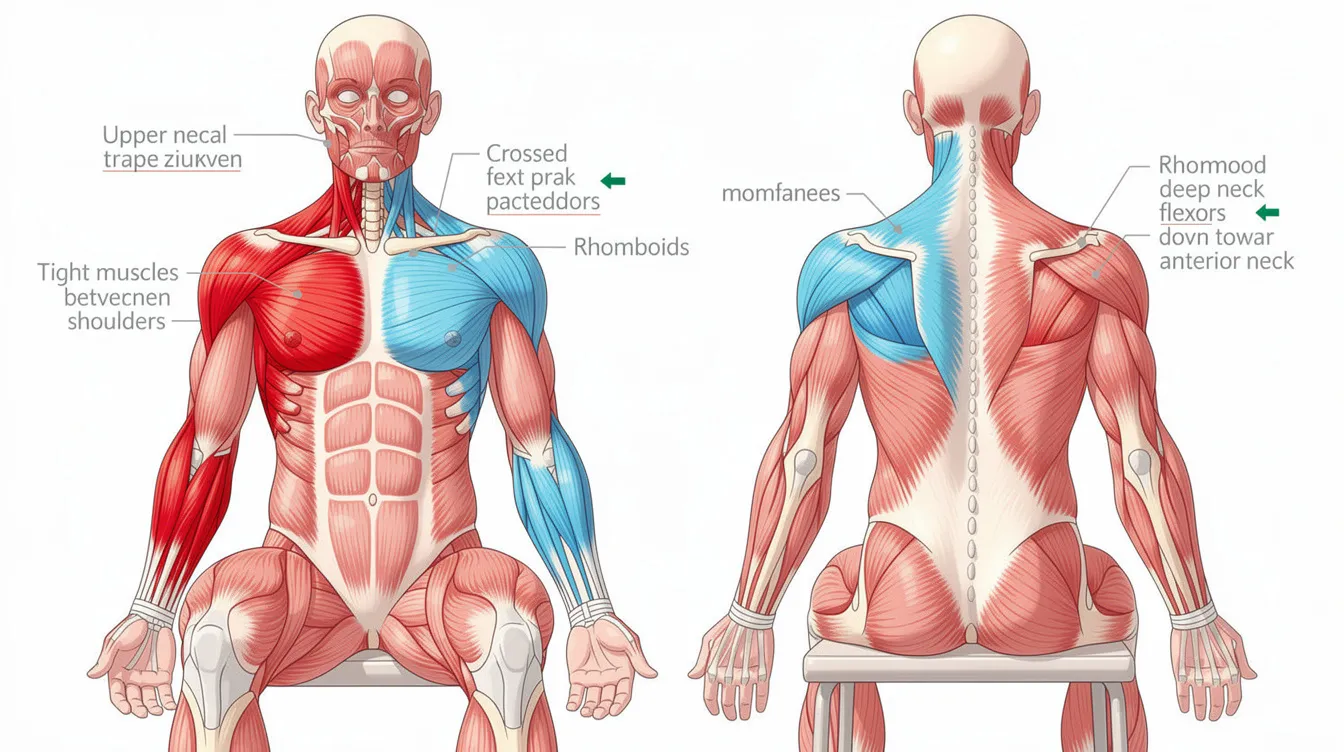
Upper crossed syndrome represents a broader compensation pattern that encompasses forward head posture and extends into the shoulder girdle. EMG studies demonstrate that subjects with rounded shoulder posture show significantly increased upper trapezius-to-lower trapezius activation ratios, confirming the imbalance through measurable data.
|
Muscle Group |
Status |
Common Effects |
|---|---|---|
|
Upper Trapezius / Levator Scapulae |
Tight / Overactive |
Neck tension, tension headaches, elevated shoulders |
|
Deep Cervical Flexors |
Weak / Inhibited |
Forward head posture, cervical instability |
|
Pectoralis Major / Minor |
Tight / Shortened |
Rounded shoulders, restricted chest expansion |
|
Rhomboids / Middle & Lower Trapezius |
Weak / Lengthened |
Scapular winging, reduced shoulder stability |
This cross-pattern of tight and weak muscles creates the characteristic “computer posture” seen throughout Singapore offices-head forward, shoulders rolled in, upper back rounded. Slouching increases muscle tension and fatigue in the overactive groups while the inhibited muscles progressively atrophy. The increased risk extends beyond discomfort: chronic loading of the cervical spine in this position can lead to nerve compression, disc herniation, and headaches requiring chiropractic care.
But the good news is that reciprocal inhibition techniques-specifically adding isometric adduction during arm exercises-have been shown to significantly reduce upper trapezius dominance while improving lower trapezius and serratus anterior activation ratios. This means that targeted exercises can begin to reverse these imbalances.
Lower Crossed Syndrome and Pelvic Compensation
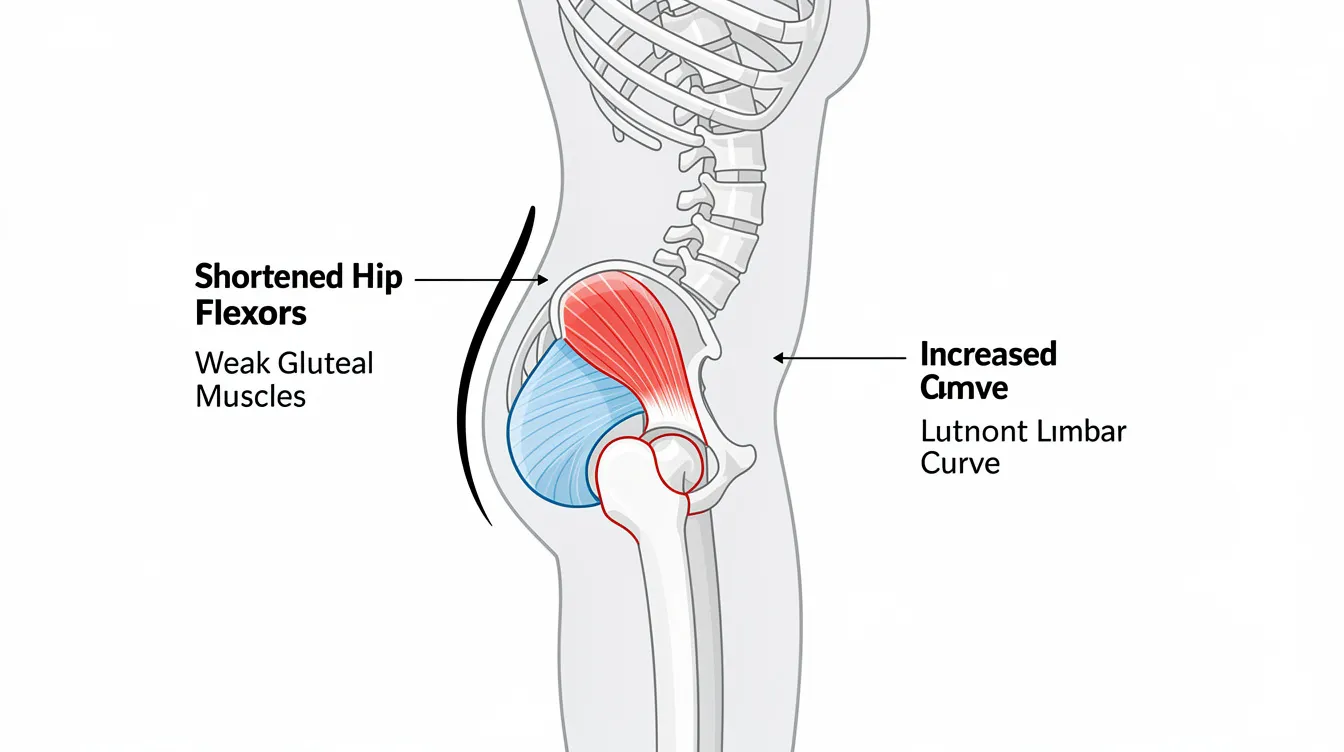
Prolonged sitting creates a parallel compensation pattern in the lower body. The hip flexors (iliopsoas, rectus femoris) remain in a shortened position for hours, becoming adaptively tight, while the gluteus maximus and deep abdominal muscles-held in a lengthened state-weaken and lose their ability to stabilize the pelvis.
This creates an anterior pelvic tilt: the pelvis rotates forward, increasing lumbar lordosis and compressing the posterior elements of the lumbar spine. Sustained poor posture can lead to pain or reduced function over time as facet load and disc pressure increase in the lower back. Hamstrings may stretch or adaptively weaken, and calf muscles compensate during standing and walking to maintain upright balance.
Hip flexor tightness correlates directly with low back discomfort in sitting office workers. The compensation extends to gait: with weak muscles in the glutes unable to produce adequate hip extension, the lumbar spine hyperextends to compensate-creating repetitive movements through the lower back that should be occurring at the hip. Prolonged static loading and repetitive tasks contribute to musculoskeletal problems that accumulate silently over years.
Understanding these three interrelated patterns provides the foundation for addressing the most common complaints that bring patients to seek care.
Common Chronic Pain Problems and Solutions
Recognizing the compensation patterns described above is essential, but Singapore patients seeking relief need practical solutions. Here are the three most common presentations linked to chronic postural stress, with clear pathways from self-management to professional intervention.
Chronic Neck and Shoulder Pain
Chronic neck pain and shoulder tension are the most frequent complaints among desk-bound adults experiencing postural compensation. The mechanism is straightforward: overactivation of the upper trapezius, levator scapulae, and suboccipital muscles combined with inhibition of deep neck flexors and lower trapezius creates sustained compression of cervical facet joints and altered disc loading. Chronic tension can manifest as neck and back pain, and when long term stress compounds the issue, elevated cortisol levels from stress impair tissue repair and recovery, slowing the body’s ability to heal from daily microtrauma.
Actionable solutions:
-
Ergonomic adjustments: Position monitors at eye level, use phone holders to avoid neck flexion, ensure your chair supports a neutral spine. Correct posture at your workstation is the single most impactful change
-
Strengthen weak muscles: Deep neck flexor chin tucks (10 repetitions, 3 times daily), wall slides for lower trapezius activation, resistance band pull-aparts for scapular retractors
-
Stretching tight muscles: Doorway pectoralis stretches, gentle upper trapezius side-bends, suboccipital self-release with a tennis ball
-
Stress management techniques: Progressive muscle relaxation and deep breathing can reduce the stress response that amplifies neck muscles tension. Managing stress directly impacts cortisol levels and reduces involuntary muscle contraction
-
When to seek evaluation: If neck pain persists beyond 4–6 weeks, includes neurological signs like numbness or tingling, shows reduced mobility in turning the head, or involves refractory tension headaches, a professional neck pain assessment is warranted. A physical therapist may also be appropriate for posture-related evaluation and chronic pain relief, alongside chiropractic care to improve posture and reduce pain through hands on techniques targeting spinal alignment
Persistent Lower Back Pain and Discomfort
The connection between hip flexor restriction and lumbar spine stress is direct and well-documented. When hip flexors remain shortened from prolonged sitting, they pull the pelvis into anterior tilt, increasing compressive forces on lumbar facets and discs. Chronic stress can worsen joint pain and inflammation, and the weakened core (transversus abdominis, multifidus) fails to provide the stabilization needed to protect the lower back. Stress often causes poor posture, leading to chronic pain that becomes self-reinforcing.
Actionable solutions:
-
Hip flexor and quadriceps stretching: Half-kneeling hip flexor stretch held 30 seconds per side, 2–3 times daily; Thomas stretch for rectus femoris
-
Glute activation: Glute bridges (15 repetitions × 3 sets), single-leg hip thrusts, clamshells to re-establish proper neural drive to inhibited gluteal muscles
-
Core stabilization: Dead bugs, bird dogs, and Pallof press variations that train the deep stabilizers without overactivating the lumbar extensors
-
Incorporating regular movement: Standing desks, walking breaks every 30–45 minutes, and mobility drills for the thoracolumbar fascia reduce sustained static loading
-
Addressing root causes: Sustained postural correction requires proper alignment of the spine and pelvis through professional assessment. Stress management is equally important-chronic stress leads to sustained muscle tension and pain that compounds mechanical dysfunction. Regular exercise reduces muscle tension and improves posture over time. Quality sleep aids in muscle recovery and stress management, and maintaining a healthy diet supports optimal musculoskeletal function
Reduced Range of Motion and Stiffness
Reduced mobility is often the earliest sign that postural compensation is progressing, even before pain develops. Fascial densification restricts normal gliding between tissue layers, structural muscle shortening limits joint excursion, and inhibitory reflexes reduce antagonist activation. The result: you can’t turn your head as far, bending forward feels restricted, and morning stiffness takes longer to resolve. Stress-induced muscle tension can restrict movement and cause pain that further discourages the movement needed for recovery.
Actionable solutions:
-
Movement breaks: Never maintain one posture for more than 30–45 minutes. Set reminders to stand, stretch, and move. Even 60 seconds of movement resets fascial hydration and proprioceptive input
-
Targeted stretching and mobility work: Dynamic stretches (leg swings, arm circles, thoracic rotations) before work; static stretches for identified tight areas after work. Stretching tight muscles can relieve tension and improve mobility
-
Myofascial release: Foam rolling for the thoracic spine, lacrosse ball work for pectorals and hip flexors, and gentle self-mobilization targeting areas of fascial restriction
-
Manual therapy: When self-management plateaus, chiropractic adjustments to restore joint mobility and soft tissue mobilization for fascial restrictions provide evidence based treatments. Understanding how often to see a chiropractor ensures you maintain progress without over-reliance on passive care
-
Exercise regularly: A combination of strength training, cardiovascular activity, and flexibility work provides the best long-term defense against reduced mobility and chronic conditions
A comprehensive management approach addresses all three of these presentations simultaneously, because the compensation patterns driving them are interconnected. Early treatment prevents simple muscle imbalances from progressing into chronic pain conditions requiring more intensive intervention.
Conclusion and Next Steps
Chronic postural stress creates predictable compensation patterns-in muscles, joints, connective tissues, and the nervous system-that progressively degrade musculoskeletal health and movement quality. The mechanisms are clear: sustained poor posture shortens some muscles, weakens others, stiffens fascia, compresses joints, and rewires motor control until dysfunction becomes the body’s default setting. Stress impacts these patterns at every level, from elevated cortisol levels impairing tissue repair to the stress response amplifying involuntary muscle tension. Sustained poor posture can lead to pain or reduced function over time, but understanding these mechanisms gives you the tools to intervene.
Immediate actionable steps:
-
Perform a posture awareness check every hour-assess your head posture, shoulder position, and pelvic alignment
-
Implement ergonomic improvements at your workstation today: monitor height, chair support, keyboard position
-
Begin a daily targeted mobility routine: 5 minutes of chin tucks, chest stretches, hip flexor stretches, and glute activation
-
Reduce stress levels through progressive muscle relaxation and deep breathing to address the underlying stress response driving physical symptoms
-
Exercise regularly with a balanced program combining strength, mobility, and cardiovascular fitness
When to seek professional care:
-
Symptoms persisting beyond 4–6 weeks despite self-management
-
Neurological signs: numbness, tingling, radiating pain
-
Persistent stiffness and reduced mobility affecting daily function
-
Visible postural changes accompanied by difficulty breathing or chronic pain
-
Failed conservative approaches after several weeks of consistent effort
For Singapore residents experiencing the effects of chronic postural stress, a comprehensive postural assessment can identify the specific compensation patterns affecting your musculoskeletal system and guide a customized treatment plan combining hands on techniques, targeted exercises, and long-term movement education. A posture corrector may offer temporary support, but lasting change requires addressing muscle patterns, fascial restrictions, and neurological adaptations through active rehabilitation.
Related topics worth exploring include ergonomic optimization for Singapore’s climate and work culture, exercise prescription for postural correction, and how stress management intersects with physical health. Schedule a consultation at Everton Chiropractic for a personalized postural assessment-because the sooner you address compensation patterns, the simpler the path back to good posture and pain-free function.
Additional Resources
-
Ergonomic assessment checklist for Singapore office workers: Monitor at eye level, feet flat on floor, elbows at 90°, lumbar support in chair, screen brightness adjusted to reduce eye strain, phone holder to eliminate neck flexion
-
Daily mobility routine targeting common compensation patterns: Chin tucks (10 reps), doorway pec stretches (30 sec each side), half-kneeling hip flexor stretch (30 sec each side), glute bridges (15 reps), thoracic foam roll extensions (2 minutes), wall slides (10 reps)-total time approximately 10 minutes
-
Recognizing early signs of postural dysfunction: Increased blood flow restriction and numbness in hands during desk work, morning stiffness lasting beyond 15 minutes, inability to maintain correct posture for more than 5 minutes, headaches concentrated at the base of the skull, joint pain when returning to neutral alignment
-
Contact Everton Chiropractic for posture assessment, spinal alignment services, and customized correction programs designed for Singapore adults with desk-based and sedentary lifestyles