
Introduction
Long-term use of painkillers for chronic lower back pain carries significant risks that most patients never anticipate when they first reach for a bottle of medication. In Singapore, up to 80% of people experience low back pain at some point in their lives, and many turn to pain medicine as their primary coping strategy. What begins as a reasonable approach to manage pain often spirals into a cycle of dependency, organ damage, and worsening disability.
This article covers the full spectrum of dangers associated with relying on prescription opioids, nonsteroidal anti inflammatory drugs (NSAIDs), and over-the-counter pain relievers for chronic conditions lasting beyond 12 weeks. It is written for adults experiencing persistent lower back pain who are currently using or considering long-term medication, and for anyone seeking a clearer understanding of why painkillers fail as a standalone solution.
The direct answer: Long-term painkiller dependency can paradoxically worsen pain through hyperalgesia, create addiction risks, mask underlying structural problems, damage vital organs, and prevent the body from healing effectively. Guidelines recommend using medications as just one part of a broader treatment plan – never as the sole strategy.
Here is what you will learn:
-
Five major dangers of chronic painkiller use for back pain
-
Why medications that provide relief short-term fail over months and years
-
The organ system damage that accumulates silently
-
Safer, evidence-based alternatives including chiropractic care and physical therapy
-
When and how to seek professional help for transitioning away from painkillers
Understanding Chronic Lower Back Pain and Painkiller Dependency
Chronic low back pain is defined as persistent pain involving the structures of the lumbar spine – discs, facet joints, ligaments, and muscles – that fails to resolve within approximately 12 weeks. Unlike acute pain following an injury or surgery, where short courses of medication serve a clear purpose, chronic pain demands a fundamentally different treatment approach that accounts for function, psychosocial factors, structural pathology, and long-term risks.
The distinction matters enormously. Opioids are effective short-term after surgery, often providing modest pain relief and some functional improvement in trials lasting 4 to 12 weeks. But clinically meaningful relief – such as a 50% or greater reduction in pain – is rare even over those short periods. When patients extend medication use beyond several weeks into months and years, the risk profile changes dramatically while the benefits plateau or vanish entirely. Studies show no long-term benefits of opioids for chronic pain, and a 12-month study showed no difference in pain function improvement between opioid and non-opioid groups.
Types of Pain Medications Commonly Used
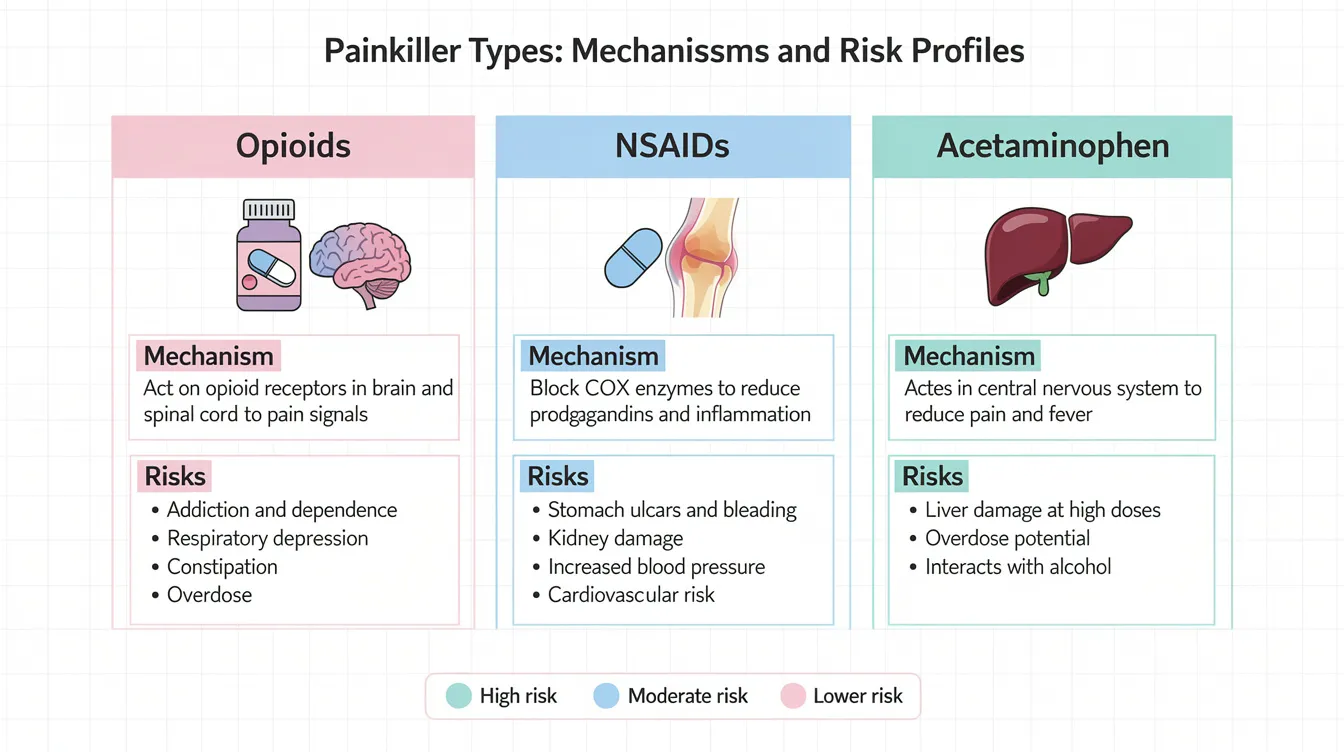
Prescription opioids such as morphine, oxycodone, and tramadol work by binding to μ-opioid receptors in the central nervous system to reduce nociceptive signalling. While they can reduce pain effectively in the short term, they carry risks of tolerance, dependency, hyperalgesia, respiratory depression, and endocrine disruption. Research shows that within 4–6 weeks, tolerance and signs of opioid-induced hyperalgesia may appear in chronic low back pain patients.
Nonsteroidal anti inflammatory drugs (NSAIDs) – including ibuprofen, diclofenac, and naproxen – inhibit cyclooxygenase (COX) enzymes, reducing the prostaglandins that mediate inflammation and pain. Nonsteroidal anti-inflammatory drugs can cause stomach ulcers and kidney damage with prolonged use, and long-term NSAID use can lead to increased blood pressure and heart risks.
Over-the-counter analgesics like paracetamol (acetaminophen) and low-dose NSAIDs are perceived as safe by most patients, but accumulated exposure creates real danger. Acetaminophen may pose risks of liver damage when used excessively. For elderly individuals or those with comorbidities, even non opioid pain relievers carry systemic risks that compound over time.
The Pain-Medication Cycle
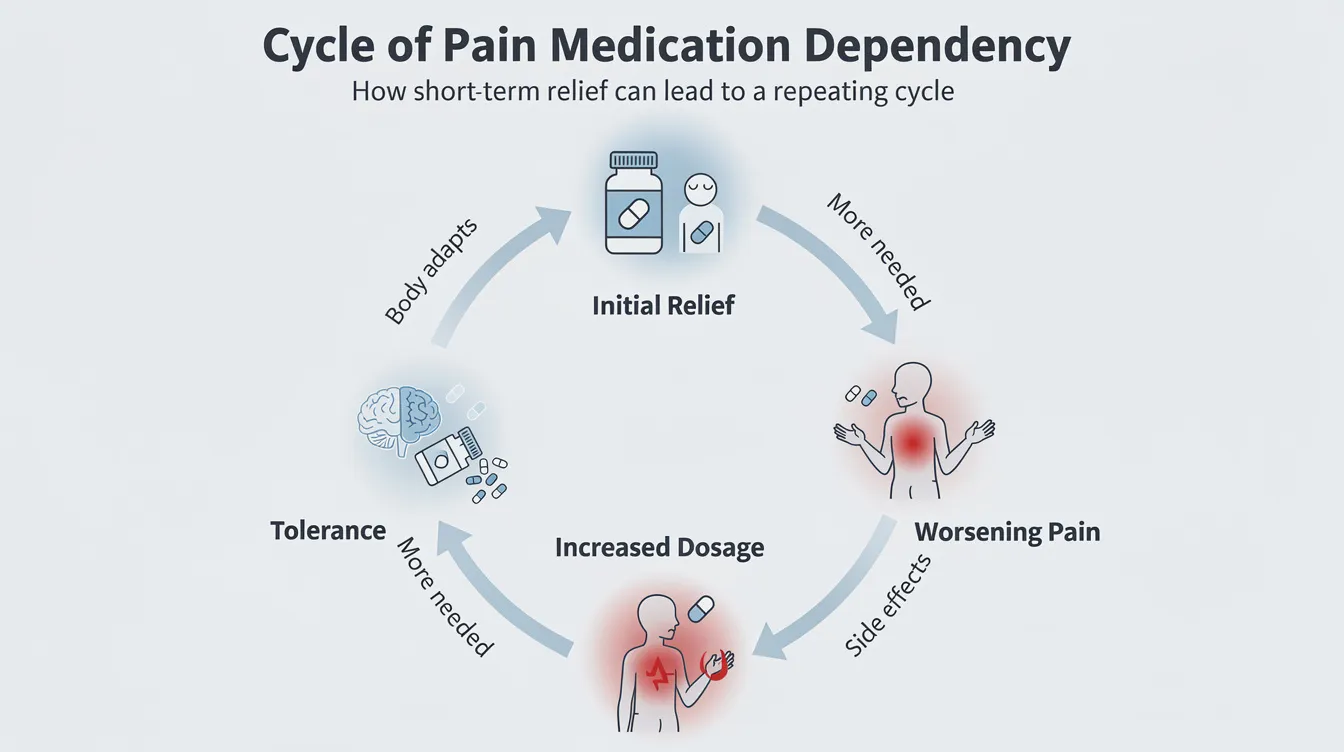
The cycle begins innocuously. A patient experiences back pain, takes medication, and feels relief. This initial success creates both psychological expectation and physical adaptation. Over time, tolerance develops – the same dose provides less relief, and increased dosages bring proportionally higher risk without proportionally greater benefit. Evidence from JAMA Internal Medicine confirms that beyond guideline doses, additional pain reduction from higher morphine-equivalent doses is often minimal.
Meanwhile, the medication dulls pain signals but leaves the root cause completely untreated. Disc degeneration, spinal misalignment, facet joint arthropathy, and muscle imbalances continue progressing beneath the chemical veil. Relying on pain medication often fails to address underlying contributors to pain. Without pain functioning as a warning system, patients may avoid diagnostic imaging or corrective therapies, and excessive dependency on pain medication can lead to worsening physical function.
Five Major Dangers of Long-Term Painkiller Use
These dangers do not appear overnight. They develop insidiously over weeks, months, and years of chronic use. It is critical to distinguish between appropriate short-term medication after surgery or acute injury and the sustained reliance that defines chronic dependency. The following five dangers represent the most clinically significant risks that pain patients face.
Hyperalgesia: When Painkillers Make Pain Worse
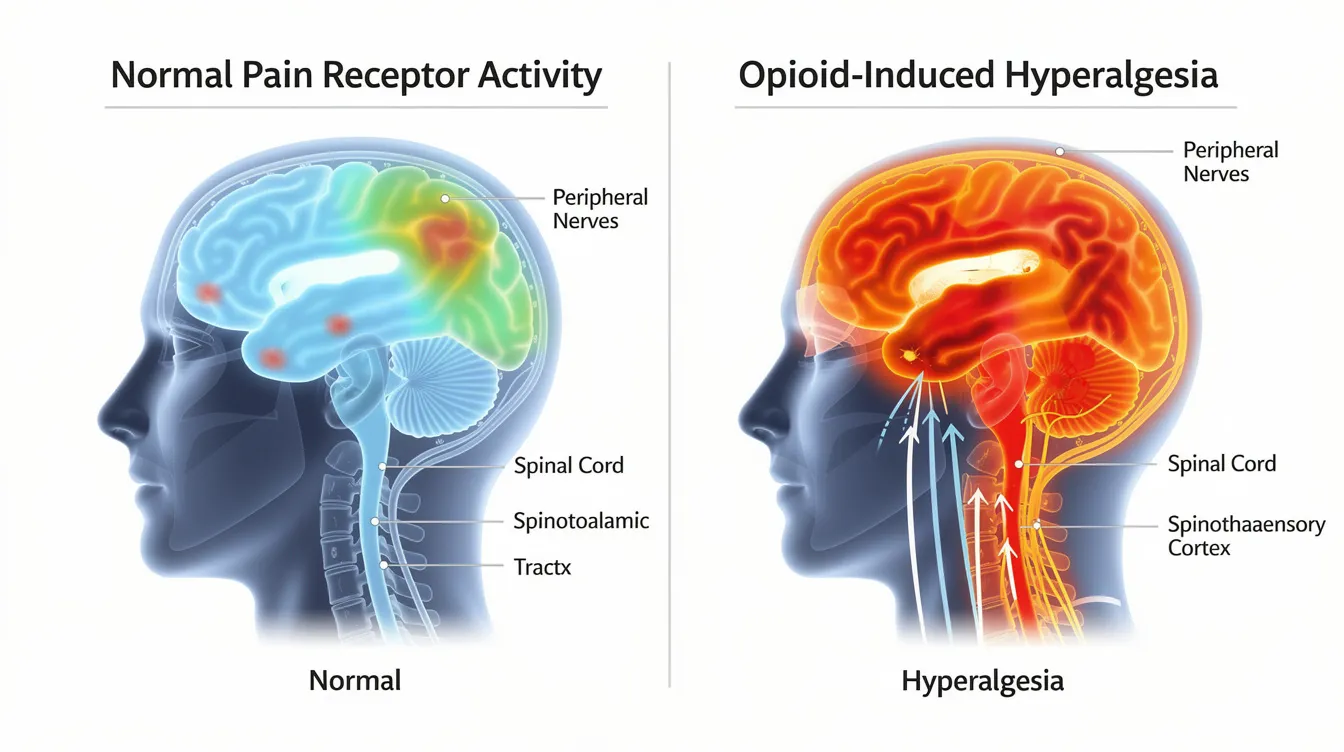
Perhaps the most counterintuitive danger of long term opioid use is opioid-induced hyperalgesia (OIH) – a paradoxical increase in pain sensitivity that develops with sustained opioid therapy. Long-term opioid use can lead to increased pain sensitivity through mechanisms involving central sensitization, NMDA receptor upregulation, and microglial activation in the nervous system.
Opioids can increase sensitivity to pain after four weeks of use. A Stanford study documented that after just one month of oral morphine therapy, six chronic low back pain patients developed both tolerance and measurable hyperalgesia on cold pressor and experimental pain tests. In practical terms, the brain becomes more reactive to pain signals, not less – meaning the very drug taken to reduce pain begins amplifying it.
Meta-analyses of double-blind randomized controlled trials lasting 4 to 15 weeks confirm that opioids compared to placebo do not reliably produce meaningful long-term pain reduction. Opioids can cause severe side effects leading to treatment discontinuation, and opioids do not improve function or reduce disability in chronic pain.
Physical Dependency and Addiction Risk
Physical dependency occurs when the body adapts to the presence of a drug, producing withdrawal symptoms – nausea, dizziness, drowsiness, anxiety, muscle aches – when medications are reduced or stopped. Addiction involves compulsive psychological use despite harmful consequences. Chronic opioid use is linked to higher rates of addiction, and long-term opioid use can lead to dependency and addiction.
Data from Singapore is instructive. A retrospective study at a major pain centre found that among 42 patients prescribed opioids for more than three months for chronic non-cancer pain, aberrant drug behaviour was observed in 5 patients (11.9%), 45.2% had psychological issues, and 23.8% required psychiatric co-management. Globally, 50 million Americans suffer from chronic pain, and the opioid crisis has demonstrated the catastrophic scale of addiction when prescribed opioids become a default treatment.
Psychiatric comorbidity dramatically worsens outcomes. A study of 81 chronic low back pain patients over 6.5 months showed that those with high negative affect (anxiety, depression) achieved only 21% pain reduction compared to 39% in those without, while requiring higher morphine-equivalent doses. Long-term opioid therapy also increases the risk of premature death – a sobering endpoint that demands careful consideration before continuing chronic opioid use.
Masking Underlying Structural Problems
Pain medications can conceal symptoms without solving structural problems. When painkillers suppress pain signals, patients lose the biological warning system that would otherwise prompt investigation and appropriate treatment of the actual source of dysfunction.
A documented case study illustrates this danger starkly: a woman with 16 years of chronic low back pain underwent numerous pharmacologic treatments – opioids, NSAIDs, muscle relaxants, and other medications – along with nerve blocks and physical therapy, yet her pain and disability persisted. The underlying spinal stenosis, degenerative discs, and facet degeneration progressed undetected beneath the medication. By the time structural interventions were finally pursued, less invasive solutions were no longer viable.
This pattern is common. When pain persists but is chemically muted, patients delay seeking diagnostic imaging or corrective care such as chiropractic assessment and posture correction. The window for early, conservative intervention closes, and conditions that could have responded to targeted treatment progress to the point of requiring surgery.
Comprehensive Analysis of Long-Term Health Impacts
Beyond the three primary dangers above, the broader health consequences of sustained painkiller use create a cascade of problems that extend far beyond the lumbar spine. Healthcare providers worldwide are increasingly moving away from long-term painkiller prescriptions precisely because the cumulative damage to multiple body systems outweighs any pain relief achieved. Regular monitoring is advised if painkillers are used long-term, but even with monitoring, many adverse effects develop progressively.
Sleep Disruption and Recovery Impairment
Opioids fundamentally disrupt sleep architecture by reducing REM and deep sleep phases, causing sleep fragmentation and increasing the risk of sleep apneas. These are not minor side effects – deep sleep is when the body performs critical tissue repair, and REM sleep is essential for nervous system recovery and pain modulation.
Research consistently demonstrates that poor sleep is a predictor of higher pain intensity and lower pain threshold, creating a vicious cycle: the drug taken to reduce pain impairs the sleep needed for natural healing, which increases pain sensitivity, which drives further medication use. Common side effects like drowsiness during waking hours compound the problem by reducing activity levels and overall health.
Movement Avoidance and Muscle Atrophy
Sedative effects from opioids and muscle relaxants discourage physical activity at exactly the time when movement is most therapeutic. The resulting muscle weakness, joint stiffness, and deconditioning create a secondary source of pain independent of the original injury. Fall risk increases with the long-term use of opioids and other sedative medications, particularly among older adults.
Disuse of core musculature leads to weaker support of the lumbar spine, placing increased load on passive structures like discs and ligaments and accelerating degeneration. Physical therapy and exercise are effective for reducing pain and improving function, yet medication-induced sedation and the false sense of pain management make most patients less likely to pursue these essential interventions. Without regular movement, even knee and hip pain can develop as compensatory biomechanics shift stress to other joints.
Organ System Effects and Side Effect Progression
The damage from chronic painkiller use extends to virtually every major organ system:
|
Medication Type |
Short-Term Risk (< 4 weeks) |
Medium-Term Risk (1–6 months) |
Long-Term Risk (> 6 months) |
|---|---|---|---|
|
Opioids |
Constipation, nausea, drowsiness, dry mouth |
Tolerance, dependency, sleep disruption, depression |
Addiction, hyperalgesia, respiratory depression, hormonal disruption, premature death |
|
NSAIDs |
Stomach pain, mild GI irritation |
Stomach ulcers, elevated blood pressure |
Kidney damage, cardiovascular events (heart disease, stroke), GI bleeding |
|
Paracetamol |
Generally well-tolerated at standard doses |
Liver stress at high doses |
Liver toxicity, potential liver failure with chronic overuse |
Kidney damage deserves particular attention in Singapore, where chronic kidney disease prevalence among residents aged 18–74 is 8.8%. A Singapore-based study found that frequent systemic NSAID use among CKD patients increased the risk of acute kidney injury with an adjusted odds ratio of approximately 1.77. A meta-analysis of 1.75 million people showed that chronic NSAID users face a pooled hazard ratio of approximately 1.50 for CKD occurrence or progression – rising to 1.67 in those with pre-existing kidney disease.
Gastrointestinal complications including stomach ulcers, bleeding, and perforations are among the most common serious side effects of chronic NSAID use, particularly in elderly patients. Cardiovascular risks – including increased risk of heart disease, hypertension, and stroke – are well-documented with both selective and non-selective NSAIDs at high doses.
Common Challenges and Safer Solutions
Breaking free from painkiller dependency is genuinely difficult. The challenges are physical, psychological, and practical. Acknowledging these barriers honestly is essential – but so is understanding that multimodal approaches are recommended for managing chronic lower back pain and that effective alternatives exist.
Fear of Increased Pain During Medication Reduction
The fear that reducing medication will cause intolerable pain is the single largest barrier most patients face. This fear is not irrational – pain may temporarily increase during tapering as the body readjusts. However, clinicians experienced in opioid therapy management recommend gradual tapering protocols conducted over weeks to months under professional supervision.
During this transition, alternative pain management strategies should be implemented simultaneously. Cognitive behavioral therapy can help manage the psychological impact of pain and reduce the catastrophizing that amplifies pain perception. Pain levels typically fluctuate but often stabilize below the levels experienced during peak medication reliance, particularly when structural causes are being addressed concurrently.
Lack of Knowledge About Non-Pharmaceutical Alternatives
Many pain patients are simply unaware of the treatment options available beyond medication. Evidence-based alternatives include:
-
Chiropractic spinal adjustments that address structural causes of pain including misalignment and joint dysfunction. Case reports document the Chiropractic BioPhysics protocol resulting in reduced spine pain after decades of failed drug therapy and OTC medication use. Regular visits to a qualified chiropractor can address the root cause of persistent pain.
-
Physical therapy that strengthens muscles supporting the spine and improves flexibility, directly countering the deconditioning caused by medication-induced inactivity.
-
Spinal decompression that gently stretches the spine to relieve pressure on compressed discs and nerves, addressing nerve damage at its source.
-
Heat and cold therapy that can provide natural pain relief without systemic side effects.
-
Acupuncture and massage therapy as complementary alternative medicine techniques for pain management.
-
Mind-body approaches including stress reduction, sleep hygiene, and lifestyle modifications that can significantly impact spinal health and target central sensitization.

Inadequate Support System for Medication Transition
Transitioning away from painkillers requires more than willpower. A multidisciplinary healthcare team – including pain specialists, chiropractors, physiotherapists, and psychologists – provides the clinical practice framework needed for safe, effective change. The Pain Association of Singapore’s consensus guidelines require screening, ongoing review, and monitoring for aberrant behaviour in patients on opioid therapy.
Family and social support networks play a crucial role. Isolation correlates with worse outcomes in chronic pain management, and mental health issues – particularly depression and anxiety – often co-exist with chronic pain and may worsen dependency profiles. Professional counselling addresses the emotional dimensions that medication alone never touches, while a supportive environment provides accountability during the difficult transition period.
Conclusion and Next Steps
Chronic lower back pain is a complex condition that demands treatment of root causes, not merely suppression of symptoms. The evidence is clear: long-term reliance on painkillers – whether opioids, NSAIDs, or over-the-counter analgesics – creates a cascade of dangers from hyperalgesia and addiction to organ damage and progressive structural deterioration. Recovery is possible, but it requires shifting from passive medication use to active, guided rehabilitation.
Take these steps to begin transitioning safely:
-
Schedule a consultation with a qualified healthcare provider experienced in chronic pain management to assess your current medication use and underlying spinal health.
-
Request a comprehensive evaluation of your lumbar spine to identify structural issues that medication may be masking.
-
Discuss a gradual tapering plan with your prescribing physician – never stop taking opioids or other medications abruptly.
-
Begin non-pharmaceutical therapies such as chiropractic care, physical therapy, or cognitive behavioural therapy alongside any medication reduction.
-
Build your support network by involving family members and connecting with professionals who understand the multidisciplinary nature of chronic pain recovery.
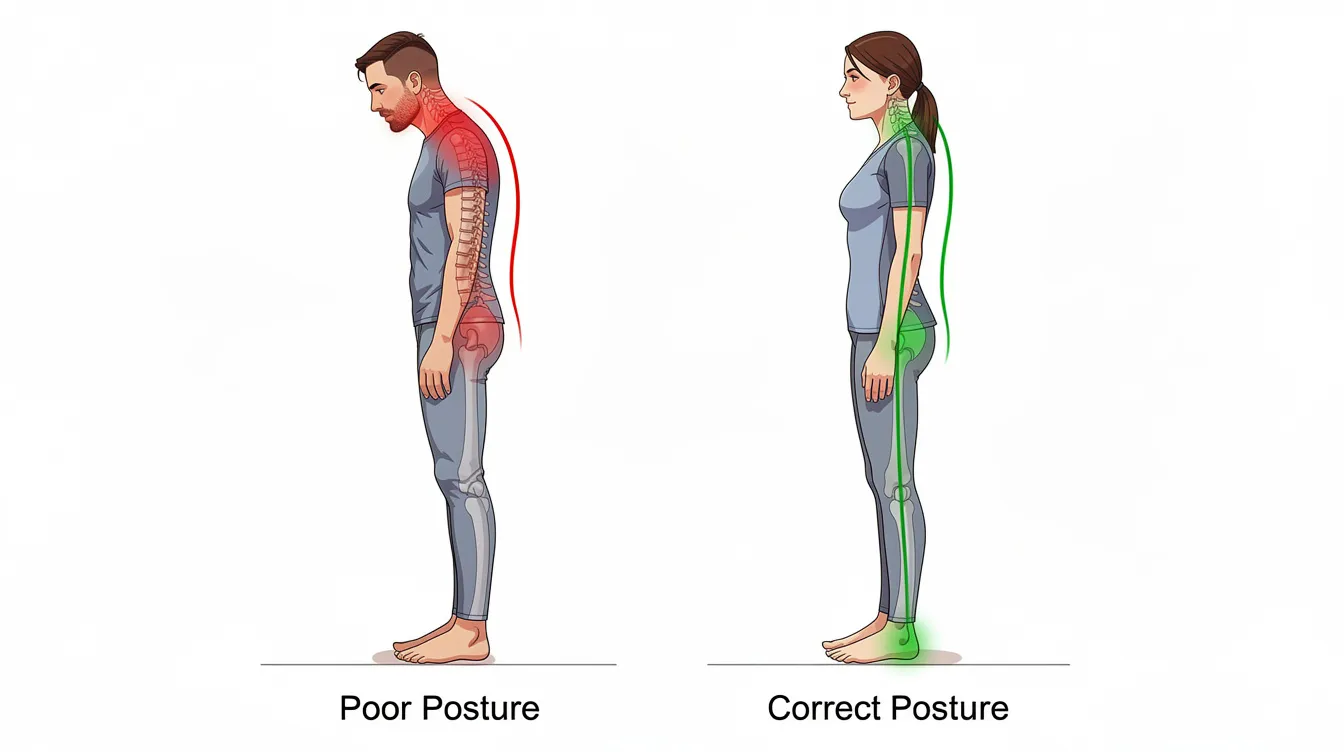
Related topics worth exploring include posture correction strategies, spinal health maintenance, preventive care for the cervical and lumbar spine, and management of related conditions like neck pain that often accompany chronic low back pain.
Additional Resources
-
Everton Chiropractic offers comprehensive spinal assessments and evidence-based chiropractic care for chronic lower back pain in Singapore. Book a consultation to discuss your treatment options.
-
Singapore’s National Guidelines for the safe prescribing of opioids provide clinical practice frameworks for both patients and providers navigating medication use for chronic non-cancer pain.
-
Exercise and movement guides – targeted stretching and strengthening programmes for lower back health can be discussed with your chiropractor or physiotherapist and tailored to your specific structural needs.
-
Lifestyle modifications including ergonomic workspace setup, sleep hygiene improvements, and stress management techniques can significantly impact overall health and reduce chronic pain without medication.