
Introduction
Frozen shoulder vs rotator cuff strain identifying your shoulder pain starts with one key difference: frozen shoulder limits both active and passive shoulder movement because the joint capsule thickens and tightens, while a rotator cuff strain usually causes weakness and sharp pain when you lift the arm yourself but leaves passive movement relatively preserved. Frozen shoulder pain is also more often a constant, aching discomfort that builds gradually and commonly feels worse at night, unlike the more movement-linked pain pattern seen with rotator cuff injury.
This guide compares frozen shoulder vs rotator cuff strain for adults in Singapore dealing with persistent shoulder pain, whether it began slowly or followed a sudden injury. It walks through symptoms, causes, risk factors, movement and pain-pattern assessments, professional chiropractic evaluation, treatment options, and Understanding Frozen Shoulder as part of learning how to tell these conditions apart before choosing care.
Both problems can make it hard to raise your arm, interrupt sleep, and affect work, exercise, and daily tasks, but they do not respond to the same treatment approach. Mistaking frozen shoulder for a rotator cuff strain, or the reverse, can prolong pain, delay recovery, and allow the condition to worsen.
By the end of this article, you will be able to:
-
Recognize the key differences between frozen shoulder and rotator cuff pain patterns
-
Understand the movement tests that provide valuable diagnostic clues
-
Identify personal risk factors for each condition
-
Know when to seek professional chiropractic assessment
-
Set realistic expectations for treatment timelines and recovery
Understanding Shoulder Pain Fundamentals
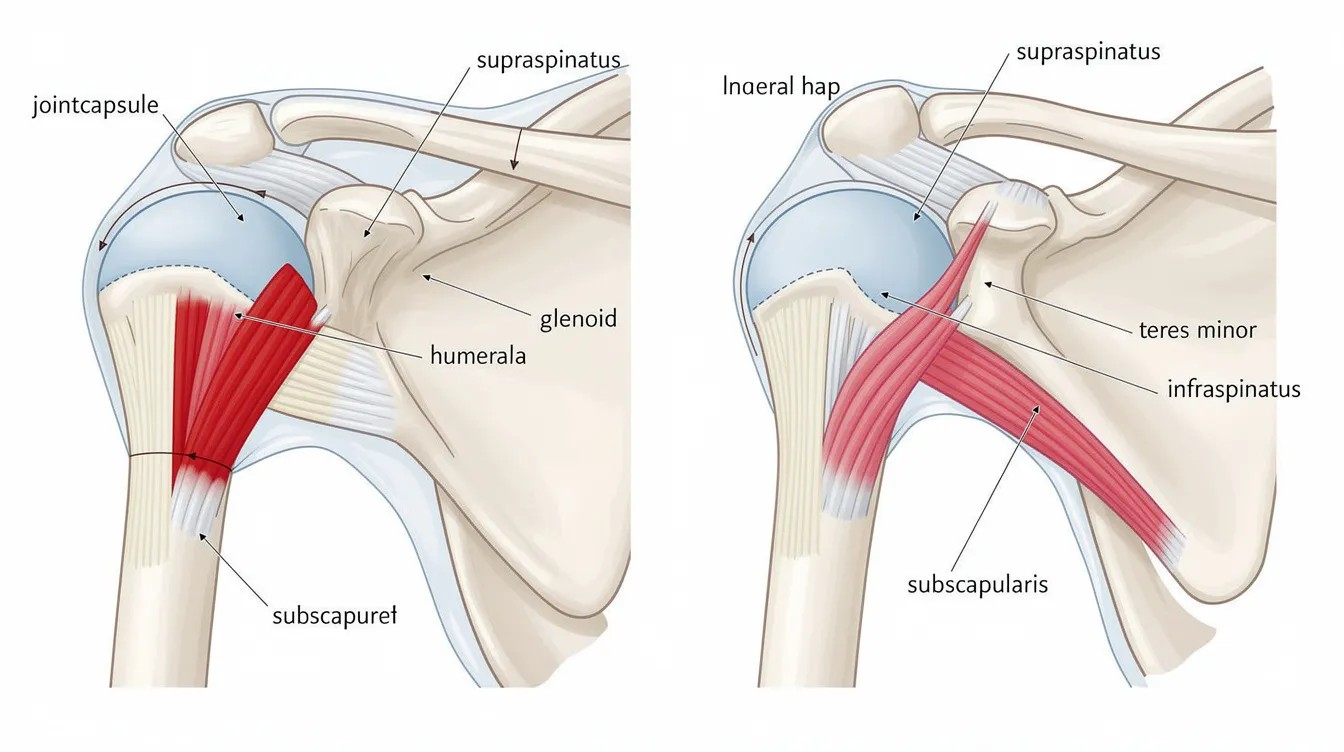
The shoulder joint is the most mobile joint in the human body-and that mobility comes at a cost. The glenohumeral joint is a ball-and-socket structure where the upper arm bone (humerus) sits in a shallow socket (glenoid) on the scapula, with the humeral head articulating there as part of the shoulder bones. Unlike the hip joint, which has deep bony stability, the shoulder relies heavily on soft tissue structures for support: the joint capsule surrounding the joint provides passive stability, while the rotator cuff muscles and tendons provide active, dynamic stability during shoulder movement.
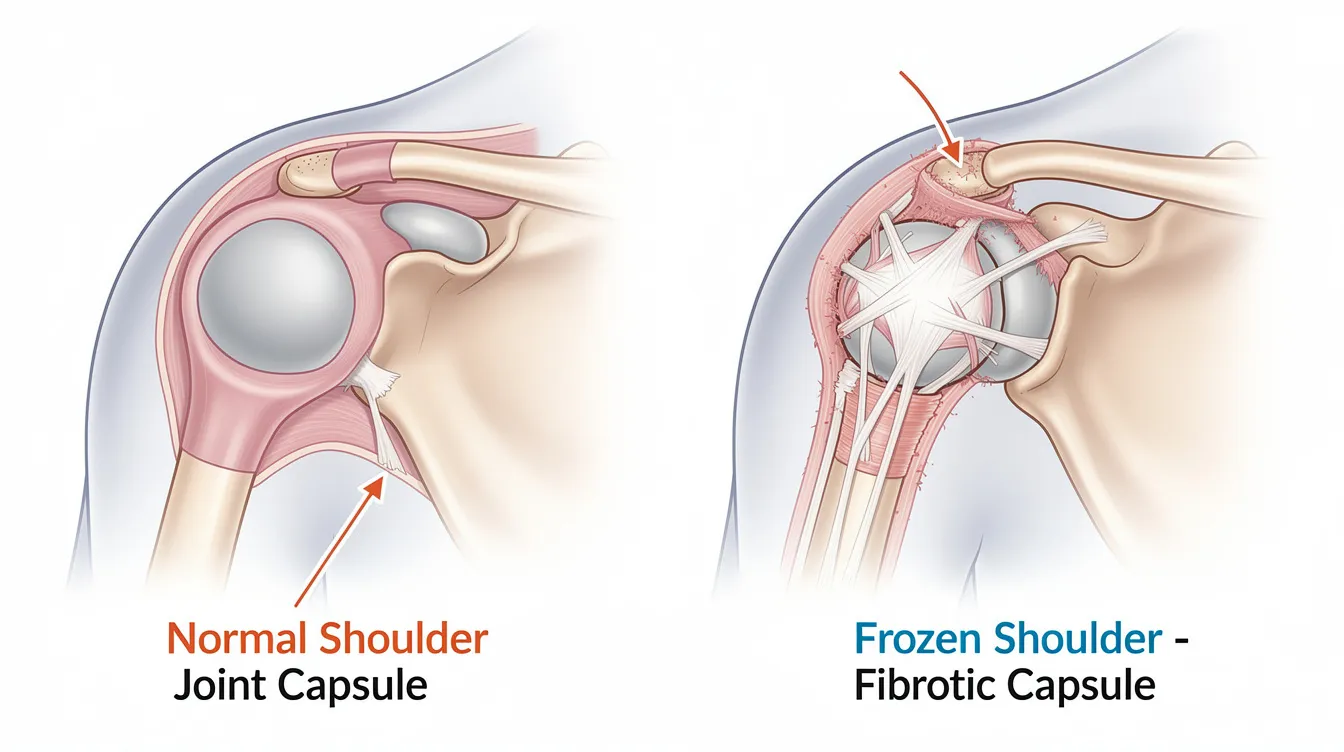
This anatomical design means the shoulder is vulnerable to two fundamentally different categories of injury. Problems with the capsule lead to adhesive capsulitis (frozen shoulder), where thickening and inflammation create restricted movement in all directions. Problems with the muscles and tendons lead to rotator cuff injury, where the stabilizing structures become damaged, inflamed, or torn. Because both conditions cause shoulder pain and limited function-and sometimes night pain-they are frequently confused in clinical settings. However, their underlying mechanisms, progression patterns, and treatment requirements are distinct.
What is Frozen Shoulder (Adhesive Capsulitis)
Frozen shoulder is characterized by tightening of the joint capsule. The connective tissue envelope surrounding the glenohumeral joint becomes inflamed, thickened, and eventually fibrotic. Adhesions form within the capsule, synovial fluid decreases, and the capsule loses its ability to stretch-severely limiting the shoulder’s range of motion in all directions.
Frozen shoulder causes severe stiffness and pain. Frozen shoulder typically progresses through three stages: Freezing, Frozen, Thawing. During the freezing stage (approximately 2–9 months), inflammation and synovitis dominate, with pain intensifying-especially at night-while range of motion begins to decline. During the frozen stage (roughly 4–12 months), pain may plateau or slightly decrease, but stiffness becomes the dominant problem, with capsular contracture severely restricting external rotation and overhead reaching. During the thawing stage (12–42 months), gradual improvement occurs, though complete frozen shoulder recovery may take up to 2–3 years, and some patients retain mild residual restriction.
Frozen shoulder typically develops gradually over months or years. Symptoms of frozen shoulder can develop without a clear injury or following reduced use. Frozen shoulder often develops after prolonged immobilization-for instance, after surgery or wearing a sling. Understanding frozen shoulder’s phased progression is essential because treatment aggressiveness must match the current stage: overly aggressive intervention during the freezing phase can prolong inflammation and worsen outcomes.
What is Rotator Cuff Strain
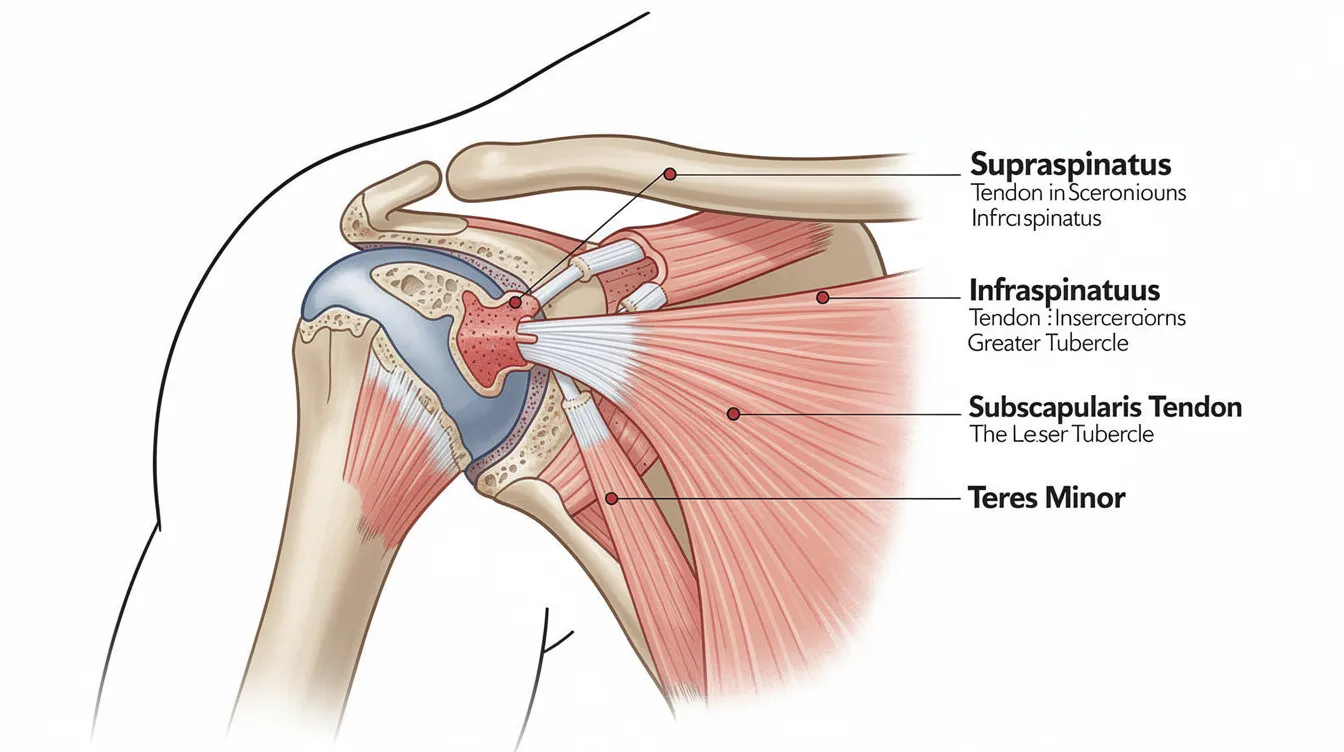
Rotator cuff strain involves damage to the muscles and tendons stabilizing the shoulder. The rotator cuff consists of four muscles-supraspinatus, infraspinatus, subscapularis, and teres minor-that bind the upper arm bone into the glenoid socket and control elevation and rotation. Injury ranges from mild tendinopathy and inflammation to partial tear and full-thickness rotator cuff tear.
Rotator cuff tears can result from acute injuries or repetitive motions. A rotator cuff strain may statistically stem from a fall, lifting, or repetitive overhead activities. Age-related degeneration contributes to rotator cuff tears, meaning less force is required to cause a torn rotator cuff when the tendon tissue has already deteriorated. Rotator cuff injuries often result from repetitive overhead motions-common in painters, swimmers, and warehouse workers.
Rotator cuff strain causes localized pain and weakness during specific movements. Unlike frozen shoulder, rotator cuff injuries allow some arm movement with assistance-a critical diagnostic distinction. However, when rotator cuff issues go untreated, the resulting pain and disuse can trigger secondary capsular stiffness, potentially leading to a secondary frozen shoulder. This overlap is one reason these conditions are so commonly confused.
Understanding these definitions helps recognize the distinct symptom patterns explored in the next section.
Key Diagnostic Differences in Singapore Clinical Practice
With these foundational definitions established, the practical challenge becomes recognizing which condition is causing your shoulder pain. In chiropractic and musculoskeletal settings, movement pattern assessment is the most reliable initial tool for differentiation-more informative than pain location alone, which can overlap significantly between these two conditions.
Movement and Range of Motion Patterns
The most important clinical distinction between frozen shoulder vs rotator cuff strain lies in passive versus active movement testing.
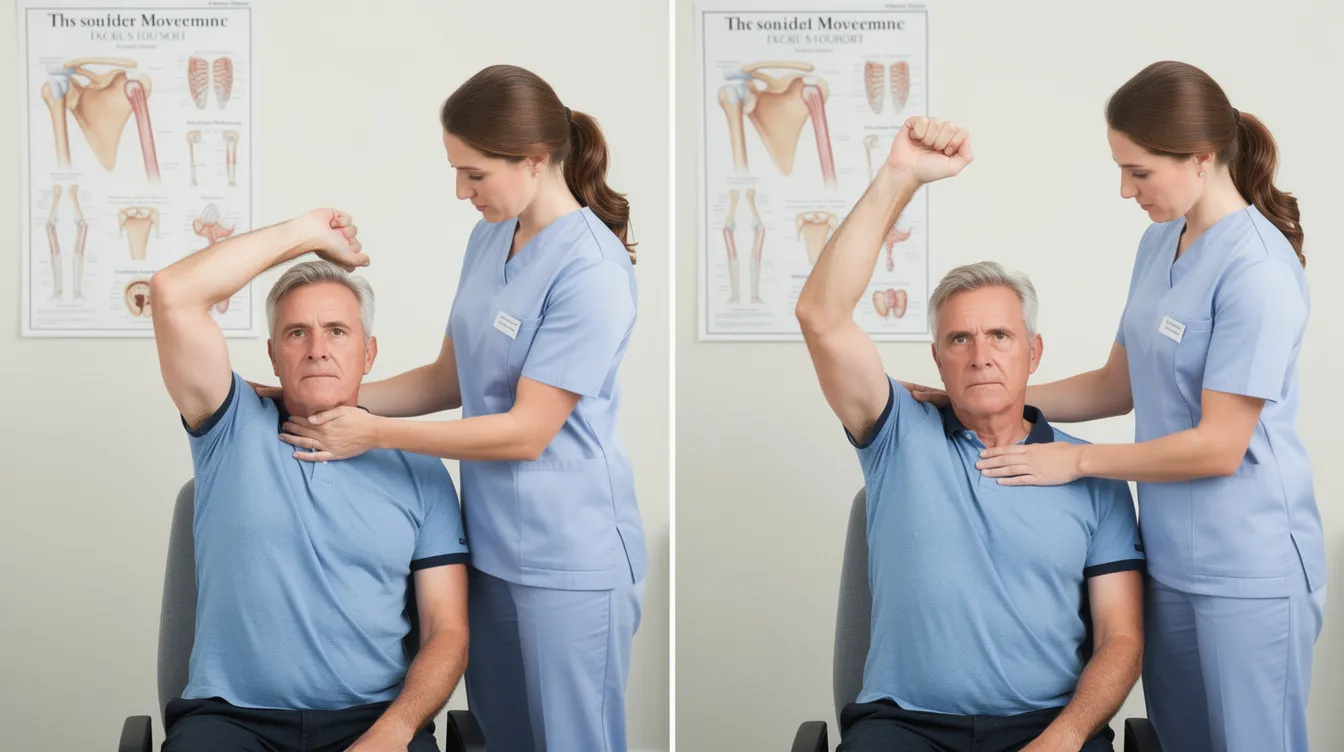
Frozen shoulder affects both active and passive shoulder motion. When you try to move your arm yourself (active motion), it is severely limited. When a clinician moves your arm for you (passive motion), the restriction persists-because the problem is the contracted capsule, not muscular weakness. Frozen shoulder typically leads to severe stiffness in all directions, with external rotation often the most affected. Reaching behind your back to clasp a bra or tuck in a shirt becomes extremely difficult. This global capsular pattern of restricted movement is a hallmark of adhesive capsulitis.
Rotator cuff strain causes pain during specific movements but preserves passive movement. Your active range is limited because lifting or rotating the arm triggers sharp pain or arm weakness-but when someone else gently moves your arm through the same range, the movement is possible. Rotator cuff issues often allow normal passive movement but cause painful active movement. Patients often describe a painful arc-discomfort felt between approximately 60° and 120° of arm abduction-which is characteristic of rotator cuff problems and shoulder impingement syndrome. Rotator cuff injuries may allow some arm lifting with assistance, further confirming preserved passive range.
This passive movement test is the key clinical indicator: if someone else cannot move your arm either, think frozen shoulder; if they can, think rotator cuff.
Pain Characteristics and Timing
Pain quality and timing provide valuable diagnostic clues that complement movement testing.
Pain from frozen shoulder is a constant dull ache that worsens at night. Frozen shoulder causes constant, dull aching pain even at rest. Night pain is severe and occurs regardless of sleeping position-pain with frozen shoulder can significantly disrupt sleep, often waking patients multiple times. The onset is gradual, developing over weeks to months without a specific triggering event. The deep ache is poorly localized, often described as being “inside” the shoulder rather than on a specific spot.
Rotator cuff pain is often sharp and localized to the front or side of the shoulder. Rotator cuff tears cause sharp pain during specific arm movements-overhead reaching, lifting objects away from the body, or rotating the arm. The pain may radiate along the upper arm but typically does not extend below the elbow. Night pain in rotator cuff injuries tends to worsen specifically when lying on the affected side, rather than in every position. Onset can be sudden (following a fall or heavy lift) or gradual (from repetitive arm motions and overuse). Between aggravating activities, pain may ease-unlike the persistent pain of frozen shoulder.
Common Triggers and Risk Factors
Frozen shoulder is more common in individuals aged 40 to 60, especially those with diabetes. Diabetes increases frozen shoulder risk by five times-a significant statistic given Singapore’s rising diabetes prevalence. Frozen shoulder affects women more often than men. Additional risk factors include thyroid disorders, cardiovascular disease, and any period of prolonged shoulder immobilization (post-surgery, post-fracture). These systemic risk factors distinguish frozen shoulder from most musculoskeletal injuries.
Rotator cuff injuries often occur suddenly or from repetitive overuse. People who perform repetitive overhead motions-painters, swimmers, tennis players, warehouse workers-are at elevated risk. Age-related degeneration of tendon tissue makes older adults more susceptible, and traumatic injuries such as falls onto an outstretched hand can cause acute tears. Shoulder impingement occurs when the rotator cuff tendons are compressed during overhead movements, often preceding more significant rotator cuff damage.
Understanding these different cause profiles helps guide treatment planning and identify which investigation pathway to pursue. Maintaining good posture can also help reduce shoulder strain, especially for Singapore office workers who spend long hours at desks.
Professional Assessment and Diagnostic Procedures
While the symptom patterns described above can help you form a preliminary understanding of your shoulder pain, accurate diagnosis requires professional evaluation. Self-diagnosis frequently leads to delayed recovery because early-stage frozen shoulder can mimic rotator cuff tendinopathy, and overlapping symptoms between the conditions can be misleading. A structured assessment at a chiropractic clinic provides the proper diagnosis needed to guide effective treatment.
Chiropractic Examination Protocol
You should seek professional assessment when shoulder pain persists beyond 2–3 weeks, when night pain regularly disrupts sleep, or when restricted movement interferes with daily activities.
A thorough chiropractic examination follows a systematic protocol:
-
Patient history: Detailed questions about onset (gradual vs sudden), duration, aggravating and relieving factors, sleep disruption, previous trauma or surgery, and comorbidities such as diabetes or thyroid disorders-all of which provide valuable diagnostic clues.
-
Physical observation: Assessment of posture, scapular alignment, shoulder shrugging or compensatory patterns, and visible muscle atrophy around the affected shoulder.
-
Range of motion testing: Systematic measurement of active versus passive movement in flexion, abduction, internal rotation, and external rotation. This is the cornerstone of differentiating between frozen shoulder and rotator cuff strain.
-
Strength and resisted testing: Tests including the empty can test (supraspinatus), lift-off and belly-press tests (subscapularis), external rotation lag, and the drop arm test help identify specific rotator cuff problems and quantify arm weakness.
-
Orthopedic special tests: Hawkins–Kennedy test, Neer’s impingement sign, painful arc assessment, and cross-body adduction test to evaluate for shoulder impingement and rotator cuff pathology.
-
Neurological screening: To rule out cervical radiculopathy or nerve involvement, which can refer pain into the shoulder region and mimic musculoskeletal conditions.
-
Imaging referral when indicated: X-ray to exclude arthritis or bony abnormalities; ultrasound for tendon evaluation (sensitivity and specificity above 90% for full-thickness rotator cuff tears); MRI for complex cases or surgical planning. In Singapore, ultrasound is increasingly used as a first-line imaging tool due to lower cost and shorter waiting times compared to MRI.

Diagnostic Comparison Table
The following table synthesizes the key differences to help readers and clinicians quickly compare findings:
|
Criteria |
Frozen Shoulder |
Rotator Cuff Strain |
|---|---|---|
|
Movement Pattern |
Global restriction of both active & passive ROM, especially external rotation |
Active ROM limited by pain/weakness; passive ROM largely preserved |
|
Pain Type |
Constant deep ache, poorly localized |
Sharp pain during specific arm movements, localized to front/side |
|
Night Pain |
Severe in any sleeping position |
Worse specifically lying on affected side |
|
Onset |
Gradual over weeks to months |
Can be sudden (trauma) or gradual (overuse) |
|
Typical Age Group |
40–60 years; associated with diabetes, thyroid disorders |
Any adult age; more common in athletes, manual workers |
|
Strength |
Limited by stiffness rather than muscular weakness |
Measurable weakness during resisted testing |
|
Duration |
1–3 years natural course through three stages |
Weeks to months depending on severity; severe tears may need surgical repair |
Frozen shoulder affects about 2% to 5% of the population. When examination findings are equivocal-or when both conditions may coexist-imaging can clarify the diagnosis. MRI may reveal capsular thickening and coracohumeral ligament changes in frozen shoulder, or tendon discontinuity and retraction in rotator cuff tear. Understanding where your findings fall in this comparison helps determine whether conservative management, consistent physical therapy, or specialist referral is most appropriate.
Common Misdiagnosis Challenges and Solutions
Despite the clear theoretical distinctions, clinical reality is often messier. These two conditions are frequently confused because their symptom presentations can overlap-particularly in early stages-and delayed or incorrect diagnosis directly impacts recovery time and treatment effectiveness.
Overlapping Symptoms Leading to Confusion
Both frozen shoulder and rotator cuff strain can cause night pain, movement limitation, and difficulty with daily tasks like reaching overhead or behind the back. In the early freezing stage of adhesive capsulitis, pain may be the dominant symptom while stiffness has not yet fully developed-making it look remarkably similar to rotator cuff inflammation or shoulder impingement.
Solution: Systematic passive versus active movement testing, combined with careful timeline assessment, is the most reliable way to differentiate. A chiropractor trained in musculoskeletal assessment can distinguish between capsular restriction patterns and muscular/tendon-based limitations through structured examination. Regular chiropractic assessment can help catch these conditions early before diagnostic lines blur further.
When Both Conditions Coexist
Secondary frozen shoulder can develop after a rotator cuff injury. When pain from a torn tendon causes someone to stop using their shoulder, the resulting immobilization triggers capsular contracture. This creates a complex clinical picture where both rotator cuff damage and adhesive capsulitis are present simultaneously.
Solution: A staged treatment approach is essential. Treatment priorities must address mobility restrictions before strength training. First, manage inflammation and reduce pain. Then, restore shoulder mobility through the capsular restriction. Only after passive range is recovered should strengthening the shoulder muscles for later rotator cuff rehabilitation begin. Attempting to strengthen through a frozen capsule is both painful and counterproductive.
Self-Treatment Mistakes
Two common self-treatment errors significantly worsen outcomes:
-
Aggressive stretching during frozen shoulder’s freezing phase can dramatically exacerbate inflammation and prolong the painful stage. During this phase, gentle, pain-controlled movement is appropriate-not forced stretching.
-
Ignoring rotator cuff weakness and continuing to push through pain leads to compensatory movement patterns, placing abnormal stress on surrounding structures and risking further tendon tissue damage.
Solution: Proper professional assessment before beginning any treatment program is essential. Frozen shoulder treatment includes physical therapy and stretching exercises-but timing and intensity must match the current stage. Non-surgical treatments for rotator cuff injuries include rest and ice in the acute phase, followed by progressive loading. Corticosteroid injections may be used for frozen shoulder relief during the freezing phase, while rotator cuff injuries may require surgical repair for severe tears. Physical therapy is essential for both frozen shoulder and rotator cuff injuries, but the exercises, intensity, and progression differ substantially.
Anti inflammatory medications can help manage pain in both conditions but do not address the underlying cause-making them a complement to, not a substitute for, proper diagnosis and rehabilitation.
Conclusion and Next Steps
The fundamental difference between frozen shoulder vs rotator cuff strain comes down to passive movement. If your shoulder is stiff in every direction and no one can move it for you, the capsule is likely involved. If someone can move your arm through its full range but you struggle to do it yourself due to severe pain or weakness, the rotator cuff is the more likely culprit.
Here are immediate steps you can take:
-
Try the passive movement test: Have someone gently lift your affected arm out to the side and rotate it. Note whether the restriction comes from stiffness (frozen shoulder) or pain/weakness (rotator cuff strain).
-
Assess your pain pattern: Constant dull ache worse at night in any position suggests adhesive capsulitis. Sharp pain only during specific arm movements suggests rotator cuff injury.
-
Review your risk factors: Age 40–60 with diabetes or thyroid disorders points toward frozen shoulder. History of repetitive motions, sports, or a sudden injury points toward rotator cuff.
-
Seek professional assessment: If persistent shoulder pain has lasted more than 2–3 weeks, book an appointment at Everton Chiropractic for a comprehensive shoulder examination including movement testing, strength assessment, and imaging referral if needed.
Treatment approaches available through chiropractic care include manual therapy matched to your condition’s stage, soft tissue therapy to reduce pain, and structured rehabilitation exercises to restore shoulder mobility and strength. Understanding which condition you have-and which phase you are in-is the foundation that makes every subsequent treatment decision effective.

Additional Resources
-
Shoulder pain prevention for Singapore office workers: Prolonged desk work contributes to poor shoulder mechanics. Reviewing posture correction strategies and addressing tech neck can reduce compensatory strain through the shoulder complex.
-
Home exercise guidelines: Gentle pendulum exercises and towel stretches can help maintain shoulder mobility during early frozen shoulder recovery, while isometric rotator cuff exercises support tendon healing without excessive load.
-
When to consider imaging or specialist referral: If symptoms are not improving after 6–8 weeks of appropriate treatment, or if examination suggests a significant rotator cuff tear, ultrasound or MRI and orthopaedic consultation may be warranted. Surgical intervention is typically reserved for full-thickness tears that fail conservative management.
-
Related conditions: Persistent shoulder pain that does not fit either pattern may indicate shoulder impingement syndrome, labral tears, or cervical spine referral-all of which benefit from professional musculoskeletal assessment.