Key Takeaways
Optimizing your workspace and daily movement patterns is essential for health in high-density office environments. Following these key steps will help you maintain long-term spinal health:
- Prioritize ergonomic adjustments to support your natural spinal curvature.
- Incorporate frequent, short breaks for mobility to prevent muscle stiffness.
- Utilize targeted stretches to counteract the primary effects of sedentary work.
- Stay proactive by monitoring for signs of lasting postural strain.
- Seek expert guidance for persistent discomfort or potential clinical injuries.
Understanding the tech neck epidemic in the CBD
The physiological impact of prolonged sitting
When you spend hours at a desk, your body experiences significant changes that aren’t immediately noticeable but accumulate over time. Spinal discs encounter increased pressure, while muscles that should remain active enter a state of atrophy. This lack of engagement leads to stiffening, contributing to the persistent aches reported by many CBD office workers, postural correction seekers.
Identifying common postural deviations
Slouching and forward-head carriage are the most frequent issues observed in high-pressure environments. These deviations occur when the head shifts ahead of the shoulders, forcing the upper back to compensate. If you notice your chin jutting forward while focused on a screen, you are likely mirroring these common structural shifts.
Why Singaporean corporate culture exacerbates physical tension
High-stakes work environments in districts like the CBD demand long hours, often leaving little room for spontaneous movement. The intense pace encourages a "hustle" mentality that keeps individuals tethered to their chairs from their morning coffee until late evening. This cultural expectation of constant availability makes it difficult for employees to prioritize physical health during the working day.
Long-term health risks of ignoring desk posture
If left unaddressed, poor alignment can evolve from simple fatigue into chronic mechanical issues. Persistent strain on the cervical spine often results in tension headaches that can hamper daily productivity. Addressing these concerns through postural correction strategies early can prevent the onset of more serious, long-term spinal complications.
Optimizing your office workstation
Adjusting monitor height to eliminate forward head carriage
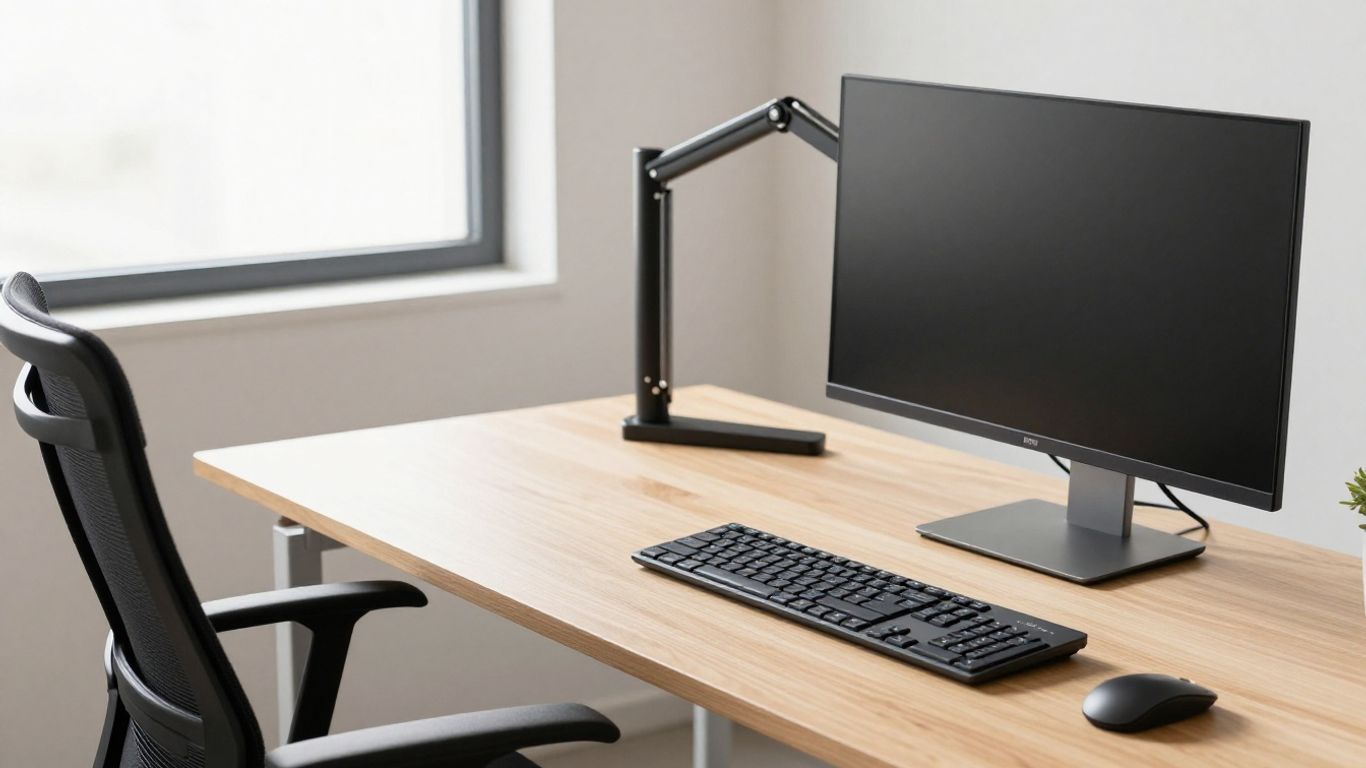
Positioning your screen at eye level is the simplest way to reduce stress on your neck muscles. When your eyes naturally land on the top third of the monitor, you avoid the unconscious tilt that leads to chronic strain. This small shift encourages your spine to stay in a neutral, healthy position throughout the afternoon.
The importance of lumbar support and chair calibration
Your chair must provide foundational support for your lumbar arch to prevent the pelvis from rotating forward. Most standard office chairs allow for adjustments that customize the depth and firmness of this support. Professionals seeking care at Everton Chiropractic often find that configuring their seating correctly is the first step toward long-term relief.
| Setting | Recommended Adjustment | Benefit |
| :— | :— | :— | :— |
| Seat Height | Feet flat on floor | Improved circulation |
| Lumbar Depth | Firm, tight support | Spinal alignment |
| Armrest Width | Parallel to torso | Reduced shoulder strain |
Properly calibrated chairs ensure that you aren’t fighting gravity to stay upright while working on complex reports.
Utilizing standing desk converters effectively
Standing desk converters offer a way to break the cycle of prolonged sitting by allowing for periodic transitions in posture. While helpful, transitioning too quickly can cause foot fatigue or improper leaning. It is more effective to use them in short, controlled intervals rather than attempting long, continuous periods of standing.
Proper mouse and keyboard placement to prevent shoulder shrugging
Keeping your peripherals close keeps your shoulders in a relaxed, downward position. When your mouse or keyboard is too far away, your shoulders instinctively shrug toward your ears, which triggers tension headaches. Maintaining a neutral wrist position prevents this unnecessary tightness from radiating into your upper back.
Essential corrective movements for high-stress days

Chest openers to counteract thoracic kyphosis
Rounded shoulders often pull the chest inward, making it difficult to maintain an open posture. Simple chest openers allow the pectoral muscles to relax while pulling the shoulder blades into a healthier position. This, combined with professional care from Everton Chiropractic, helps restore your natural range of movement.
Exercises to strengthen the scapular retractors
Strengthening the muscles between your shoulder blades is crucial for standing tall. Your rhomboids act as the primary stabilizers for the upper spine, and keeping them engaged prevents the dreaded "slump" that hits by mid-afternoon. Stronger scapular retractors allow you to hold your frame with significantly less conscious effort.
Targeted hip flexor stretches for the seated professional
Sitting creates a constant contraction in your hip flexors, which eventually pulls on the lower back and creates secondary pain. Releasing these muscles through a kneeling or standing lunge stretch can provide near-instant relief for your lumbar region. Consistent stretching helps you counteract tightness that builds up during long meetings.
Chair-based mobility flows for midday resets
Integrating a few fluid motions into your routine helps wake up muscles that have become dormant. You can easily perform these movements without leaving your workspace:
- Seated thoracic rotation to release mid-back tension.
- Gentle neck tilts to alleviate accumulated lateral stiffness.
- Ankle rolls to maintain circulation in your lower limbs.
- Controlled shoulder rolls to reset your posture.
Performing these small flows helps you maintain focus throughout the day while preventing the stiffness typical of desk-based roles.
Practical daily habits for lasting alignment
Setting digital reminders for postural checks
It is common to lose track of your body position while deeply focused on a task. Utilizing a subtle digital alarm serves as a necessary physical alignment reset button throughout your busy working hours. This habit encourages mindfulness about your posture before tension develops into pain.
Integrating movement into your morning and evening commute
Your journey to the office is a hidden opportunity to prime your body for the day. Walking between the MRT or bus station allows your joints to lubricate and your muscles to activate. Choosing to walk or stand during your commute is a simple way to improve your baseline vitality.
The role of hydration in maintaining spinal disc health
Spinal discs rely on hydration to remain supple and absorb shock throughout the day. When you are dehydrated, your discs lose their shock-absorbing capacity, which can lead to increased vulnerability during long periods of sitting at a desk. Keep a water bottle nearby to support the structural health of your spine.
Correct breathing techniques to support core stability
Deep, diaphragmatic breathing supports internal stability, which in turn reinforces your spinal structure. shallow chest breathing often correlates with rounded shoulders and increased neck tension. By focusing on your breath, you naturally engage your core, providing better support for your spine while you process emails or participate in calls.
When to seek professional postural correction in Singapore
Recognizing the difference between fatigue and clinical injury
General muscle fatigue from a long day usually dissipates after a rest, while a clinical injury often manifests as sharp pain or persistent stiffness. If your discomfort does not resolve after a weekend of rest, it may be time to consult an expert. Dr. Richard Chew and the team at Everton Chiropractic specialize in evaluating these patterns.
Distinguishing between chiropractic care and physiotherapy options
Chiropractic care focuses on spinal alignment and joint function to alleviate nerve tension and physical discomfort. Physiotherapy often centers on rehabilitation exercise and soft tissue correction after an injury occurs. Understanding your specific goal—whether it is realignment or injury recovery—will help you choose the right path for your needs.
Navigating private health insurance for corrective therapy
Many insurance plans in Singapore cover chiropractic services, though it depends on your specific company policy. Always verify your coverage details before your visit to ensure a smooth administrative experience. Most professional offices can provide the necessary documentation to facilitate your claim easily.
Selecting reputable clinics accessible within the CBD district
Proximity to your workplace ensures you can maintain consistency with a treatment plan for tailored posture treatment. Look for clinics that prioritize a professional, patient-centered atmosphere and possess local experience. Accessing quality care close to the CBD, such as the services provided at Everton Chiropractic, simplifies the process of integrating wellness into your work week.
Conclusion
Addressing desk posture is a continuous effort that requires both workspace optimization and daily intentionality. By making small, evidence-based adjustments to how you sit, move, and breathe, you lay a solid foundation for your long-term physical wellbeing. Should your pain persist, seeking professional help ensures that you remain active, comfortable, and prepared to handle the demands of your career.
Frequently Asked Questions
Can poor posture lead to permanent damage?
Long-term postural strain can certainly lead to irreversible changes in your spinal joints and muscle structure if left untreated for many years. It is always wise to address structural issues as soon as you notice recurring pain or discomfort.
How long does it take to fix bad posture?
Recovering your natural alignment depends on how long you have held those habitual patterns, but most people notice a marked difference within a few weeks of starting a consistent corrective routine.
Should I use a standing desk throughout the entire day?
Standing all day can be just as potentially problematic for your spine as sitting all day, as it places different stresses on your lower body and feet. It is best to alternate between sitting, standing, and moving to keep your muscles engaged.
Does exercise fix posture on its own?
Exercise is a foundational component of postural health, but it often needs to be balanced with manual adjustments to correct misalignments that have already locked into place. Consistent movement works best when combined with professional assessment.
What are the most common signs that my posture needs attention?
Typical markers include recurring neck tightness, rounded upper back curvature, consistent lower back dullness, and frequent tension headaches. If you feel like you have to "force" yourself to sit up straight, your core muscles may be lacking the strength required.
Are there specific pillows that help with desk-related pain?
While ergonomic pillows can improve your sleep and cervical comfort at night, they are designed to support you while you lie down rather than correcting posture during office hours. They are a good supplement to your overall spinal health strategy.
Can breathing exercises really change my posture?
Deep breathing naturally encourages your ribcage to expand and your torso to lengthen, which is the exact opposite of the collapsed posture seen in a slouched desk worker. Practicing this can relieve the muscle patterns that lead to chronic tightness.