
Chiropractic care between sessions is defined as the daily habits, exercises, and lifestyle choices that sustain the benefits of spinal adjustments until your next visit. Adjustments create a temporary window of opportunity for improved spinal movement. What you do inside that window determines whether the benefit lasts a week or a lifetime. Patients who treat their home routine as part of the treatment itself recover faster, move better, and need fewer corrective visits over time.
What daily habits best support chiropractic care between sessions?
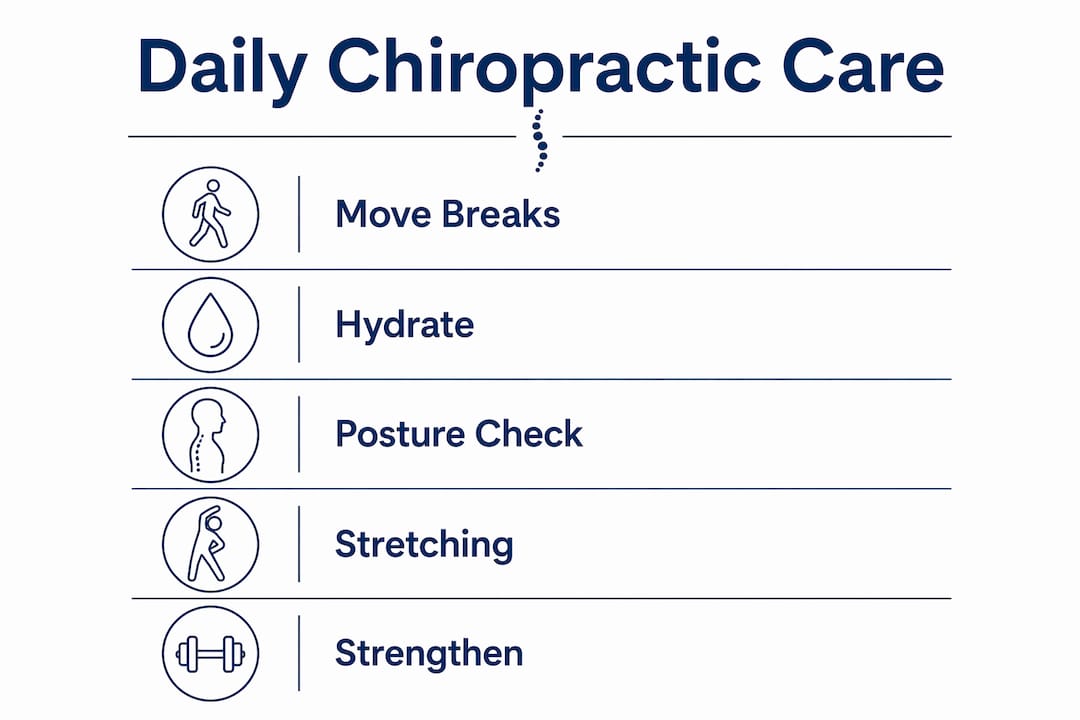
The single most effective daily habit is moving your body before stiffness sets in. Taking a 2-minute movement break every hour reduces joint stiffness and keeps circulation moving through spinal tissues. That matters because sedentary positions cut off the fluid exchange that keeps spinal discs hydrated and pliable. Setting a phone timer or using a standing desk reminder makes this habit automatic rather than optional.
Hydration is the second pillar most patients underestimate. Consistent water intake throughout the day supports disc height, tissue elasticity, and joint mobility after adjustments. Spinal discs are roughly 80% water and lose fluid under compression during the day. Drinking steadily, rather than gulping large amounts at once, keeps those discs resilient.

Sleep is where the body does its deepest repair work. Quality sleep of 7–9 hours reduces muscle tension and prevents spinal tissues from becoming sensitized between visits. Sleeping on your back or side, with a pillow that keeps your neck neutral, protects the alignment your chiropractor worked to restore. Stomach sleeping reverses that work by forcing the cervical spine into sustained rotation.
Here is a practical daily checklist to build around:
- Move for 2 minutes every hour, even if it is just walking to the kitchen and back.
- Drink water steadily throughout the day, not just at meals.
- Sleep 7–9 hours on your back or side with a supportive pillow.
- Avoid sitting in one position for longer than 45 minutes at a stretch.
- Check your workday spinal posture at least twice during your work hours.
Pro Tip: Set three phone alarms labeled “Move,” “Water,” and “Posture check” at evenly spaced intervals during your workday. Habit stacking on existing cues, like standing up every time you take a call, works even better.
Which stretches and home exercises reinforce chiropractic adjustments?
Consistency beats intensity every time. Daily adherence to short home exercise sessions predicts faster recovery more reliably than longer, sporadic workouts. A 10-minute daily routine done seven days a week outperforms a 60-minute session done once a week. The spine responds to repeated, gentle input, not occasional bursts of effort.
Experts recommend 10–15 minutes of daily stretching combined with strengthening exercises three to five times per week. Stretching maintains the range of motion your chiropractor restored. Strengthening builds the muscular support that holds alignment in place between appointments. Together, they address both mobility and stability, which are the two things most patients lose when they skip home care.
Patients who shift from reactive stretching to proactive daily maintenance show better long-term spinal durability and pain relief. Reactive stretching means only doing exercises when pain returns. Proactive maintenance means doing them every day regardless of how you feel. The difference in outcomes is significant and consistent across clinical observations.
| Exercise | Type | Frequency | Duration |
|---|---|---|---|
| Cat-cow stretch | Mobility | Daily | 10 slow reps |
| Child’s pose | Flexibility | Daily | 30–60 seconds |
| Bird-dog | Core stability | 3–5x per week | 10 reps each side |
| Glute bridge | Strength | 3–5x per week | 3 sets of 12 reps |
| Thoracic extension over foam roller | Mobility | Daily | 60 seconds |
| Chin tuck | Postural correction | Daily | 10 reps |
Pro Tip: Start with just two exercises from the table above for the first week. Add one more each week until you reach a full routine. Starting small removes the friction that causes most patients to quit by day three.
Building a long-term spinal health routine does not require gym equipment or large blocks of time. A yoga mat, a foam roller, and 15 minutes are enough to maintain what your chiropractor has built.
How do posture and ergonomics impact recovery between sessions?
Poor posture is the most common way patients undo their adjustments without realizing it. Small lifestyle adjustments in sleeping and sitting posture remove daily low-level stressors that quietly jeopardize treatment benefits. The spine does not care whether stress comes from a heavy lift or from eight hours of slouching in a chair. Both create the same tissue load over time.
Sitting ergonomics follow one core rule: hips higher than knees. This position tilts the pelvis forward slightly, which preserves the lumbar curve rather than flattening it. A rolled towel or lumbar support placed at the curve of your lower back reinforces this position when your chair does not. Screen height matters too. A monitor positioned below eye level pulls the head forward, adding roughly 10 pounds of effective load to the cervical spine for every inch of forward shift.
Sleeping position is equally consequential. Side sleeping with a pillow between the knees keeps the hips stacked and reduces rotational stress on the lumbar spine. Back sleeping with a pillow under the knees flattens the lumbar curve slightly and distributes load evenly. Stomach sleeping is the one position that consistently works against spinal recovery, regardless of pillow choice.
Key posture checkpoints to review daily:
- Ears aligned over shoulders, not jutting forward.
- Shoulders relaxed and back, not rounded toward the screen.
- Hips at or above knee height when seated.
- Feet flat on the floor, not crossed or tucked under the chair.
- Screen at eye level to prevent neck flexion.
Reviewing your posture after each adjustment helps you understand what changed and what to protect. Posture is not just cosmetic. It directly influences how the nervous system processes pain signals and how quickly spinal tissues recover.
What role does stress management play in chiropractic outcomes?
Stress increases muscle tension in the upper back and neck, which can undo the muscular relaxation achieved during an adjustment within hours. This is not a minor factor. Chronic stress keeps the nervous system in a heightened state, which makes spinal tissues more sensitive and slower to heal. Managing stress is not separate from your physical recovery. It is part of it.
Three techniques work reliably for most patients:
- Diaphragmatic breathing: Slow, deep breaths that expand the belly rather than the chest activate the parasympathetic nervous system and reduce muscle guarding within minutes.
- Progressive muscle relaxation: Tensing and releasing muscle groups from feet to shoulders teaches the body to recognize and release held tension.
- Mindfulness practice: Even five minutes of focused attention on breath or body sensation lowers cortisol levels and reduces the chronic bracing that tightens spinal muscles.
“The body does not separate emotional stress from physical stress. Tension held in the mind shows up as tension held in the muscles. Reducing one reliably reduces the other, and that directly supports what chiropractic care is trying to achieve.”
Stress reduction techniques complement physical care rather than replace it. Patients who address both the mechanical and the neurological sides of recovery consistently report better outcomes and longer intervals between flare-ups.
Key Takeaways
What you do between chiropractic appointments determines whether adjustments produce lasting results or temporary relief.
| Point | Details |
|---|---|
| Adjustments create a window | Spinal benefits are temporary without daily habits to reinforce alignment and mobility. |
| Move every hour | Two-minute movement breaks reduce stiffness and keep spinal circulation active. |
| Consistency over intensity | Daily 10–15 minute routines predict faster recovery than sporadic longer sessions. |
| Posture protects your progress | Sitting with hips above knees and sleeping on your back or side prevents alignment loss. |
| Stress undermines healing | Managing muscle tension through breathing and mindfulness directly supports spinal recovery. |
What I have learned watching patients succeed and fail between visits
The patients who get the most out of chiropractic care are not the ones who come in most often. They are the ones who treat the time between appointments as seriously as the appointment itself. I have seen patients with significant disc issues recover faster than patients with minor complaints, simply because the first group did their home exercises every day without exception.
The most common mistake is waiting for pain to return before doing anything. That reactive mindset turns chiropractic care into a pain management cycle rather than a genuine recovery process. The patients who break that cycle are the ones who adopt a “first aid” mindset: planned, simple exercises done before symptoms return, not after. That shift alone changes the entire trajectory of care.
The second mistake is treating home exercises as optional extras. They are not. They are the mechanism by which your adjustment becomes a lasting change rather than a temporary fix. Your chiropractor restores the movement. Your daily habits decide whether it stays. That partnership between what happens in the clinic and what happens at home is the actual treatment. Neither half works as well without the other.
If you are not sure where to start, ask your chiropractor for three specific exercises tailored to your presentation. Three exercises done daily beats a comprehensive program done never.
— Aman
How Evertonchiropractic supports your recovery at home
Evertonchiropractic, led by Dr. Richard, builds personalized home care instructions into every treatment plan. Patients leave each session knowing exactly which exercises to do, how often to do them, and what posture habits to prioritize before the next visit.

The clinic’s evidence-informed approach means home care recommendations are matched to your specific condition, not copied from a generic handout. Whether you are managing lower back pain, sciatica, or postural issues, Evertonchiropractic connects in-clinic adjustments with the daily habits that make them last. Learn more about how spinal adjustments relieve pain and what the evidence shows about long-term recovery. For patients dealing with persistent discomfort, the guide on lower back pain treatment that lasts is a practical next step.
FAQ
What should I do immediately after a chiropractic adjustment?
Active rest after an adjustment means gentle, low-impact movement rather than returning to a static desk or couch. Avoid intense exercise for the first 24 hours, but keep moving with short walks and light stretching.
How often should I do home exercises between chiropractic appointments?
Daily short sessions of 10–15 minutes are more effective than longer sessions done a few times a week. Consistency is the strongest predictor of recovery speed, not session length.
Can poor posture reverse the effects of a chiropractic adjustment?
Yes. Sustained poor posture, especially stomach sleeping or prolonged forward head position, reintroduces the same mechanical stress your chiropractor worked to relieve. Correcting sitting and sleeping posture protects your adjustment results.
Does stress affect how well chiropractic care works?
Stress-induced muscle tension, particularly in the upper back and neck, can reduce the effectiveness of adjustments within hours. Stress management techniques like diaphragmatic breathing directly support physical recovery.
How do I know if my home exercises are working?
Reduced stiffness in the morning, improved range of motion, and longer intervals between pain episodes are reliable signs that your home routine is reinforcing your chiropractic care. Track these markers weekly rather than daily for a clearer picture.