
Chiropractic care corrects poor posture by restoring proper spinal alignment and resetting neuromuscular control through targeted spinal adjustments and comprehensive rehabilitation. Most posture problems are not simply a matter of weak muscles. They involve spinal joint fixations that disrupt the nervous system’s ability to coordinate movement and maintain upright alignment. Understanding how chiropractic corrects poor posture means recognizing that the spine and nervous system work together, and that fixing one without addressing the other produces limited, short-lived results. Evertonchiropractic takes exactly this approach, combining structural correction with neuromuscular retraining for lasting change.
What specific chiropractic techniques are used to correct poor posture?
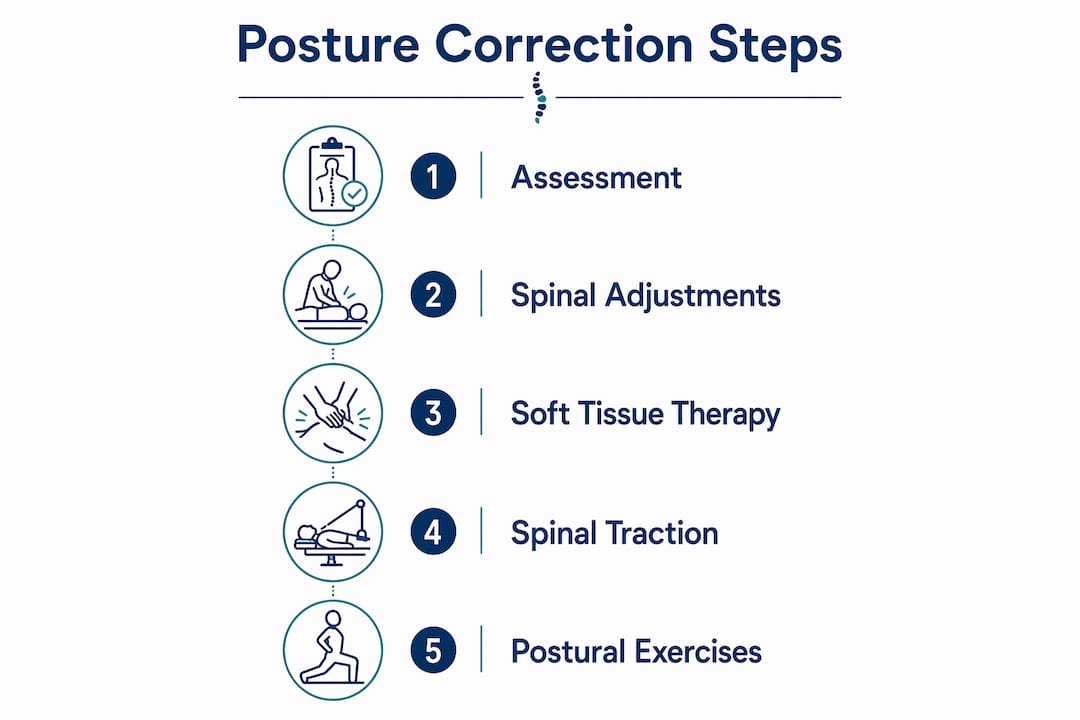
Chiropractic posture correction relies on several distinct techniques, each targeting a different layer of the problem. No single method works in isolation. The most effective treatment plans combine structural, soft tissue, and rehabilitative approaches in a specific sequence.
Spinal adjustments
Spinal adjustments are the foundation of chiropractic posture correction. A chiropractor applies controlled force to specific vertebral segments to restore normal joint motion and reduce fixations. These fixations, called vertebral subluxations, alter how the nervous system reads and responds to body position. Correcting them is the first step before any exercise program can work effectively.

Soft tissue therapies
Myofascial release and trigger point therapy lengthen shortened muscles caused by years of poor posture. Tight hip flexors, a compressed chest, and an overworked upper trapezius all pull the spine out of alignment. Soft tissue work releases these patterns so the spine can hold its corrected position between adjustments.
Spinal remodeling traction
Spinal remodeling traction applies sustained, low-load force to reshape the natural curves of the spine. This technique is particularly useful for patients with forward head posture or a flattened lumbar curve. Lasting posture correction requires this kind of structural remodeling, not just short-term symptom relief.
Postural exercises and ergonomic advice
Targeted exercises reinforce the corrections made during adjustments. Chiropractors prescribe specific movements to strengthen the deep stabilizing muscles of the spine, including the multifidus and transverse abdominis. Ergonomic advice addresses the daily habits, such as office posture and screen height, that created the problem in the first place.
- Spinal adjustments restore joint motion and correct vertebral subluxations
- Myofascial release and trigger point therapy release chronically shortened muscles
- Spinal remodeling traction reshapes spinal curves over time
- Targeted exercises strengthen deep stabilizers after structural correction
- Ergonomic counseling reduces the daily load that perpetuates poor posture
Pro Tip: Hands-on joint correction must come before exercise. Exercising a restricted spinal segment reinforces the dysfunction rather than correcting it. Adjustments first, exercises second.
What is the neurological and biomechanical basis behind chiropractic posture correction?
Posture is a neurological function, not just a mechanical one. The cerebellum constantly processes proprioceptive signals from joints, muscles, and tendons to maintain balance and upright position. When spinal joints become fixated, those signals become distorted, and the cerebellum receives inaccurate information about where the body is in space.
Chiropractic adjustments restore joint mobility and normalize neurological signaling, which allows muscles to reset and function properly. This is why patients often report feeling “lighter” or “taller” immediately after an adjustment. The change is not just structural. The nervous system has received a corrective input that changes how muscles activate across the entire body.
Muscle imbalances are a consequence of structural dysfunction, not the primary cause. Tight pectorals and weak rhomboids do not create poor posture on their own. They develop because the spine is already misaligned and the nervous system has adapted to that position. Treating the muscles without addressing the underlying joint restriction is like treating a symptom while ignoring its source.
“Posture is a critical public health marker closely tied to neurologic function and longevity. Postural instability links to an 84% higher all-cause mortality risk, which means poor posture is not a cosmetic issue. It is a neurological one with serious long-term consequences.”
The goal of chiropractic care is not to force the spine into a rigid position. Balanced, neutral spinal alignment is the target. This means the natural curves of the cervical, thoracic, and lumbar spine are maintained without strain or compensation. Overcorrection creates new problems, particularly in the lumbar region, where patients often develop excessive lordosis when they try too hard to “stand straight.”
Pro Tip: Think of posture correction as a neurological reset, not a mechanical fix. The spine needs to move freely before the nervous system can learn a new, healthier default position.
How does chiropractic care compare to exercises alone for improving posture?
Exercise is necessary for maintaining posture, but it cannot correct spinal misalignments on its own. A meta-analysis of 28 randomized controlled trials involving 901 participants found that corrective exercises improve postural angles but show limited evidence for reducing pain or improving muscle strength when used in isolation. That finding matters because pain and functional strength are what patients actually care about.
The reason exercise falls short on its own is structural. When vertebral segments are mechanically restricted, the muscles around them cannot activate correctly. Asking those muscles to work harder through exercise reinforces the compensation pattern rather than resolving it. Hands-on chiropractic adjustments must precede effective rehabilitation exercises for this reason.
Chiropractic care combined with exercise produces outcomes that neither approach achieves alone. Adjustments restore the joint mobility and neurological signaling that make exercise effective. Exercise then builds the strength and endurance needed to hold the corrected position. The two methods are not competing approaches. They are sequential steps in the same process.
| Approach | Postural angle improvement | Pain reduction | Muscle strength gains |
|---|---|---|---|
| Exercise alone | Moderate | Limited | Limited |
| Chiropractic adjustments alone | Strong | Strong | Moderate |
| Combined chiropractic and exercise | Strong | Strong | Strong |
Overcorrecting posture is a common mistake when patients rely on exercise programs without professional guidance. Forcing a “military style” posture, with the chest pushed forward and the shoulders pulled back aggressively, creates strain in the thoracic spine and upper traps. The conditions treated by spinal realignment are best addressed through balanced, effortless alignment rather than rigid, forced positions.
What can patients expect during a chiropractic posture correction treatment plan?
A structured treatment plan is what separates lasting posture correction from temporary relief. Patients who follow a complete protocol get measurably better results than those who stop care once symptoms ease. 87% of patients report measurable postural improvements within 8–12 weeks of consistent chiropractic treatment, and 78% maintain those results when following full protocols.
A typical treatment plan at Evertonchiropractic follows a clear progression:
- Initial assessment. The chiropractor conducts a full postural analysis, including digital X-rays where indicated, to identify specific vertebral fixations, curve deviations, and muscle imbalances. This baseline determines the treatment priorities and sets measurable goals.
- Intensive correction phase (weeks 1–4). Frequent adjustments address the primary structural restrictions. Soft tissue therapies begin releasing the muscle patterns that have developed around the misalignment. Patients receive their first set of home exercises at this stage.
- Stabilization phase (weeks 5–8). Adjustment frequency decreases as the spine begins holding its corrected position. Exercise complexity increases to build strength in the newly aligned posture. Ergonomic changes at work and home are implemented.
- Rehabilitation phase (weeks 9–12). The focus shifts to reinforcing the neurological changes made during earlier phases. Patients develop the body awareness and movement habits needed to maintain alignment independently.
- Maintenance care. Periodic check-ins, typically monthly or quarterly, catch early signs of regression before they become established patterns. This phase is what separates patients who maintain their results from those who relapse within six months.
Patient adherence to home exercises and lifestyle changes is the single biggest predictor of long-term success. The adjustments create the structural opportunity for change. The patient’s daily habits determine whether that change holds.
Common pitfalls and expert tips for successful posture correction
The biggest mistake patients make is trying to fix posture through willpower alone. Consciously holding a “good” posture throughout the day is exhausting and unsustainable. It also frequently leads to overcorrection, which creates new strain patterns rather than resolving existing ones.
- Avoid forcing a rigid, military-style posture. Forced overcorrection causes strain and can create new problems, particularly in the lumbar spine.
- Recognize that effortless, neutral alignment is the goal. Good posture should feel natural, not like a constant effort.
- Do not skip the structural phase of treatment. Jumping straight to strengthening exercises without correcting joint restrictions reduces the effectiveness of the entire program.
- Address ergonomics early. A corrected spine that returns to a poorly set up workstation every day will regress faster than the adjustments can keep up.
- Track progress with objective measures, not just how you feel. Postural photographs taken at consistent intervals show changes that are easy to miss day to day.
Pro Tip: Use a wall test monthly to self-monitor your progress. Stand with your heels, buttocks, and shoulders touching a wall. The back of your head should touch the wall with minimal effort. If it does not, your forward head posture is still present and needs attention.
Clinician expertise matters significantly in this process. A chiropractor who emphasizes neuromuscular reset alongside structural realignment produces better outcomes than one focused solely on symptom relief. The posture before and after chiropractic adjustment changes that patients experience reflect both structural and neurological improvements working together.
Key Takeaways
Chiropractic corrects poor posture by addressing both the structural joint restrictions and the neurological dysfunction that exercise alone cannot reach.
| Point | Details |
|---|---|
| Adjustments precede exercise | Restricted spinal joints must be corrected before rehabilitation exercises can work effectively. |
| Posture is neurological | Joint fixations distort proprioceptive signals, making posture a nervous system issue, not just a muscle issue. |
| Combined care wins | Chiropractic plus exercise outperforms either approach alone for pain, strength, and postural angles. |
| 8–12 weeks for results | 87% of patients see measurable improvement within this window when following a full protocol. |
| Neutral alignment is the goal | Forced or rigid posture creates new strain. Effortless, balanced alignment is the sustainable target. |
Why posture correction is the most underrated health investment
I have seen patients spend years doing core exercises, buying ergonomic chairs, and watching posture tutorials without meaningful change. The frustration is real, and the reason is almost always the same: they are trying to solve a structural and neurological problem with a behavioral fix.
What changed my thinking was understanding the mortality data. An 84% higher all-cause mortality risk linked to postural instability is not a number you can ignore. Posture is not about looking confident in photos. It is a direct window into how well your nervous system is functioning. When I see a patient who cannot maintain a single-leg stance for 10 seconds, I am not looking at a balance problem. I am looking at a neurological warning sign.
The chiropractic approach works because it addresses the root cause. Spinal adjustments change the input to the nervous system, not just the position of bones. That is why patients feel different after their first adjustment, often before any visible postural change has occurred. The nervous system has already started recalibrating. Evertonchiropractic’s approach, led by Dr. Richard, reflects this understanding. The clinic does not treat posture as a cosmetic concern. It treats it as a foundational health marker that affects everything from pain levels to long-term mobility.
My honest advice: do not wait until posture problems become pain problems. The structural changes that cause poor posture take years to develop and are far easier to correct early. A chiropractic assessment for spinal alignment is the most direct way to find out where you actually stand.
— Aman
Evertonchiropractic’s approach to lasting posture correction
Evertonchiropractic offers a structured, evidence-informed approach to posture correction that goes well beyond a standard adjustment. Dr. Richard combines spinal adjustments, soft tissue therapies, and targeted rehabilitation exercises into a personalized plan based on detailed diagnostic findings, including postural analysis and digital imaging where appropriate.

Patients dealing with forward head posture, rounded shoulders, or chronic lower back pain from spinal misalignment get a treatment plan built around their specific findings, not a generic protocol. For patients whose posture problems have progressed to chronic pain, the chiropractic chronic pain guide outlines how the same structural and neurological principles apply to pain management. If spinal alignment is your primary concern, the spinal alignment treatment page details the methods used at the clinic. Book an assessment to find out exactly what your spine needs.
FAQ
How long does chiropractic posture correction take?
Most patients see measurable postural improvements within 8–12 weeks of consistent care. Maintaining those results long-term requires following the full treatment protocol, including home exercises and periodic maintenance visits.
Can chiropractic fix posture without exercise?
Chiropractic adjustments correct the structural and neurological restrictions that cause poor posture, but exercise is needed to build the strength that holds the corrected position. The two approaches work best together.
Is poor posture a neurological problem or a muscle problem?
Poor posture is primarily a neurological problem caused by spinal joint fixations that distort proprioceptive signals to the brain. Muscle imbalances develop as a secondary consequence of that structural dysfunction.
What is the difference between chiropractic and physical therapy for poor posture?
Chiropractic care addresses the underlying spinal joint restrictions and neurological dysfunction that cause poor posture. Physical therapy focuses primarily on strengthening and stretching muscles. Combined approaches that include both structural correction and rehabilitation exercise produce the strongest outcomes.
Does forcing good posture make things worse?
Forced, rigid posture creates new strain, particularly in the lumbar spine. The goal of effective posture correction is neutral, balanced spinal alignment that feels effortless, not a military-style position held through constant muscular effort.