
Chiropractic care is a specialized approach that restores biomechanical function, corrects joint alignment, and enhances neuromuscular coordination to help athletes return to sport safely and at full capacity. Understanding how chiropractic supports return to sport means recognizing it as far more than pain relief. Chiropractic therapy improves joint mobility and flexibility, restoring normal movement patterns and reducing injury risk in athletes. Research also shows that up to 16% of athletes at major games receive chiropractic treatment, with evidence pointing to decreased recovery times and better functional outcomes. These numbers confirm that sports medicine teams worldwide treat chiropractic as a core part of athlete care, not an optional add-on.
How chiropractic supports return to sport through key techniques
Chiropractic rehabilitation techniques target the root causes of athletic injury, not just the symptoms. The three primary methods used in sports recovery are spinal manipulative therapy (SMT), joint mobilization, and soft tissue therapy. Each addresses a different layer of the problem, and together they rebuild the functional foundation athletes need to compete.
Spinal manipulative therapy (SMT) restores proper alignment to the spine and peripheral joints. SMT produces statistically significant improvements in pain relief and functional status without serious complications. That means athletes can move through a greater range of motion sooner, which accelerates the entire recovery timeline.
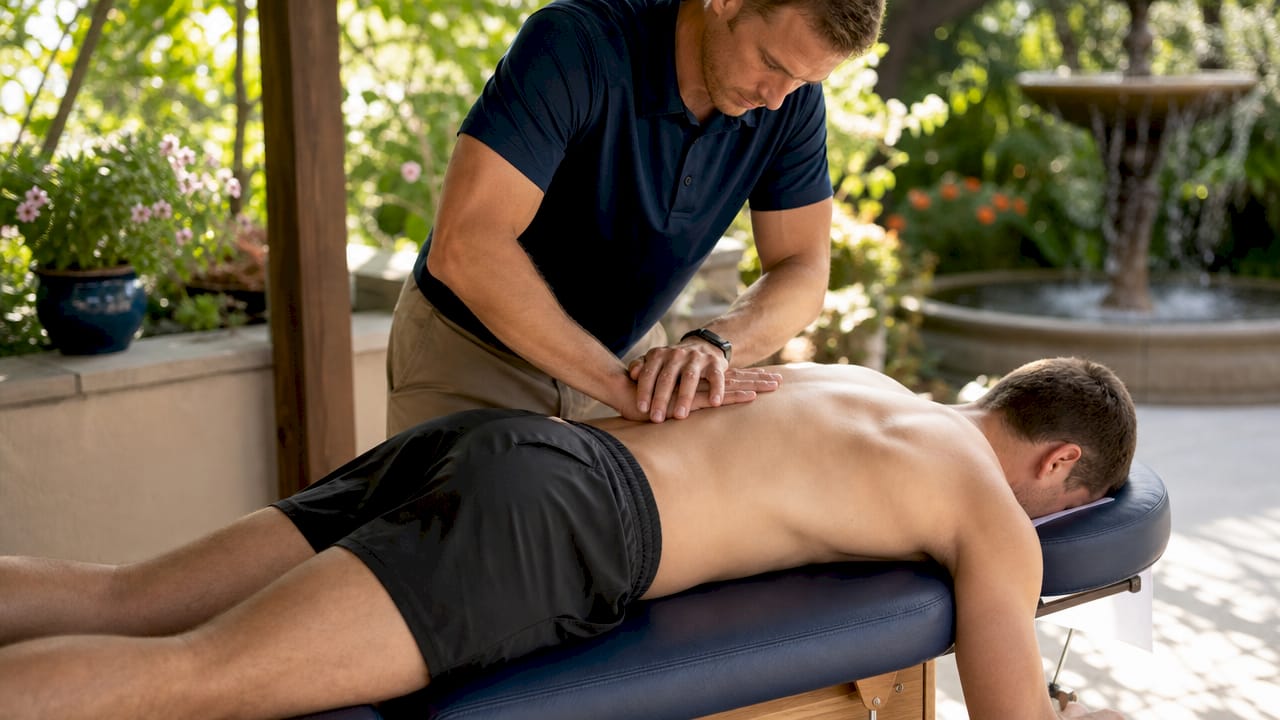
Joint mobilization and soft tissue therapy address the muscles, fascia, and connective tissue surrounding injured joints. Restricted soft tissue creates compensatory movement patterns that increase re-injury risk. Releasing that restriction allows the body to move as it was designed to, which is the foundation of safe return to play after injury.
Neuromuscular re-education is the technique most athletes overlook. Efficient nervous system communication with musculoskeletal structures is essential for balance, coordination, and reaction time. Chiropractic care directly improves this communication, which translates to better performance and fewer injuries once athletes are back on the field.
- Spinal adjustments restore joint mechanics and reduce pain
- Mobilization improves range of motion in stiff or post-injury joints
- Soft tissue therapy reduces muscle tension and breaks down scar tissue
- Neuromuscular re-education retrains movement patterns for sport-specific demands
- Rehabilitation exercises reinforce the gains made during manual treatment
Pro Tip: Ask your chiropractor to pair each manual therapy session with sport-specific movement drills. The manual work opens the window; the exercises lock in the gains.
How does chiropractic care integrate with exercise therapy?
Manual therapy and exercise therapy are not competing approaches. The best chiropractic care combines both in staged rehabilitation plans aligned with where the athlete is in their recovery. Treating them as alternatives is one of the most common and costly mistakes in sports injury chiropractic treatment.
The clinical rationale is straightforward. Manual therapy reduces pain and improves movement tolerance initially, which creates the conditions for exercise therapy to work. Without that first step, athletes often cannot perform the movements required for rehabilitation exercises at the right intensity or quality.
| Therapy type | Primary role | Best stage | Long-term benefit |
|---|---|---|---|
| Manual therapy | Pain relief, movement restoration | Early recovery | Reduces barriers to exercise |
| Exercise therapy | Strength, endurance, function | Mid to late recovery | Prevents re-injury |
| Combined approach | Full functional restoration | All stages | Fastest return to sport |
The staged model works like this. In the early phase, the chiropractor uses SMT and mobilization to reduce pain and restore basic movement. As tolerance improves, the athlete progresses to active rehabilitation exercises targeting the specific muscles and movement patterns their sport demands. The chiropractor monitors progress and adjusts the manual therapy load as the exercise component increases.
A common misconception is that once exercise begins, manual therapy stops. The evidence does not support that view. Many athletes benefit from ongoing adjustments throughout the exercise phase to maintain joint mechanics and prevent compensation patterns from developing.
Pro Tip: Track your pain levels and range of motion before and after each session. Objective data helps your chiropractor make faster, more accurate decisions about when to progress your program.
How does chiropractic care vary for athletes of different ages?
Age is one of the most important variables in sports injury chiropractic treatment. Effective chiropractic intervention must be age-appropriate, with younger athletes receiving development-supportive care and older athletes treated to manage degenerative changes and accumulated biomechanical stress. A single protocol does not serve all athletes equally.
Younger athletes require care that supports healthy physiological development. Their bones, tendons, and growth plates respond differently to load and manipulation than adult tissue. Chiropractic care for young athletes focuses on correcting early postural imbalances, supporting proper movement development, and preventing the overuse injuries that derail athletic careers before they begin. Evertonchiropractic addresses these needs through individualized assessment rather than applying adult protocols to developing bodies.
Adult athletes carry the accumulated load of years of training. Their primary concerns are managing biomechanical stress, maintaining joint health, and recovering from acute injuries without losing fitness. Chiropractic care for this group emphasizes restoring full range of motion quickly and integrating with strength and conditioning programs.
Older athletes face a different challenge. Joint degeneration, reduced tissue elasticity, and slower healing rates all affect how chiropractic care is delivered. The goal shifts from performance maximization to mobility preservation, pain reduction, and keeping athletes active for longer. Evertonchiropractic’s approach, led by Dr. Richard, directly challenges the idea that physical decline is inevitable with age.
| Age group | Primary focus | Key techniques | Recovery goal |
|---|---|---|---|
| Youth athletes | Development support, injury prevention | Gentle mobilization, posture correction | Safe participation and growth |
| Adult athletes | Biomechanical restoration, performance | SMT, soft tissue therapy, rehab exercises | Full return to sport |
| Older athletes | Mobility preservation, pain management | Low-force adjustments, mobility work | Sustained active lifestyle |
- Youth athletes need growth-appropriate techniques, not scaled-down adult protocols
- Adult athletes benefit most from combining SMT with sport-specific conditioning
- Older athletes respond well to low-force mobilization and targeted mobility work
- Every age group benefits from chiropractic injury prevention strategies built into their training
What practical steps should athletes follow for a successful return to play?
A successful return to play after injury requires a structured plan, not just a series of appointments. The athletes who return fastest and stay healthy longest treat chiropractic care as one part of a coordinated recovery system.
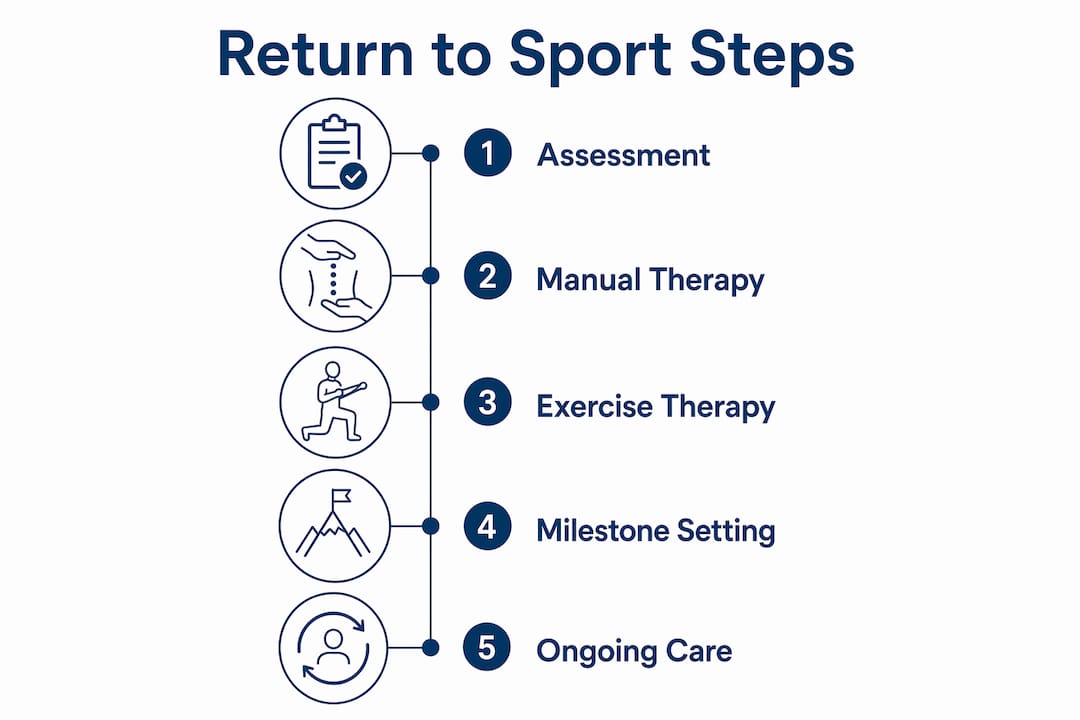
1. Start with a thorough assessment. Your chiropractor should evaluate posture, joint mobility, movement quality, and sport-specific demands before any treatment begins. A diagnosis without context produces a generic plan. A contextual assessment produces a plan built around your sport, your position, and your body.
2. Set clear milestones, not just dates. Rushing return to sport is the single most common cause of re-injury. Work with your chiropractor to define functional benchmarks, such as full pain-free range of motion, restored strength symmetry, and sport-specific movement competency, before clearing yourself to compete.
3. Coordinate your care team. Chiropractic care works best when it communicates with your coach, physical therapist, and strength and conditioning staff. Chiropractors participate in multidisciplinary teams to optimize recovery and maintain participation. Siloed care produces siloed results.
4. Prioritize sleep and recovery quality. Research shows that chiropractic care improves sleep disturbance in active populations managing musculoskeletal pain. Better sleep accelerates tissue repair and reduces pain sensitivity, which directly supports faster recovery.
5. Maintain chiropractic care after return. Most athletes stop treatment the moment they feel ready to compete. That is the wrong time to stop. Maintenance care reduces injury risk by keeping joint mechanics and neuromuscular coordination at their best throughout the competitive season.
Pro Tip: When selecting a chiropractor for sports recovery, ask specifically about their experience with athletes in your sport. A chiropractor who understands the demands of your activity will build a far more relevant treatment plan than one applying a general protocol.
Key Takeaways
Chiropractic care supports return to sport by combining spinal manipulative therapy, neuromuscular re-education, and staged exercise rehabilitation to restore function, reduce injury risk, and keep athletes competing at their best.
| Point | Details |
|---|---|
| Techniques target function, not just pain | SMT, mobilization, and neuromuscular re-education rebuild the movement quality sport demands. |
| Manual and exercise therapy work together | Staged rehabilitation combining both approaches produces faster, more durable recovery than either alone. |
| Age determines treatment approach | Youth, adult, and older athletes each require different techniques and goals for safe return to sport. |
| Multidisciplinary coordination matters | Chiropractic care delivers the best outcomes when it communicates with coaches, physios, and trainers. |
| Maintenance care prevents re-injury | Continuing chiropractic after return to sport keeps joint mechanics and coordination at peak levels. |
Why I think most athletes underuse chiropractic care
Most athletes I see arrive at chiropractic care as a last resort, after weeks of rest, ice, and hoping the problem resolves itself. That delay is costly. The window for the fastest recovery is the earliest phase of injury, when manual therapy can restore movement tolerance before compensation patterns become ingrained.
The other pattern I see repeatedly is athletes treating chiropractic as a one-time fix. They come in, feel better, and disappear until the next injury. That approach misses the real value. Chiropractic care is most powerful as a continuous part of training, not a reactive response to breakdown. The athletes who use it proactively, integrating it with their conditioning and monitoring their joint health across a season, are the ones who stay on the field longest.
There is also a persistent belief that chiropractic and strength training are somehow in tension. They are not. Restoring joint mechanics through spinal adjustments makes strength training more effective because the body can express force through properly aligned structures. I have seen athletes add meaningful performance gains simply by addressing the biomechanical restrictions that were limiting their movement quality for years.
The evidence base for chiropractic in sports recovery has grown considerably. The conversation has shifted from “does it work” to “how do we integrate it best.” Athletes who understand that shift will use chiropractic more intelligently and get better results.
— Aman
Evertonchiropractic’s approach to sports recovery
Athletes dealing with sports injuries need more than generic treatment. Evertonchiropractic, led by Dr. Richard, builds individualized recovery programs that combine spinal adjustments, soft tissue therapy, and rehabilitation exercises matched to each athlete’s sport and recovery stage.

Whether you are managing a recent injury or working to prevent the next one, Evertonchiropractic’s evidence-informed approach addresses the biomechanical factors that drive both breakdown and performance. The clinic’s focus on spinal alignment and function means athletes get care that supports their goals, not just their symptoms. For athletes dealing with lower back pain as part of their recovery, the clinic’s lower back pain guide is a strong starting point. Contact Evertonchiropractic to build a recovery plan built around your sport.
FAQ
How does chiropractic care help athletes return to sport?
Chiropractic care restores joint mobility, corrects biomechanical imbalances, and improves neuromuscular coordination, all of which reduce pain and rebuild the movement quality needed for sport. Research confirms that combining manual therapy with exercise rehabilitation produces the fastest and most durable recovery outcomes.
Is chiropractic care safe for athletes during injury recovery?
Spinal manipulative therapy produces significant improvements in pain and function without serious complications, making it a safe option for athletes at appropriate recovery stages. Treatment is adapted to the athlete’s injury status, age, and sport-specific demands.
How many chiropractic sessions does return to sport typically require?
The number of sessions varies based on injury severity, age, and sport demands. There is no universal timeline. Progress is measured against functional benchmarks like pain-free range of motion and movement quality, not a fixed number of visits.
Can chiropractic care improve athletic performance, not just recovery?
Chiropractic care improves neuromuscular coordination, balance, and reaction time, which directly support athletic performance beyond injury recovery. Athletes who maintain chiropractic care during their competitive season report better movement quality and fewer injuries.
Should athletes continue chiropractic care after returning to sport?
Maintenance chiropractic care keeps joint mechanics and neuromuscular coordination at their best throughout a competitive season. Stopping treatment at the point of return to sport removes a key layer of injury prevention at the moment it is most needed.