
Chiropractic care is defined as a non-pharmacologic treatment that corrects musculoskeletal misalignments to reduce nerve pressure, ease muscle tension, and restore joint function. For anyone living with persistent back pain, sciatica, or neck pain, understanding how chiropractic addresses chronic pain is the first step toward lasting relief. The American College of Physicians now recommends spinal manipulation as a first-line treatment for chronic low back pain, placing it alongside exercise and acupuncture. Evertonchiropractic, led by Dr. Richard, builds on this evidence to deliver care that targets the root cause of pain rather than masking symptoms.
How chiropractic addresses chronic pain at the root cause
Chronic pain is not simply a symptom. It is a signal that something in your body’s structure or movement pattern is not working correctly. Chiropractic care targets that structural problem directly through spinal manipulation and manual therapy.
Spinal manipulation and nerve decompression
Spinal manipulation uses high-velocity, low-amplitude thrusts to restore motion to restricted spinal joints. This technique stimulates joint receptors and modulates spinal reflexes, which reduces the nerve irritation that drives chronic pain signals. When a vertebra sits out of its optimal position, it can compress nearby nerves and trigger a cascade of muscle guarding and inflammation. Restoring that alignment breaks the cycle.

Neurophysiologic effects on pain processing
Chiropractic adjustments produce measurable neurophysiologic changes beyond simple joint movement. They reduce muscle hypertonicity, the excessive tension that keeps muscles locked in a protective spasm, and alter how the nervous system processes pain. This means patients often notice reduced sensitivity in areas that previously felt tender to the touch. The effect is not placebo. Clinical research confirms that spinal manipulation modulates pain at the neurological level.
What a typical chiropractic treatment includes
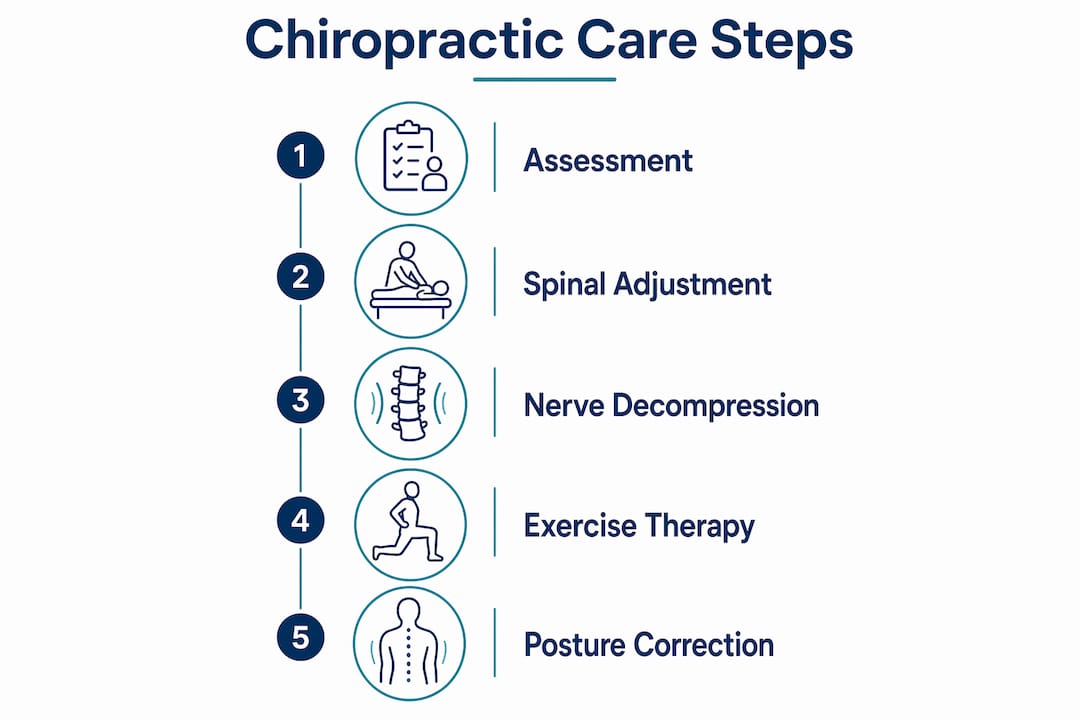
A full chiropractic session for chronic pain typically combines several components:
- Spinal adjustment: Restores joint mobility and reduces nerve compression
- Soft tissue therapy: Releases tight muscles and fascia surrounding the spine
- Mobilization: Gentle, repetitive movements for joints that cannot tolerate high-velocity thrusts
- Exercise guidance: Targeted movements to reinforce spinal stability between visits
- Postural coaching: Corrections to sitting, standing, and sleeping positions that perpetuate pain
Pro Tip: Tell your chiropractor exactly where your pain radiates, not just where it starts. Referred pain patterns help the clinician identify which spinal level is involved and adjust the treatment accordingly.
What does recent clinical research show about chiropractic effectiveness?
The evidence base for chiropractic treatment for pain has grown significantly in 2026. Two landmark studies now give patients and clinicians a clearer picture of what to expect.
The PACBACK trial: a direct comparison
The PACBACK randomized clinical trial enrolled 1,000 participants with chronic low back pain and compared spinal manipulation plus clinician-supported self-management against standard medical care. 64% of chiropractic patients achieved a 50% reduction in pain impact, compared to 55% in the medical care group. That 9-percentage-point gap is clinically meaningful. It means roughly 1 in 11 patients who would not have improved with standard care alone achieved significant relief through chiropractic.
The long-term picture is equally strong. At the one-year mark, 12% fewer patients in the chiropractic group reported chronic pain interfering with daily activities compared to the medical care group. That translates to real-world gains: working longer hours, sleeping through the night, and moving without bracing for the next flare.
Military study: sleep quality and pain interference
A 52-week study of active-duty military personnel found that adding chiropractic care to usual medical treatment produced sustained improvements in sleep quality over the full year. Sleep and chronic pain are tightly linked. Poor sleep amplifies pain sensitivity, and pain disrupts sleep. Breaking that cycle through chiropractic care delivers benefits that extend well beyond the spine itself.
Patient satisfaction rates
Patient satisfaction with chiropractic care for chronic pain ranges between 77% and 94%. High satisfaction is linked specifically to combined chiropractic and exercise approaches. That figure matters because satisfaction predicts adherence, and adherence predicts outcomes.
Pro Tip: Ask your chiropractor to include a structured home exercise plan from your first visit. Research consistently shows that patients who exercise between sessions achieve better and faster results than those who rely on in-clinic treatment alone.
How does chiropractic integrate with complementary therapies?
Managing chronic pain with chiropractic works best when adjustments are part of a broader care plan. Chiropractic care is part of an integrative model that addresses inflammation, posture, and lifestyle factors together. No single therapy solves chronic pain in isolation.
Exercise therapy as a core partner
Exercise therapy combined with chiropractic adjustments produces a 30% pain reduction and the highest patient satisfaction scores in the literature. Exercise builds the muscular support that holds spinal corrections in place. Without it, the spine tends to drift back toward its dysfunctional pattern between visits. Strength and mobility work are not optional add-ons. They are what makes chiropractic relief last.
Posture correction and ergonomics
Poor posture is one of the most common reasons chronic pain returns after treatment. Correcting spinal alignment through adjustments is only half the job. The other half is changing the daily habits that created the misalignment in the first place. Ergonomic adjustments to your workstation, sleeping position, and movement patterns sustain the gains made in the clinic.
Complementary therapy options
| Therapy | How it complements chiropractic | Expected benefit |
|---|---|---|
| Exercise therapy | Builds spinal muscle support | Longer-lasting pain relief |
| Soft tissue massage | Releases muscle tension around adjusted joints | Faster recovery between sessions |
| Cold laser therapy | Reduces local inflammation | Reduced soreness after adjustments |
| Postural retraining | Corrects movement patterns | Prevents pain recurrence |
| Ergonomic coaching | Modifies daily stressors on the spine | Sustained alignment between visits |
Patients who actively participate in their recovery see better outcomes. Ergonomic improvement, stretching, and strengthening between chiropractic visits are the factors that separate short-term relief from lasting progress. The clinic visit starts the process. What you do at home determines how far it goes.
Evertonchiropractic incorporates red light therapy alongside spinal adjustments for patients who need faster tissue recovery, particularly after acute flare-ups within a chronic pain pattern.
What should you expect from chiropractic treatment?
Knowing what the process looks like reduces anxiety and helps you get more from each visit. Chiropractic care for chronic pain follows a structured progression.
- Initial evaluation: Your chiropractor takes a full history, assesses posture, tests range of motion, and identifies which spinal segments are restricted or misaligned. This step determines the treatment plan.
- Early treatment phase: Sessions are typically more frequent, often two to three times per week, to build momentum and reduce acute flare-ups within the chronic pattern.
- Progressive loading: As pain decreases, exercise and rehabilitation components increase. The goal shifts from pain relief to functional restoration.
- Maintenance phase: Many patients with chronic conditions benefit from periodic visits, monthly or quarterly, to maintain spinal health and catch new restrictions early.
- Self-management: Home exercises, posture habits, and lifestyle adjustments become the primary tools for sustaining results.
Chronic pain rarely resolves after one or two sessions. Realistic expectations matter. Most patients notice meaningful improvement within four to six weeks of consistent care. Conditions like sciatica or long-standing low back pain may require longer treatment timelines depending on severity and how long the problem has been present.
Pro Tip: Track your pain levels on a simple 0–10 scale before and after each session. This gives your chiropractor objective data to refine your treatment plan and helps you recognize progress that is easy to overlook when you are in the middle of it.
Key Takeaways
Chiropractic care reduces chronic pain by correcting spinal misalignments, modulating nerve signals, and building lasting function through integrated exercise and lifestyle strategies.
| Point | Details |
|---|---|
| Clinical evidence is strong | The PACBACK trial shows 64% of chiropractic patients achieved 50% pain reduction, outperforming standard medical care. |
| Root cause treatment | Spinal manipulation targets nerve compression and muscle hypertonicity, not just surface-level symptoms. |
| Integration multiplies results | Combining chiropractic with exercise therapy produces 30% pain reduction and up to 94% patient satisfaction. |
| Sleep quality improves | Military research shows chiropractic care sustains sleep improvements over 52 weeks, breaking the pain-sleep cycle. |
| Patient participation is decisive | Home exercises, ergonomic changes, and stretching between visits determine whether relief lasts. |
Why I think most people underestimate chiropractic for chronic pain
Most patients arrive at a chiropractic clinic after years of managing pain with medication, rest, and hope. They expect an adjustment to feel like a quick fix. What actually happens is more interesting and more demanding than that.
The clinical results are real. A 64% responder rate in the PACBACK trial is not a minor finding. But the patients who get the most out of chiropractic are the ones who treat it as a system, not a service. They show up consistently, do the home exercises, and change the postural habits that caused the problem in the first place.
The hardest part of my experience working with chronic pain patients is managing the gap between what people want and what the body can deliver on a given timeline. Chronic pain took months or years to develop. Expecting it to resolve in two weeks sets patients up for disappointment and early dropout. The patients who stay the course, who communicate openly with their chiropractor and adjust their daily lives, are the ones who report the most dramatic long-term improvements.
Chiropractic is not a standalone cure. It is the structural foundation of a broader recovery strategy. When you pair it with exercise, sleep hygiene, and ergonomic awareness, the results compound. That is the version of chiropractic care worth committing to.
— Aman
Evertonchiropractic’s approach to lasting chronic pain relief
Chronic pain does not respond to generic treatment. Evertonchiropractic builds individualized care plans that combine spinal adjustments, rehabilitation exercises, and posture correction to address the specific patterns driving each patient’s pain.

Dr. Richard and the team at Evertonchiropractic use evidence-informed protocols grounded in the same research that now guides the American College of Physicians. Whether you are dealing with low back pain, sciatica, or persistent neck pain, the clinic offers a structured path from pain reduction to restored function. Start with their lower back pain guide to understand what a comprehensive, medication-free approach to chronic pain actually looks like in practice.
FAQ
Does chiropractic work for chronic pain?
Yes. The PACBACK trial found that 64% of patients receiving spinal manipulation achieved a 50% reduction in pain impact, outperforming standard medical care at one year.
How many chiropractic sessions does chronic pain require?
Most patients notice meaningful improvement within four to six weeks of consistent care. Long-standing conditions like sciatica or chronic low back pain may require a longer treatment course.
What conditions does chiropractic treat beyond back pain?
Chiropractic care effectively addresses neck pain, headaches, sciatica, and overuse injuries by correcting the spinal and joint restrictions that drive those conditions.
Can chiropractic improve sleep quality?
Research on active-duty military personnel shows that adding chiropractic care to standard treatment produces sustained improvements in sleep disturbance over 52 weeks, which directly reduces chronic pain sensitivity.
Is chiropractic safe as a first-line treatment?
The American College of Physicians recommends spinal manipulation as a first-line, non-pharmacologic therapy for chronic low back pain, placing it alongside exercise and acupuncture in its 2026 clinical guidelines.