Chiropractic care supports longevity by maintaining spinal alignment and nervous system function, two biological foundations that determine how well your body ages. When your spine is properly aligned, your brain communicates clearly with every organ, muscle, and tissue in your body. That communication drives immune response, metabolic efficiency, and physical resilience. Research now confirms what practitioners at clinics like Evertonchiropractic have long observed: regular chiropractic adjustments produce measurable improvements in both physical and mental health, and they do so more safely than most pharmaceutical alternatives.
Why chiropractic supports longevity: what the science shows
The strongest case for chiropractic and healthy aging comes from clinical data, not theory. A 2026 longitudinal study of 163 adults with spinal pain found that three months of chiropractic care produced statistically significant improvements in both physical and mental health scores on the SF-36v2 scale. Physical component scores rose by approximately 6.3 points and mental component scores by 4.2 points. Those numbers matter because SF-36v2 scores directly predict functional independence, which is the defining marker of quality aging.
Safety data reinforces the case even further. An NIH-funded cohort study of 291,604 Medicare patients showed that chiropractic care produced 20% fewer adverse events compared to prescription drug therapy and 14% fewer compared to medical care alone over 24 months. That is not a marginal difference. For older adults managing chronic pain, the risk profile of treatment is as important as its effectiveness.
“Chiropractic care is significantly safer than pharmacological pain management for seniors, avoiding risks like cognitive impairment and organ damage.” — 2026 safety comparison study
A separate systematic review of 25 studies tracking more than 400 adverse events found no life-threatening events in elderly chiropractic patients. The most common side effects were mild soreness that resolved within 24–48 hours. That safety profile makes chiropractic one of the most practical tools in a longevity-focused health plan.
| Outcome | Chiropractic result |
|---|---|
| Physical health score change | +6.3 points (SF-36v2) after 3 months |
| Mental health score change | +4.2 points (SF-36v2) after 3 months |
| Adverse events vs. prescription drugs | 20% fewer over 24 months |
| Adverse events vs. medical care alone | 14% fewer over 24 months |
| Life-threatening events in elderly patients | None reported across 25 studies |
How chiropractic adjustments affect the nervous system and immune function
The nervous system is the body’s master control network. Every heartbeat, immune response, and hormonal signal depends on clear neural communication between the brain and the rest of the body. Spinal misalignments, called subluxations in chiropractic terminology, disrupt that communication. Correcting them restores signal clarity across the entire system.

Brain imaging research shows that chiropractic adjustments influence prefrontal cortex function, improving sensory integration and movement coordination. The prefrontal cortex governs decision-making, balance, and motor planning, all of which decline with age. Stimulating neuroplasticity in this region through spinal adjustment gives the aging nervous system a measurable functional advantage.
The effects extend beyond the brain. Research in precision health shows that chiropractic adjustment modulates systemic biochemical signaling, affecting metabolic flexibility and cellular energy production. These are core pillars of longevity biology. A body that processes energy efficiently at the cellular level ages more slowly and recovers faster from physical stress.
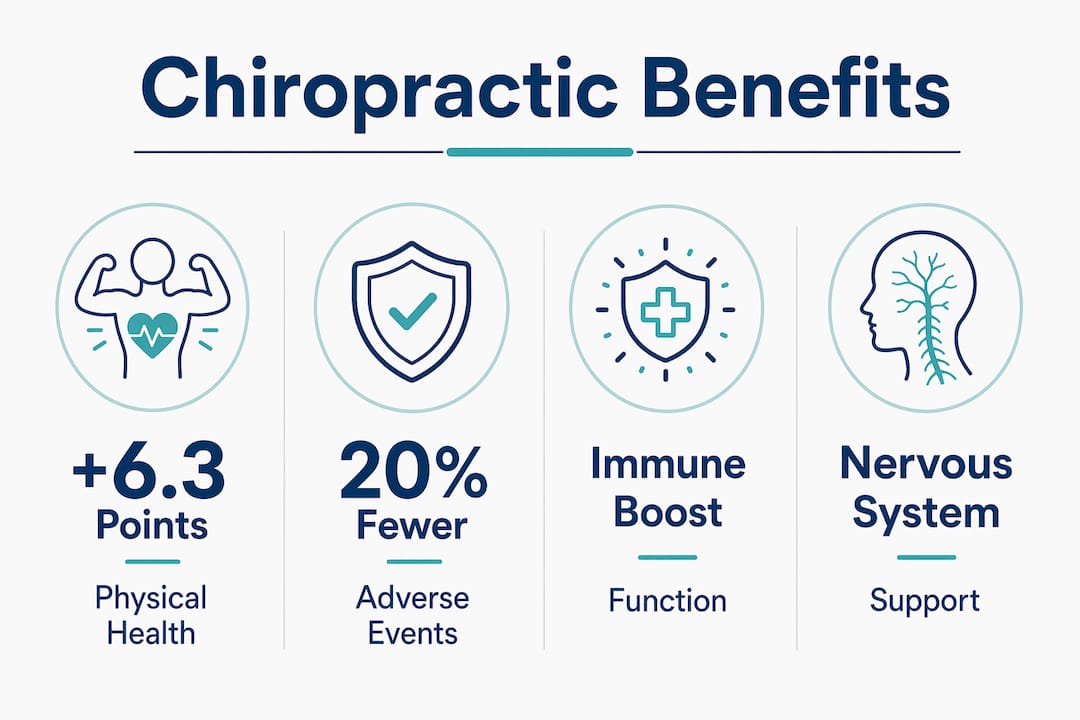
Immune function follows the same pattern. The nervous system regulates immune response through a network of signaling pathways. When spinal alignment improves, that regulatory capacity improves with it. Patients who receive regular adjustments often report fewer infections and faster recovery times, consistent with what the neurological evidence predicts.
Pro Tip: If you are starting chiropractic care for long-term wellness rather than acute pain, tell your chiropractor upfront. That context changes the treatment plan significantly, shifting focus from symptom relief to functional maintenance.
- Spinal alignment restores clear neural communication between the brain and body
- Prefrontal cortex stimulation through adjustment supports balance and motor coordination
- Systemic biochemical signaling improves, supporting metabolic and cellular health
- Immune regulation benefits from a well-functioning nervous system
- Spinal health long term is a direct input into how well your body ages
What are the safety considerations for chiropractic care in older adults?
Older adults are not the same as younger patients, and responsible chiropractic care reflects that. Bone density decreases with age, vascular changes occur, and the spine becomes less tolerant of high-force manipulation. Chiropractors trained in geriatric care adapt their techniques accordingly.
For patients with osteoporosis or elevated vascular risk, instrument-assisted low-force methods replace high-velocity manipulation. These techniques deliver the same neurological benefit without the mechanical load that could fracture a compromised vertebra or stress a fragile artery. The adaptation is not a compromise. It is the correct clinical choice.
Pro Tip: Before your first appointment, ask your chiropractor whether they conduct bone density and vascular screening as part of their intake process. A thorough assessment before treatment is the standard of care for patients over 60.
The comparison with medication is worth stating plainly. Prescription pain drugs carry risks of cognitive impairment, gastrointestinal damage, and organ stress, all of which accelerate aging. Chiropractic care, when properly adapted for the individual, avoids those complications entirely. For seniors managing chronic musculoskeletal pain, that difference in risk profile is clinically significant.
| Treatment approach | Key risk considerations |
|---|---|
| High-velocity spinal manipulation | Not appropriate for osteoporosis or vascular concerns |
| Instrument-assisted low-force methods | Safe for elderly patients; minimal adverse events |
| Prescription pain medications | Risk of cognitive impairment, organ damage, dependency |
| Chiropractic care (adapted) | 20% fewer adverse events than prescription drugs in seniors |
Proper screening before treatment is the factor that separates safe chiropractic care from risky care. A thorough intake assessment covering bone density, cardiovascular history, and current medications gives the chiropractor the information needed to select the right technique for each patient.
How chiropractic fits into a broader longevity strategy
Chiropractic care is not a standalone solution for aging well. No single intervention is. The evidence is clear that chiropractic must be integrated with strength training, balance work, and an active lifestyle to produce optimal longevity outcomes. Adjustments improve the mechanical and neurological foundation, but the patient must build on that foundation through consistent physical effort.
Maintaining mobility through chiropractic care directly reduces fall risk, which is one of the leading causes of functional decline in adults over 65. Falls are not just injuries. They are often the event that triggers a cascade of reduced activity, muscle loss, and loss of independence. Preserving the spinal mechanics and balance coordination that prevent falls is one of the most concrete ways chiropractic contributes to a longer, more independent life.
Practitioners at Evertonchiropractic emphasize that functional assessments and corrective exercise are as important as the adjustment itself. Passive manipulation alone does not build the muscular support that protects the spine between visits. Patients who combine adjustments with prescribed rehabilitative exercises see better long-term outcomes than those who rely on adjustments alone.
Practical steps to maximize longevity benefits from chiropractic care:
- Combine regular adjustments with a structured strength and balance training program
- Ask your chiropractor for corrective exercises tailored to your specific spinal findings
- Address nutrition and sleep, since spinal tissue repair depends on both
- Schedule periodic functional assessments, not just pain-driven visits
- Use chiropractic as part of a preventive care plan, not only as a response to acute pain
- Work with your chiropractor to prevent spinal degeneration before it becomes irreversible
The goal is not to treat aging. The goal is to maintain the physical capacity that makes aging an active, engaged experience rather than a slow retreat from life.
Key takeaways
Chiropractic care supports longevity by restoring nervous system function, reducing adverse event risk compared to medication, and preserving the mobility that keeps older adults independent.
| Point | Details |
|---|---|
| Clinical evidence is strong | A 2026 study showed physical and mental health scores improve significantly after 3 months of care. |
| Safety advantage over medication | Chiropractic produces 20% fewer adverse events than prescription drugs in Medicare patients. |
| Nervous system drives the benefit | Adjustments improve prefrontal cortex function and systemic biochemical signaling relevant to aging. |
| Technique must match the patient | Low-force methods are required for older adults with osteoporosis or vascular concerns. |
| Integration multiplies results | Chiropractic combined with strength training and balance work produces the best longevity outcomes. |
Why I think most people underestimate chiropractic’s role in aging
Most patients arrive at a chiropractic clinic because something hurts. That is understandable. Pain is what gets attention. But the patients I see make the biggest long-term gains are the ones who stay after the pain resolves, because they understand that the spine is not just a structural column. It is a communication highway.
What surprises people most is the neurological dimension. They expect their back to feel better. They do not expect their balance to improve, their sleep to deepen, or their energy to stabilize. Those changes happen because the nervous system is now operating with less interference. The body is doing what it was designed to do.
The misconception I push back on hardest is the idea that physical decline is inevitable. Evertonchiropractic, led by Dr. Richard, was built around exactly that challenge. Decline is not inevitable. It is often the result of neglect, specifically the neglect of spinal health, movement quality, and nervous system maintenance. The patients who age best are the ones who treat their spine the way they treat their teeth: with consistent, preventive care rather than emergency intervention.
My honest advice is this: do not wait for a crisis. Start with a functional assessment, understand where your spine and nervous system stand today, and build a plan that includes adjustments, exercise, and lifestyle support. That combination is what longevity through chiropractic actually looks like in practice.
— Aman
Take the next step toward lasting spinal health with Evertonchiropractic
Evertonchiropractic, led by Dr. Richard, offers personalized care plans designed for long-term movement and quality of life, not just short-term pain relief. Whether you are managing lower back pain, sciatica, or simply want to maintain your physical independence as you age, the clinic provides evidence-informed spinal adjustments, posture correction, and rehabilitative exercise guidance tailored to your goals.
If you are ready to take a proactive approach to aging, start with a guide to maintaining independence through chiropractic care. For those dealing with chronic lower back pain, Evertonchiropractic’s approach to lasting back pain relief addresses the root cause rather than masking symptoms. Book a consultation and find out what a spine-first longevity plan looks like for you.
FAQ
Does chiropractic care actually improve lifespan?
Chiropractic care improves the quality-of-life markers most closely linked to healthy aging, including physical function, mental health scores, mobility, and fall risk reduction. No single intervention extends lifespan in isolation, but chiropractic addresses several of the key mechanisms that determine how well you age.
Is chiropractic care safe for elderly patients?
A systematic review of 25 studies found no life-threatening adverse events in elderly chiropractic patients. Most side effects were mild soreness that resolved within 24–48 hours, making it one of the safest options for managing musculoskeletal pain in older adults.
How does chiropractic care compare to medication for seniors?
An NIH-funded study of over 291,000 Medicare patients found chiropractic care produced 20% fewer adverse events than prescription drug therapy over 24 months. It also avoids the cognitive impairment and organ damage risks associated with long-term pain medication use.
How often should older adults receive chiropractic adjustments?
Frequency depends on individual health status, spinal findings, and treatment goals. Patients focused on longevity and prevention typically benefit from regular maintenance visits combined with corrective exercise, rather than care driven solely by acute pain episodes.
Can chiropractic care help prevent falls in older adults?
Chiropractic care improves balance and movement coordination by stimulating prefrontal cortex function and restoring spinal alignment. These neurological and mechanical improvements directly reduce fall risk, which is one of the most significant threats to independence in adults over 65.